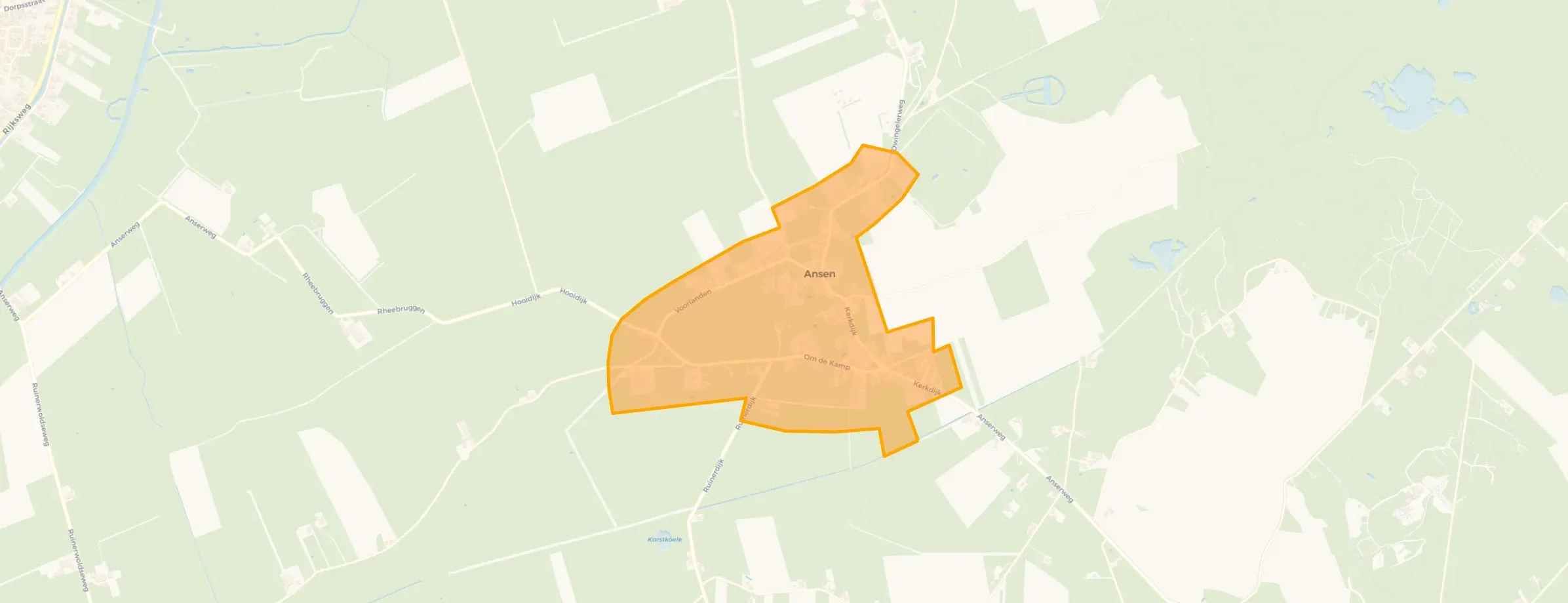
Ansen is located in the province of Drenthe, in the municipality of De Wolden, in the district Ansen. The neighbourhood has a total area of 92 hectares, of which 92 hectares are land and 0 hectares are water. The neighbourhood is coded as BU16901000. The postcode area is 7964KA-7964KZ.
Ansen has 270 residents. Of these, 48,1% are men and 51,9% are women. Most residents are 45 to 65 years (37,0%). The other age groups are 29,6% for '65 years or older', 16,7% for '25 to 45 years', 11,1% for '0 to 15 years' and 7,4% for '15 to 25 years'. Of the residents, 35,2% is unmarried, 51,9% is married, 5,6% is divorced and 7,4% is widowed. 255 residents originate from the Netherlands, 5 come from Europe and 10 come from countries outside Europe.
There are 115 households in Ansen. 21,7% of these are single-person households, 47,8% households without children and 30,4% households with children. The average household size is 2,2 persons. The national average is 2,1 persons.
In Ansen there are 200 income recipients. The average income per income recipient is €40.900, which is €1.300 (3%) lower than the national average of €42.200. Per resident, the average income is €35.500, which is €600 (2%) higher than the national average of €34.900. Most residents of Ansen are highly educated. 40,0% have a university or higher professional education (HBO/WO), 40,0% have an intermediate education (HAVO, VWO or MBO 2-4) and 20,0% have a lower education (VMBO or MBO 1).
Of the 270 residents, around 73% are in paid employment, which amounts to 197 people. This is 1% higher than the national average of 72%. The majority of workers are in salaried employment (68%), while 32% are self-employed. In Ansen, 30% of residents receive a benefit. The largest group is those receiving a state pension (AOW). 70 people receive this benefit.
In Ansen there are 135 homes with an average assessed value (WOZ) of €482.000. Of these, around 92% are occupied and 8% unoccupied. Most homes are owner-occupied. This amounts to 30% rental homes and 70% owner-occupied homes. Of the homes, 70% privately owned, 10% owned by housing associations and 20% owned by other landlords. The most common construction periods in Ansen are 1950-1970 (16%) and 1700-1900 (15%).
There are currently 7 homes for sale in Ansen. The most recently listed home is Kleine Esweg 7 by De Woonmaat Makelaardij. Over the past year, 9 homes were sold in Ansen. On average, a home was sold within 65 days.
The average asking price for a home for sale in Ansen over the past year was €658.833. This is 37% higher than the average assessed value (WOZ) of €482.000. The average asking price per m² of floor area is €3.992.
There is 1 homes for rent in Ansen. The most recent home is Kerkdijk 7B, offered by www.thuiskompas.nl. No homes were let in Ansen over the past year.
No recent rental data available for Ansen.
In Ansen there are 63 addresses with a registered energy label. The most common labels are A (33%), B (21%) and C (16%). On average, an address in Ansen uses 3.740 kWh of electricity per year. This is 47% above the national average of 2.550 kWh. Natural gas consumption, at 1.000 m³ per year, is 25% above the national average of 800 m³.
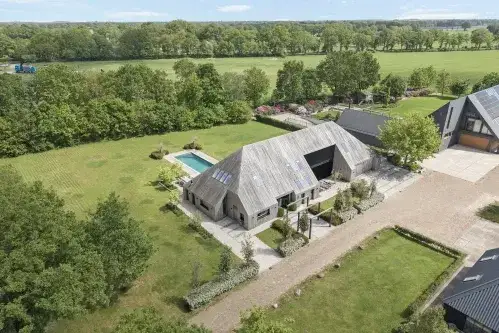
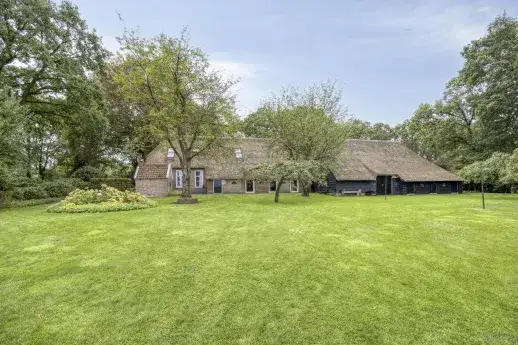
The housing stock is mainly post-war — 51% was built between 1945 and 1990. In addition, the most common type is detached houses (52%).
Over the past year a home for sale in Ansen was listed for an average of €553,494 (€3,626 per m²).
Buurt Ansen has 270 residents. The largest age group is 45 to 65 years (37%).
The housing supply in Ansen is remarkably efficient: 51% has an A, A+ or B label. The average natural gas consumption per household is 1,000 m³ per year.
From Ansen you can on average reach a supermarket at 2.9 km, a GP at 3.4 km, a railway station at 13.4 km, a primary school at 3.5 km (as the crow flies, source: CBS).