Municipality in Zeeland
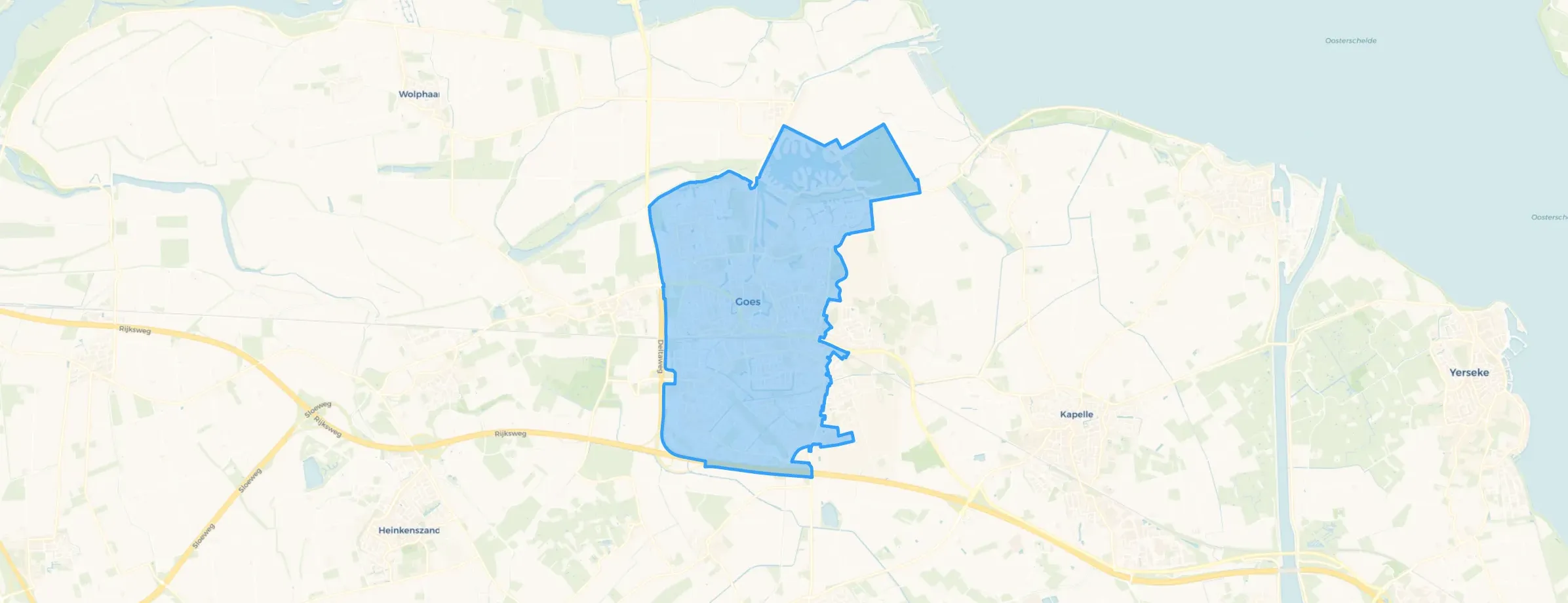
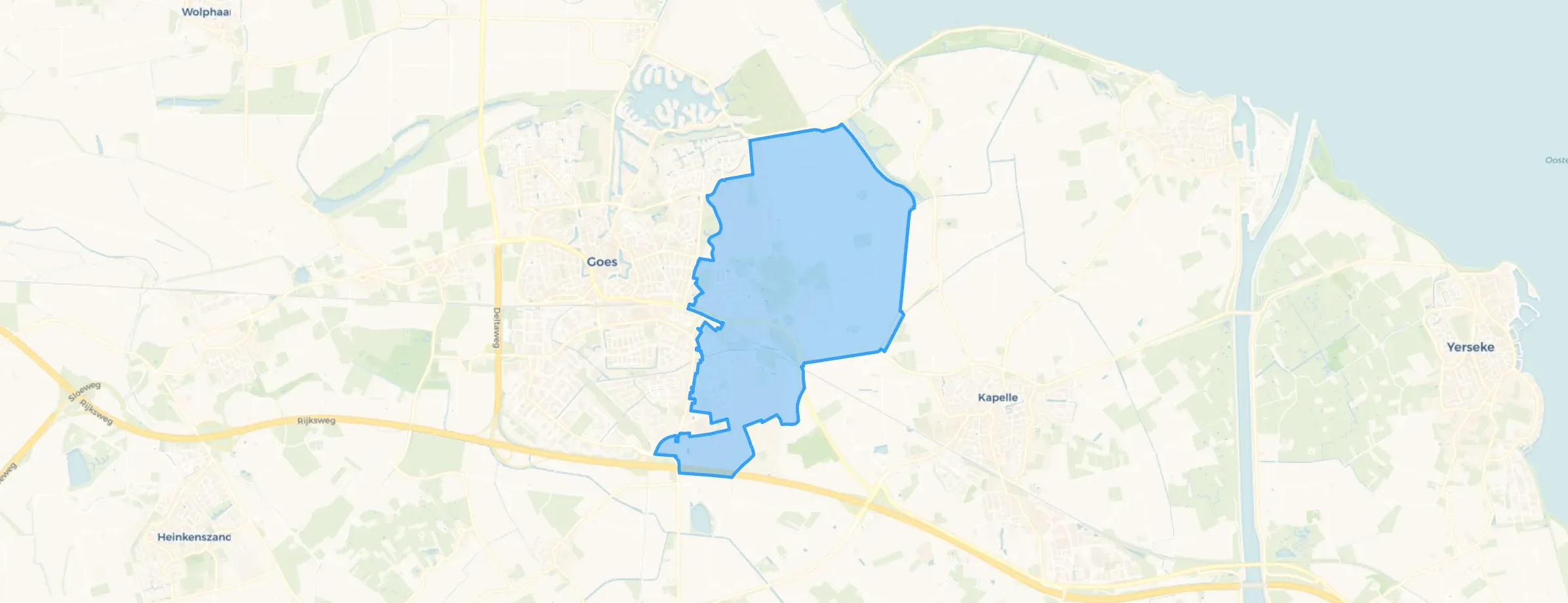
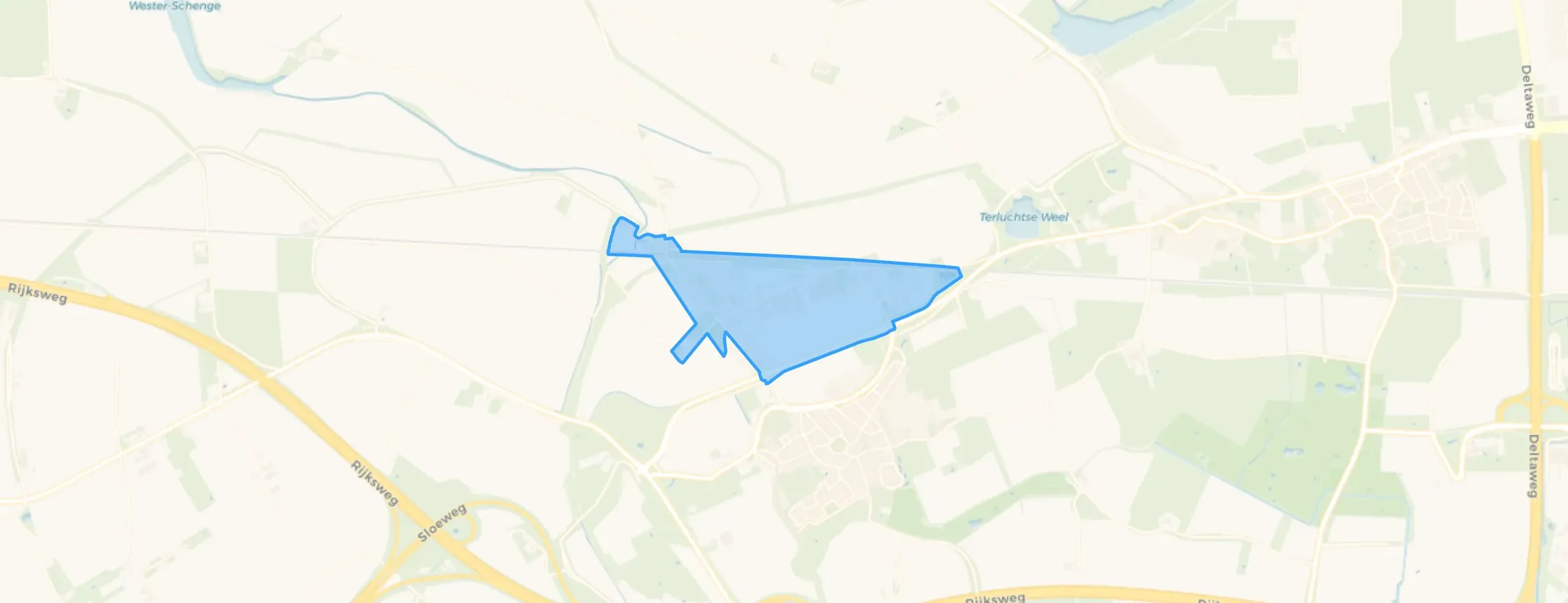
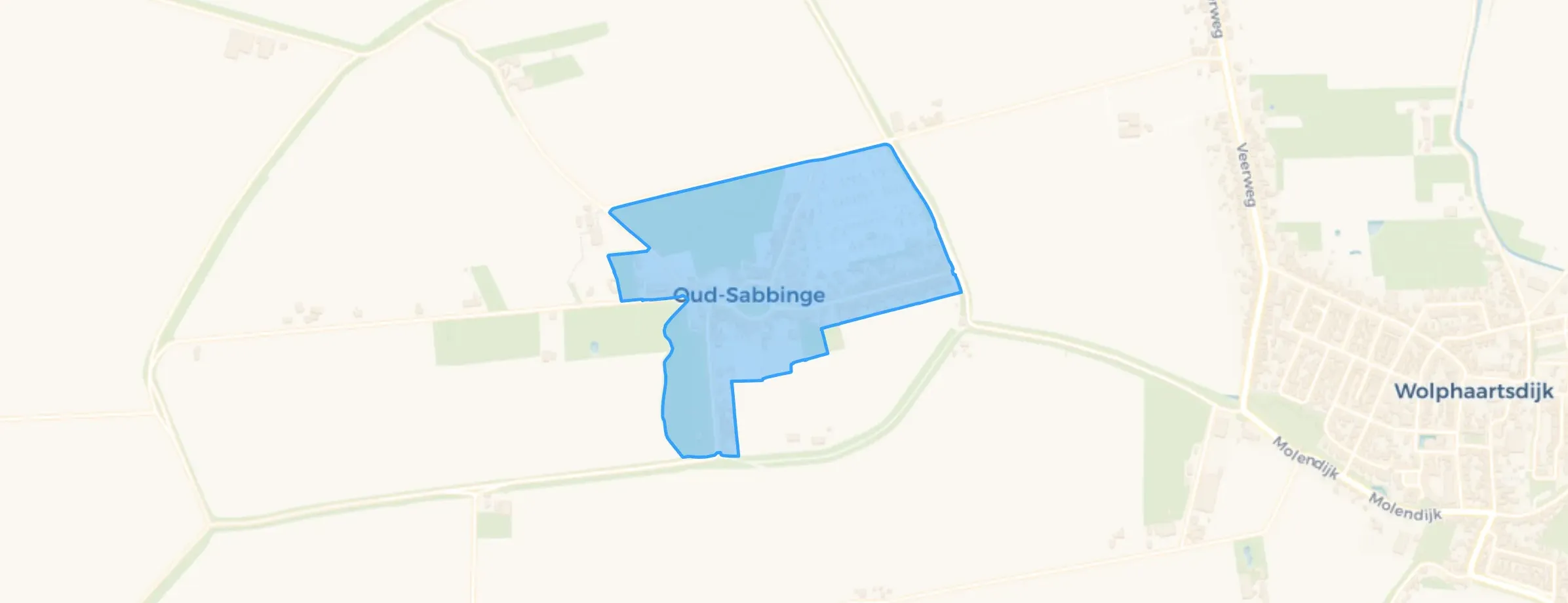
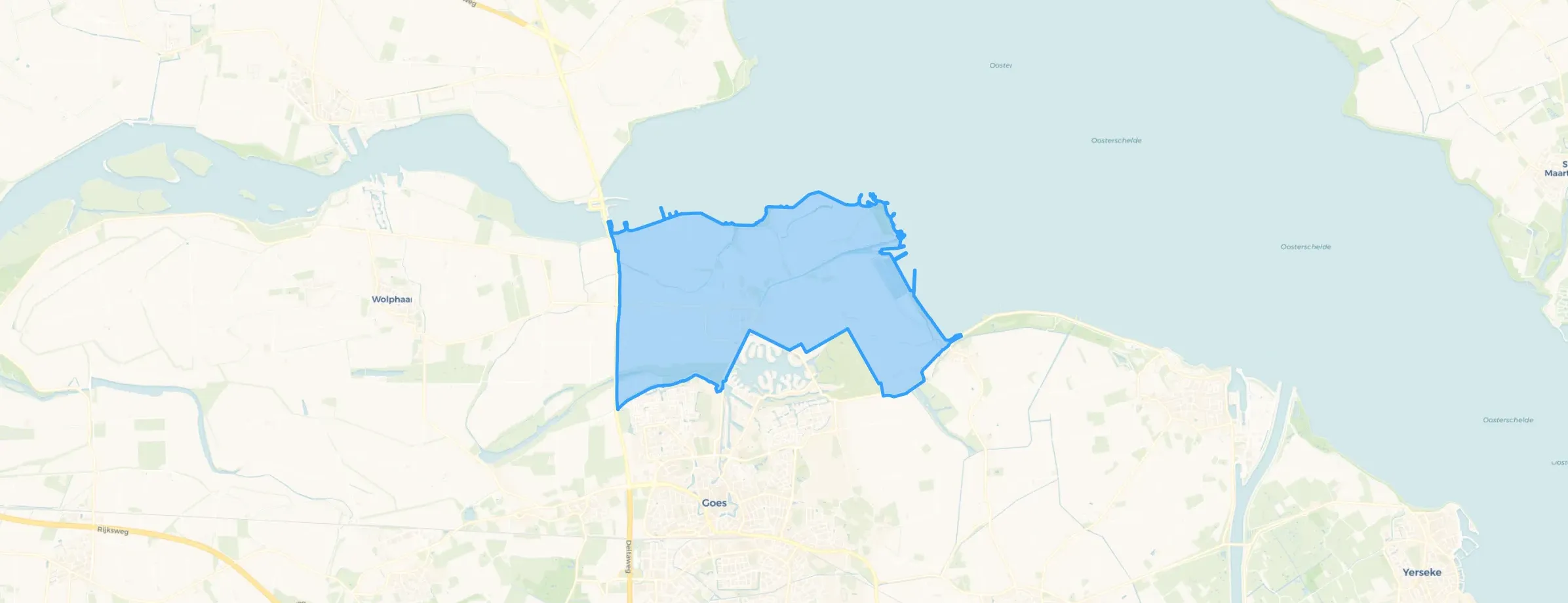
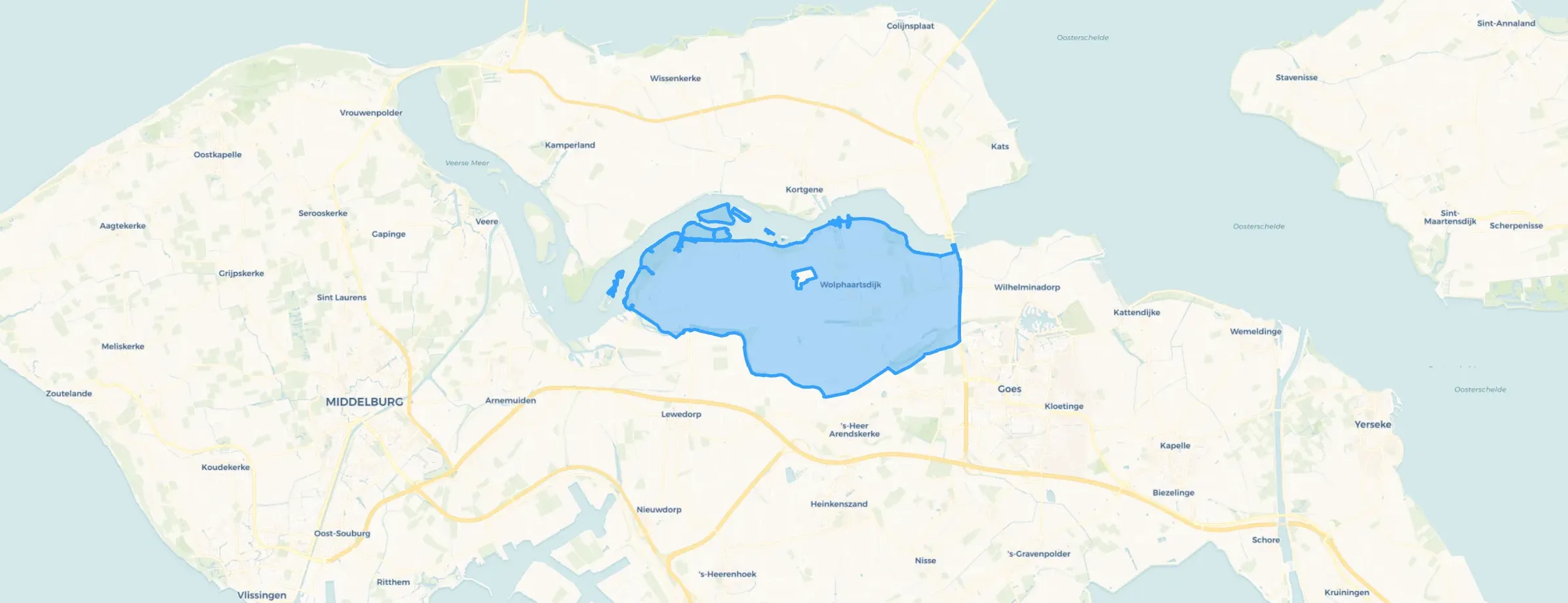
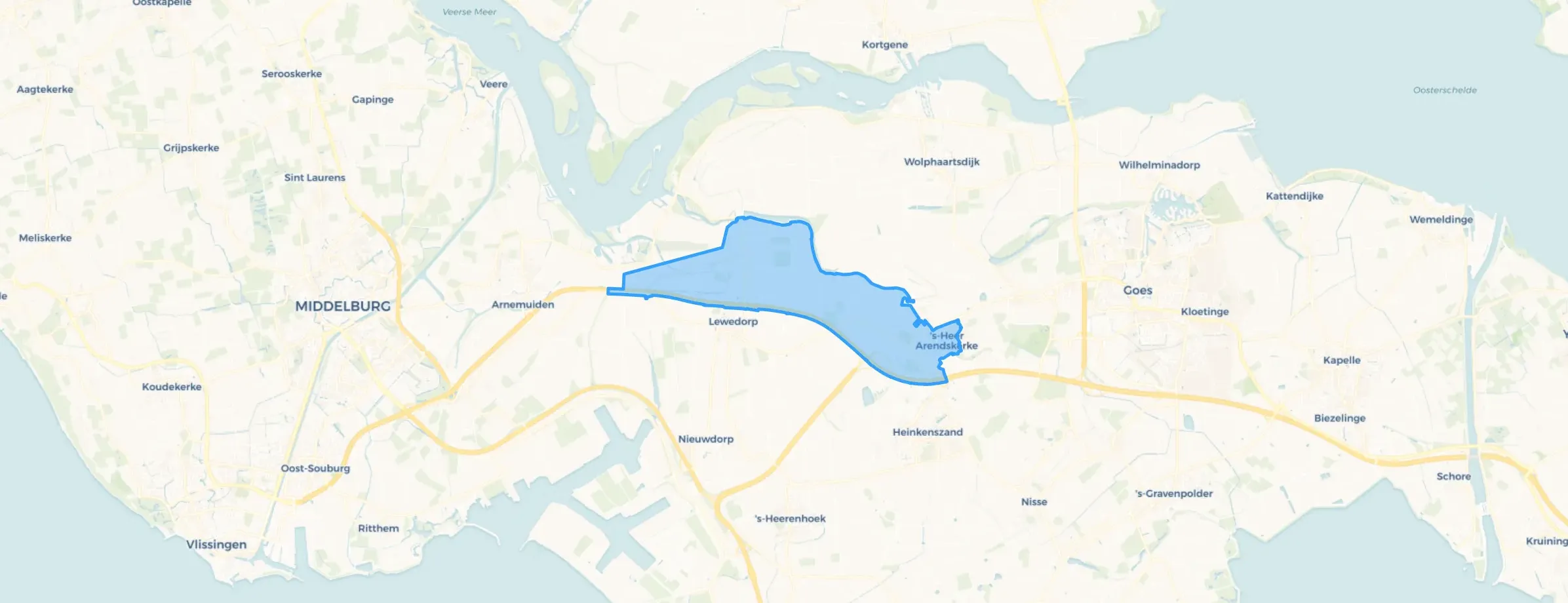
Goes is located in the province of Zeeland The municipality has a total area of 10.192 hectares, of which 9.248 hectares are land and 944 hectares are water. The municipality is coded as GM0664. The postcode area is 4458AA-4481PV.
Goes has 40.120 residents. Of these, 49,6% are men and 50,4% are women. Most residents are 45 to 65 years (27,6%). The other age groups are 24,7% for '65 years or older', 22,9% for '25 to 45 years', 14,1% for '0 to 15 years' and 10,8% for '15 to 25 years'. Of the residents, 44,5% is unmarried, 40,8% is married, 9,0% is divorced and 5,7% is widowed. 31.655 residents originate from the Netherlands, 3.262 come from Europe and 5.203 come from countries outside Europe.
There are 18.830 households in Goes. 40,1% of these are single-person households, 30,7% households without children and 29,1% households with children. The average household size is 2,1 persons. The national average is 2,1 persons.
In Goes there are 32.400 income recipients. The average income per income recipient is €40.300, which is €1.900 (5%) lower than the national average of €42.200. Per resident, the average income is €33.800, which is €1.100 (3%) lower than the national average of €34.900. Most residents of Goes are educated to an intermediate level. 42,9% have an intermediate education (HAVO, VWO or MBO 2-4), 30,2% have a lower education (VMBO or MBO 1) and 26,8% have a university or higher professional education (HBO/WO).
Of the 40.120 residents, around 72% are in paid employment, which amounts to 28.886 people. This is 0% lower than the national average of 72%. The majority of workers are in salaried employment (84%), while 16% are self-employed. In Goes, 30% of residents receive a benefit. The largest group is those receiving a state pension (AOW). 8.990 people receive this benefit.
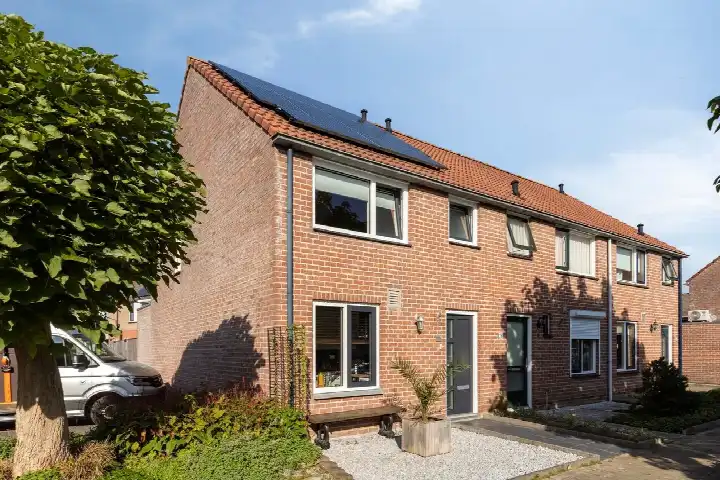
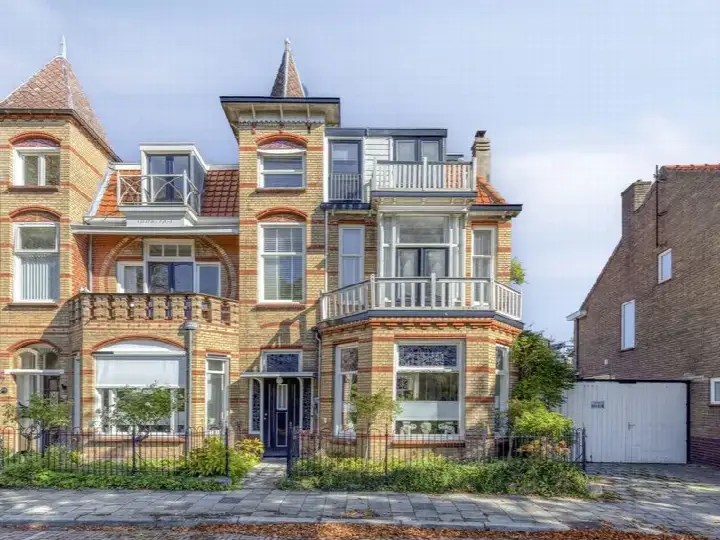
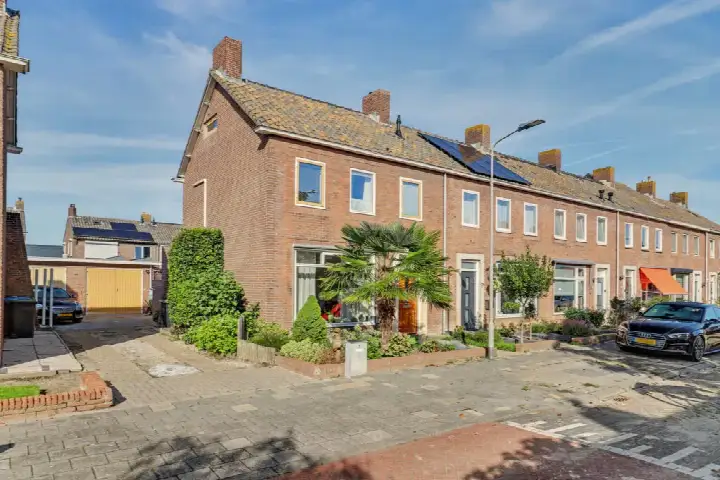
In Goes there are 19.353 homes with an average assessed value (WOZ) of €338.000. Of these, around 95% are occupied and 5% unoccupied. Most homes are owner-occupied. This amounts to 39% rental homes and 61% owner-occupied homes. Of the homes, 61% privately owned, 28% owned by housing associations and 11% owned by other landlords. The most common construction periods in Goes are 1950-1970 (18%) and 1970-1980 (17%).
There are currently no homes for sale in Goes. The most recently listed home is Wijngaardstraat 20A by Neeskens Makelaars op Vastgoed Nederland. No homes were sold in Goes over the past year.
There are currently no homes for rent in Goes. The most recent home is Banierstraat 15, offered by Neeskens Makelaars. No homes were let in Goes over the past year.
No recent rental data available for Goes.
In Goes there are 14.525 addresses with a registered energy label. The most common labels are A (25%), C (24%) and B (17%). On average, an address in Goes uses 2.480 kWh of electricity per year. This is 3% below the national average of 2.550 kWh. With an annual consumption of 750 m³ per address, natural gas consumption is 6% below the national average of 800 m³.
Kleine buurt waar iedereen elkaar kent maar wel met rust laat. Heerlijk rustig.goed centraal gelegen. Scholen en winkels om de hoek. Zo ook het medisch centrum en tandarts.
Auto-translated to English by AIWe've been living here for 15 years with pleasure. Green and quiet. Lots of nature. Good social control, not always in each other's homes, but always helpful. One point of attention: the A256 motorway is causing increasing noise pollution. More and more (freight) traffic, (tourist) route from the Westerscheldetunnel, increasingly heavier cars (battery packs) and outdated joints in the viaduct.
Auto-translated to English by AIThere are high-rise buildings, rental and owner-occupied homes, lots of greenery, a deer park, schools. Residents are mixed in terms of age and nationality. Generally a clean, quiet neighbourhood. In some places less so. People are friendly, tidy and interested in each other. A good neighbourhood to live in.
Auto-translated to English by AIthe neighbourhood is fairly quiet, Hertekamp within walking distance, forest within walking distance, schools nearby, rental and owner-occupied homes, apartments and low-rise buildings. playground etc, lots of variety in people in terms of old and young,
Auto-translated to English by AIVery nice neighbourhood with very nice people, lots of green, parks and playgrounds, plenty of parking, many children in the neighbourhood. There are also shops within walking distance, which is nice. And we as neighbours help each other with all sorts of chores, which is nice when you can help someone. So I think my living environment is great. In my street you are allowed to drive, but only to load and unload, so it is safer for the children and the neighbourhood. The street is also kept clean by the residents; we also trim hedges that are too high and overhang onto the street. So it's nice to live here. The houses are well insulated, just great. Schools are good and safely accessible.
Auto-translated to English by AIQuiet neighbourhood but safe
Auto-translated to English by AIgood neighbourhood, nothing ever happened really
Auto-translated to English by AIIt's quiet and familiar but you have to travel a bit further for amenities
Auto-translated to English by AIOver the past year a home for sale in Goes was listed for an average of €449,511 (€3,703 per m²). That is 15% below the Dutch national average.
A rental home in Goes cost an average of €1,529 per month (€18 per m²). That is 29% below the national average.
Residents give Goes a 8.5 out of 10 based on 16 reviews. Especially nature and greenery (9.1) scores well; amenities (7.9) receives the lowest rating.
The housing supply in Goes is remarkably efficient: 57% has an A, A+ or B label. The average natural gas consumption per household is 750 m³ per year.
From Goes you can on average reach a supermarket at 1.3 km, a GP at 1.3 km, a railway station at 2.6 km, a primary school at 0.8 km (as the crow flies, source: CBS).
Right now you will find 303 homes for sale and 10 homes for rent in Goes.