Neighbourhood in Rotterdam
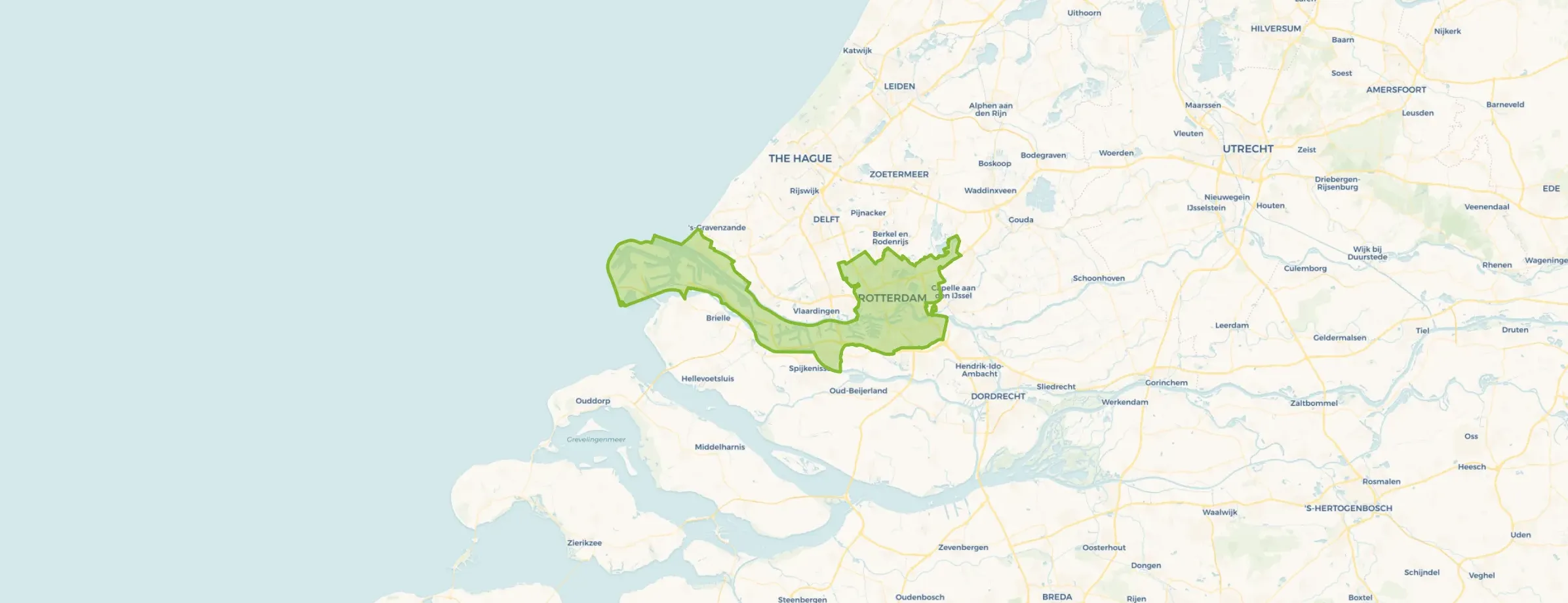
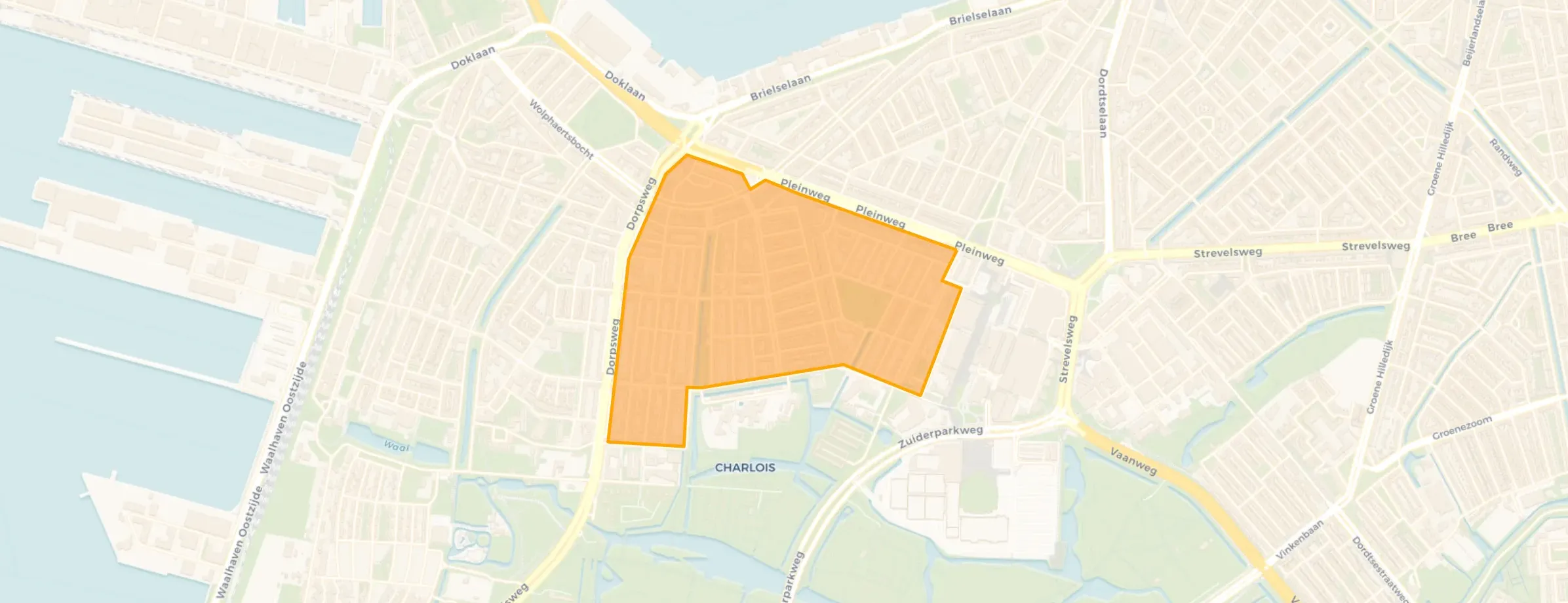
Carnisse is located in the province of Zuid-Holland, in the municipality of Rotterdam, in the district Charlois The neighbourhood has a total area of 59 hectares, of which 59 hectares are land and 0 hectares are water. The neighbourhood is coded as BU05991572. The postcode area is 3083CA-3083ZT.
Six residents rate the neighbourhood as more than satisfactory with a score of 7.0. They describe it as 'familiar', 'Very cosy neighbourhood' and 'Safety'. Aspects such as safety, accessibility, amenities are rated well in this neighbourhood, while community and housing score less well.
Carnisse has 11.285 residents. Of these, 53,7% are men and 46,4% are women. Most residents are 25 to 45 years (41,0%). The other age groups are 22,5% for '45 to 65 years', 14,6% for '0 to 15 years', 13,6% for '15 to 25 years' and 8,2% for '65 years or older'. Of the residents, 70,0% is unmarried, 18,7% is married, 9,3% is divorced and 2,0% is widowed. 2.815 residents originate from the Netherlands, 3.770 come from Europe and 4.700 come from countries outside Europe.
There are 6.325 households in Carnisse. 56,4% of these are single-person households, 18,7% households without children and 24,8% households with children. The average household size is 1,8 persons. The national average is 2,1 persons.
In Carnisse there are 9.100 income recipients. The average income per income recipient is €33.200, which is €9.000 (21%) lower than the national average of €42.200. Per resident, the average income is €26.900, which is €8.000 (23%) lower than the national average of €34.900. Most residents of Carnisse are educated to an intermediate level. 44,7% have an intermediate education (HAVO, VWO or MBO 2-4), 30,3% have a lower education (VMBO or MBO 1) and 25,0% have a university or higher professional education (HBO/WO).
Of the 11.285 residents, around 70% are in paid employment, which amounts to 7.900 people. This is 2% lower than the national average of 72%. The majority of workers are in salaried employment (79%), while 21% are self-employed. In Carnisse, 17% of residents receive a benefit. The largest group is those receiving a state pension (AOW). 790 people receive this benefit.
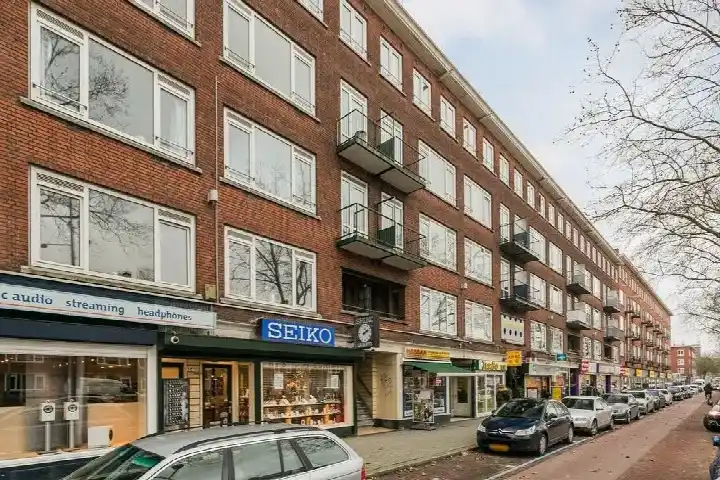
In Carnisse there are 6.137 homes with an average assessed value (WOZ) of €203.000. Of these, around 89% are occupied and 11% unoccupied. Most homes are rental properties. This amounts to 67% rental homes and 33% owner-occupied homes. Of the homes, 33% privately owned, 20% owned by housing associations and 47% owned by other landlords. The most common construction periods in Carnisse are 1925-1950 (65%) and 1950-1970 (13%).
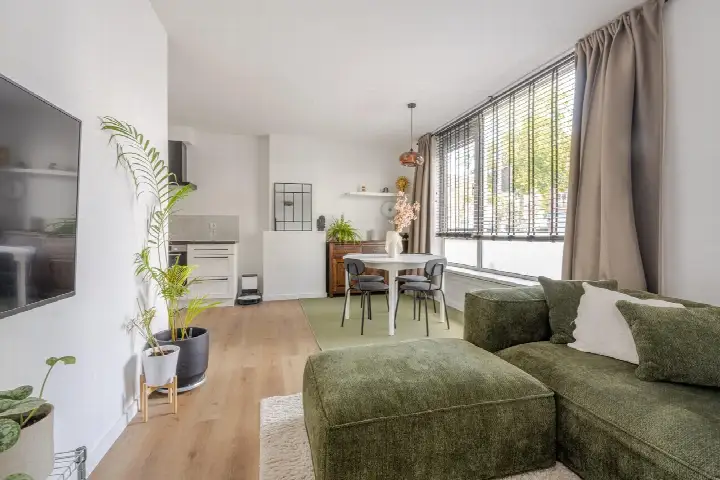
There are currently 85 homes for sale in Carnisse. The most recently listed home is Robbenoordplein 5A by Zuidstad Makelaars. Over the past year, 629 homes were sold in Carnisse. On average, a home was sold within 60 days.
The average asking price for a home for sale in Carnisse over the past year was €246.722. This is 22% higher than the average assessed value (WOZ) of €203.000. The average asking price per m² of plot is €3.682.
There are 10 homes for rent in Carnisse. The most recent home is Pleinweg 142C, offered by ViaDaan op Pararius. Over the past year, 131 homes were let in Carnisse. On average, a listing was let within 23 days.
The average rent for a rental home in Carnisse over the past year was €1.393 per month. Per m² of plot area that is €24 per month.
In Carnisse there are 4.413 addresses with a registered energy label. The most common labels are C (28%), D (17%) and G (13%). On average, an address in Carnisse uses 1.920 kWh of electricity per year. This is 25% below the national average of 2.550 kWh. With an annual consumption of 750 m³ per address, natural gas consumption is 6% below the national average of 800 m³.
I was born here in 1962, my parents lived in Nootdorp, also known as Brabantse dorp, where Zuidplein now stands. I have lived here for 62 years and still feel it is safe and familiar. Over the years I have seen many changes; more culture and diversity have been added, which greatly benefits the neighbourhood. Also, with the arrival of housing in the area, there has been more attention for the residents. Now I see the neighbourhood becoming more beautiful again because of much new construction, the renovated Zuidplein and the renewed bus station, making it easier for everyone to reach. Zuiderpark has become a beautiful place. It is wonderful to see how much has changed over all these years. As for hygiene, some improvement is needed, but this is largely up to the residents themselves; we must do this together to get a cleaner neighbourhood. Despite my concerns about hygiene, I will never leave; this is my home.
Auto-translated to English by AII was born here in 1962, over the years a lot has changed, more community centres have been added where residents can go daily so they are not alone. What I like about the neighbourhood is that you know everyone and if something is wrong, you are always helped. It would be nice if there could be more social housing, there are too few homes for young people, causing them to have to live at home longer.
Auto-translated to English by AIThe Carnissen neighbourhood is a very quiet area, but lately a lot of things have been happening, like recently a house caught fire. I happened to live right next to that house and my house almost caught fire too. I think the neighbourhood should be safer because there are also a lot of young children.
Auto-translated to English by AIRotterdam Zuid is always portrayed as some dangerous neighbourhood, but I strongly disagree. I've been living here for a year and a half now, my boyfriend even longer, and I have never felt unsafe. Yes, of course things happen, but you don't get involved. And that happens everywhere. I came from a quiet village and was afraid it would be a big transition, but now, a year and a half later, I'm very happy I live here. We have a nice balcony overlooking a long street and we recognise all the dogs in the neighbourhood because we see them out walking with their owners every day. The only downside I can think of is that there is not enough space to dispose of your waste, so a lot of rubbish and other things are left next to the bins, and then the birds tear it apart, everything ends up everywhere, and no one cleans it up.
Auto-translated to English by AIAffordable neighbourhood with decent amenities. The area could be a bit cleaner and more pleasant.
Auto-translated to English by AIThe price you pay to live here is proportionate to what you get; you don't pay much but you do live in a decent house. People here just aren't very connected to the neighbourhood, everyone lives their own life and leaves each other alone. Some streets could do with a makeover.
Auto-translated to English by AIThe housing stock is mainly post-war — 50% was built between 1945 and 1990. In addition, the most common type is flats (95%).
Over the past year a home for sale in Carnisse was listed for an average of €244,734 (€4,031 per m²). That is 54% below the Dutch national average.
A rental home in Carnisse cost an average of €1,414 per month (€18 per m²). That is 35% below the national average.
Residents give Carnisse a 7.0 out of 10 based on 6 reviews. Especially safety (8.7) scores well; housing (6.0) receives the lowest rating.
Buurt Carnisse has 11,285 residents. The largest age group is 25 to 45 years (41%). Notably, 56% of the households are single-person households.
A considerable share of the supply in Carnisse is less efficient: 33% has an E, F or G label. The average natural gas consumption per household is 750 m³ per year.
From Carnisse you can on average reach a supermarket at 0.4 km, a GP at 0.5 km, a railway station at 3.8 km, a primary school at 0.6 km (as the crow flies, source: CBS).
Right now you will find 92 homes for sale and 12 homes for rent in Carnisse.