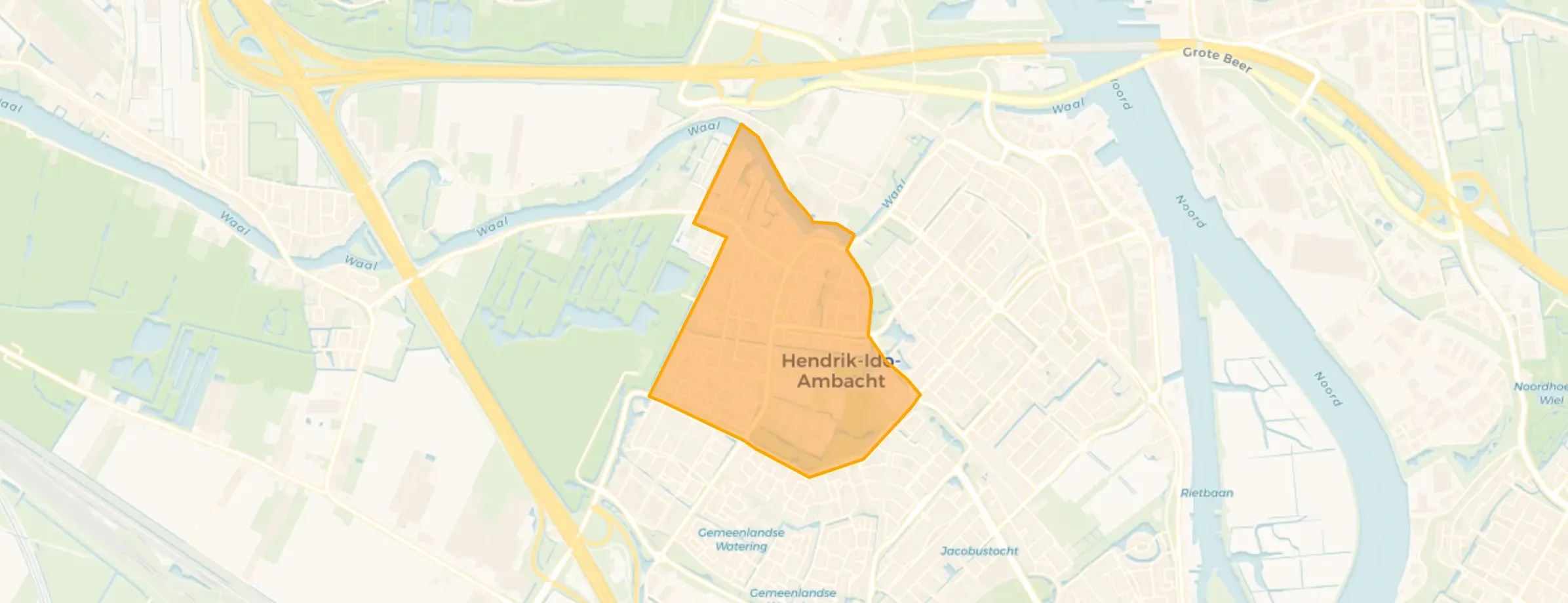
Neighbourhood in Hendrik-Ido-Ambacht
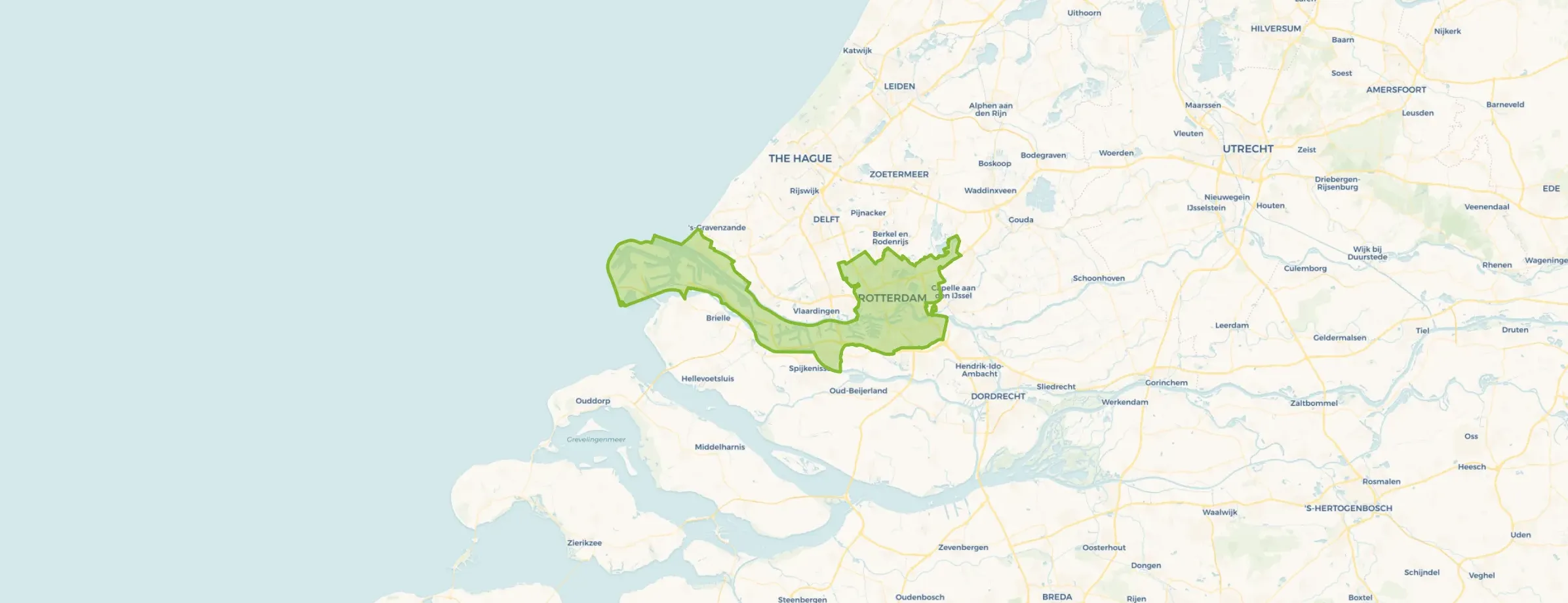
Dorp is located in the province of Zuid-Holland, in the municipality of Hendrik-Ido-Ambacht, in the district Centrum The neighbourhood has a total area of 110 hectares, of which 104 hectares are land and 7 hectares are water. The neighbourhood is coded as BU05310101. The postcode area is 3341BD-3343LG.
Three residents rate the neighbourhood as more than satisfactory with a score of 6.9. They describe it as 'Christian', 'Few social contacts in the neighbourhood' and 'No longer a pleasant neighbourhood'. Residents experience big differences in this neighbourhood: greenery, accessibility, cleanliness receive high ratings, while community and amenities are mentioned as weak points.
Dorp has 4.835 residents. Of these, 49,1% are men and 50,9% are women. Most residents are 25 to 45 years (26,4%). The other age groups are 24,8% for '45 to 65 years', 20,5% for '0 to 15 years', 16,2% for '65 years or older' and 12,1% for '15 to 25 years'. Of the residents, 45,4% is unmarried, 44,4% is married, 5,8% is divorced and 4,3% is widowed. 4.100 residents originate from the Netherlands, 195 come from Europe and 540 come from countries outside Europe.
There are 1.915 households in Dorp. 26,9% of these are single-person households, 27,9% households without children and 45,2% households with children. The average household size is 2,5 persons. The national average is 2,1 persons.
In Dorp there are 3.800 income recipients. The average income per income recipient is €41.600, which is €600 (1%) lower than the national average of €42.200. Per resident, the average income is €32.400, which is €2.500 (7%) lower than the national average of €34.900. Most residents of Dorp are educated to an intermediate level. 46,4% have an intermediate education (HAVO, VWO or MBO 2-4), 27,0% have a university or higher professional education (HBO/WO) and 26,7% have a lower education (VMBO or MBO 1).
Of the 4.835 residents, around 77% are in paid employment, which amounts to 3.723 people. This is 5% higher than the national average of 72%. The majority of workers are in salaried employment (86%), while 14% are self-employed. In Dorp, 20% of residents receive a benefit. The largest group is those receiving a state pension (AOW). 700 people receive this benefit.
In Dorp there are 1.936 homes with an average assessed value (WOZ) of €396.000. Of these, around 97% are occupied and 3% unoccupied. Most homes are owner-occupied. This amounts to 23% rental homes and 77% owner-occupied homes. Of the homes, 76% privately owned, 20% owned by housing associations and 4% owned by other landlords. The most common construction periods in Dorp are 1950-1970 (75%) and 1990-2000 (8%).
There are currently 17 homes for sale in Dorp. The most recently listed home is Weteringsingel 33 by Van Spronsen Makelaars | NVM-Qualis. Over the past year, 103 homes were sold in Dorp. On average, a home was sold within 66 days.
The average asking price for a home for sale in Dorp over the past year was €645.029. This is 63% higher than the average assessed value (WOZ) of €396.000. The average asking price per m² of plot is €4.216.
There are currently no homes for rent in Dorp. Over the past year, 2 homes were let in Dorp. On average, a listing was let within 18 days.
No recent rental data available for Dorp.
In Dorp there are 1.148 addresses with a registered energy label. The most common labels are C (28%), A (23%) and D (16%). On average, an address in Dorp uses 2.710 kWh of electricity per year. This is 6% above the national average of 2.550 kWh. Natural gas consumption, at 850 m³ per year, is 6% above the national average of 800 m³.
It's a nice neighbourhood with quite friendly people. There are more elderly than young people and many Christians. It's a mix of poor and rich. In one street there are terraced houses and a few metres further there are large beautiful houses. For the rest, there is a lot of nature and even a large natural playground, but that's about it. The primary school education here is not the best; not much is done and the teachers themselves underestimate the pupils. The secondary school is quite far away and the vocational colleges/universities of applied sciences are even further. On the one hand that's nice because it's nice and quiet. But for the students it's sometimes annoying, especially the vocational colleges/universities of applied sciences.
Auto-translated to English by AIThere are many families with young children, but otherwise there is little cosiness in the neighbourhood.
Auto-translated to English by AIVery restless, emergency services hard to reach, plenty of green though, shops not nearby, since the separation from the plastic it has all become very unhygienic, in terms of safety a lot has been renovated but it has actually gone backwards rather than forwards.
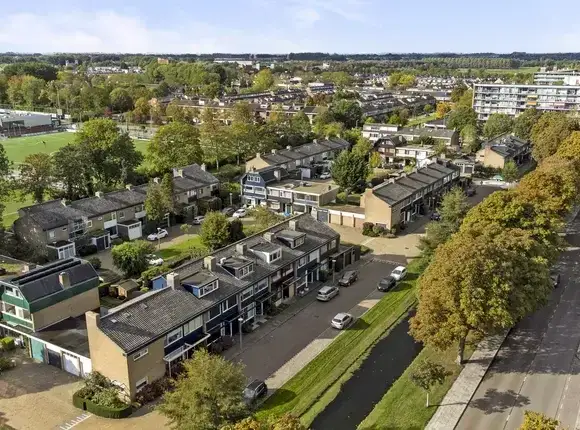
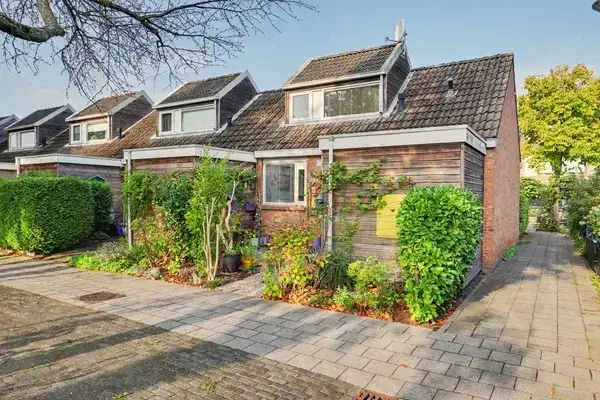
Auto-translated to English by AIThe housing stock is mainly post-war — 89% was built between 1945 and 1990. In addition, the most common type is terraced houses (49%).
Over the past year a home for sale in Dorp was listed for an average of €674,147 (€4,031 per m²).
Residents give Dorp a 6.9 out of 10 based on 3 reviews. Nature and greenery stands out with a 8.7; amenities lags behind with a 5.3.
Buurt Dorp has 4,835 residents. Many families: 45% of the households have children.
From Dorp you can on average reach a supermarket at 0.5 km, a GP at 0.5 km, a railway station at 4.8 km, a primary school at 0.5 km (as the crow flies, source: CBS).
Right now you will find 19 homes for sale in Dorp.