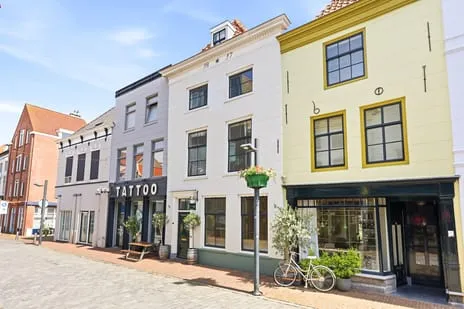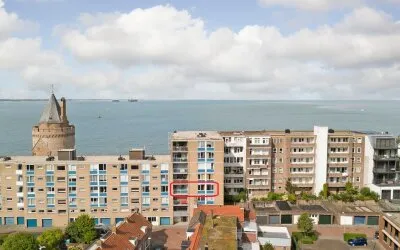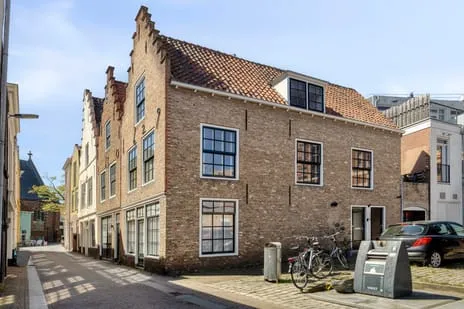
Oude Binnenstad, Vlissingen
 Neighbourhood
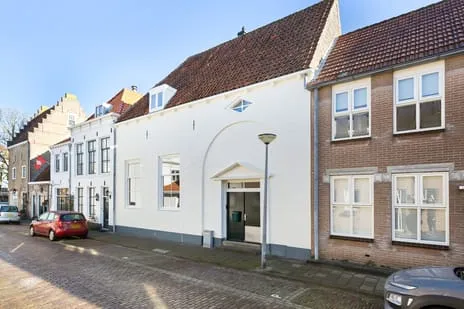
This end-of-terrace house on Vrouwestraat dates from 1629, making it one of the oldest homes in Vlissingen. With 164 m² of floor space, it is a third larger than the average home in the neighbourhood. The price of €415,000 is on the high side compared to the neighbourhood median of €350,000, but the size and character justify it. For context, end-of-terrace houses in Vlissingen typically sell for around €3,469 per m².
The Oude Binnenstad neighbourhood is the historic heart of Vlissingen, with a dense urban feel (address density 2,222 per km²). It is a mixed area: many one-person households (1,550 out of 2,590 homes) and a significant share of residents aged 65 and over (1,485). The housing stock is old, 47% built before 1945, and energy labels tend to be low, with 47% at D or below. No resident reviews are available for this neighbourhood.
For daily groceries, Albert Heijn is just around the corner and Aldi is similarly close. Two primary schools are within a five-minute walk: Archipelschool Frans Naerebout and Ichtusschool, both. A restaurant is on your doorstep, and a park or public garden is a ten-minute walk away. The train station is 4.3 km from the home, so you would cycle or drive.
At the time of writing, the home is listed through several channels, including Aerssens & Partners makelaars en taxateurs.
Details of this home

Vrouwestraat 7, Vlissingen
Data from Oude Binnenstad
Data from Oude Binnenstad
13 within 5 km



22 within 5 km
About Vrouwestraat 7, Vlissingen
The asking price of €415,000 is above the neighbourhood median of €350,000 and the average sold price of €353,330. However, this home is 164 m², which is 33% larger than the neighbourhood average of 123 m². The price per m² works out to about €2,530, which is below the neighbourhood average of €3,469 per m², so you are getting more space for your money.
The home has energy label E. This is common for older properties in the neighbourhood, where 47% of homes have a label of D or lower. Label E means the home is not very energy-efficient, so heating costs are likely to be higher than in a modern home. You may want to consider improvements such as insulation or double glazing.
The house was built in 1629, making it over 390 years old. In the neighbourhood, 47% of homes were built before 1945, so an old building is typical. Older homes often have character features like high ceilings or original details, but they may also require more maintenance, especially regarding the roof, foundations, and energy efficiency.
The Oude Binnenstad is a dense, historic area with many one-person households and a large share of older residents. It is very walkable: supermarkets, restaurants, and a park are all within a ten-minute walk. The train station is 4.3 km away, so a bike or car is needed for longer journeys. The area has a relatively high crime rate (375 incidents), which is something to be aware of.
With 164 m² of floor area, this home is 33% larger than the neighbourhood average of 123 m². The plot is 80 m², which is typical for a historic terraced house. The extra space is a notable advantage in a neighbourhood where many homes are smaller.
Two primary schools are within a five-minute walk: Archipelschool Frans Naerebout and Ichtusschool, both at 265 m. Other primary schools within 1.2 km include Archipelschool De Branding, Iqra, and RK Basisschool St. Jozef. For secondary education, the nearest school is 3.5 km away.
The train station is 4.3 km from the home. This is a 10-15 minute bike ride or a short drive. There is no bus distance listed, but the station is not within walking distance for most people.
The listing does not mention parking. In a dense historic centre like Oude Binnenstad, on-street parking may be limited and possibly permit-based. You would need to check with the municipality for specific parking arrangements.
6 homes in the neighbourhood Oude Binnenstad

Buurtje.nl uses cookies to make the site work and to improve it. In doing so, we process data such as your IP address and the pages you visit.
We use this data for three purposes: running the website (functional), measuring visits so we can improve Buurtje.nl (analytics), and — if you allow it — tailoring ads to your interests (marketing).
How we handle your data is described in our privacy policy. You can change your preferences at any time via 'Cookie preferences' at the bottom of every page.
Choose per category which cookies we may place. Read more in our privacy policy.