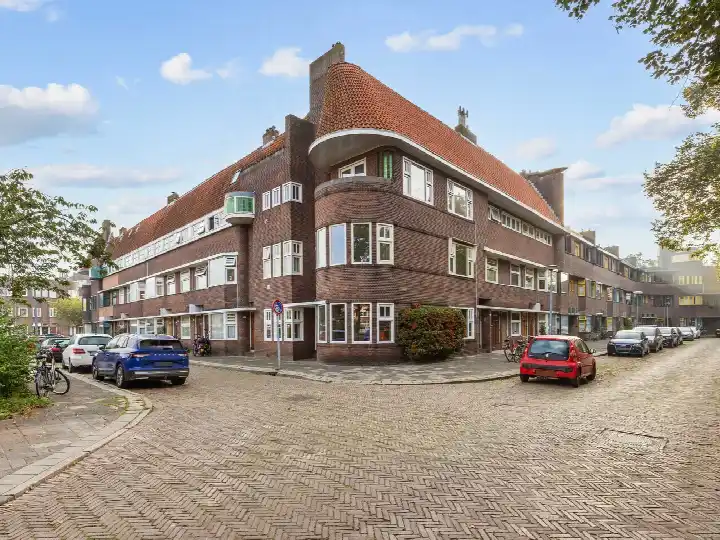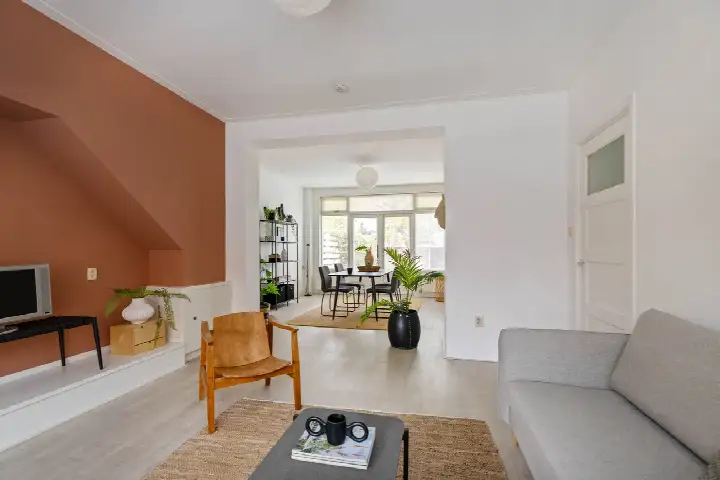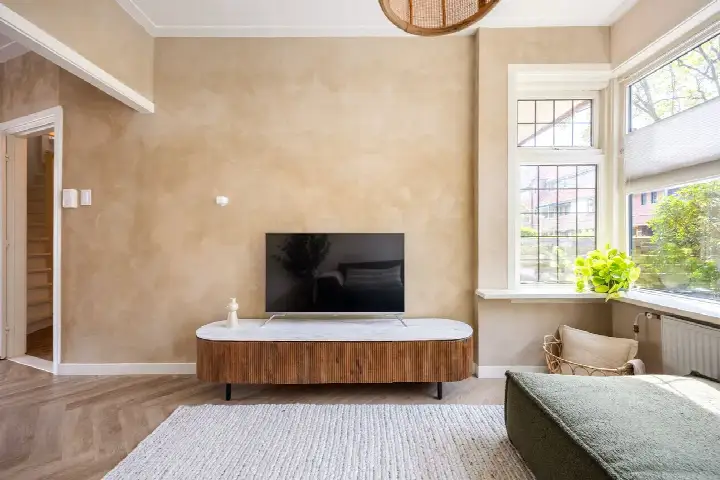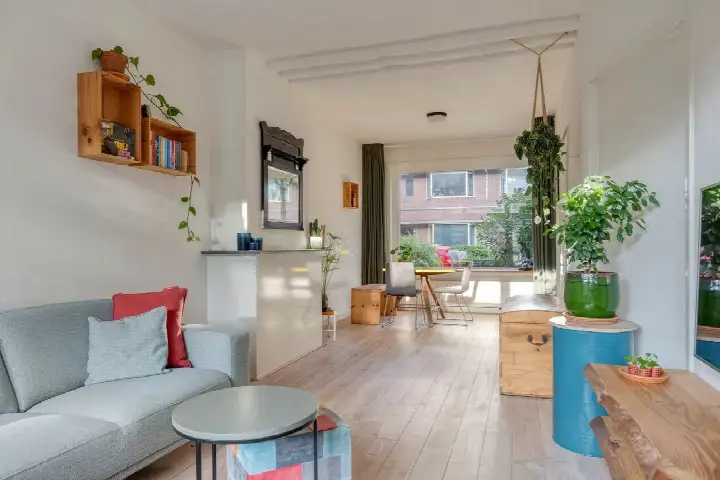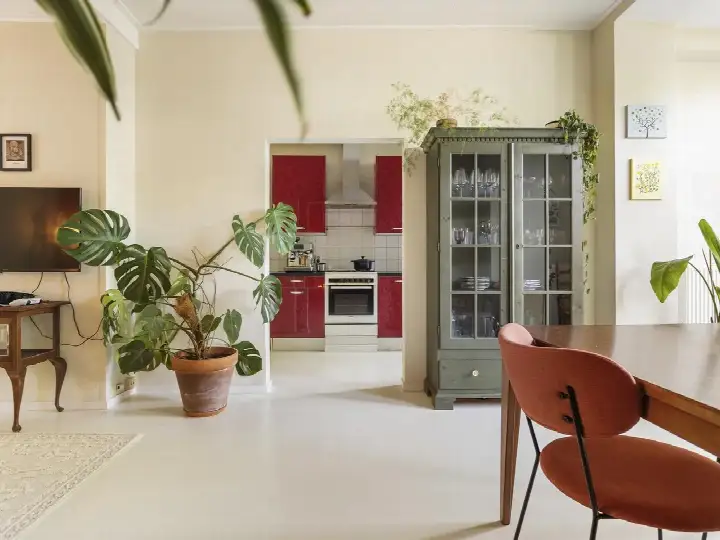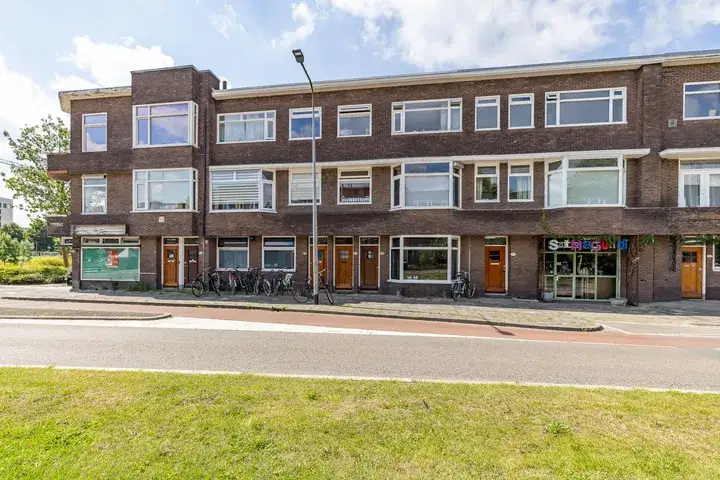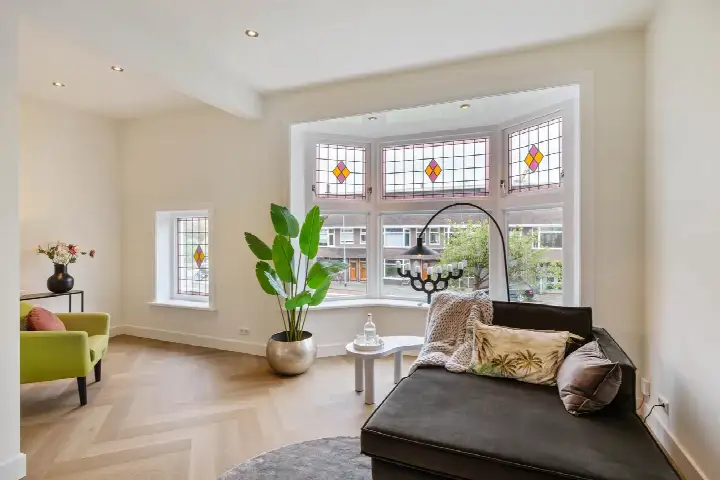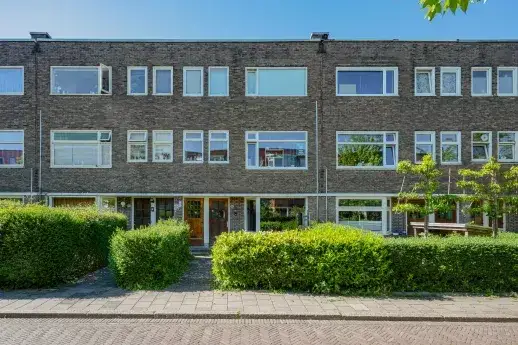





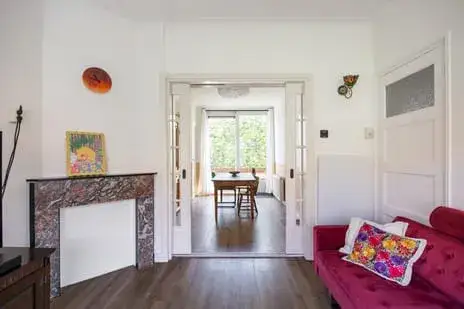

A pre-war apartment with character
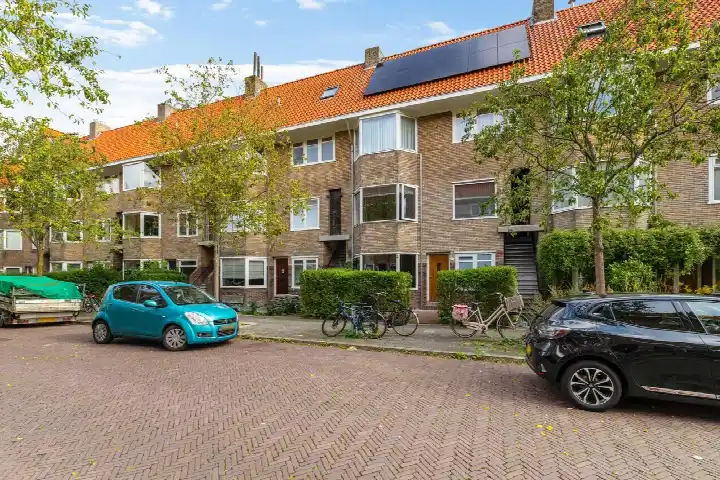
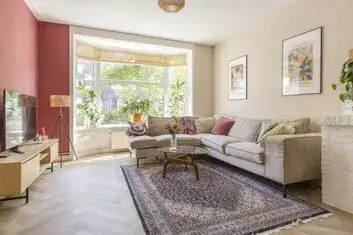
This 1936 apartment on Ambonstraat sits in the Indische buurt, a lively part of Groningen's Oud-Noord. With 88 m² and an energy label C, it's a solid home that balances original charm with modern efficiency. The last known asking price of €325,000 was keen compared to the neighbourhood average of €353,480, making it a fair entry point for apartments in Groningen. This home has not been online since 28 July 2026.
The Indische buurt
The Indische buurt is a diverse, urban neighbourhood with a strong sense of community. One resident calls it a "lovely neighbourhood" and says: "I feel at home in this neighbourhood. Very diverse, safe and easily accessible." Another describes it as "safe and relaxing" with "lots of nature, close to the centre but very quiet." A third review notes it's a "deprived neighbourhood" with "generally low income." Based on three reviews, the average score is 7.87 out of 10. The area is densely populated, with many single-person households and a young demographic. For more on the area, see the neighbourhood Indische buurt.
Life on the street
Your daily routine is well covered here. For groceries, Albert Heijn is on your doorstep, Jumbo and Aldi are just around the corner, and Lidl and PLUS are a couple of streets away. For school runs, Openbare Basisschool Karrepad is a five-minute walk, De Kleine Wereld is a couple of streets away, and St. Franciscus is a ten-minute walk. The municipality Groningen offers a vibrant city life with parks, restaurants, and a train station a ten-minute walk away.
Source
When this home was still on the market, it was listed only via Reinders Makelaars en Adviseurs.
This summary was generated with AI and may contain errors. Always verify the details with the provider.
Features
Details of this home
Transfer
Price

Areas and volume
 Insure your home and belongingsGet insured
Layout
Construction
Frequently asked questions
About Ambonstraat 21B, Groningen
Was €325,000 a fair price for this apartment?
The asking price of €325,000 was below the neighbourhood average of €353,480 and the median of €340,000. Given the 88 m² floor area, the price per m² worked out to about €3,693, which was significantly lower than the neighbourhood average of €5,571 per m². This made the listing priced for the Indische buurt.
What is the energy label and what does it mean?
The apartment has an energy label C. This means it has reasonable insulation and energy efficiency, but not the highest standards. In the neighbourhood, about 21% of homes have label C, while 38% have a label D or lower.
How far is the train station?
The nearest train station is 1.3 km away, which is about a 15-minute walk or a short cycle ride. This makes it convenient for commuting to other parts of Groningen or further afield.
What is the neighbourhood like in terms of safety?
The Indische buurt has a mixed reputation. One resident describes it as "safe and relaxing," while another calls it a "deprived neighbourhood." The total number of crimes recorded in the area is 475, which is relatively high for a neighbourhood of 8,440 residents. However, many residents feel safe and appreciate the diversity and accessibility.
Are there parks or green spaces nearby?
Yes, a park or public garden is just 0.2 km away, literally on your doorstep. This makes it easy to enjoy nature without leaving the neighbourhood, as one resident noted: "lots of nature, close to the centre but very quiet."
What is the typical buyer profile in this area?
The neighbourhood has a young demographic, with 37% of residents aged 25-45 and 27% aged 15-25. Many households are single-person (51%), and only 15% of homes are owner-occupied. This suggests a mix of students, young professionals, and some families, though families with children make up only 9% of households.