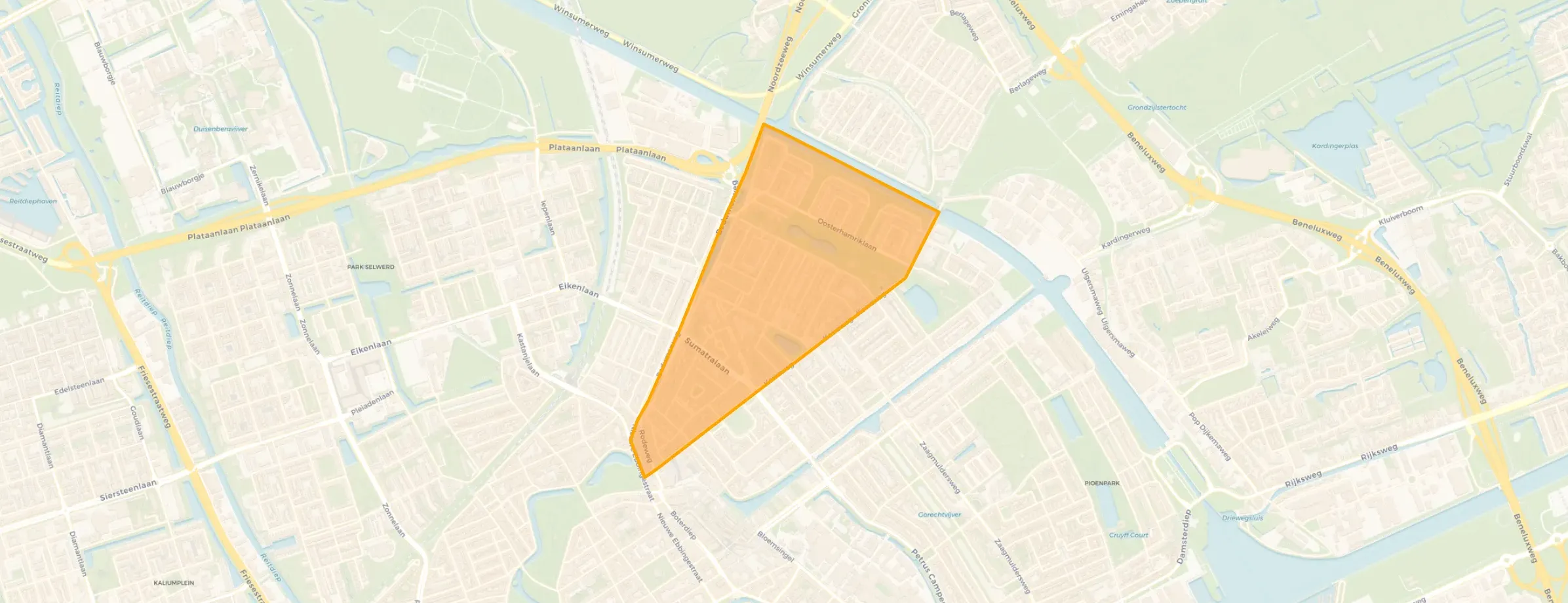
Neighbourhood in Groningen
Indische buurt is located in the province of Groningen, in the municipality of Groningen, in the district Oud-Noord The neighbourhood has a total area of 72 hectares, of which 69 hectares are land and 2 hectares are water. The neighbourhood is coded as BU00140301. The postcode area is 9715AA-9715TR.
Ten residents rate the neighbourhood as good with a score of 7.9. They describe it as 'Deprived neighbourhood', 'Lovely neighbourhood' and 'Safe and relaxing'. Opinions in this neighbourhood are divided, but on the whole all aspects are rated fairly evenly.
Indische buurt has 8.525 residents. Of these, 50,5% are men and 49,5% are women. Most residents are 25 to 45 years (37,7%). The other age groups are 26,3% for '15 to 25 years', 17,6% for '45 to 65 years', 9,4% for '0 to 15 years' and 8,9% for '65 years or older'. Of the residents, 79,7% is unmarried, 11,4% is married, 7,2% is divorced and 1,6% is widowed. 5.250 residents originate from the Netherlands, 980 come from Europe and 2.295 come from countries outside Europe.
There are 5.880 households in Indische buurt. 71,5% of these are single-person households, 16,0% households without children and 12,5% households with children. The average household size is 1,4 persons. The national average is 2,1 persons.
In Indische buurt there are 7.200 income recipients. The average income per income recipient is €29.200, which is €13.000 (31%) lower than the national average of €42.200. Per resident, the average income is €25.700, which is €9.200 (26%) lower than the national average of €34.900. Most residents of Indische buurt are educated to an intermediate level. 41,3% have an intermediate education (HAVO, VWO or MBO 2-4), 39,6% have a university or higher professional education (HBO/WO) and 19,1% have a lower education (VMBO or MBO 1).
Of the 8.525 residents, around 63% are in paid employment, which amounts to 5.371 people. This is 9% lower than the national average of 72%. The majority of workers are in salaried employment (90%), while 10% are self-employed. In Indische buurt, 24% of residents receive a benefit. The largest group is those receiving a social assistance benefit. 830 people receive this benefit.
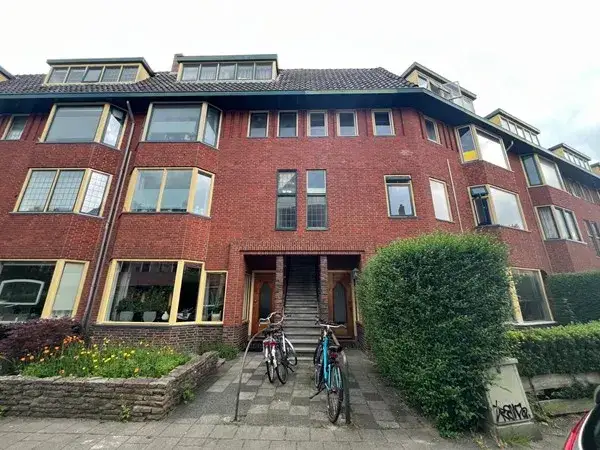
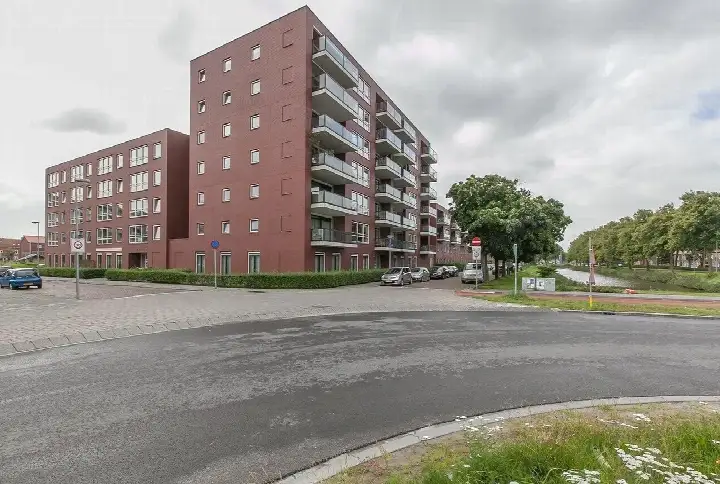
In Indische buurt there are 4.901 homes with an average assessed value (WOZ) of €238.000. Of these, around 97% are occupied and 3% unoccupied. Most homes are rental properties. This amounts to 84% rental homes and 16% owner-occupied homes. Of the homes, 16% privately owned, 60% owned by housing associations and 24% owned by other landlords. The most common construction periods in Indische buurt are 1925-1950 (33%) and 1900-1925 (21%).
There are currently no homes for sale in Indische buurt. The most recently listed home is Korreweg 74A by Makelaardij Met Bauke. No homes were sold in Indische buurt over the past year.
There are currently no homes for rent in Indische buurt. The most recent home is Ceramstraat 20A, offered by Gruno Verhuur. No homes were let in Indische buurt over the past year.
No recent rental data available for Indische buurt.
In Indische buurt there are 4.251 addresses with a registered energy label. The most common labels are A (39%), C (20%) and D (13%). On average, an address in Indische buurt uses 1.660 kWh of electricity per year. This is 35% below the national average of 2.550 kWh. With an annual consumption of 730 m³ per address, natural gas consumption is 9% below the national average of 800 m³.
Old neighbourhood, generally low income.
Auto-translated to English by AII feel at home in this neighbourhood. Very diverse, safe and easily accessible.
Auto-translated to English by AINice neighbourhood with lots of nature, close to the centre but very quiet.
Auto-translated to English by AII haven't lived here very long, but I'm especially a fan of the green surroundings and walking routes. I was also surprised that people from my block like to chat and know each other reasonably well. On the street I don't always feel very safe, because there are relatively many people with (visible) mental health and/or drug problems. Yet after living here for a short time, I noticed that I need to worry less than I thought and most people are very friendly here. I am less of a fan of the amenities here; only the Plus supermarket is in the neighbourhood, but that's not necessarily very affordable for everyone. Furthermore, there isn't much within walking distance. I also notice that, for example, on my street there is quite a lot of litter (now also a lot of old fireworks) and the gardens are generally not maintained. This could certainly be improved (:
Auto-translated to English by AInice park, close to the centre, two supermarkets nearby, also two hairdressers, community centre with many activities and cheap lunch/dinner around the corner. Second-hand clothing shop, flower shop and a few other shops, including two cafeterias, a pizza delivery, in short plenty of amenities. And also just over 5 minutes by bike from the centre.
Auto-translated to English by AIHave been living here for 5 years, very pleasant. Lots of nice people. Good for starters.
Auto-translated to English by AISchools, shops, supermarkets, everything is here in the neighbourhood.
Auto-translated to English by AIMany different people live here, from students to various cultures, but also the cargo bike mothers, etc. That makes this neighbourhood lively and cosy.
Auto-translated to English by AIThe housing stock is predominantly pre-war — 78% of the homes date from before 1945. In addition, the most common type is flats (88%).
Over the past year a home for sale in Indische buurt was listed for an average of €325,483 (€3,921 per m²). That is 38% below the Dutch national average.
A rental home in Indische buurt cost an average of €906 per month (€15 per m²). That is 58% below the national average.
Residents give Indische buurt a 7.9 out of 10 based on 10 reviews. Nature and greenery stands out with a 8.3; cleanliness lags behind with a 7.4.
Buurt Indische buurt has 8,525 residents. The largest age group is 25 to 45 years (38%). Notably, 72% of the households are single-person households.
From Indische buurt you can on average reach a supermarket at 0.4 km, a GP at 0.5 km, a railway station at 1.3 km, a primary school at 0.8 km (as the crow flies, source: CBS).
Right now you will find 29 homes for sale and 17 homes for rent in Indische buurt.