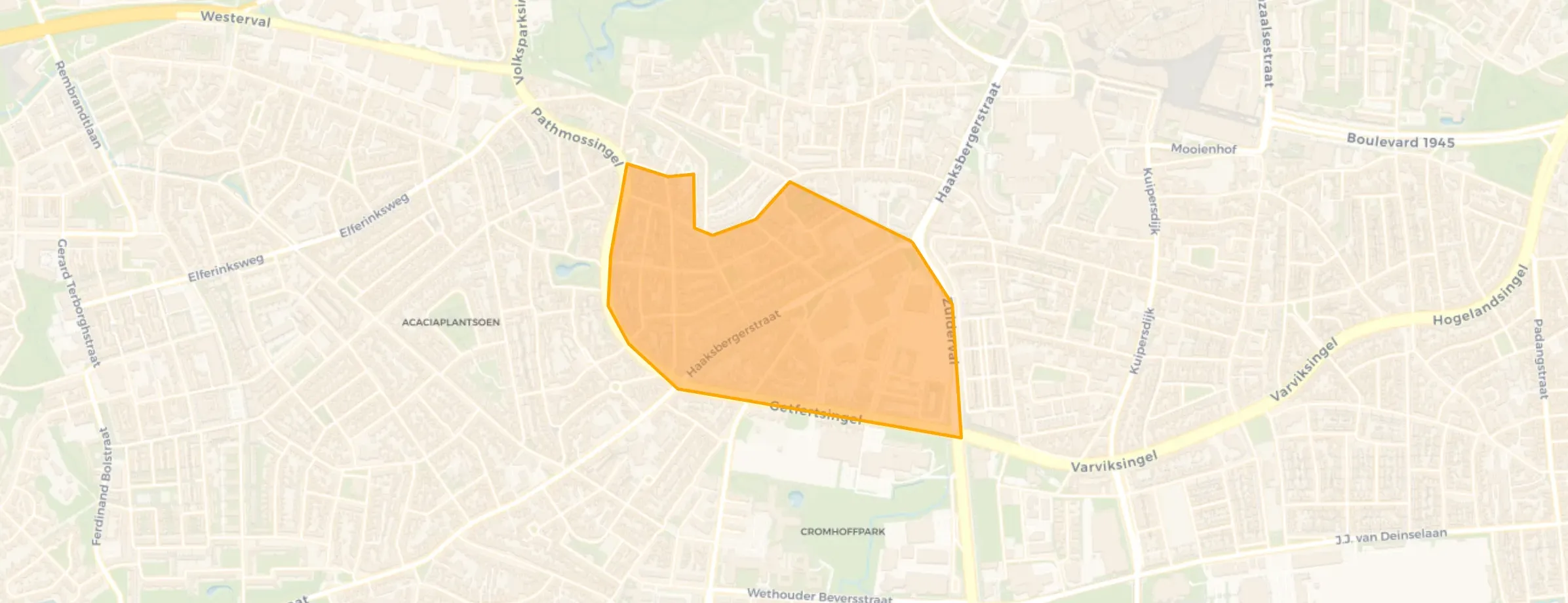
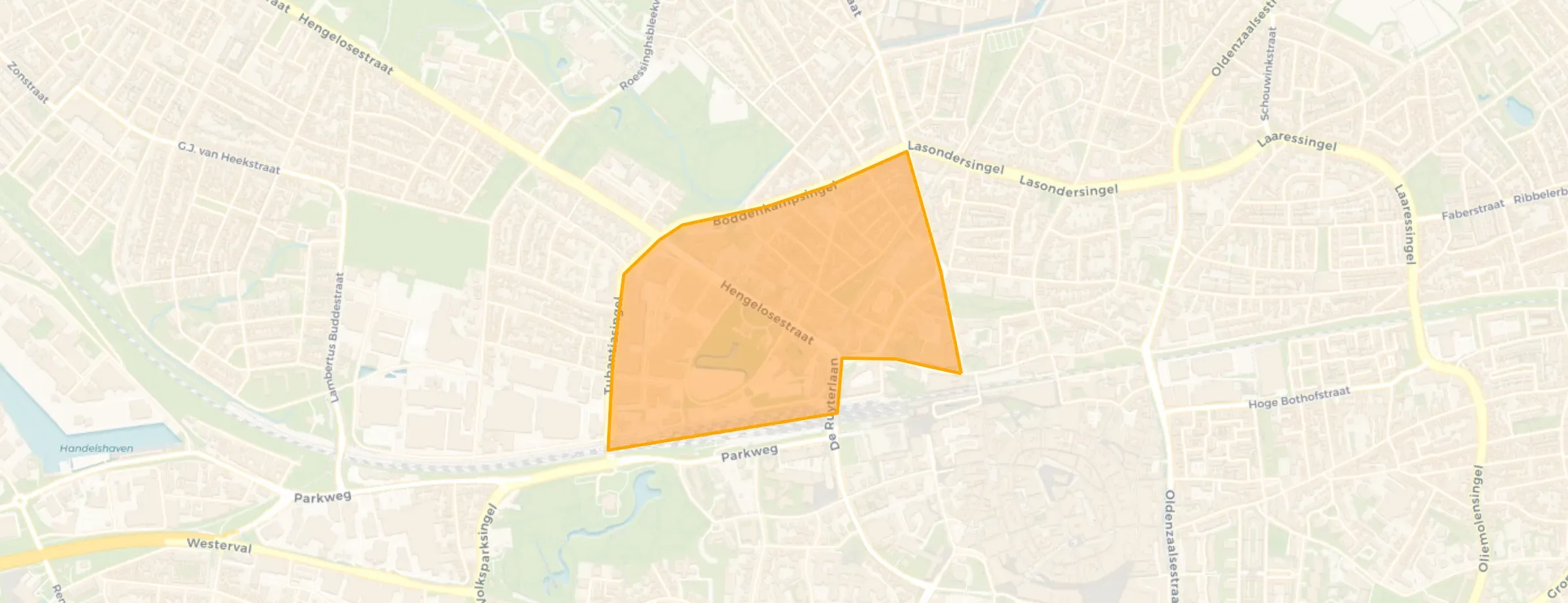
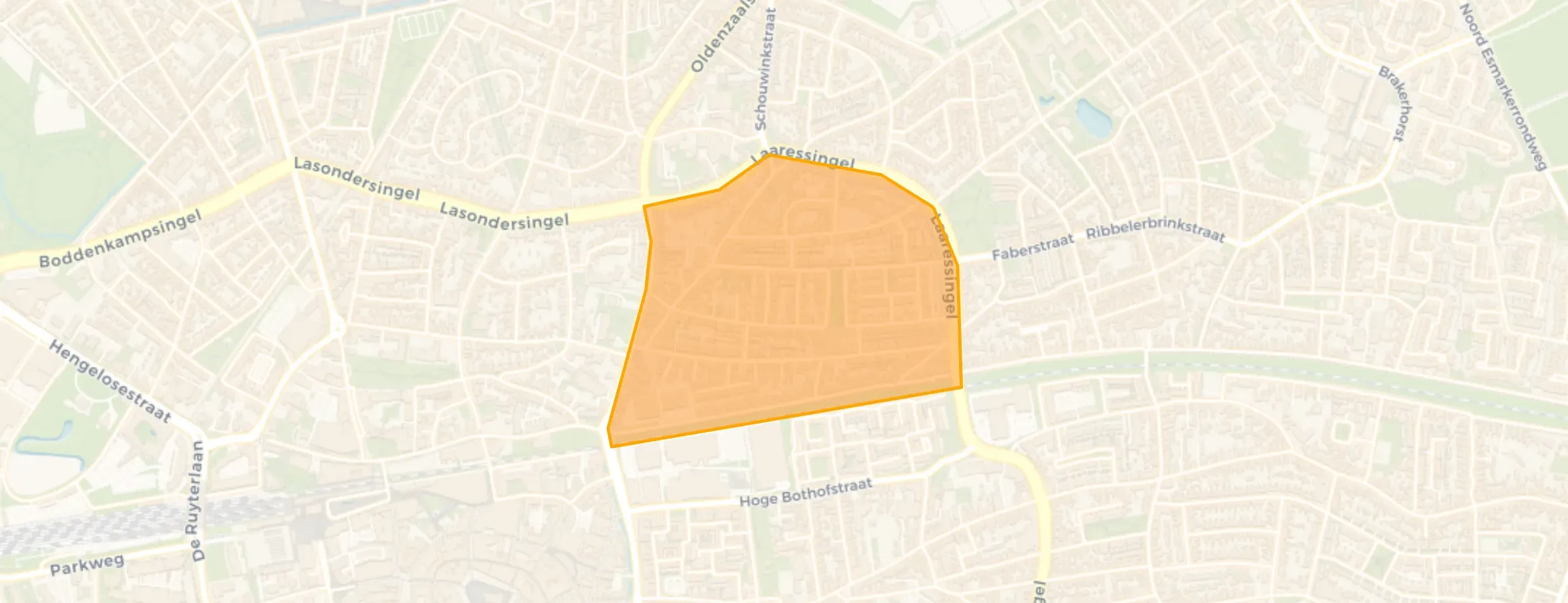
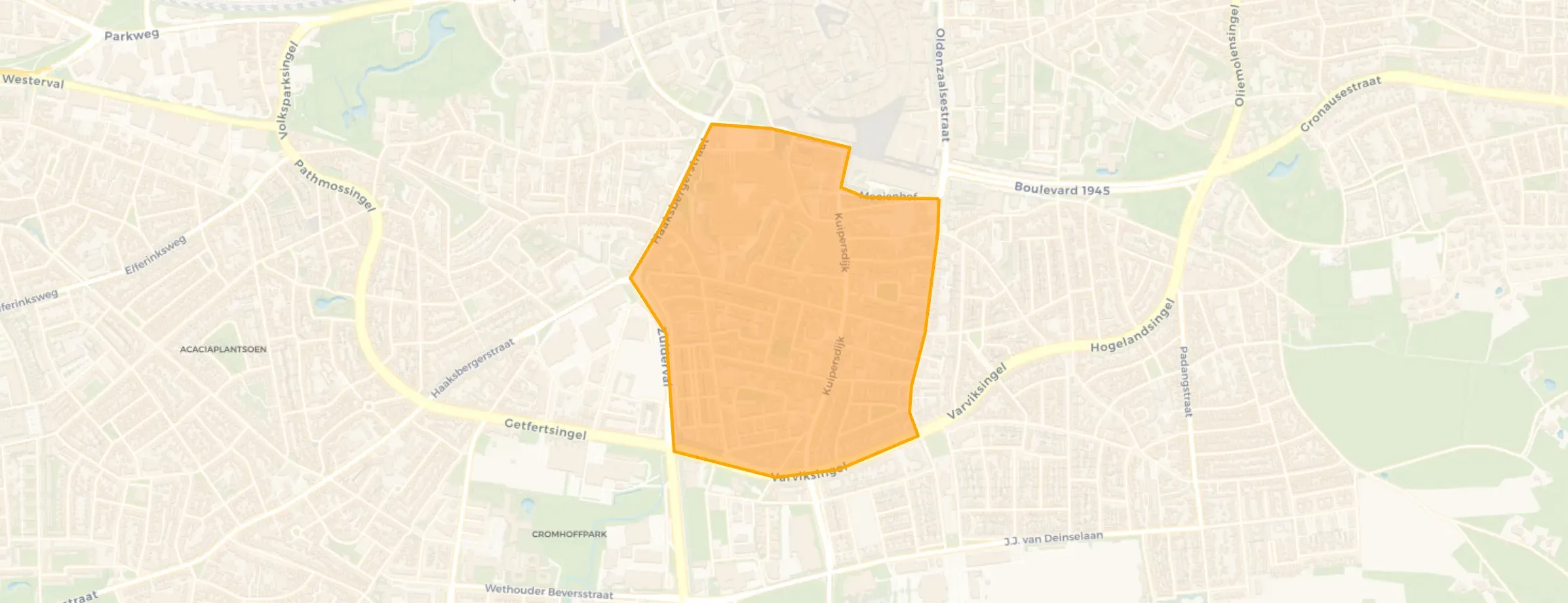
District in Enschede
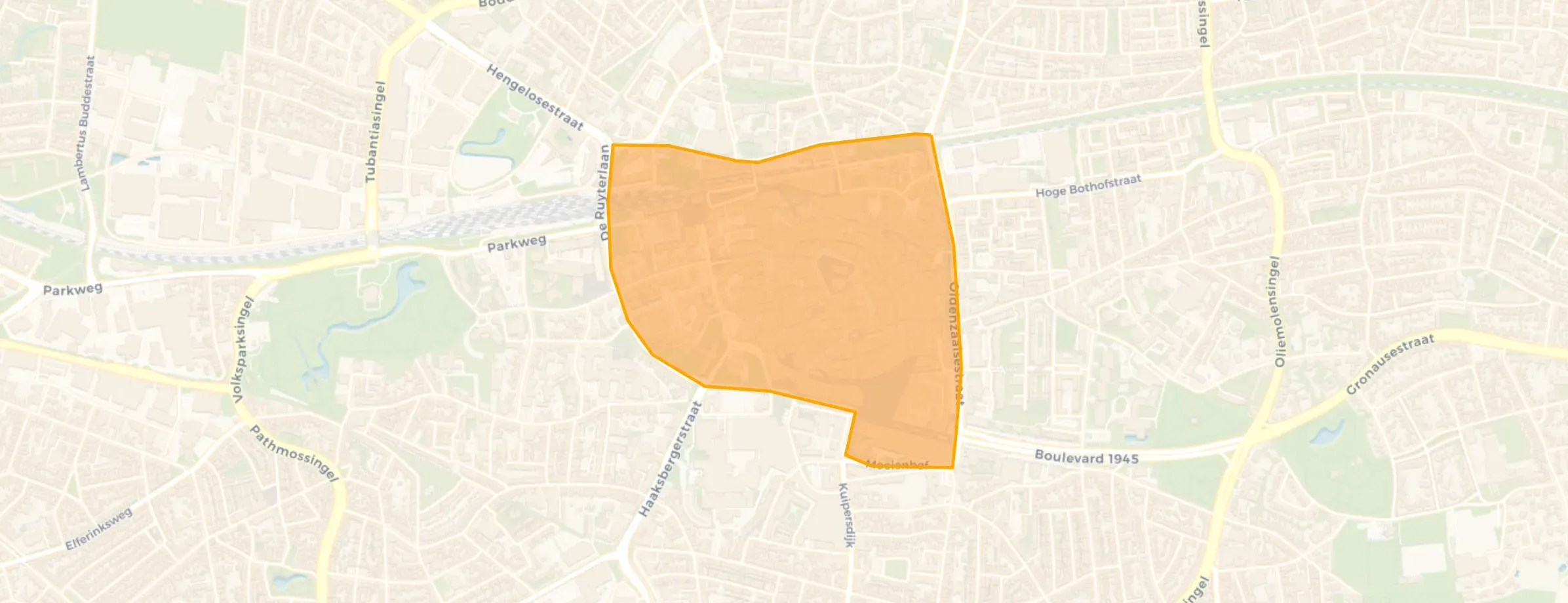
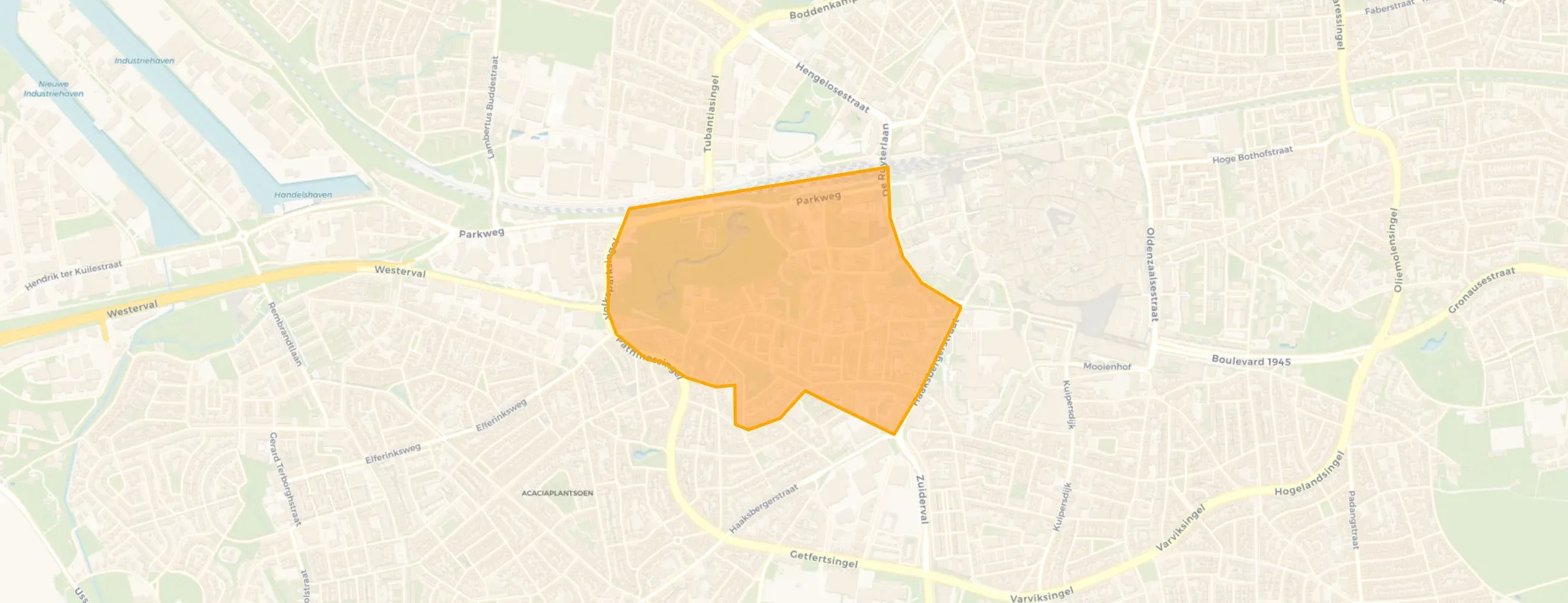
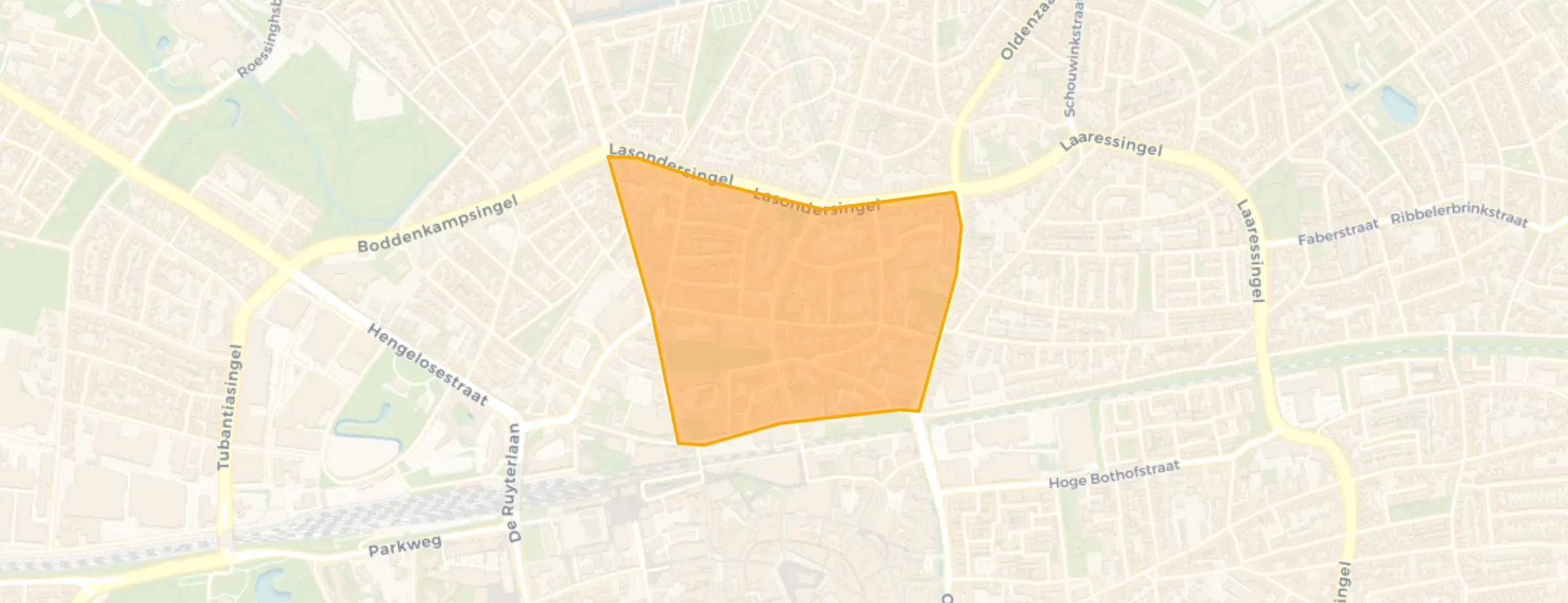
Binnensingelgebied is located in the province of Overijssel, in the municipality of Enschede The district has a total area of 427 hectares, of which 427 hectares are land and 0 hectares are water. The district is coded as WK015300. The postcode area is 7511AA-7535AX.
Binnensingelgebied has 28.505 residents. Of these, 52,8% are men and 47,2% are women. Most residents are 25 to 45 years (31,6%). The other age groups are 21,9% for '15 to 25 years', 19,9% for '45 to 65 years', 16,2% for '65 years or older' and 10,4% for '0 to 15 years'. Of the residents, 64,3% is unmarried, 23,5% is married, 7,9% is divorced and 4,2% is widowed. 17.365 residents originate from the Netherlands, 4.270 come from Europe and 6.870 come from countries outside Europe.
There are 17.580 households in Binnensingelgebied. 63,7% of these are single-person households, 20,5% households without children and 15,8% households with children. The average household size is 1,6 persons.
In Binnensingelgebied there are 22.200 income recipients. The average income per income recipient is €30.700, which is €5.100 (14%) lower than the national average of €35.800. Per resident, the average income is €26.600, which is €2.600 (9%) lower than the national average of €29.200. Most residents of Binnensingelgebied are educated to an intermediate level. 42,8% have an intermediate education (HAVO, VWO or MBO 2-4), 35,8% have a university or higher professional education (HBO/WO) and 21,4% have a lower education (VMBO or MBO 1).
Of the 28.505 residents, around 57% are in paid employment, which amounts to 16.248 people. This is 8% lower than the national average of 65%. The majority of workers are in salaried employment (89%), while 11% are self-employed. In Binnensingelgebied, 25% of residents receive a benefit. The largest group is those receiving a state pension (AOW). 4.210 people receive this benefit.
In Binnensingelgebied there are 14.965 homes with an average assessed value (WOZ) of €271.000. Of these, around 94% are occupied and 6% unoccupied. Most homes are rental properties. This amounts to 68% rental homes and 32% owner-occupied homes. Of the homes, 32% privately owned, 39% owned by housing associations and 29% owned by other landlords. The most common construction periods in Binnensingelgebied are 1980-1990 (17%) and 1950-1970 (13%).
There are currently no homes for sale in Binnensingelgebied. The most recently listed home is Niermansgang 109 by Valeur Taxaties en Makelaardij op Funda. No homes were sold in Binnensingelgebied over the past year.
There are currently no homes for rent in Binnensingelgebied. The most recent home is Walstraat 16-15, offered by www.woninghuren.nl. No homes were let in Binnensingelgebied over the past year.
No recent rental data available for Binnensingelgebied.
In Binnensingelgebied there are 16.311 addresses with a registered energy label. The most common labels are A (25%), C (20%) and B (15%). On average, an address in Binnensingelgebied uses 2.280 kWh of electricity per year. This is 19% below the national average of 2.810 kWh. With an annual consumption of 860 m³ per address, natural gas consumption is 33% below the national average of 1.280 m³.
It's a nice neighbourhood with plenty of amenities, there are many different family compositions and the residents are approachable and pleasant to interact with. However, in my immediate vicinity there is crime such as theft (bicycles/scooters/items) and (car) break-ins. It's a fairly green neighbourhood close to Volkspark, which is of course pleasant, but it could also use some improvement in aesthetics. In my immediate area, street hygiene could certainly be improved, especially the amount of litter on the streets. Overall, the neighbourhood is easily accessible, but to get to places more central in the district you usually have to take a detour.
Auto-translated to English by AII've been living here for over 2 years now. Above a shop (our own shop). The neighbourhood is very friendly and tidy. Many new buildings are being built for students and first-time buyers! Everything is very close by, which is super convenient. There are many rubbish bins and also racks for deposit bottles. Great neighbourhood!!
Auto-translated to English by AIWe have a shop in the city centre... 83 years in the family. Over the years, the inner city has changed a lot! And not for the better. Demolition of beautiful buildings, many empty shop premises where unfortunately only the so-called "fortune seekers" often settle. The result is that they are empty again after a while! It is often made difficult for shopkeepers because of all the rules from the municipality. Rules thought up by gentlemen somewhere in a warm office who don't even seem to know the whole situation in the city themselves. Streets are closed, the car park in our neighbourhood closed, and that, as they say, for a higher purpose! No, it is certainly not a pleasure to be a small independent business in a city like Enschede where there is only room for large worthless chains like Primark, Sissy Boy XL and Action. No more appreciation for a decent butcher, fish or fruit shop. Very unfortunate but that is the reality in Enschede.
Auto-translated to English by AIPoor contact with each other. People hardly talk anymore
Auto-translated to English by AII have always felt at home here. From the moment I was born, I already screamed “Het Zeggelt, that's where I feel at home!”. Every morning when I wake up here, I bring cookies to all the residents of our street. Often no one opens the door, but then I just throw them over the fence.
Auto-translated to English by AIwould rather live somewhere else
Auto-translated to English by AIIt's a safe neighbourhood, where a lot of diverse people live. That can sometimes clash a bit and because of that, in my opinion, there isn't really a sense of community. The neighbourhood is also very close to the city, which makes it very accessible and close to everything, but apart from a few trees and grassy patches, there is no nature.
Auto-translated to English by AIEnschede is not really my place to live. There are a lot of junkies, people really live for themselves and there is no social cohesion. The house is easily accessible by public transport, as it is a 7-minute walk from the station. However, if you drive into the city centre by car, you can only do so between 7 and 11 o'clock. If you have your own car, you can't park it anywhere; it can be a 20-minute walk. School is very close, you have the UT, ROC van Twente and Saxion. Living in the city centre is convenient because everything is close by in terms of shops. There is also a lot of crime in the neighbourhood, young people walking around with weapons (apparently) and many junkies arguing over money and drugs. The houses in the centre are old and poorly insulated; you pay an arm and a leg for rent and gas, water, electricity. There is little greenery, although there is the city park.
Auto-translated to English by AI
The most common type is flats (63%).
Over the past year a home for sale in Binnensingelgebied was listed for an average of €418,746 (€3,610 per m²). Last quarter prices fell by 12%.
A rental home in Binnensingelgebied cost an average of €1,892 per month (€19 per m²).
Residents give Binnensingelgebied a 7.0 out of 10 based on 10 reviews. Accessibility stands out with a 8.0; nature and greenery lags behind with a 6.2.
Wijk Binnensingelgebied has 28,505 residents. The largest age group is 25 to 45 years (32%). Notably, 64% of the households are single-person households.
The housing supply in Binnensingelgebied is remarkably efficient: 53% has an A, A+ or B label. The average natural gas consumption per household is 860 m³ per year.
From Binnensingelgebied you can on average reach a supermarket at 0.5 km, a GP at 0.6 km, a railway station at 1.5 km, a primary school at 0.6 km (as the crow flies, source: CBS).
Right now you will find 164 homes for sale and 137 homes for rent in Binnensingelgebied. A home for sale here is listed for an average of 78 days — relatively long for the current market.

Buurtje.nl uses cookies to make the site work and to improve it. In doing so, we process data such as your IP address and the pages you visit.
We use this data for three purposes: running the website (functional), measuring visits so we can improve Buurtje.nl (analytics), and — if you allow it — tailoring ads to your interests (marketing).
How we handle your data is described in our privacy policy. You can change your preferences at any time via 'Cookie preferences' at the bottom of every page.
Choose per category which cookies we may place. Read more in our privacy policy.