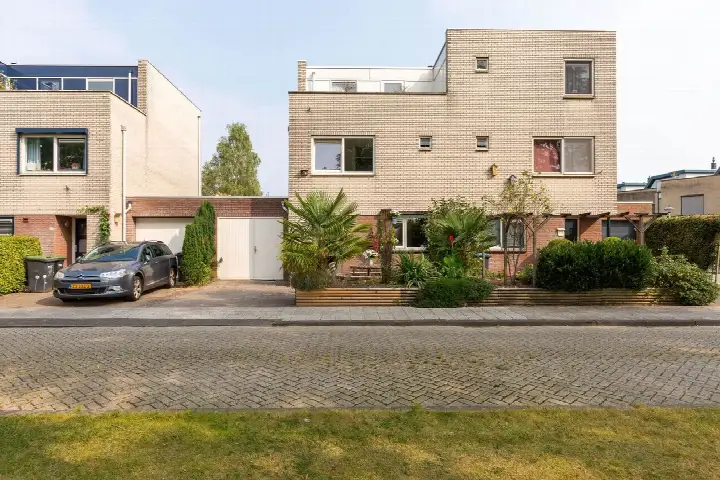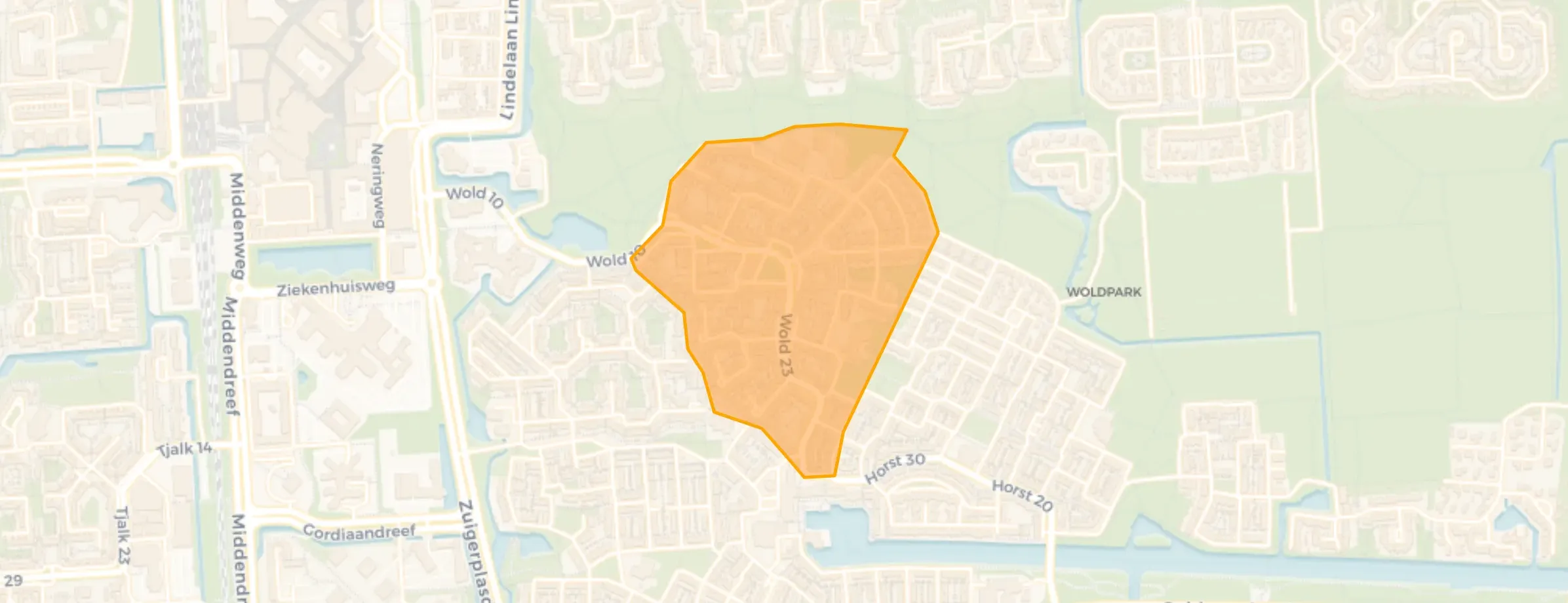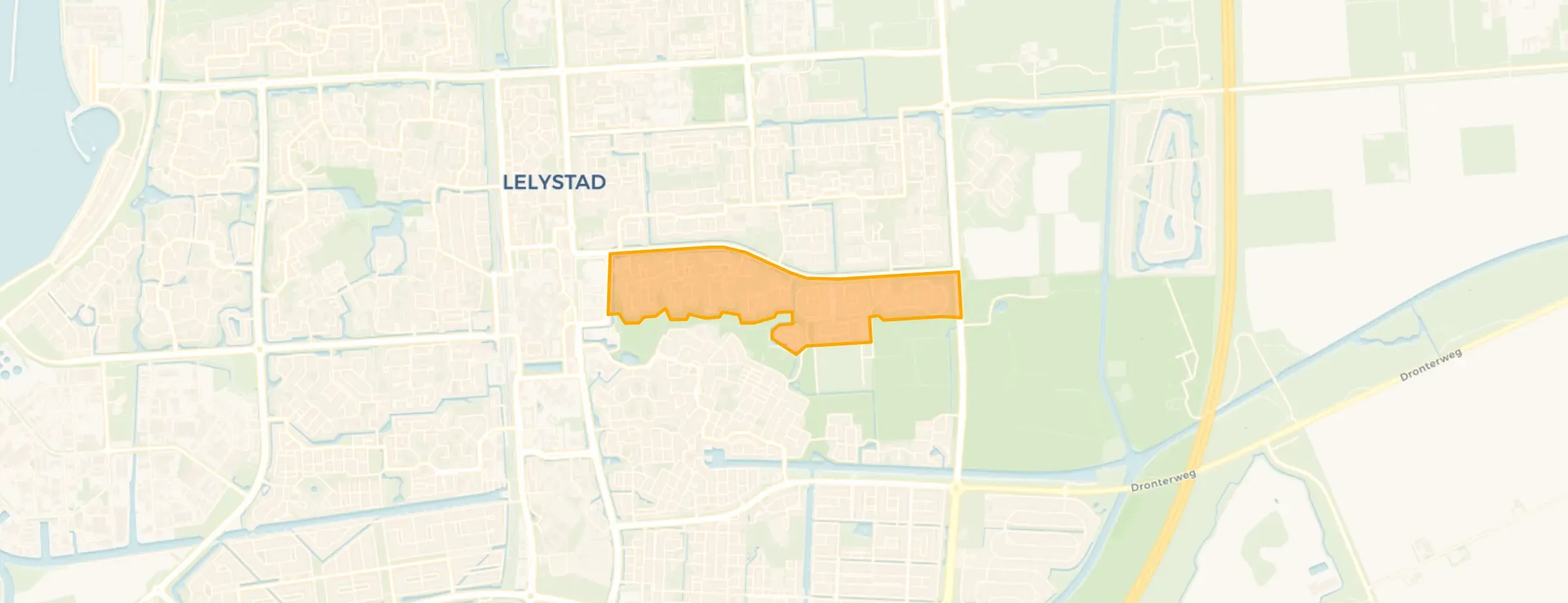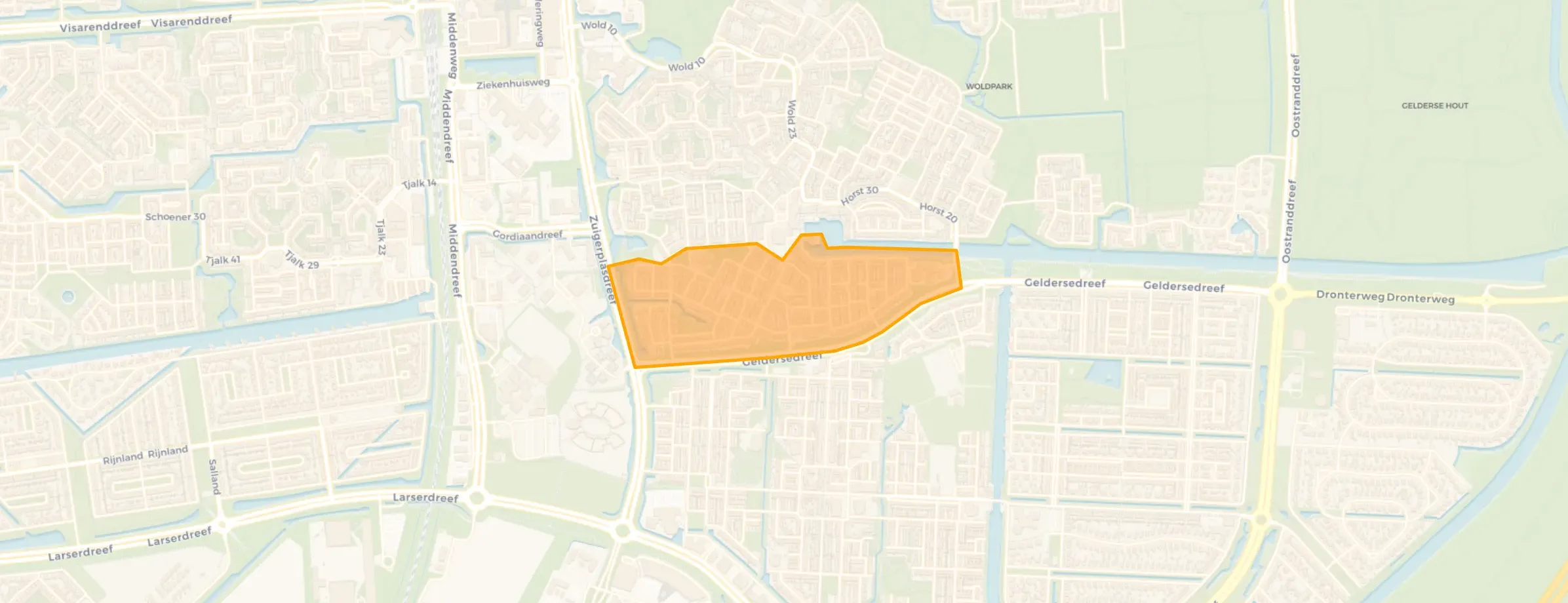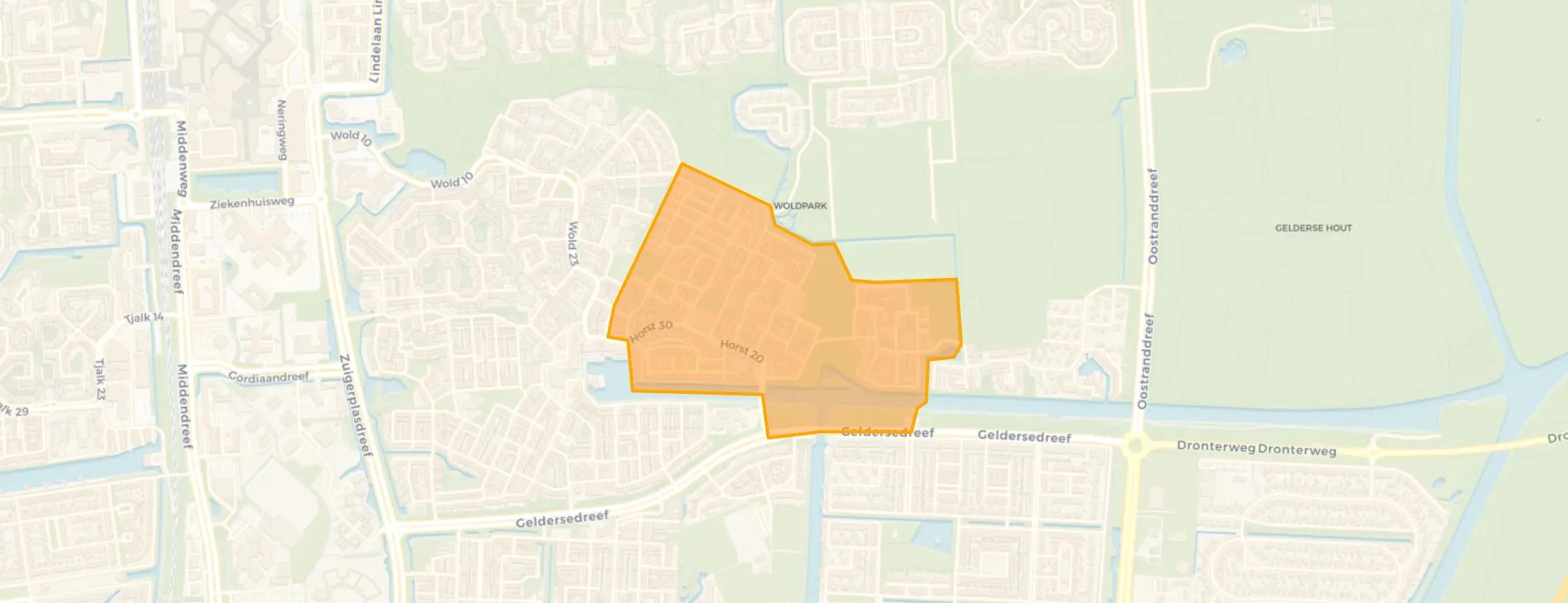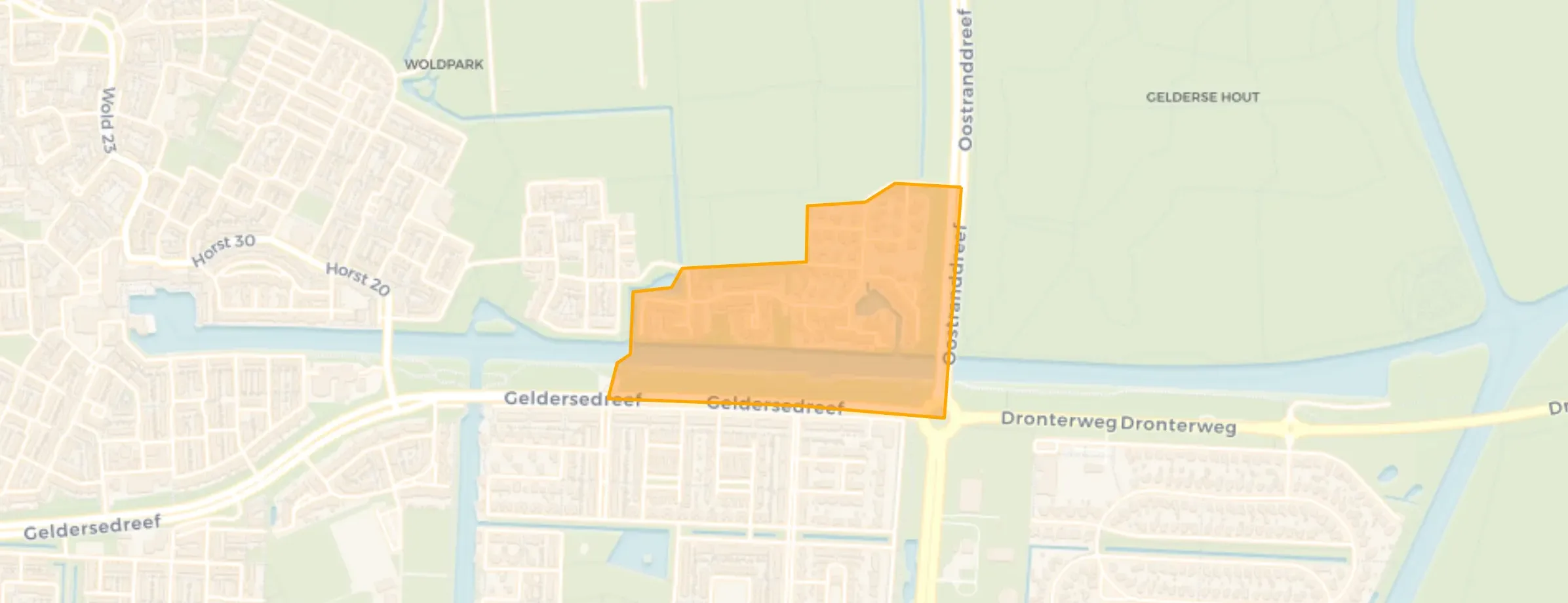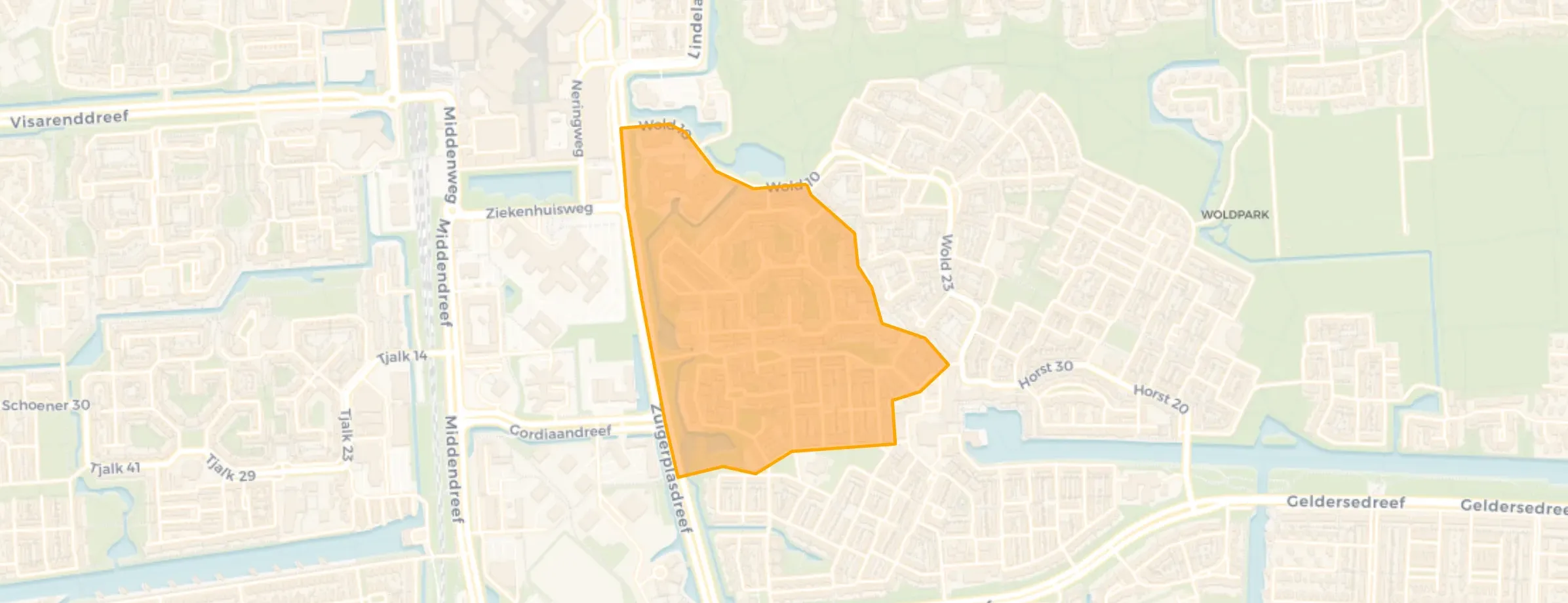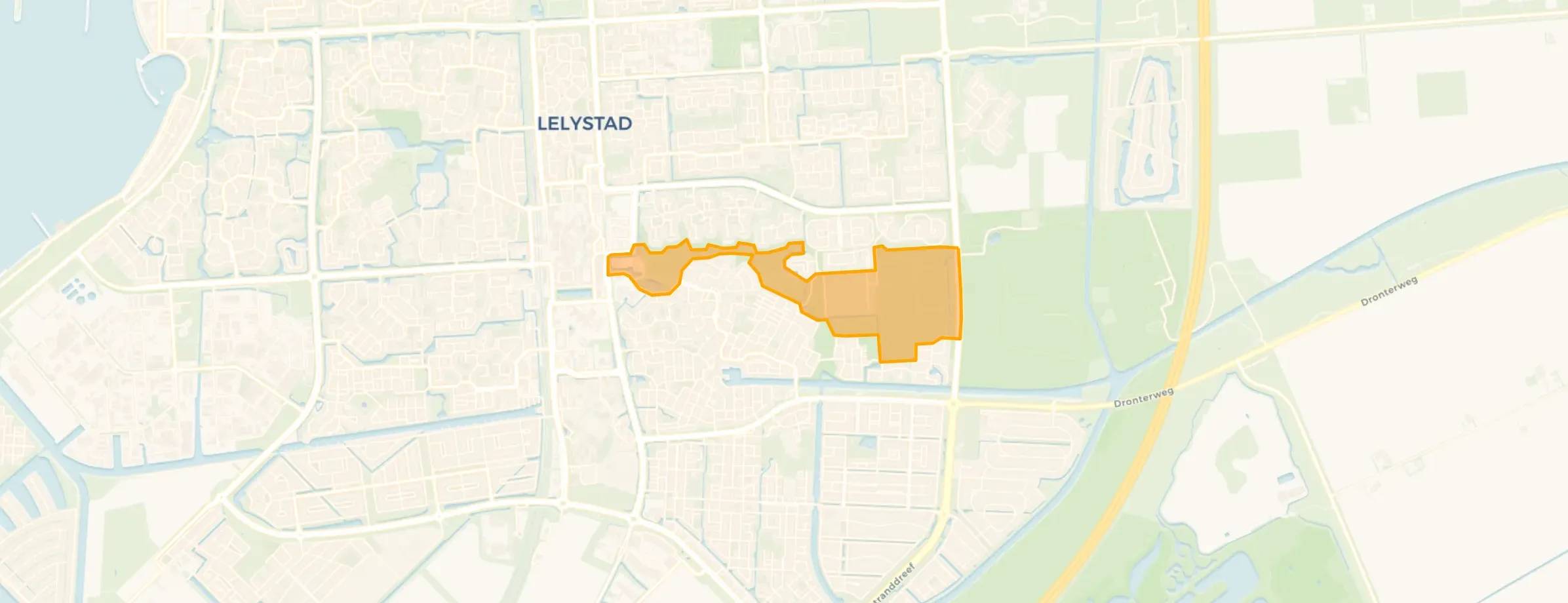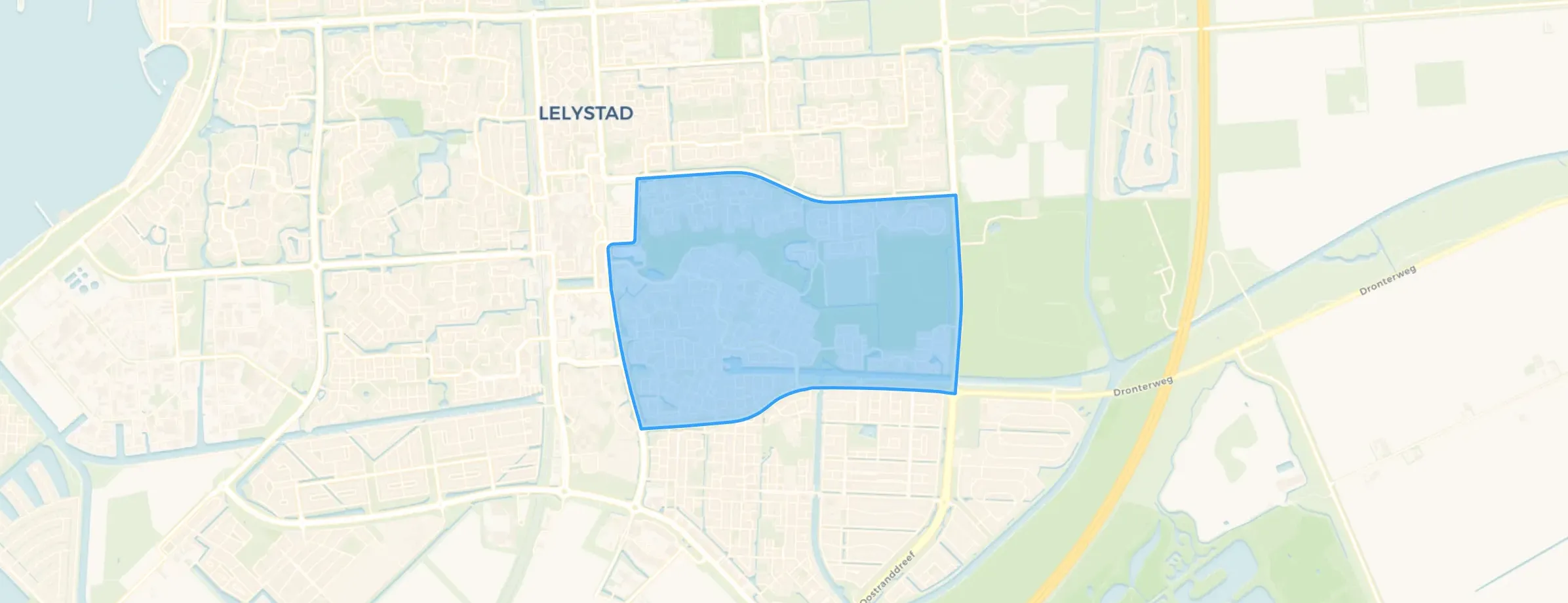
Boswijk is located in the province of Flevoland, in the municipality of Lelystad. The district has a total area of 278 hectares, of which 267 hectares are land and 11 hectares are water. The district is coded as WK099503. The postcode area is 8212DA-8225VL.
Boswijk has 10.830 residents. Of these, 50,4% are men and 49,5% are women. Most residents are 25 to 45 years (28,5%). The other age groups are 24,3% for '45 to 65 years', 19,3% for '65 years or older', 16,4% for '0 to 15 years' and 11,4% for '15 to 25 years'. Of the residents, 51,1% is unmarried, 35,5% is married, 9,6% is divorced and 3,8% is widowed. 6.510 residents originate from the Netherlands, 1.275 come from Europe and 3.045 come from countries outside Europe.
There are 4.915 households in Boswijk. 36,7% of these are single-person households, 26,2% households without children and 37,0% households with children. The average household size is 2,2 persons. The national average is 2,1 persons.
In Boswijk there are 8.600 income recipients. The average income per income recipient is €37.100, which is €5.100 (12%) lower than the national average of €42.200. Per resident, the average income is €30.100, which is €4.800 (14%) lower than the national average of €34.900. Most residents of Boswijk are educated to an intermediate level. 44,6% have an intermediate education (HAVO, VWO or MBO 2-4), 32,7% have a lower education (VMBO or MBO 1) and 22,7% have a university or higher professional education (HBO/WO).
Of the 10.830 residents, around 68% are in paid employment, which amounts to 7.364 people. This is 4% lower than the national average of 72%. The majority of workers are in salaried employment (87%), while 13% are self-employed. In Boswijk, 26% of residents receive a benefit. The largest group is those receiving a state pension (AOW). 1.850 people receive this benefit.
In Boswijk there are 4.730 homes with an average assessed value (WOZ) of €315.000. Of these, around 98% are occupied and 2% unoccupied. Most homes are owner-occupied. This amounts to 32% rental homes and 68% owner-occupied homes. Of the homes, 68% privately owned, 26% owned by housing associations and 6% owned by other landlords. The most common construction periods in Boswijk are 1980-1990 (70%) and 1970-1980 (20%).
There are currently 3 homes for sale in Boswijk. The most recently listed home is Beukenhof 128 by Dop Makelaars. Over the past year, 15 homes were sold in Boswijk. On average, a home was sold within 44 days.
The average asking price for a home for sale in Boswijk over the past year was €476.267. This is 51% higher than the average assessed value (WOZ) of €315.000. The average asking price per m² of floor area is €3.248.
There is 1 homes for rent in Boswijk. The most recent home is Woldpad 91, offered by Buisman Makelaars. Over the past year, 1 homes were let in Boswijk. On average, a listing was let within 27 days.
The average rent for a rental home in Boswijk over the past year was €1.950 per month. Per m² of floor area that is €23 per month.
In Boswijk there are 2.862 addresses with a registered energy label. The most common labels are B (39%), C (36%) and A (20%). On average, an address in Boswijk uses 2.560 kWh of electricity per year. This is 0% above the national average of 2.550 kWh. Natural gas consumption, at 830 m³ per year, is 4% above the national average of 800 m³.
A lot of nuisance because owner-occupied and social rented homes are mixed in the neighbourhood. High unemployment, low-skilled people, subletting, noise pollution, loud music, shouting, firework nuisance, and drug nuisance from young people driving around in expensive cars at the strangest times, and dealing youngsters on fatbikes. In addition, all roads and pavements in the neighbourhood are rotten or sunken, and many houses look neglected or completely rotten on the outside.
Auto-translated to English by AIIncrease in unsafety; expensive cars are speeding and revving at the strangest times, causing noise pollution for the living environment. These are mainly young boys with a cultural background who think the whole neighbourhood belongs to them and that they can make quick money this way. Additionally, the roads, paving, and lighting are very poor. And I see an increase in my area of a group of young people who are at risk of sliding into criminality. They drive back and forth in the neighbourhoods on fatbikes that they could not possibly have obtained honestly. Also, a lot of waste and litter in the neighbourhood.
Auto-translated to English by AIDe Zoom is a very pleasant neighbourhood to live in. Large houses, lots of greenery, forest nearby, social and almost village-like atmosphere. Only a bit far from supermarkets, shops, the centre and the station, and downright poor bus connections.
Auto-translated to English by AIFalse promises from Centrada and the municipality. They say they'll deal with mould and an open socket, and in the meantime you get a €10 gift card from Praxis to fix it yourself, so not really solved at all. I was born here and noticed that Lelystad is slowly deteriorating. And it's no longer really for the 21+.
Auto-translated to English by AIVery nice, there are many children and also many playgrounds. That makes it cosy. Sometimes there is a lot of rubbish on the street.
Auto-translated to English by AI1 vegetables 2 pans 3 safe
Auto-translated to English by AIThe housing stock is relatively young — 67% dates from after 1990. In addition, the most common type is terraced houses (60%).
Over the past year a home for sale in Boswijk was listed for an average of €497,138 (€3,556 per m²).
A rental home in Boswijk cost an average of €1,642 per month (€16 per m²). That is 12% below the national average.
Residents give Boswijk a 6.4 out of 10 based on 6 reviews. The strongest score is for nature and greenery (7.7), the weakest for cleanliness (5.3).
Wijk Boswijk has 10,830 residents. Many families: 37% of the households have children.
The housing supply in Boswijk is remarkably efficient: 78% has an A, A+ or B label. The average natural gas consumption per household is 830 m³ per year.
From Boswijk you can on average reach a supermarket at 0.8 km, a GP at 1.0 km, a railway station at 2.2 km, a primary school at 0.7 km (as the crow flies, source: CBS).