District in Den Helder
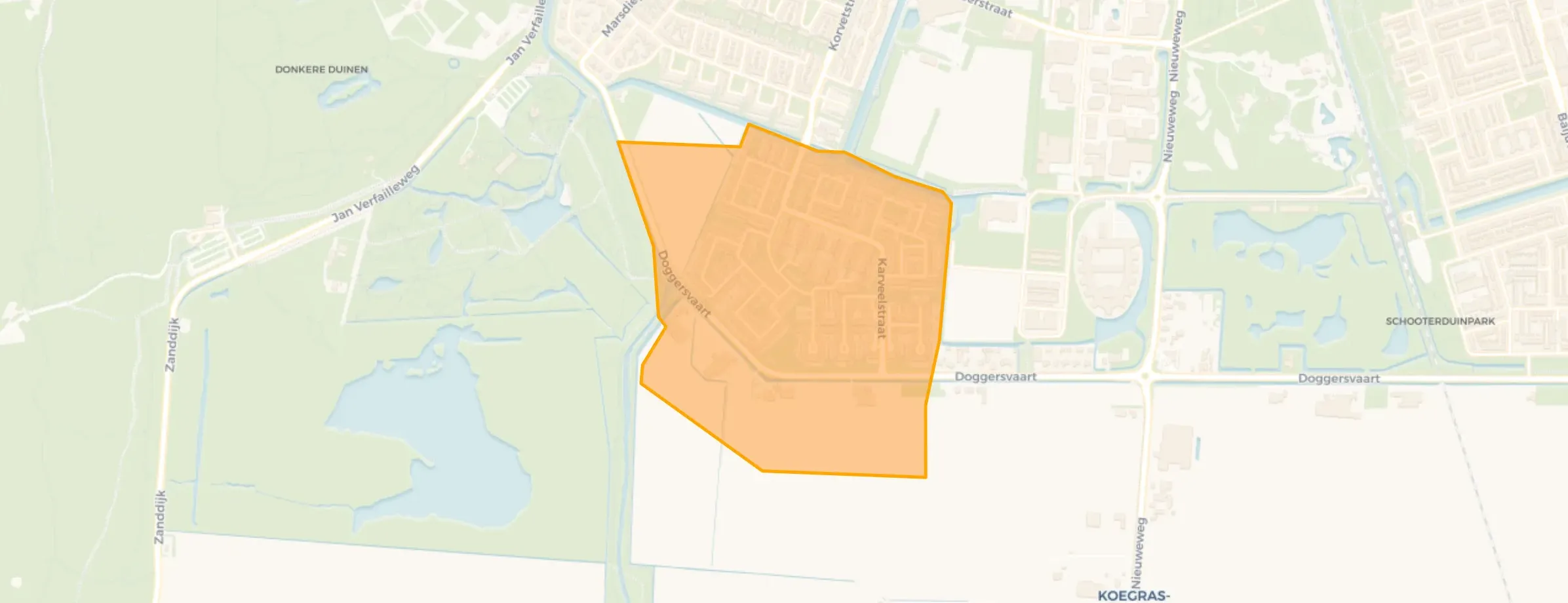
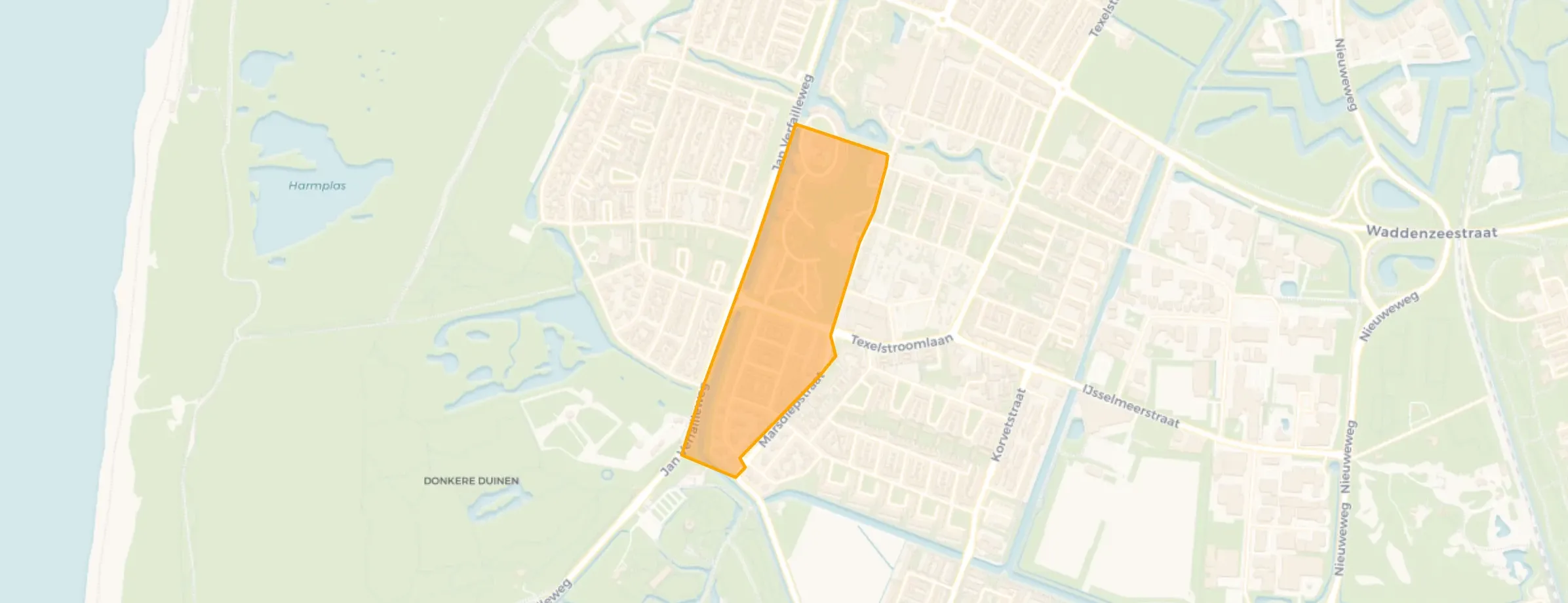
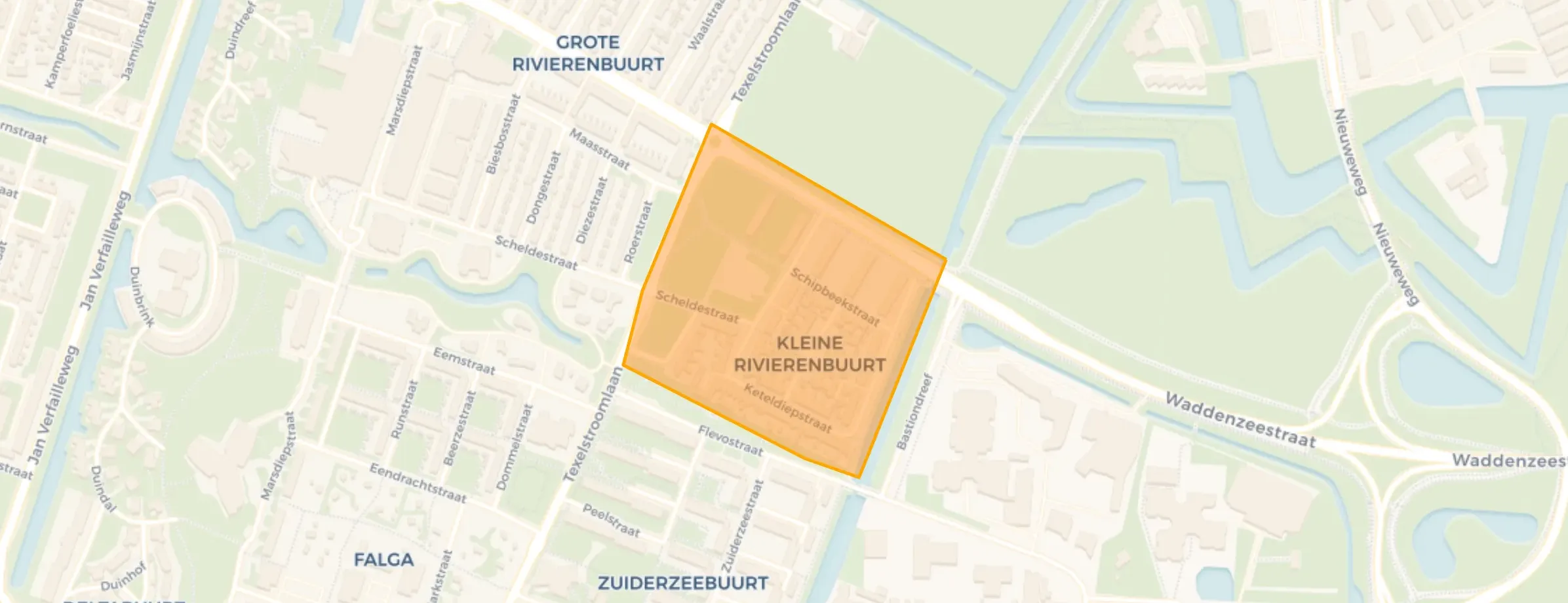
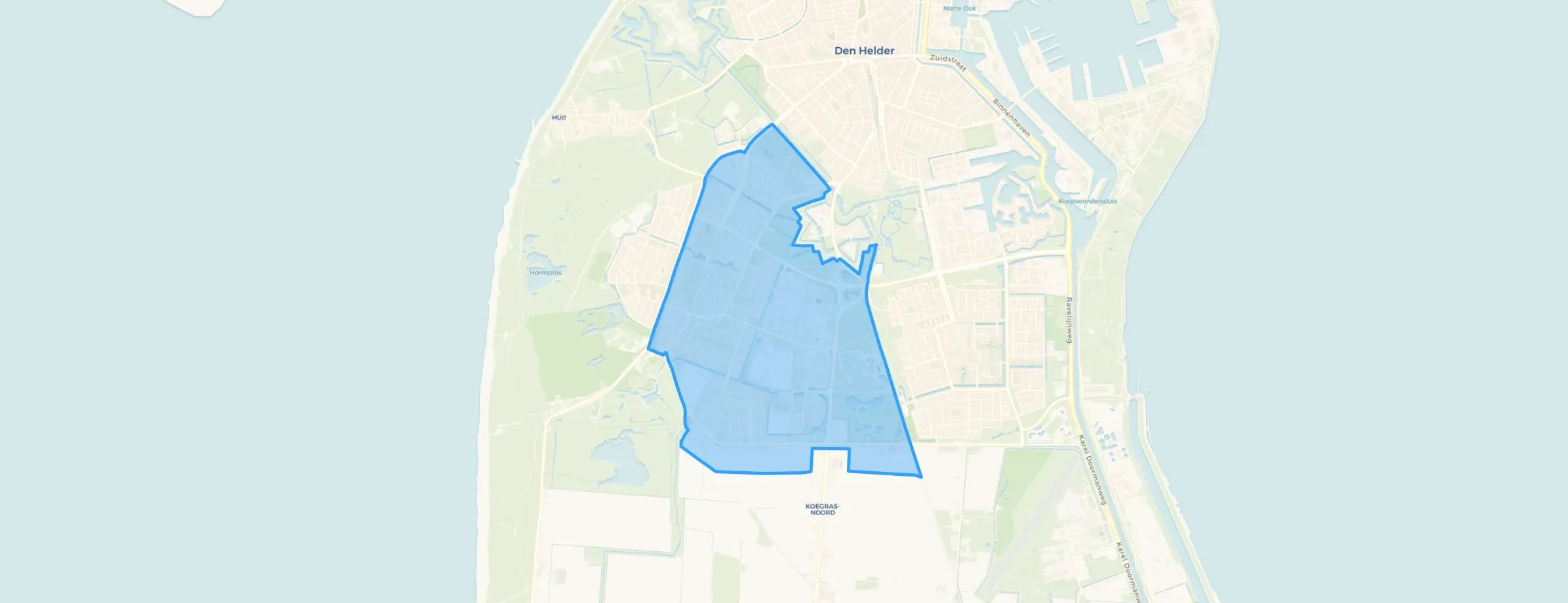
Nieuw Den Helder-Oost is located in the province of Noord-Holland, in the municipality of Den Helder The district has a total area of 379 hectares, of which 366 hectares are land and 12 hectares are water. The district is coded as WK040004. The postcode area is 1784AA-1784XW.
Nieuw Den Helder-Oost has 9.230 residents. Of these, 49,8% are men and 50,2% are women. Most residents are 45 to 65 years (24,2%). The other age groups are 23,9% for '25 to 45 years', 23,8% for '65 years or older', 15,7% for '0 to 15 years' and 12,4% for '15 to 25 years'. Of the residents, 48,7% is unmarried, 34,8% is married, 10,4% is divorced and 6,1% is widowed. 6.105 residents originate from the Netherlands, 560 come from Europe and 2.565 come from countries outside Europe.
There are 4.350 households in Nieuw Den Helder-Oost. 43,2% of these are single-person households, 25,9% households without children and 30,9% households with children. The average household size is 2,0 persons.
In Nieuw Den Helder-Oost there are 7.100 income recipients. The average income per income recipient is €30.800, which is €5.000 (14%) lower than the national average of €35.800. Per resident, the average income is €25.400, which is €3.800 (13%) lower than the national average of €29.200. Most residents of Nieuw Den Helder-Oost are educated to an intermediate level. 51,3% have an intermediate education (HAVO, VWO or MBO 2-4), 34,8% have a lower education (VMBO or MBO 1) and 14,0% have a university or higher professional education (HBO/WO).
Of the 9.230 residents, around 57% are in paid employment, which amounts to 5.261 people. This is 8% lower than the national average of 65%. The majority of workers are in salaried employment (91%), while 9% are self-employed. In Nieuw Den Helder-Oost, 34% of residents receive a benefit. The largest group is those receiving a state pension (AOW). 1.980 people receive this benefit.
In Nieuw Den Helder-Oost there are 4.597 homes with an average assessed value (WOZ) of €194.000. Of these, around 95% are occupied and 5% unoccupied. Most homes are rental properties. This amounts to 64% rental homes and 36% owner-occupied homes. Of the homes, 36% privately owned, 53% owned by housing associations and 11% owned by other landlords. The most common construction periods in Nieuw Den Helder-Oost are 1950-1970 (56%) and 1970-1980 (22%).
There are currently no homes for sale in Nieuw Den Helder-Oost. The most recently listed home is Alblasstraat 12 by Noordstad Makelaardij. No homes were sold in Nieuw Den Helder-Oost over the past year.
There are currently no homes for rent in Nieuw Den Helder-Oost. The most recent home is IJsselmeerstraat 54, offered by NederWoon Verhuurmakelaars B.V.. No homes were let in Nieuw Den Helder-Oost over the past year.
No recent rental data available for Nieuw Den Helder-Oost.
In Nieuw Den Helder-Oost there are 4.828 addresses with a registered energy label. The most common labels are C (34%), A (25%) and D (15%). On average, an address in Nieuw Den Helder-Oost uses 2.130 kWh of electricity per year. This is 24% below the national average of 2.810 kWh. With an annual consumption of 960 m³ per address, natural gas consumption is 25% below the national average of 1.280 m³.
Everything is within walking distance, the bus stop is around the corner, a central location that still offers a peaceful environment for me and my family.
Auto-translated to English by AIWe prefer not to go out when it's dark. Double locks on all doors, including the shed and gate. We both come from a different province in the Netherlands.
Auto-translated to English by AIAfter a certain time in the evening, I no longer go outside alone. We even have double locks on the gate, shed and aviary. Hygiene: people throw paper etc. into the bushes, empty bottles and cans. Just an ASO neighbourhood. What could be better: fewer coloured people in the neighbourhood, also benefit claimants. Make it a neighbourhood where almost everyone is equal. And where everyone feels safe again to, for example, walk their dog around 10 p.m.
Auto-translated to English by AIMore empty properties, the neighbourhood is deteriorating due to many more foreigners in the area. I no longer go out on the street after 10pm. Double locks everywhere. More street lighting and more social housing.
Auto-translated to English by AIOur street is often used as a rat run. There are dealers in the area, so there's always commotion. Opposite us, flats have been removed, there are pests like mice etc. Will the pile of rubble, now consisting of grass etc., ever be removed? Remove weeds more often, keep trees and shrubs low. The bushes along the footpath are often used as a place to pee. The insufficient rating is due to too much turnover of residents, vacant properties. People race through the street like idiots. [Improvement: make it one-way traffic] Clear the pile of rubble etc. where the flats used to be, a haven for mice and other vermin.
Auto-translated to English by AIAfter a certain time I no longer go outside, double locks etc. Could be better in the neighbourhood, keeping it clean and tidy. I live opposite a shopping centre, busy with renovations. So to a different supermarket than you're used to. A lot of young people leaving everything lying around, e.g. dog poo etc.
Auto-translated to English by AIThe neighbourhood is going downhill very fast. Lots of foreigners together in the evening. In the evening I no longer cross the street alone. Lots of litter, people drive way too fast. Our street is used as a rat run, we have double locks everywhere. In the evening the curtains are closed and we are not there; we neighbours keep an eye on each other's houses etc. When we go on holiday, the person who feeds the cat closes the curtains and turns on the lights.
Auto-translated to English by AILived here for 10 years and never had any problems, lots of peace and living pleasure
Auto-translated to English by AI
The housing stock is mainly post-war — 81% was built between 1945 and 1990. In addition, the most common type is terraced houses (42%).
Over the past year a home for sale in Nieuw Den Helder-Oost was listed for an average of €318,456 (€2,614 per m²). Last quarter prices fell by 5%.
Residents give Nieuw Den Helder-Oost a 6.5 out of 10 based on 11 reviews. The strongest score is for nature and greenery (7.7), the weakest for cleanliness (6.4).
From Nieuw Den Helder-Oost you can on average reach a supermarket at 0.7 km, a GP at 0.6 km, a railway station at 2.6 km, a primary school at 0.7 km (as the crow flies, source: CBS).
Right now you will find 17 homes for sale and 1 homes for rent in Nieuw Den Helder-Oost.

Buurtje.nl uses cookies to make the site work and to improve it. In doing so, we process data such as your IP address and the pages you visit.
We use this data for three purposes: running the website (functional), measuring visits so we can improve Buurtje.nl (analytics), and — if you allow it — tailoring ads to your interests (marketing).
How we handle your data is described in our privacy policy. You can change your preferences at any time via 'Cookie preferences' at the bottom of every page.
Choose per category which cookies we may place. Read more in our privacy policy.