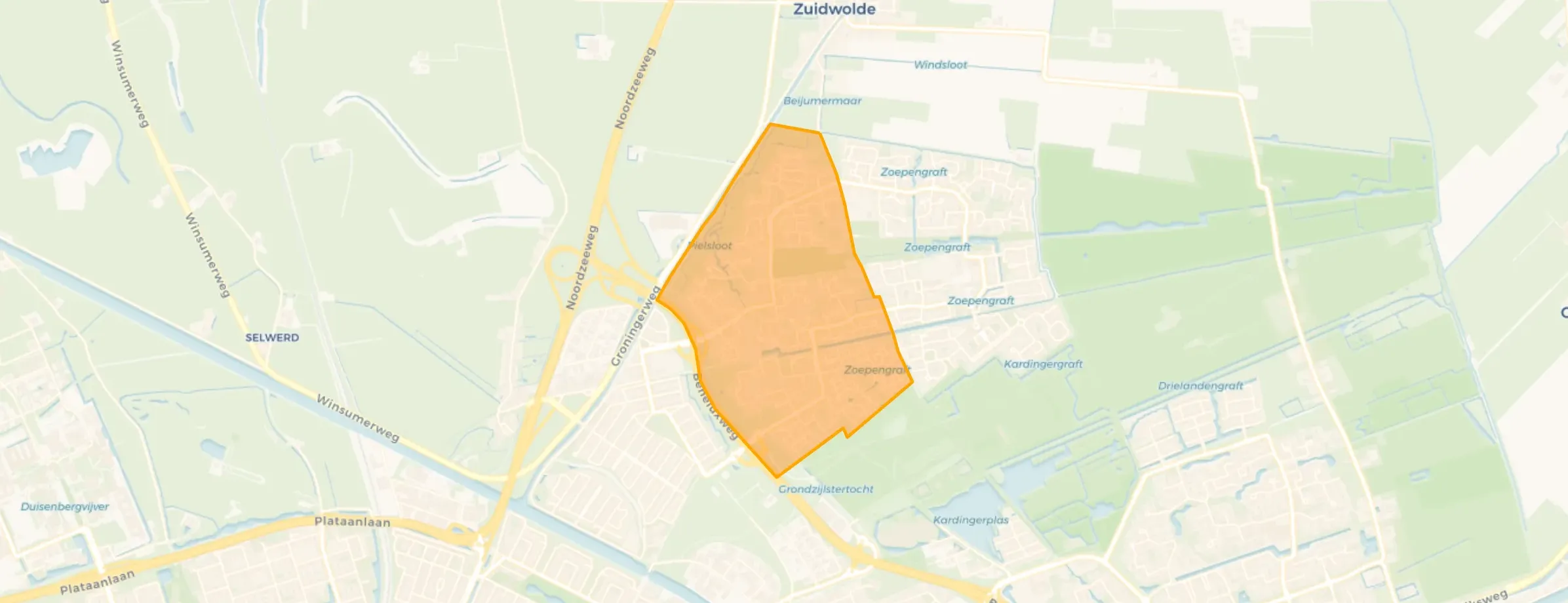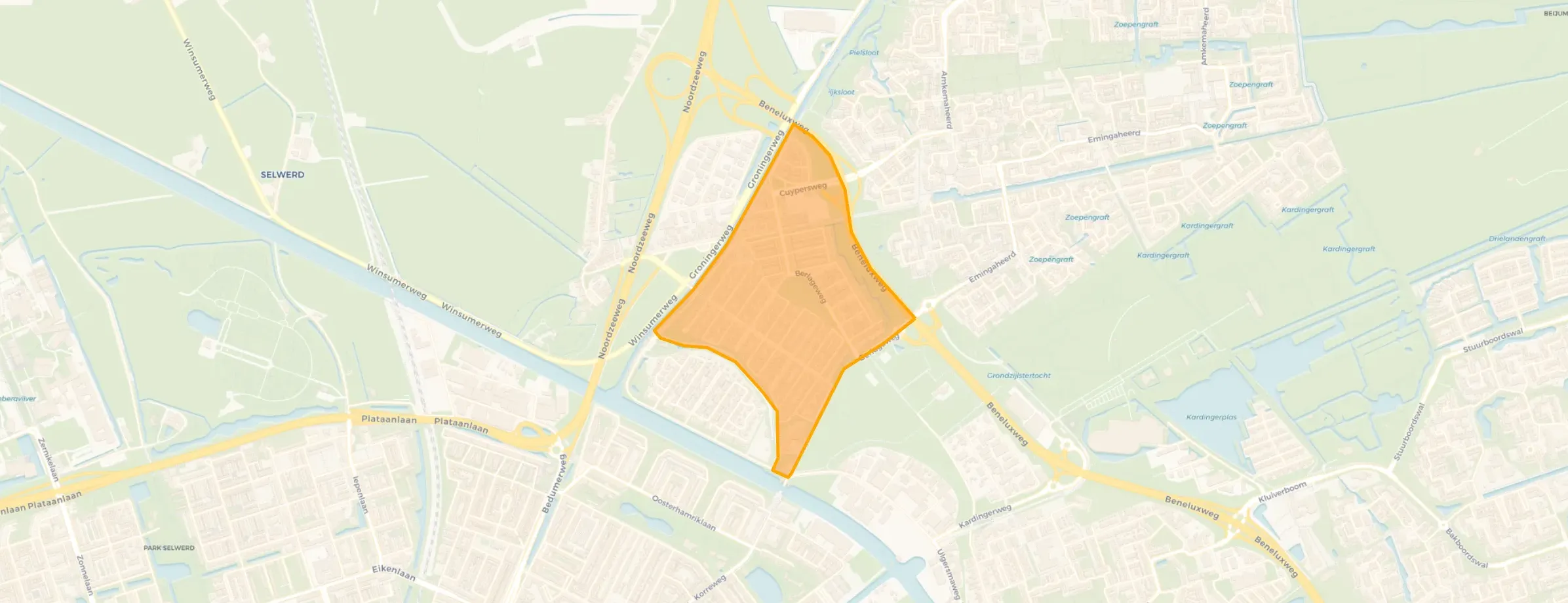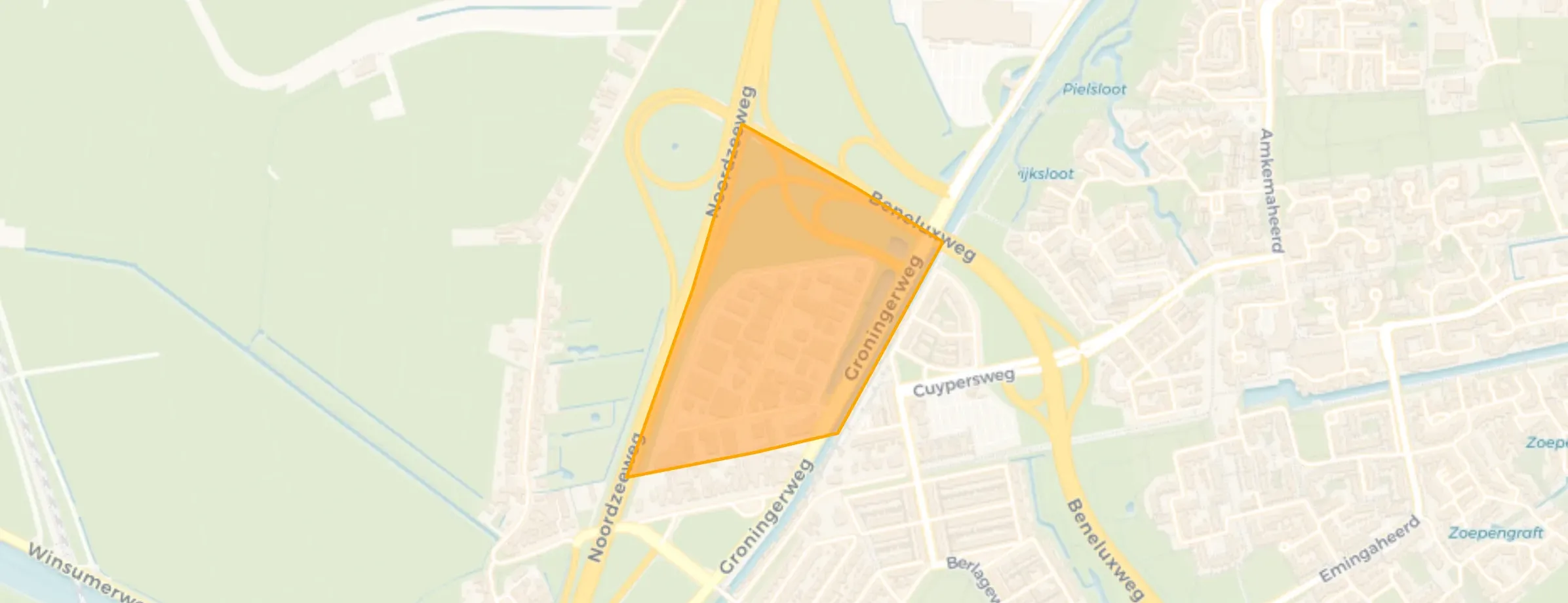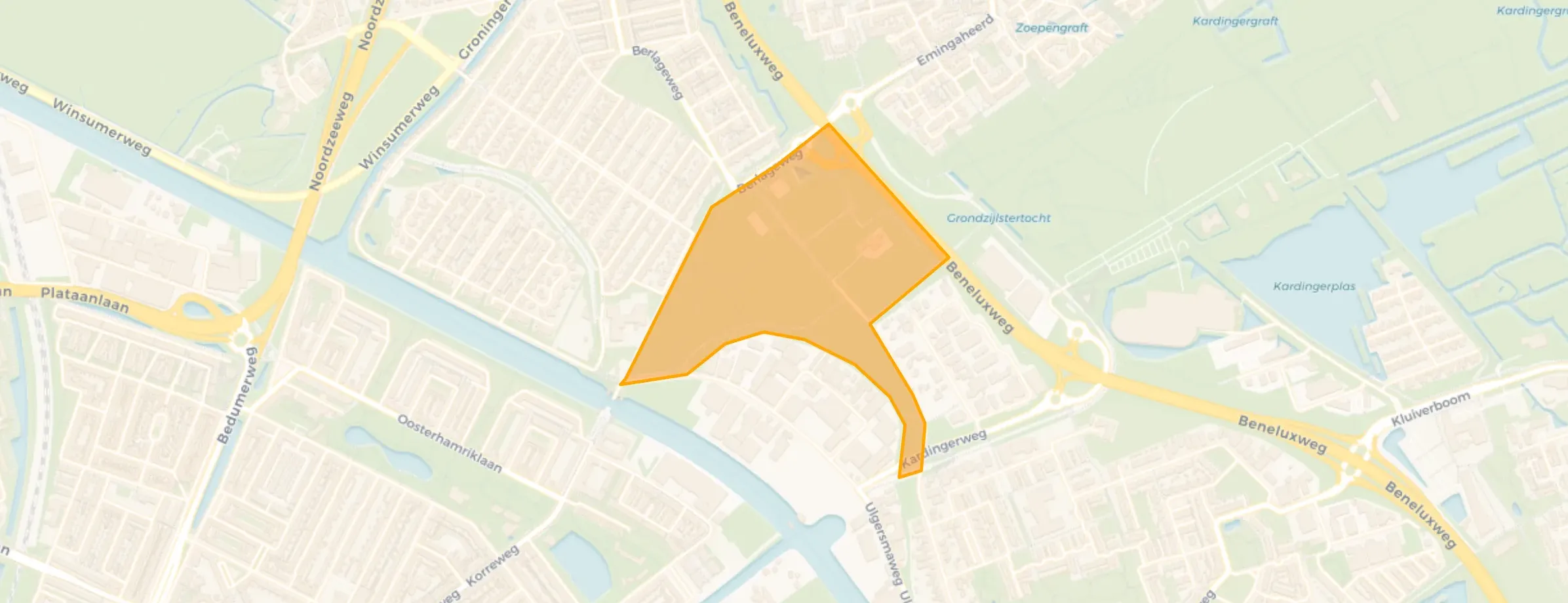
District in Groningen
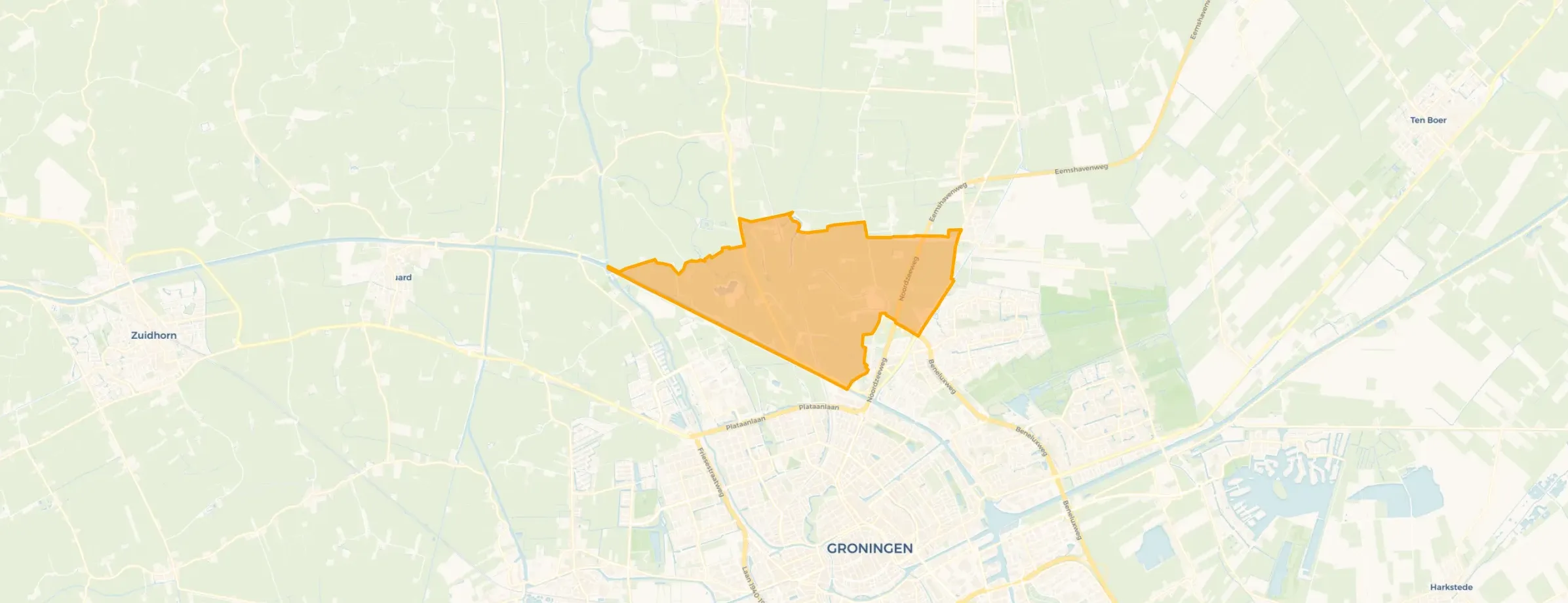
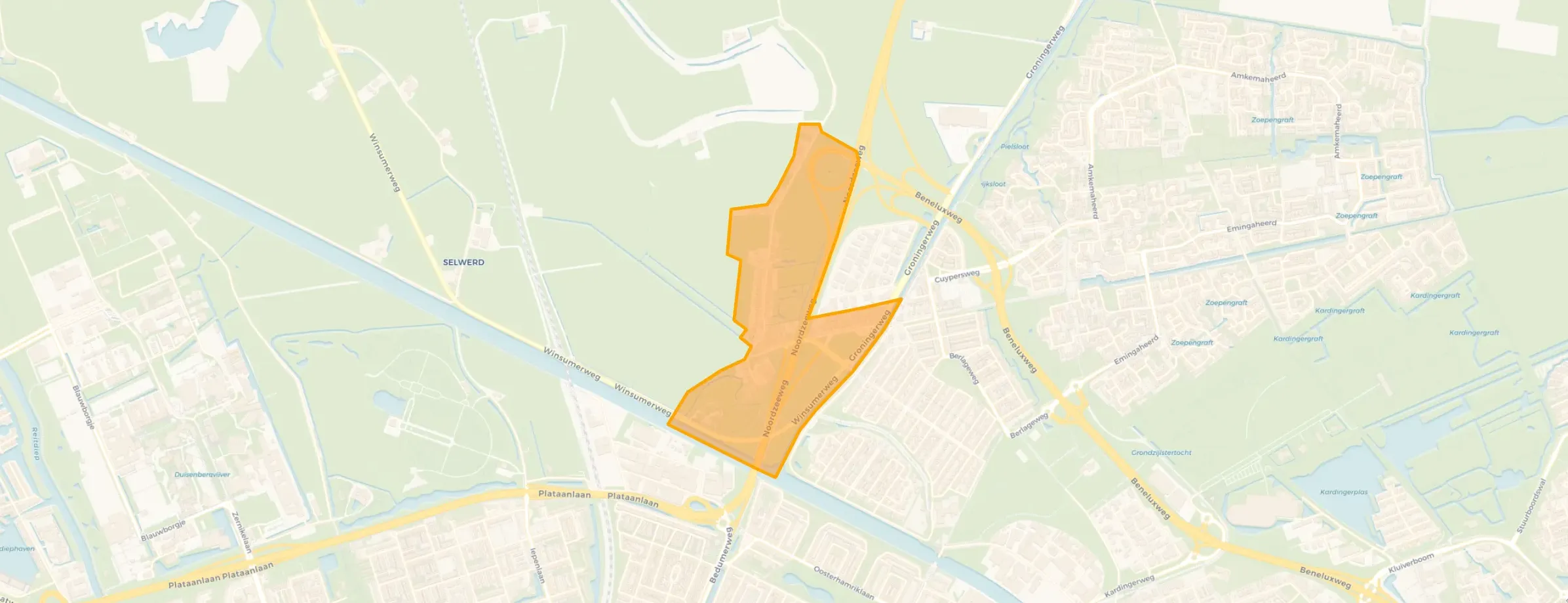
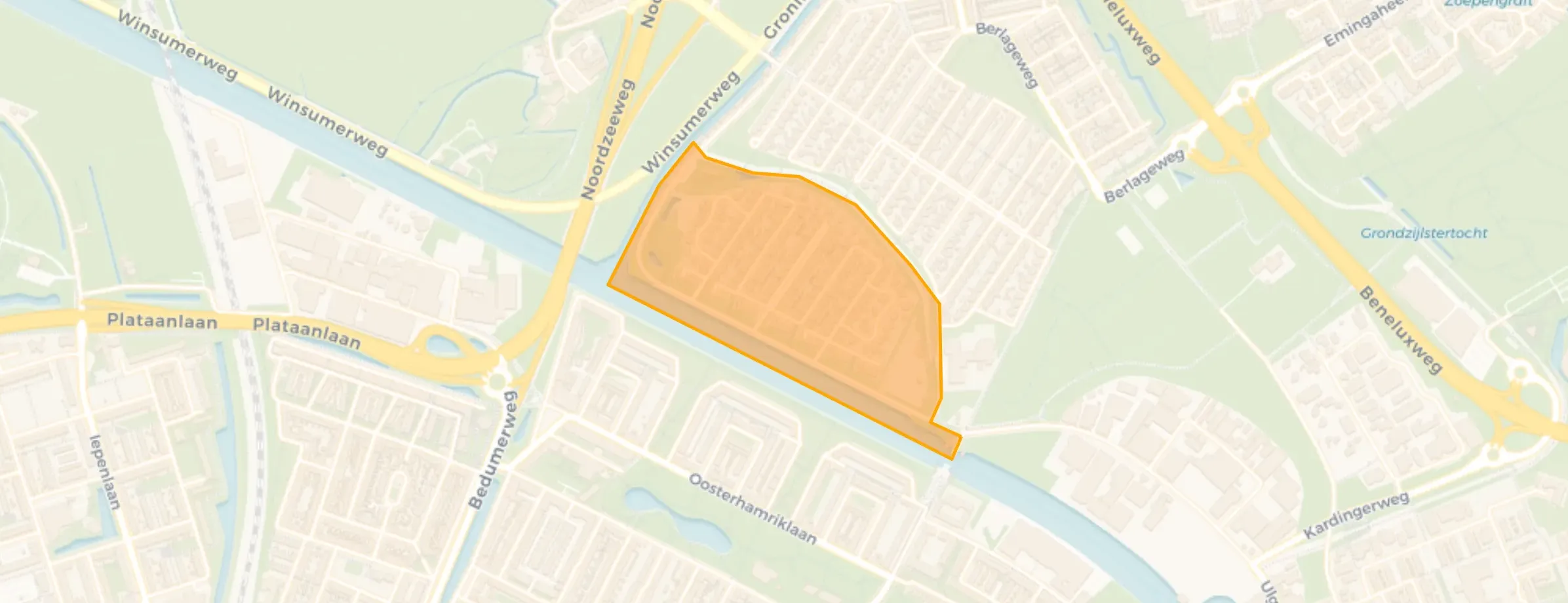
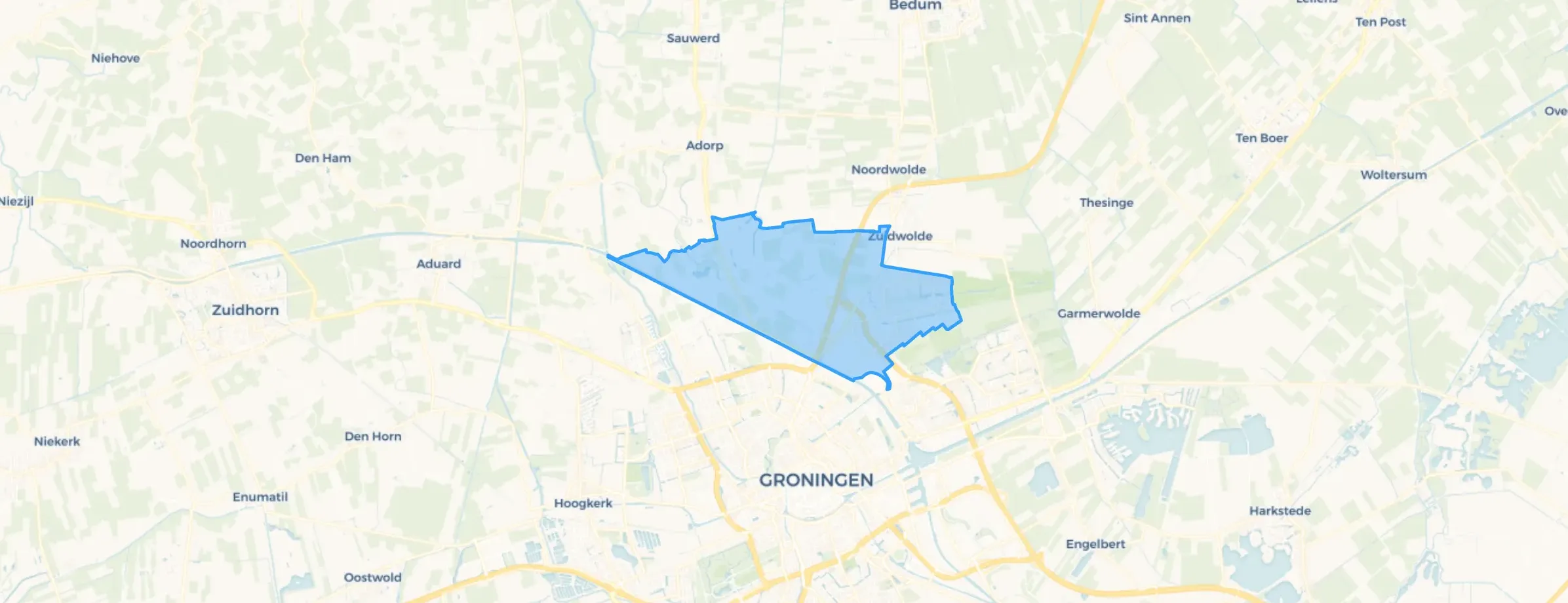
Noordoost is located in the province of Groningen, in the municipality of Groningen The district has a total area of 1.071 hectares, of which 1.050 hectares are land and 22 hectares are water. The district is coded as WK001411. The postcode area is 9731BH-9738TG.
Noordoost has 15.580 residents. Of these, 50,5% are men and 49,5% are women. Most residents are 45 to 65 years (29,2%). The other age groups are 26,4% for '25 to 45 years', 16,0% for '65 years or older', 15,7% for '0 to 15 years' and 12,7% for '15 to 25 years'. Of the residents, 58,3% is unmarried, 29,8% is married, 9,5% is divorced and 2,3% is widowed. 11.375 residents originate from the Netherlands, 1.200 come from Europe and 3.005 come from countries outside Europe.
There are 7.895 households in Noordoost. 45,4% of these are single-person households, 23,8% households without children and 30,8% households with children. The average household size is 2,0 persons.
In Noordoost there are 12.600 income recipients. The average income per income recipient is €32.200, which is €3.600 (10%) lower than the national average of €35.800. Per resident, the average income is €26.100, which is €3.100 (11%) lower than the national average of €29.200. Most residents of Noordoost are educated to an intermediate level. 41,3% have an intermediate education (HAVO, VWO or MBO 2-4), 35,8% have a university or higher professional education (HBO/WO) and 22,9% have a lower education (VMBO or MBO 1).
Of the 15.580 residents, around 59% are in paid employment, which amounts to 9.192 people. This is 6% lower than the national average of 65%. The majority of workers are in salaried employment (88%), while 12% are self-employed. In Noordoost, 25% of residents receive a benefit. The largest group is those receiving a state pension (AOW). 2.030 people receive this benefit.
In Noordoost there are 7.633 homes with an average assessed value (WOZ) of €249.000. Of these, around 98% are occupied and 2% unoccupied. Most homes are owner-occupied. This amounts to 44% rental homes and 56% owner-occupied homes. Of the homes, 57% privately owned, 35% owned by housing associations and 8% owned by other landlords. The most common construction periods in Noordoost are 1980-1990 (64%) and 1970-1980 (17%).
There are currently no homes for sale in Noordoost. The most recently listed home is Berlageweg 82 by Huispedia. No homes were sold in Noordoost over the past year.
There are currently no homes for rent in Noordoost. The most recent home is Grevingaheerd 77, offered by Roommatch. No homes were let in Noordoost over the past year.
No recent rental data available for Noordoost.
In Noordoost there are 7.539 addresses with a registered energy label. The most common labels are C (48%), B (24%) and A (16%). On average, an address in Noordoost uses 2.220 kWh of electricity per year. This is 21% below the national average of 2.810 kWh. With an annual consumption of 920 m³ per address, natural gas consumption is 28% below the national average of 1.280 m³.
Large family-friendly neighbourhood with all cultures! Lots of green in the area, and there's something for everyone from young to old! Only the shopping options leave something to be desired, there could be a few more budget shops for people on a tight budget, which is a shame...
Auto-translated to English by AII usually feel safe, although at night there are sometimes loitering youths who, for example, set off fireworks, vape, play music. There are also a few people in the neighbourhood who don't function perfectly mentally, such as a neighbour who very often screams with a scary dog. But otherwise there is a lot of nature in Beijum and there are many residents who are very kind.
Auto-translated to English by AIOur neighbourhood is there for each other, organises cosy coffee moments, eating moments, Neighbour's Day, New Year's drinks, we play boules with a group, people borrow from each other and return things, we look out for each other, watch each other's children and houses, give someone a lift to a doctor, do groceries for someone who is ill or elderly, we have a neighbourhood supermarket, a prayer group, and we have many amenities in the area! We are easily accessible by bike, car and bus, we are quickly at Oer or in the woods, can enjoy walking, swimming pool and ice rink nearby, shops, pharmacy, doctors and dentists around the corner. In short, who wouldn't want to be part of this??
Auto-translated to English by AIbeautiful neighbourhood
Auto-translated to English by AIEveryone is on their own.. we are more people for a village. school was fine now the children are adults.. plenty of shops in the neighbourhood.. we live on the edge so it's all good
Auto-translated to English by AINice neighbourhood on the edge of Groningen.
Auto-translated to English by AIGrew up here since childhood, seeing it transform from an unsafe back alley of Groningen into a nice, cosy, but still somewhat unsafe neighbourhood.
Auto-translated to English by AIReally city-like.. but few people care about each other.. noisy children.. we have green space behind the house and in the neighbourhood.. bus nearby and shops too
Auto-translated to English by AI
The housing stock is mainly post-war — 82% was built between 1945 and 1990. In addition, the most common type is terraced houses (43%).
Over the past year a home for sale in Noordoost was listed for an average of €322,437 (€3,114 per m²). Last quarter prices rose by 40%.
Residents give Noordoost a 7.4 out of 10 based on 13 reviews. The strongest score is for accessibility (8.2), the weakest for housing (6.9).
The housing supply in Noordoost is remarkably efficient: 55% has an A, A+ or B label. The average natural gas consumption per household is 920 m³ per year.
From Noordoost you can on average reach a supermarket at 1.0 km, a GP at 0.9 km, a railway station at 4.4 km, a primary school at 0.8 km (as the crow flies, source: CBS).
Right now you will find 50 homes for sale and 7 homes for rent in Noordoost.

Buurtje.nl uses cookies to make the site work and to improve it. In doing so, we process data such as your IP address and the pages you visit.
We use this data for three purposes: running the website (functional), measuring visits so we can improve Buurtje.nl (analytics), and — if you allow it — tailoring ads to your interests (marketing).
How we handle your data is described in our privacy policy. You can change your preferences at any time via 'Cookie preferences' at the bottom of every page.
Choose per category which cookies we may place. Read more in our privacy policy.