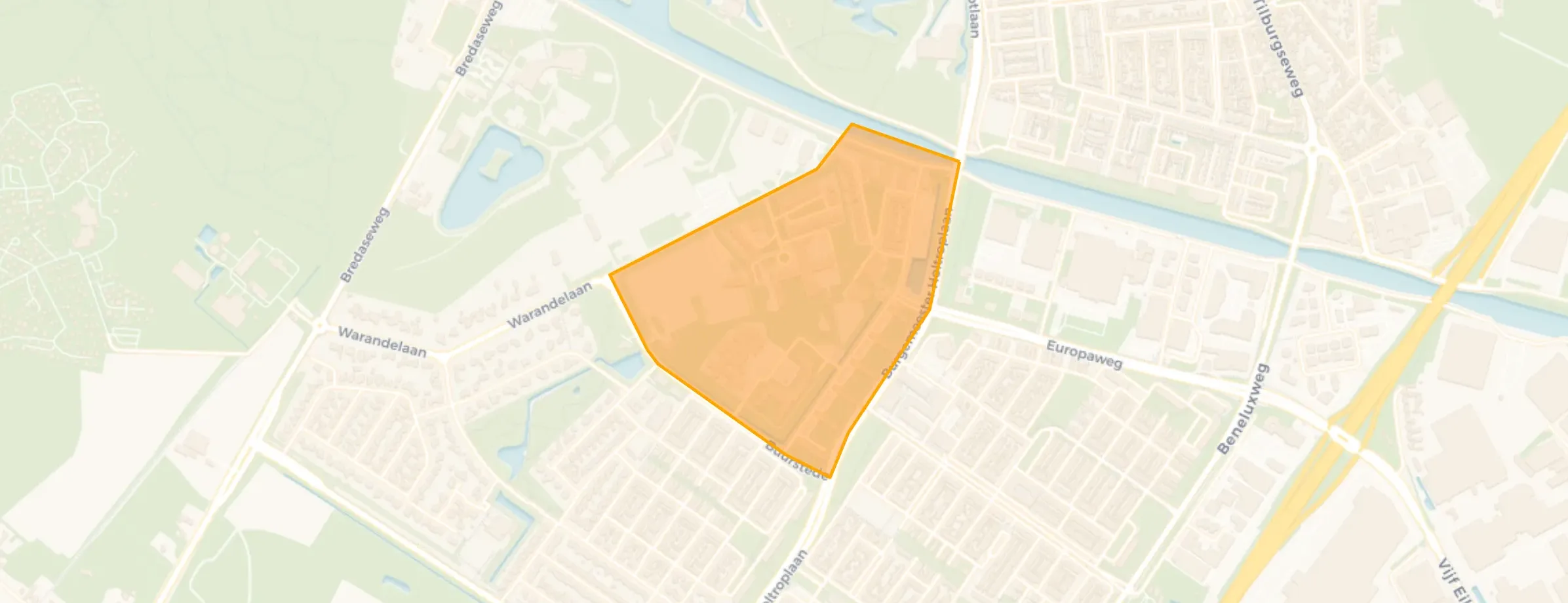
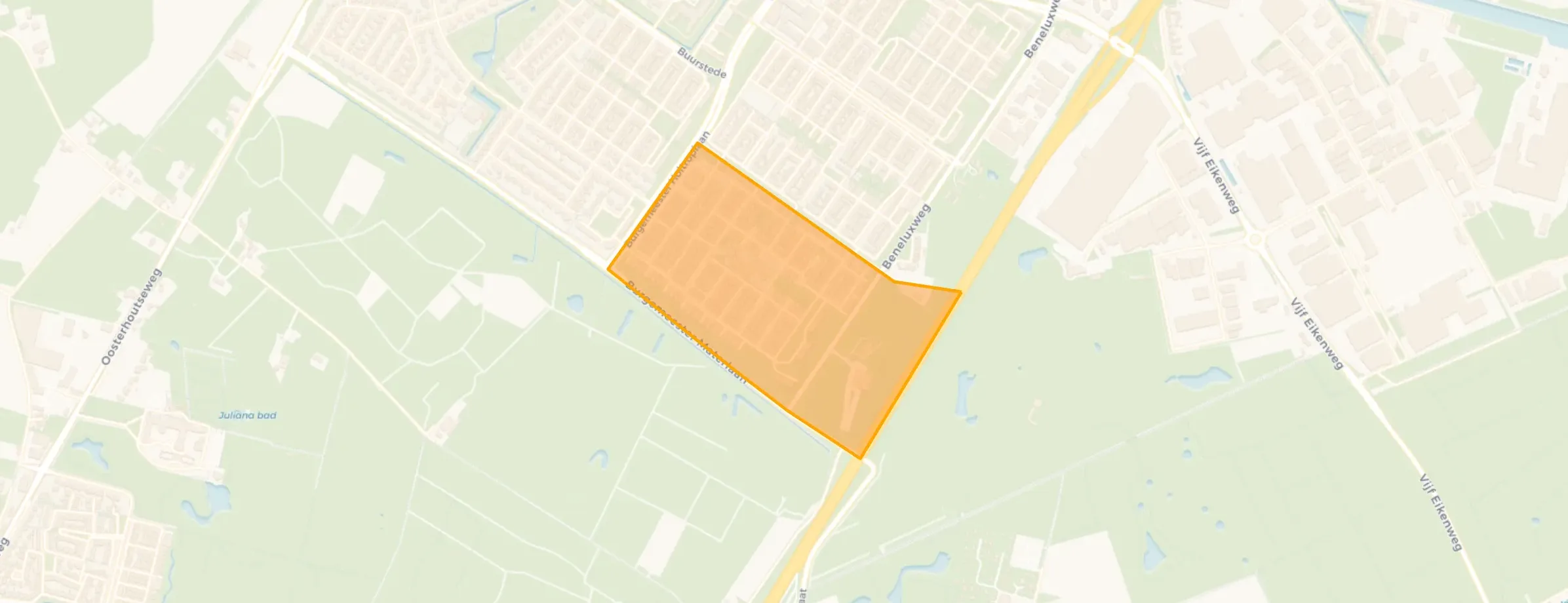
District in Oosterhout
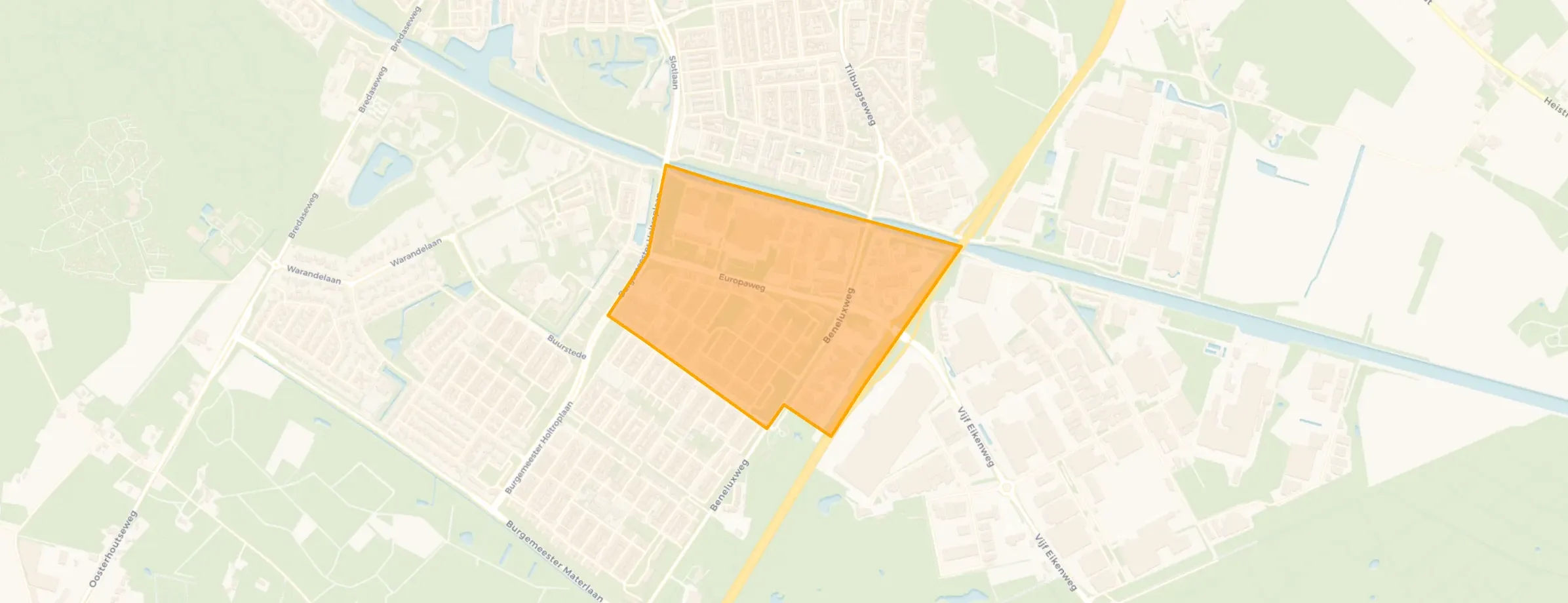
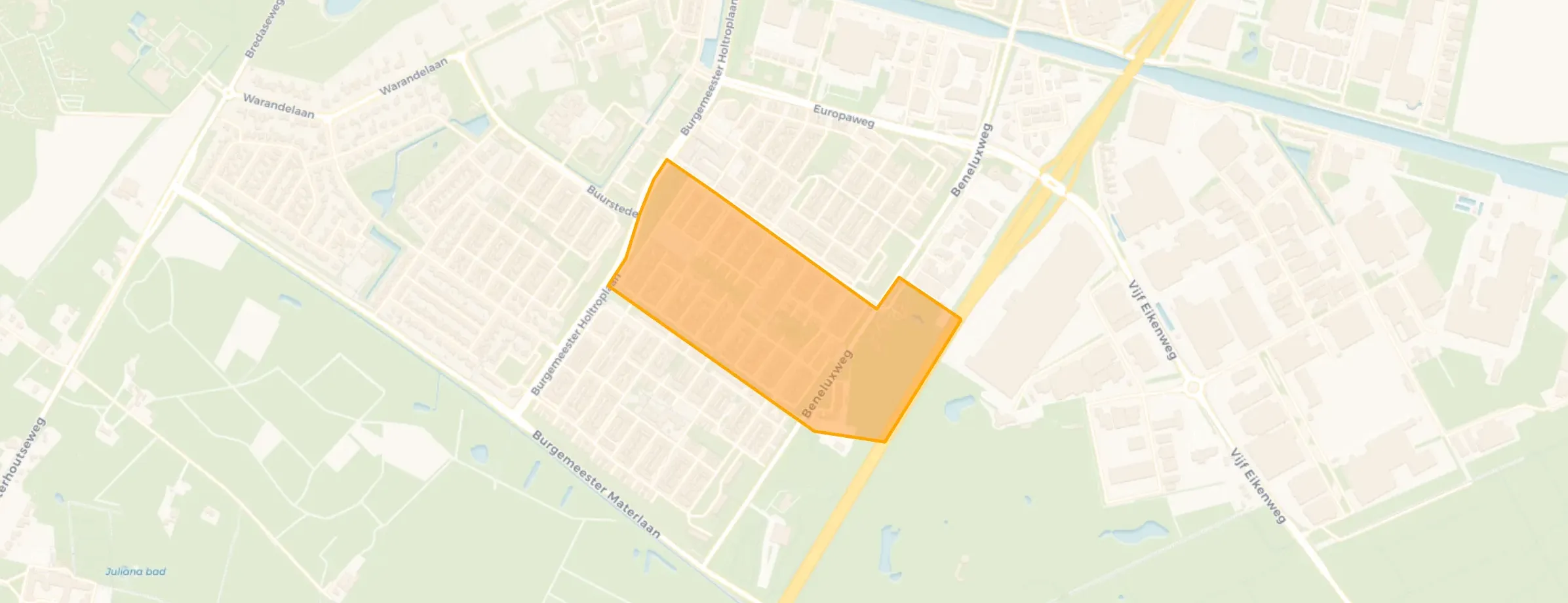
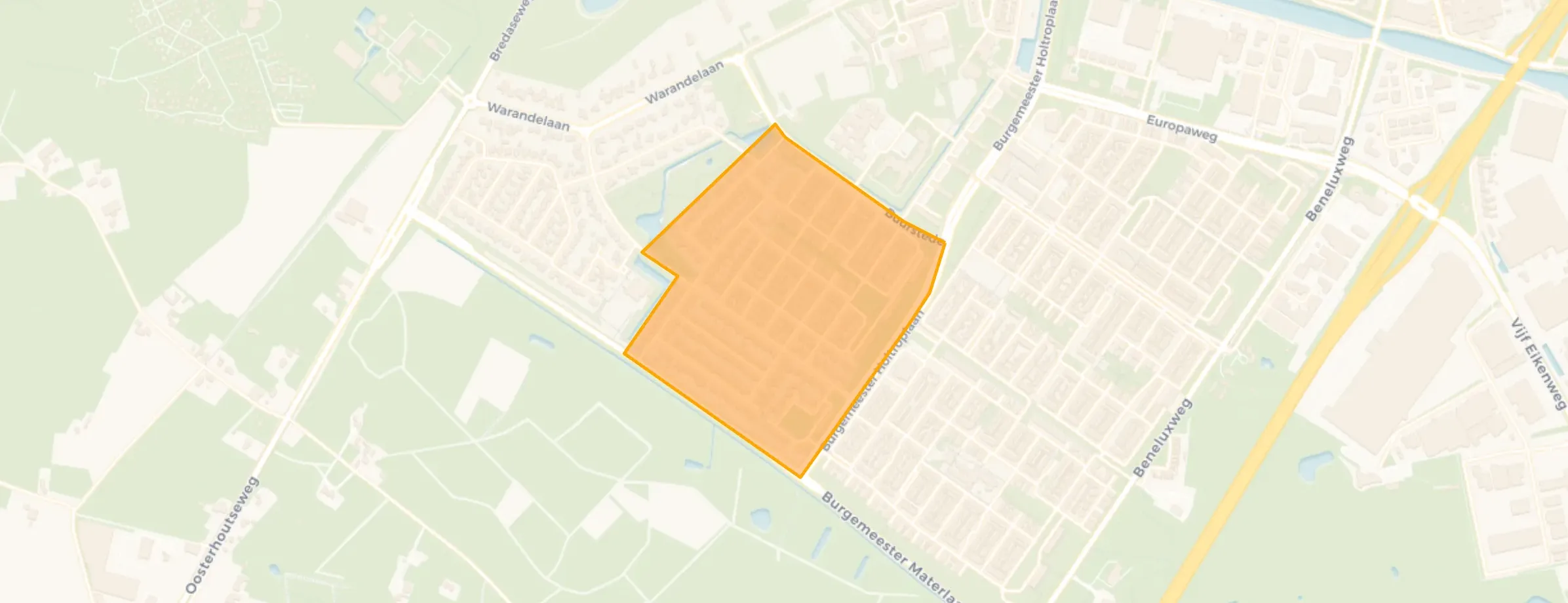
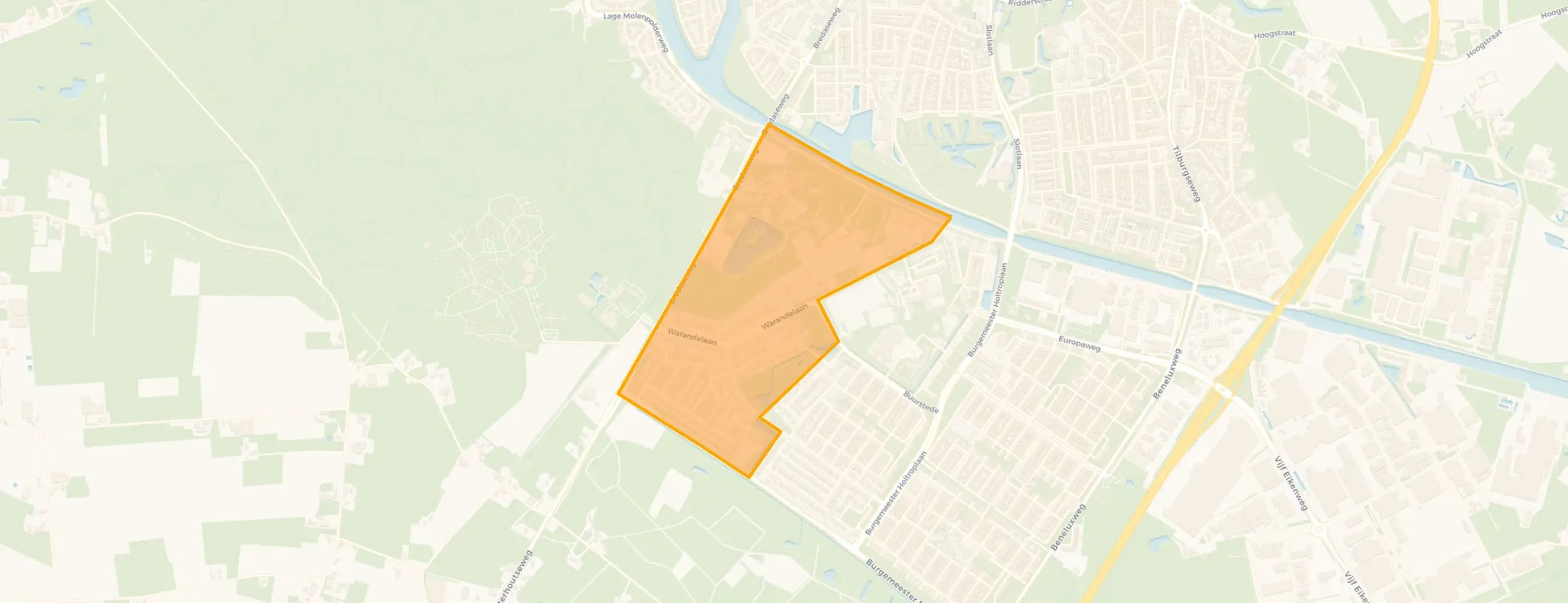
Oosterheide is located in the province of Noord-Brabant, in the municipality of Oosterhout The district has a total area of 283 hectares, of which 276 hectares are land and 7 hectares are water. The district is coded as WK082605. The postcode area is 4903RA-4904SX.
Oosterheide has 8.830 residents. Of these, 48,9% are men and 51,1% are women. Most residents are 45 to 65 years (25,1%). The other age groups are 24,3% for '25 to 45 years', 22,9% for '65 years or older', 16,1% for '0 to 15 years' and 11,5% for '15 to 25 years'. Of the residents, 46,4% is unmarried, 38,6% is married, 9,1% is divorced and 6,0% is widowed. 5.085 residents originate from the Netherlands, 840 come from Europe and 2.910 come from countries outside Europe.
There are 3.985 households in Oosterheide. 37,5% of these are single-person households, 29,4% households without children and 33,1% households with children. The average household size is 2,2 persons.
In Oosterheide there are 7.000 income recipients. The average income per income recipient is €32.000, which is €3.800 (11%) lower than the national average of €35.800. Per resident, the average income is €25.900, which is €3.300 (11%) lower than the national average of €29.200. Most residents of Oosterheide are educated to a lower level. 37,6% have a lower education (VMBO or MBO 1), 37,4% have an intermediate education (HAVO, VWO or MBO 2-4) and 25,0% have a university or higher professional education (HBO/WO).
Of the 8.830 residents, around 59% are in paid employment, which amounts to 5.210 people. This is 6% lower than the national average of 65%. The majority of workers are in salaried employment (86%), while 14% are self-employed. In Oosterheide, 31% of residents receive a benefit. The largest group is those receiving a state pension (AOW). 1.840 people receive this benefit.
In Oosterheide there are 4.044 homes with an average assessed value (WOZ) of €302.000. Of these, around 95% are occupied and 5% unoccupied. Most homes are rental properties. This amounts to 58% rental homes and 42% owner-occupied homes. Of the homes, 42% privately owned, 53% owned by housing associations and 5% owned by other landlords. The most common construction periods in Oosterheide are 1950-1970 (57%) and 1970-1980 (23%).
There are currently no homes for sale in Oosterheide. The most recently listed home is Gentiaanstraat 5 by Biemans Makelaardij | NVM - Qualis op Funda. No homes were sold in Oosterheide over the past year.
There are currently no homes for rent in Oosterheide. The most recent home is Hildebrandlaan 63, offered by www.klikvoorwonen.nl. No homes were let in Oosterheide over the past year.
No recent rental data available for Oosterheide.
In Oosterheide there are 4.213 addresses with a registered energy label. The most common labels are A (44%), C (23%) and D (16%). On average, an address in Oosterheide uses 2.590 kWh of electricity per year. This is 8% below the national average of 2.810 kWh. With an annual consumption of 1.020 m³ per address, natural gas consumption is 20% below the national average of 1.280 m³.
Nice neighbours. Cosy atmosphere of the area
Auto-translated to English by AIMy experience with the neighbourhood is good, but I miss a water supply such as a public tap and the schools in this neighbourhood are not so good; those just outside the neighbourhood are better. What is good is the wooded surroundings.
Auto-translated to English by AIThe neighbourhood is very nice, not many strange things happen. Very accessible and connection to public transport around the corner. Primary school is in the area and there are secondary schools within cycling distance. There is a shopping centre within cycling/walking distance. Many sports facilities and restaurants.
Auto-translated to English by AIThe neighbourhood is deteriorating significantly in terms of crime and safety. They are now renovating the neighbourhood, which may take a while, but where they are working there is of course some nuisance, but afterwards it can only become more beautiful and pleasant. Bos Landgoed Oosterheide and Floraliapark are nearby, where you can enjoy walking and many activities are organised for young and old! "De Bunthoef" now on the Beneluxweg, a centre where a lot is organised, but where you can also go for serious matters, which I find very pleasant in this area. The hygiene in and around the houses could be better. Which is also partly due to the residents themselves. Better control. Perhaps more frequent rubbish collection instead of once a month, twice... Bulky waste collection again at fixed times, so that people without transport or much money can still dispose of their waste. So that it doesn't remain everywhere in the neighbourhood, where rats and other vermin take over. Currently, people have been on a waiting list for a house for years but get nothing, while those houses are rented out to "refugees"; that should be looked into more carefully. I am not against genuine refugees who are not safe in their own country, but many are men and leave their families behind in that "unsafe" country. Perhaps it's time to sort out what and who really have a right to a house. Better flow-through... e.g. people in a large house where only one person lives should move to a smaller house.
Auto-translated to English by AICosy, lots of greenery. Public transport is nearby. Owner-occupied and rental homes mixed neighbourhood. Mixed nationalities.
Auto-translated to English by AINo problems, lots of foreign people, but they are friendly so no issues with that. Shops nearby, buses nearby etc. A lot of renovation and construction for housing is currently going on. The municipality is doing their best to make something of it.
Auto-translated to English by AIPlenty of shops in the neighbourhood. Close to the motorway. Public transport is also nearby. Market every week.
Auto-translated to English by AIAn insane, decaying neighbourhood, birds of a feather flock together in the flats, drugs crime and alcohol, I'm fighting for a better living environment
Auto-translated to English by AIThe housing stock is mainly post-war — 93% was built between 1945 and 1990.
Over the past year a home for sale in Oosterheide was listed for an average of €498,060 (€3,408 per m²). Last quarter prices fell by 36%.
Residents give Oosterheide a 7.1 out of 10 based on 8 reviews. The strongest score is for nature and greenery (8.2), the weakest for cleanliness (5.9).
From Oosterheide you can on average reach a supermarket at 0.8 km, a GP at 0.9 km, a railway station at 8.3 km, a primary school at 0.8 km (as the crow flies, source: CBS).
Right now you will find 52 homes for sale and 1 homes for rent in Oosterheide.