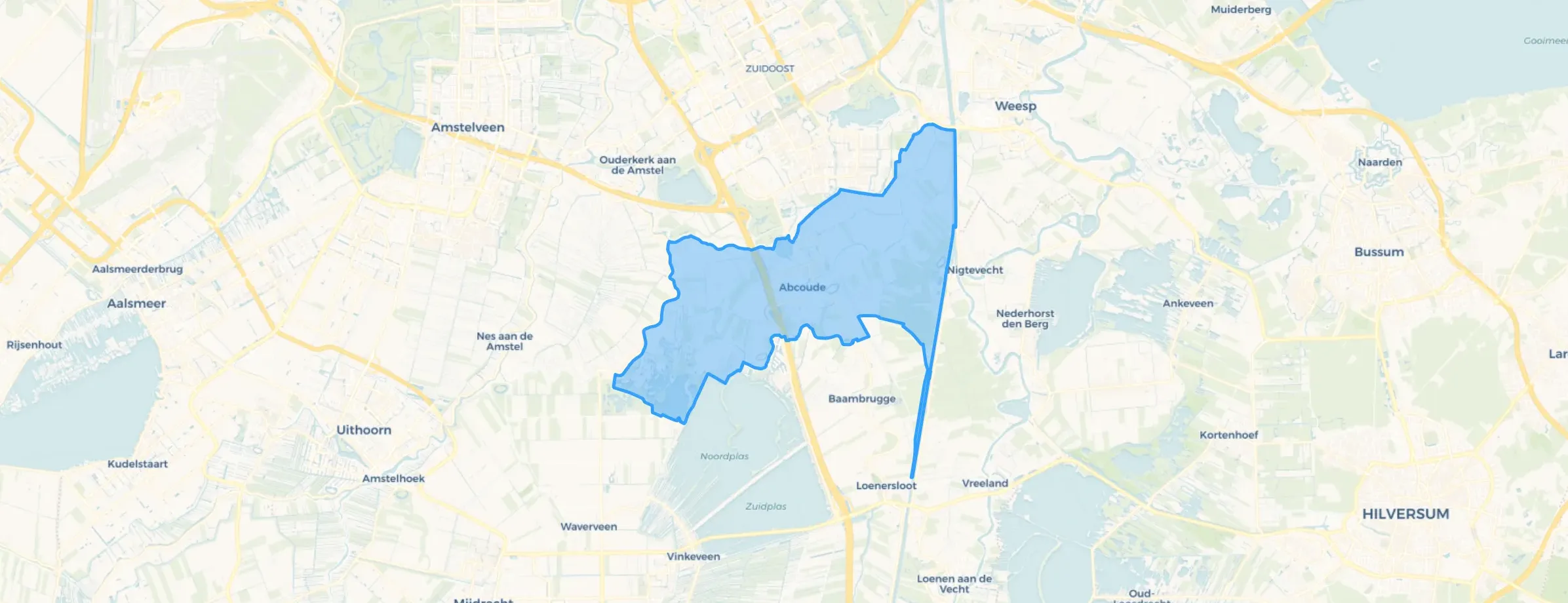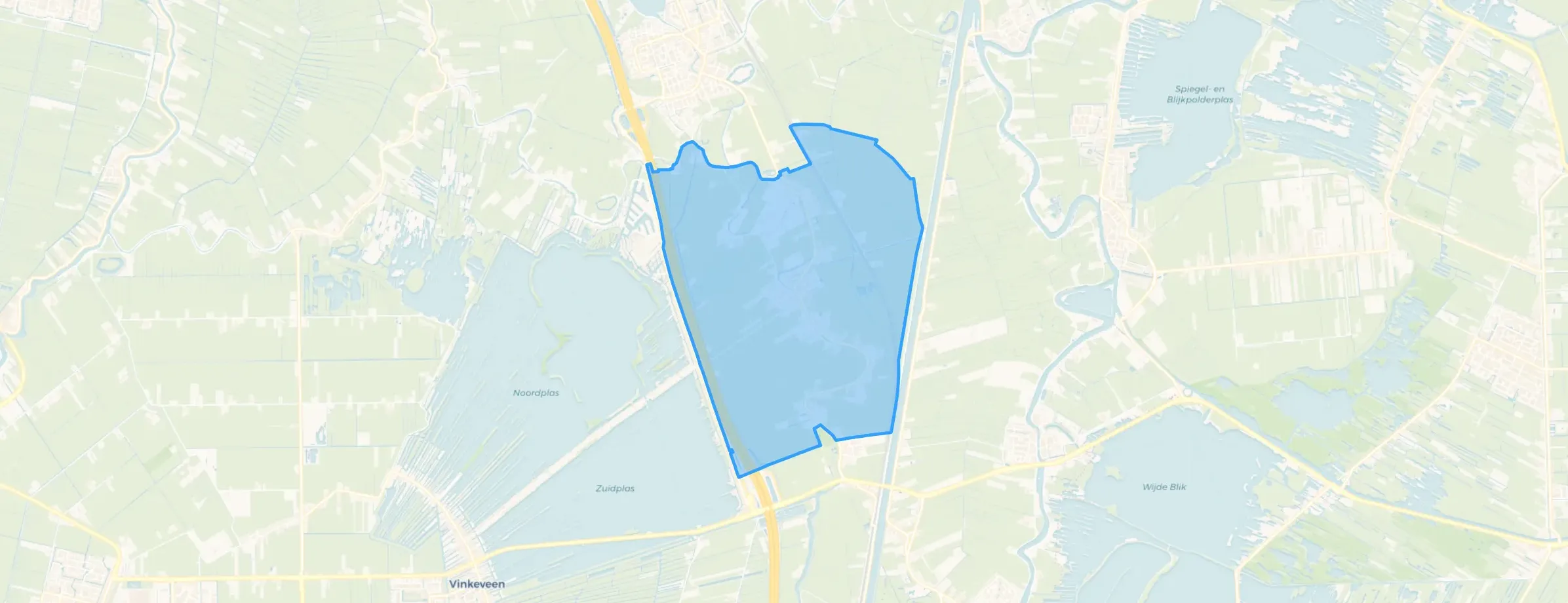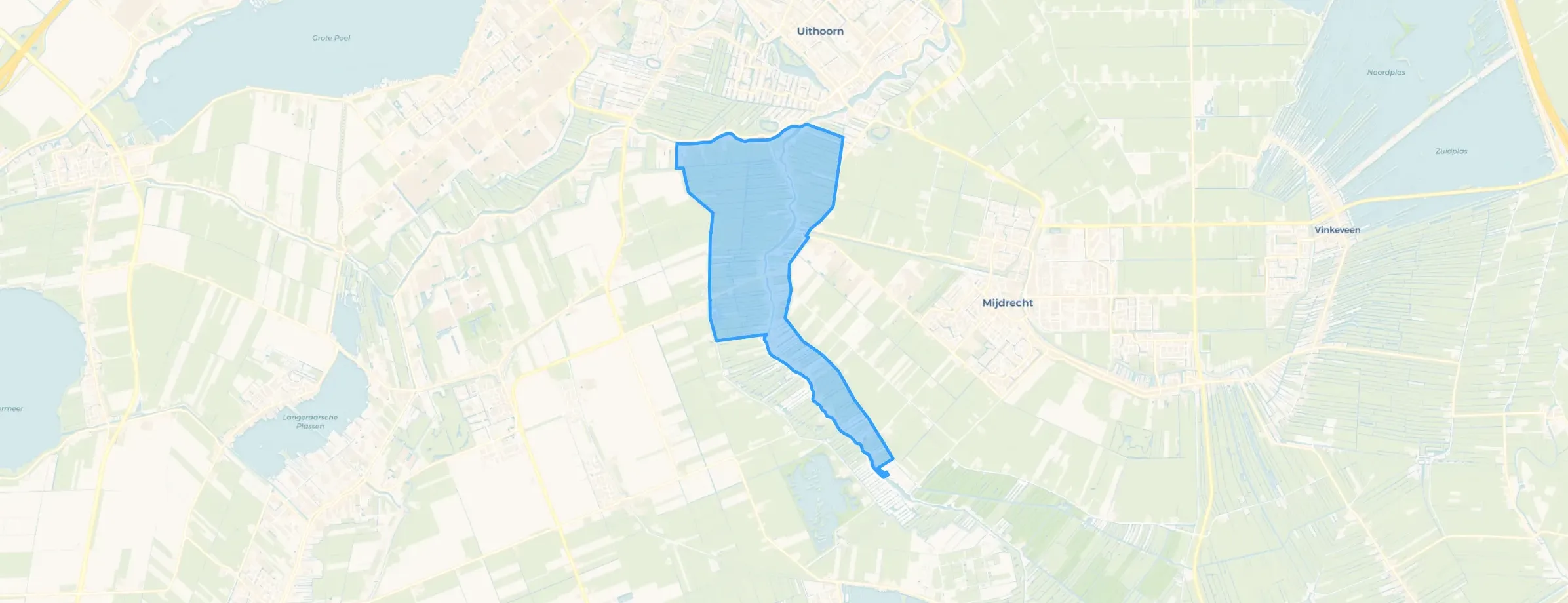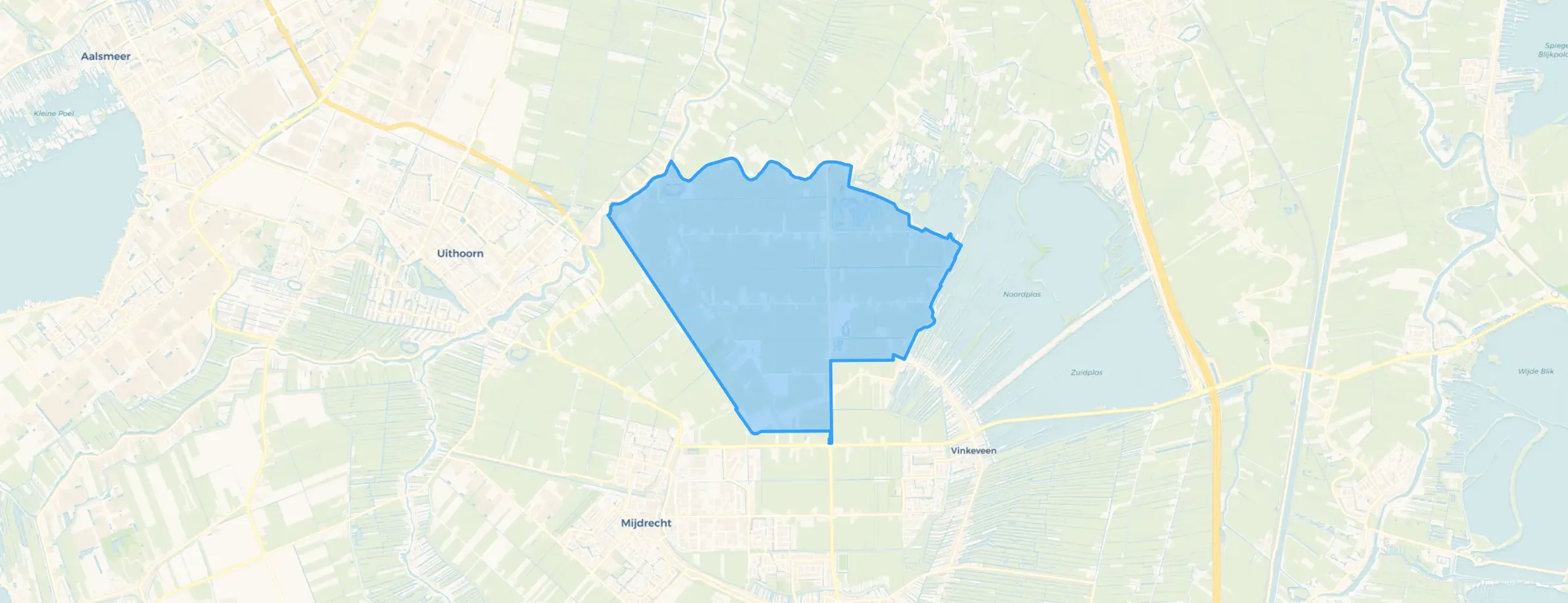
Municipality in Utrecht
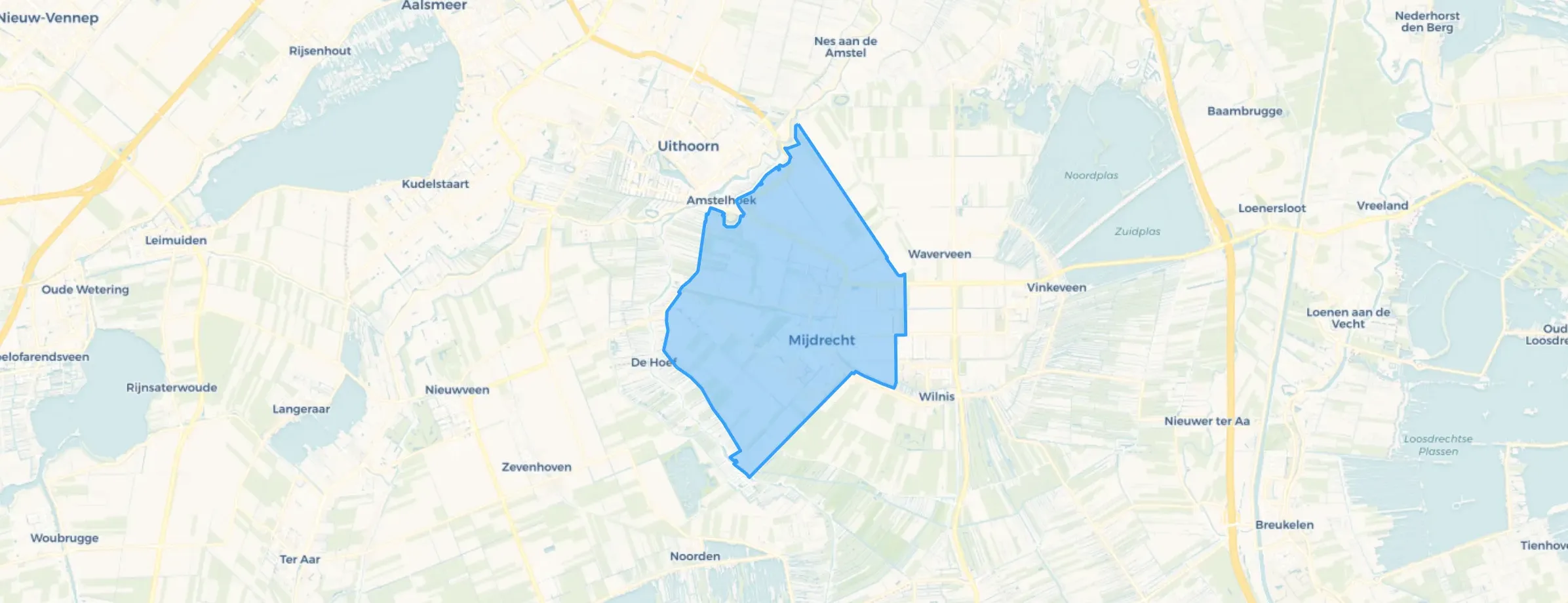
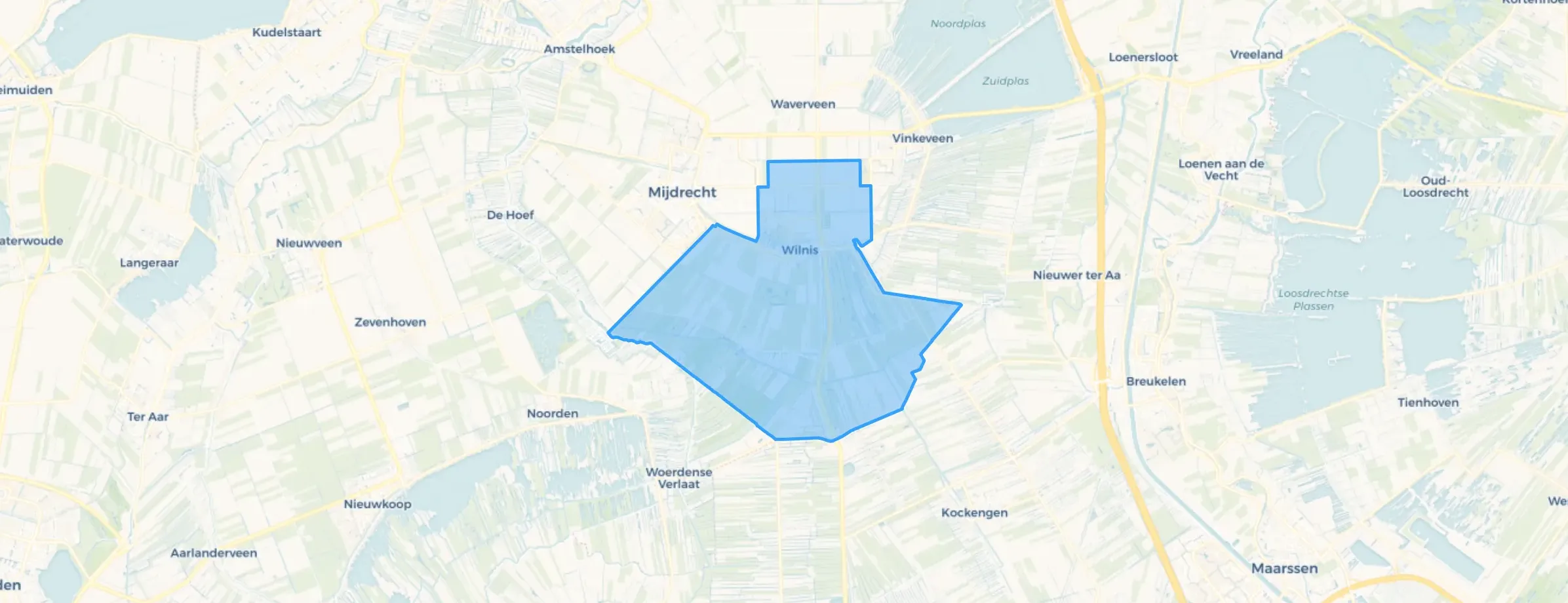
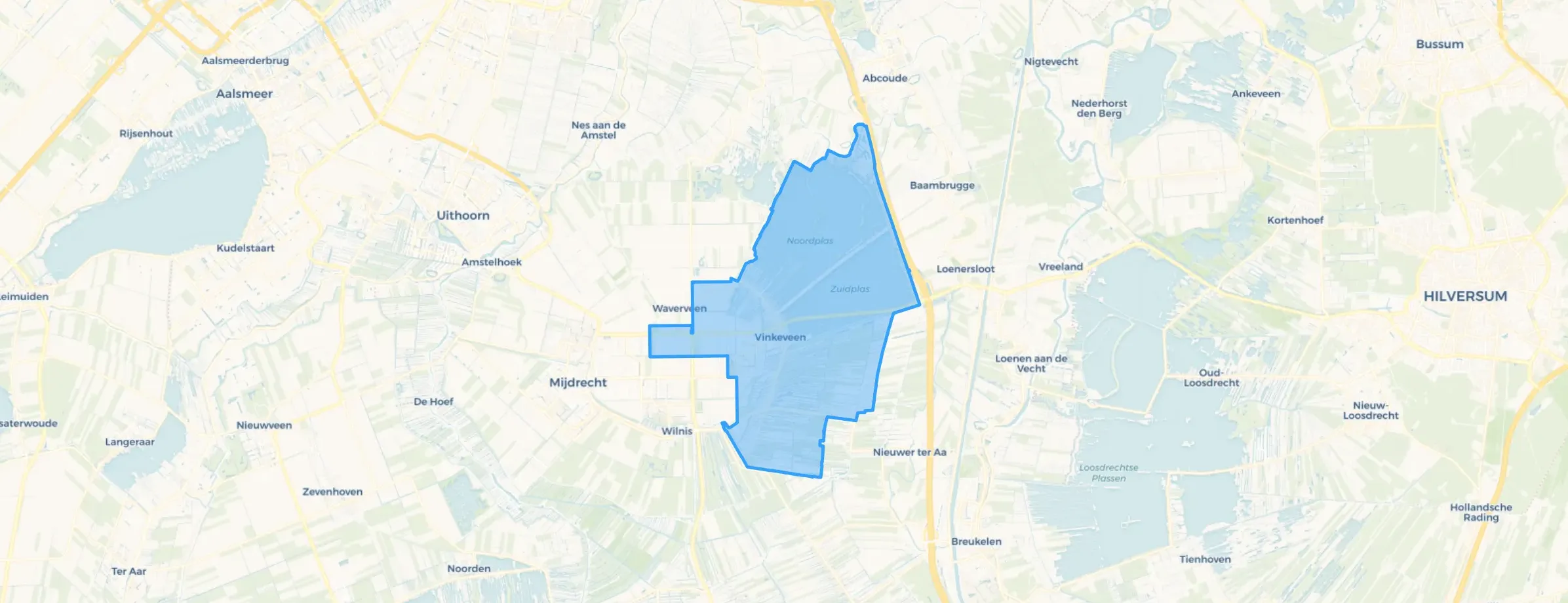
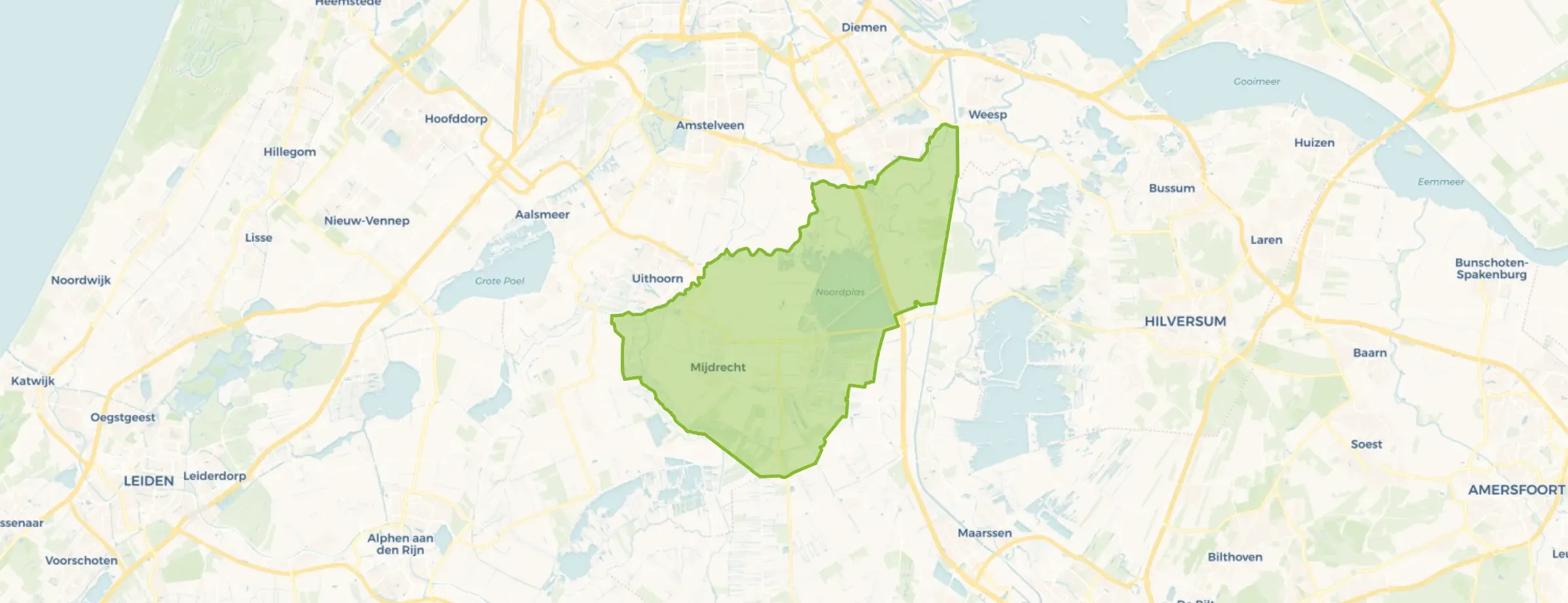
De Ronde Venen is located in the province of Utrecht The municipality has a total area of 11.698 hectares, of which 9.968 hectares are land and 1.730 hectares are water. The municipality is coded as GM0736. The postcode area is 1391AA-3648XZ.
De Ronde Venen has 45.813 residents. Of these, 49,5% are men and 50,5% are women. Most residents are 45 to 65 years (29,2%). The other age groups are 22,4% for '65 years or older', 21,7% for '25 to 45 years', 15,7% for '0 to 15 years' and 11,0% for '15 to 25 years'. Of the residents, 46,2% is unmarried, 41,5% is married, 7,3% is divorced and 5,0% is widowed. 36.400 residents originate from the Netherlands, 3.278 come from Europe and 6.135 come from countries outside Europe.
There are 19.963 households in De Ronde Venen. 31,7% of these are single-person households, 31,0% households without children and 37,2% households with children. The average household size is 2,3 persons.
In De Ronde Venen there are 36.800 income recipients. The average income per income recipient is €43.600, which is €7.800 (22%) higher than the national average of €35.800. Per resident, the average income is €36.000, which is €6.800 (23%) higher than the national average of €29.200. Most residents of De Ronde Venen are educated to an intermediate level. 42,8% have an intermediate education (HAVO, VWO or MBO 2-4), 32,6% have a university or higher professional education (HBO/WO) and 24,7% have a lower education (VMBO or MBO 1).
Of the 45.813 residents, around 68% are in paid employment, which amounts to 31.153 people. This is 3% higher than the national average of 65%. The majority of workers are in salaried employment (78%), while 22% are self-employed. In De Ronde Venen, 25% of residents receive a benefit. The largest group is those receiving a state pension (AOW). 9.080 people receive this benefit.
In De Ronde Venen there are 18.872 homes with an average assessed value (WOZ) of €516.000. Of these, around 96% are occupied and 4% unoccupied. Most homes are owner-occupied. This amounts to 34% rental homes and 66% owner-occupied homes. Of the homes, 66% privately owned, 24% owned by housing associations and 10% owned by other landlords. The most common construction periods in De Ronde Venen are 1950-1970 (24%) and 1980-1990 (20%).
There are currently no homes for sale in De Ronde Venen. The most recently listed home is Heulweg 28 by KORVER MAKELAARS | Altijd 't juiste adres ! op Funda. No homes were sold in De Ronde Venen over the past year.
There are currently no homes for rent in De Ronde Venen. The most recent home is Marickenlaan 2, offered by Brockhoff Verhuur. No homes were let in De Ronde Venen over the past year.
No recent rental data available for De Ronde Venen.
In De Ronde Venen there are 20.080 addresses with a registered energy label. The most common labels are C (31%), A (25%) and B (16%). On average, an address in De Ronde Venen uses 2.980 kWh of electricity per year. This is 6% above the national average of 2.810 kWh. With an annual consumption of 1.120 m³ per address, natural gas consumption is 13% below the national average of 1.280 m³.
Very antisocial next to me.
Auto-translated to English by AIThe neighbourhood is very quiet and family-friendly, there is also a school nearby and there are many friendly neighbours.
Auto-translated to English by AIBeautiful neighbourhood, lots of greenery, much too fast driving by all traffic, the maximum speed is only 30 km/h and is hugely exceeded in some places. Behind houses, 3 cars regularly come a few times a week and according to residents, drugs are traded, judging by the packaging left behind. Children play there, but the police do not check despite various reports and video footage that have been offered to the police.
Auto-translated to English by AIThe neighbourhood looks good with various beautiful and nice houses. The number of playing children is increasing, but for them it is very unsafe because the through road Viergang, where a maximum speed of 30 km/h applies, is used as a racetrack by cars, trucks and mopeds. Sometimes there is an electronic speed display, where very often speeds that the user considers normal, such as 60 to even 90 km per hour, are achieved. I have observed this myself when I monitored the speed registration for a while, but no results of the registration findings ever come out. I have often complained about this, but to no avail. My preference is therefore to put many more stickers and signs along and on the road and more higher speed bumps. Also on various remote parking lots behind residential blocks, we have various cars gathering in the evening hours between 10:00 PM and 12:00 AM on Tuesdays and Fridays, and we see on camera that multiple people get into one car and later disappear in all directions, and this happens every week. We have reported this to the police, but as far as we know, nothing has ever been checked about what the youth are up to there. We as a neighbourhood find this worrying. All in all, we hope that the situation on the Viergang improves and that speed-limiting actions are taken, as well as checking what the youngsters are up to on the parking lots.
Auto-translated to English by AIFairly good experience. There are primary schools and a secondary school. This is very convenient if you are going to live here with a family. I do notice that more and more nature is disappearing, which is a shame. Also, in some places there is a lot of rubbish on the streets. The village is very convenient and is easily accessible by bus from most places. Every Thursday there is a market in the village with delicious food. During holidays there are also fun things to find in the village, such as an ice rink at Christmas and a flea market on King's Day. On King's Day there is also always a fair, which does get more expensive every year.
Auto-translated to English by AIHave been living here for about 7 years now, very safe, not much crime except during New Year's Eve.
Auto-translated to English by AIEasy to do your shopping and you can also go for a good walk. The people who live there are also very sociable and if you want something to eat or drink, you can do so in the many restaurants or cafés.
Auto-translated to English by AIPublic transport is getting worse and worse. There's always dog poop on the dyke and loads of people walking, so you often can't cycle at full speed. In the street, people live who tinker with mopeds. Guess what noise that makes. The church clock chimes every hour, and if you're unlucky and the hands are turned by a storm, then also at night. There's not really a patch of forest if you have a dog yourself. Are there good points? Yes, primary school around the corner, easily accessible by car (but then you MUST have one). Public transport to Utrecht and Bijlmer from Mijdrecht centre both exactly 1 hour by bus and train. Woerden less than an hour.
Auto-translated to English by AI
The housing stock is mainly post-war — 51% was built between 1945 and 1990.
Over the past year a home for sale in De Ronde Venen was listed for an average of €806,543 (€5,686 per m²).
A rental home in De Ronde Venen cost an average of €2,331 per month (€22 per m²).
Residents give De Ronde Venen a 7.5 out of 10 based on 9 reviews. The strongest score is for education (8.1), the weakest for cleanliness (7.2).
Gemeente De Ronde Venen has 45,813 residents. Many families: 37% of the households have children.
The housing supply in De Ronde Venen is remarkably efficient: 62% has an A, A+ or B label. The average natural gas consumption per household is 1,120 m³ per year.
From De Ronde Venen you can on average reach a supermarket at 1.1 km, a GP at 1.2 km, a railway station at 9.2 km, a primary school at 0.9 km (as the crow flies, source: CBS).
Right now you will find 296 homes for sale and 26 homes for rent in De Ronde Venen.

Buurtje.nl uses cookies to make the site work and to improve it. In doing so, we process data such as your IP address and the pages you visit.
We use this data for three purposes: running the website (functional), measuring visits so we can improve Buurtje.nl (analytics), and — if you allow it — tailoring ads to your interests (marketing).
How we handle your data is described in our privacy policy. You can change your preferences at any time via 'Cookie preferences' at the bottom of every page.
Choose per category which cookies we may place. Read more in our privacy policy.