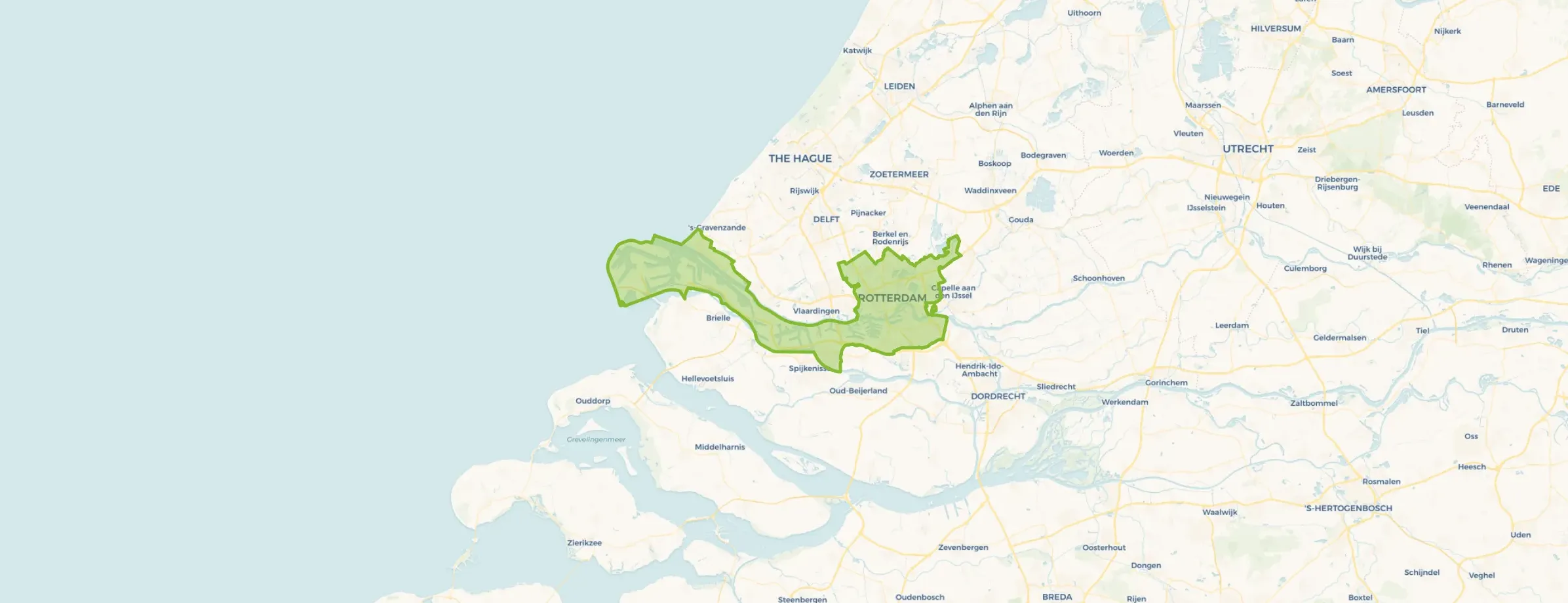
Dorp is located in the province of Zuid-Holland, in the municipality of Rotterdam, in the district Hoek van Holland. The neighbourhood has a total area of 380 hectares, of which 324 hectares are land and 56 hectares are water. The neighbourhood is coded as BU05991702. The postcode area is 3151AA-3151ZC.
Four residents rate the neighbourhood as good with a score of 7.2. They describe it as 'Quiet but still lively', 'Row houses, no neighbours' and 'Chill neighbourhood'. Aspects such as education, greenery, safety are rated well in this neighbourhood, while cleanliness and housing score less well.
Dorp has 7.920 residents. Of these, 48,5% are men and 51,5% are women. Most residents are 65 years or older (28,6%). The other age groups are 27,3% for '45 to 65 years', 21,2% for '25 to 45 years', 13,1% for '0 to 15 years' and 9,9% for '15 to 25 years'. Of the residents, 44,4% is unmarried, 37,8% is married, 11,0% is divorced and 6,9% is widowed. 6.200 residents originate from the Netherlands, 710 come from Europe and 1.010 come from countries outside Europe.
There are 3.965 households in Dorp. 41,5% of these are single-person households, 29,1% households without children and 29,4% households with children. The average household size is 2,0 persons. The national average is 2,1 persons.
In Dorp there are 6.700 income recipients. The average income per income recipient is €38.000, which is €4.200 (10%) lower than the national average of €42.200. Per resident, the average income is €32.500, which is €2.400 (7%) lower than the national average of €34.900. Most residents of Dorp are educated to an intermediate level. 47,1% have an intermediate education (HAVO, VWO or MBO 2-4), 32,5% have a lower education (VMBO or MBO 1) and 20,4% have a university or higher professional education (HBO/WO).
Of the 7.920 residents, around 69% are in paid employment, which amounts to 5.465 people. This is 3% lower than the national average of 72%. The majority of workers are in salaried employment (85%), while 15% are self-employed. In Dorp, 34% of residents receive a benefit. The largest group is those receiving a state pension (AOW). 2.040 people receive this benefit.
In Dorp there are 3.974 homes with an average assessed value (WOZ) of €345.000. Of these, around 97% are occupied and 3% unoccupied. Most homes are rental properties. This amounts to 59% rental homes and 41% owner-occupied homes. Of the homes, 41% privately owned, 53% owned by housing associations and 6% owned by other landlords. The most common construction periods in Dorp are 1950-1970 (29%) and 1970-1980 (20%).
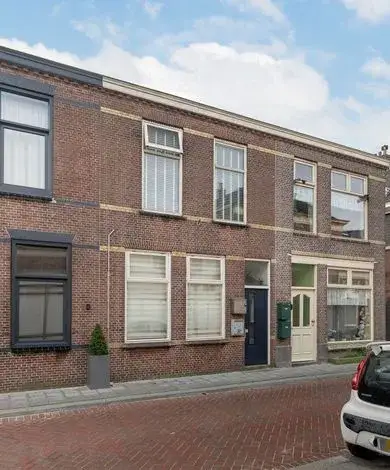
There are currently 19 homes for sale in Dorp. The most recently listed home is President Jan Lelsstraat 33 by BROCH Makelaars op Funda. Over the past year, 65 homes were sold in Dorp. On average, a home was sold within 51 days.
The average asking price for a home for sale in Dorp over the past year was €428.069. This is 24% higher than the average assessed value (WOZ) of €345.000. The average asking price per m² of floor area is €4.278.
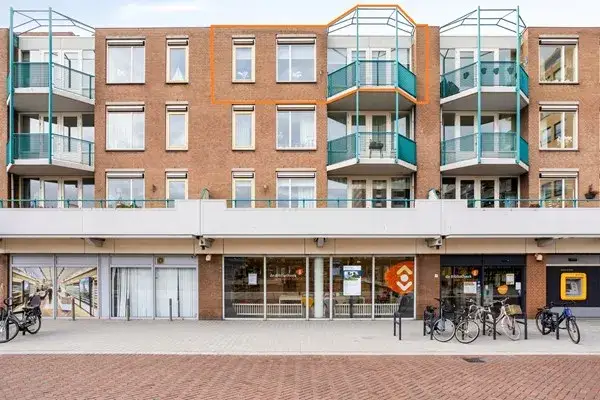
There are currently no homes for rent in Dorp. The most recent home is Marjorystraat 49, offered by LIV Residential op Pararius. Over the past year, 1 homes were let in Dorp. On average, a listing was let within 353 days.
The average rent for a rental home in Dorp over the past year was €1.615 per month. Per m² of floor area that is €13 per month.
In Dorp there are 3.059 addresses with a registered energy label. The most common labels are C (29%), A (24%) and B (18%). On average, an address in Dorp uses 2.170 kWh of electricity per year. This is 15% below the national average of 2.550 kWh. With an annual consumption of 730 m³ per address, natural gas consumption is 9% below the national average of 800 m³.
I've lived in this neighbourhood almost my entire life. Over the years a lot has changed, but it's still a friendly welcoming place.
Auto-translated to English by AIThe neighbourhood is not super cosy but everyone sometimes has a chat or says hello.
Auto-translated to English by AII've lived here almost my whole life and it's a pretty chill neighbourhood. There's a playground with a football pitch almost right behind my house, so that was great when I was young. There's also a school a 4-minute walk away and next to it a new shop is coming. So amenities are close by. The only downside is that the metro is a 20-minute walk away.
Auto-translated to English by AILittle is organised for young people aged 17, which means some youngsters hang out on the streets, and I think that's a real shame.
Auto-translated to English by AIThe housing stock is mainly post-war — 58% was built between 1945 and 1990. In addition, the most common type is terraced houses (41%).
Over the past year a home for sale in Dorp was listed for an average of €428,069 (€4,278 per m²). That is 18% below the Dutch national average. Last quarter prices fell by 22%.
Residents give Dorp a 7.2 out of 10 based on 4 reviews. The strongest score is for education (8.3), the weakest for housing (5.8).
From Dorp you can on average reach a supermarket at 0.6 km, a GP at 0.6 km, a railway station at 18.0 km, a primary school at 0.5 km (as the crow flies, source: CBS).
Right now you will find 19 homes for sale in Dorp.