Neighbourhood in Arnhem
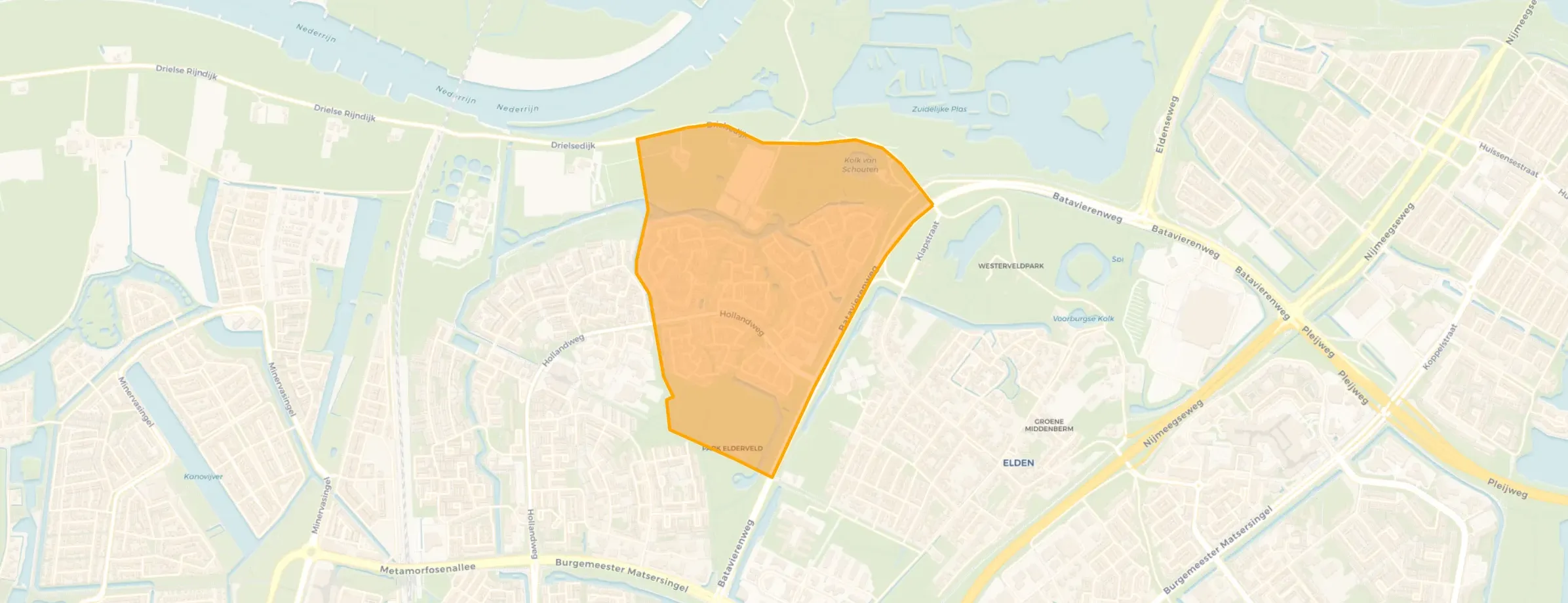
Elderhof is located in the province of Gelderland, in the municipality of Arnhem, in the district Elderveld The neighbourhood has a total area of 82 hectares, of which 77 hectares are land and 5 hectares are water. The neighbourhood is coded as BU02022197. The postcode area is 6841HJ-6843ZZ.
Three residents rate the neighbourhood as good with a score of 7.0. They describe it as 'Nice, well-maintained neighbourhood', 'A quiet and cosy neighbourhood' and 'A cosy and close-knit neighbourhood'. Aspects such as greenery, housing, cleanliness are rated well in this neighbourhood, while safety and education score less well.
Elderhof has 2.815 residents. Of these, 50,3% are men and 49,9% are women. Most residents are 65 years or older (30,4%). The other age groups are 24,7% for '45 to 65 years', 21,5% for '25 to 45 years', 14,2% for '0 to 15 years' and 9,2% for '15 to 25 years'. Of the residents, 38,7% is unmarried, 51,0% is married, 5,9% is divorced and 4,6% is widowed. 2.185 residents originate from the Netherlands, 215 come from Europe and 415 come from countries outside Europe.
There are 1.220 households in Elderhof. 23,0% of these are single-person households, 41,8% households without children and 35,2% households with children. The average household size is 2,3 persons. The national average is 2,1 persons.
In Elderhof there are 2.400 income recipients. The average income per income recipient is €37.800, which is €4.400 (10%) lower than the national average of €42.200. Per resident, the average income is €33.900, which is €1.000 (3%) lower than the national average of €34.900. Most residents of Elderhof are educated to an intermediate level. 42,0% have an intermediate education (HAVO, VWO or MBO 2-4), 38,2% have a university or higher professional education (HBO/WO) and 19,8% have a lower education (VMBO or MBO 1).
Of the 2.815 residents, around 67% are in paid employment, which amounts to 1.886 people. This is 5% lower than the national average of 72%. The majority of workers are in salaried employment (88%), while 12% are self-employed. In Elderhof, 33% of residents receive a benefit. The largest group is those receiving a state pension (AOW). 770 people receive this benefit.
In Elderhof there are 1.209 homes with an average assessed value (WOZ) of €364.000. Of these, around 99% are occupied and 1% unoccupied. Most homes are owner-occupied. This amounts to 11% rental homes and 89% owner-occupied homes. Of the homes, 89% privately owned, 9% owned by housing associations and 2% owned by other landlords. The most common construction periods in Elderhof are 1970-1980 (50%) and 1980-1990 (48%).
There are currently 8 homes for sale in Elderhof. The most recently listed home is Enkhuizenstraat 40 by Bults Makelaardij. Over the past year, 85 homes were sold in Elderhof. On average, a home was sold within 38 days.
The average asking price for a home for sale in Elderhof over the past year was €406.818. This is 12% higher than the average assessed value (WOZ) of €364.000. The average asking price per m² of plot is €3.129.
There are currently no homes for rent in Elderhof. The most recent home is Purmerendstraat 46, offered by Blinq Makelaars op Vastgoed Nederland. Over the past year, 7 homes were let in Elderhof. On average, a listing was let within 25 days.
No recent rental data available for Elderhof.
In Elderhof there are 477 addresses with a registered energy label. The most common labels are C (53%), B (23%) and A (16%). On average, an address in Elderhof uses 2.570 kWh of electricity per year. This is 1% above the national average of 2.550 kWh. Natural gas consumption in this neighbourhood, at 800 m³ per year, exactly matches the national average.
My neighbourhood is very pleasant to live in. I do notice that I live in the nicest part of the neighbourhood myself. If you go more towards the shopping centre, you end up in a grim area and I don't feel very comfortable there. Many confused people, elderly people and mobility scooters causing nuisance. There have also been many attacks in my neighbourhood. Again, the area where I live is very nice, but the neighbourhood is starting to become increasingly grim.
Auto-translated to English by AIIt is relatively quiet, not often very noisy. Only sounds that come from other places (like from Gelredome). People are friendly, but there isn't a very strong bond. People won't quickly get together to do something. There are also many families living here, so there are children. There are several playgrounds in the neighbourhood. But some are already a bit outdated and could use a makeover.
Auto-translated to English by AIUnfortunately, my neighbour is a real dictator because he interferes with everything and calls the police for no reason, but apart from that it's very cosy
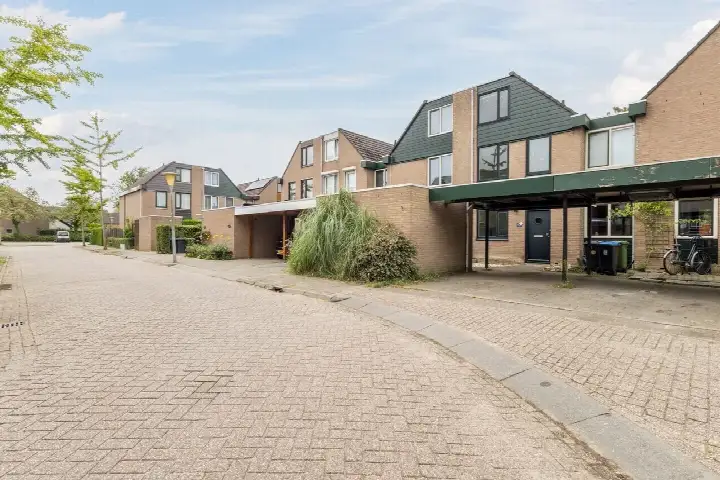
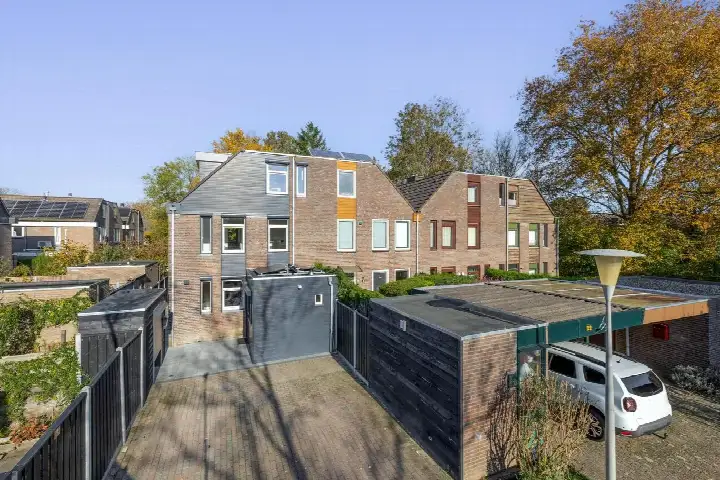
Auto-translated to English by AIThe housing stock is mainly post-war — 99% was built between 1945 and 1990. In addition, the most common type is terraced houses (65%).
Over the past year a home for sale in Elderhof was listed for an average of €405,179 (€3,448 per m²). That is 23% below the Dutch national average.
Residents give Elderhof a 7.0 out of 10 based on 3 reviews. The strongest score is for housing (7.7), the weakest for education (5.7).
Buurt Elderhof has 2,815 residents. The largest age group is 65+ years (30%). Many families: 35% of the households have children.
From Elderhof you can on average reach a supermarket at 1.0 km, a GP at 1.1 km, a railway station at 2.2 km, a primary school at 1.0 km (as the crow flies, source: CBS).