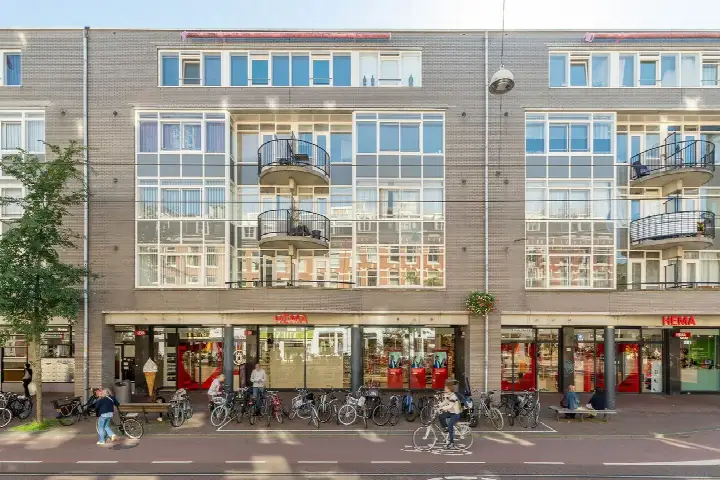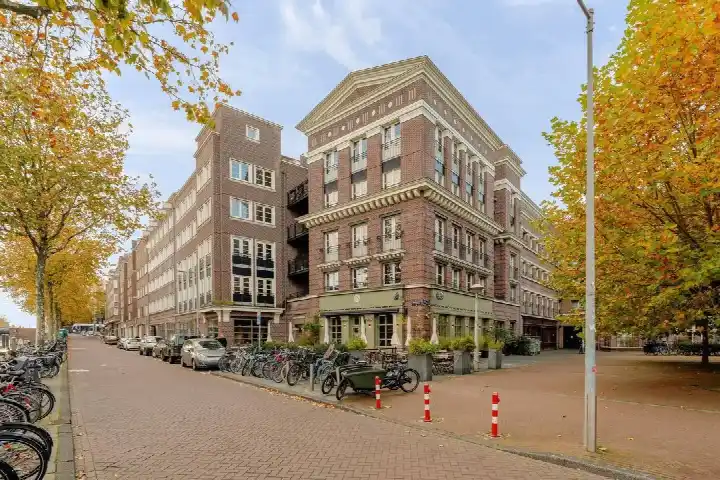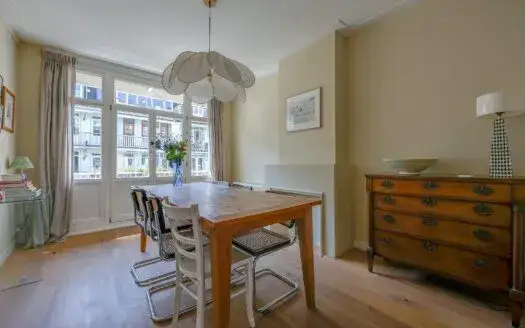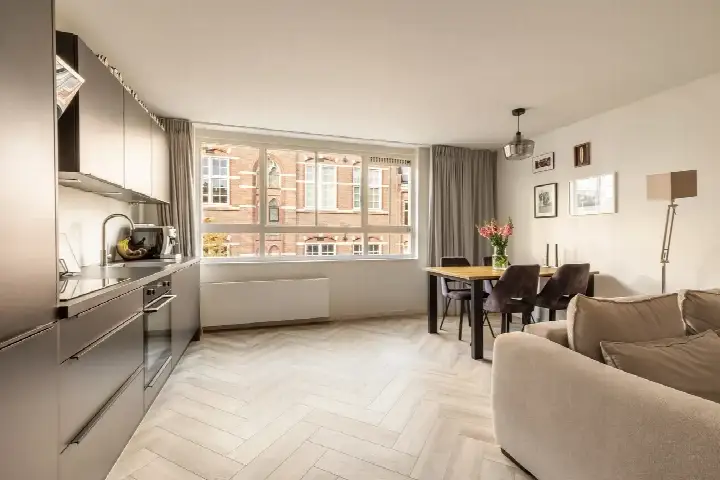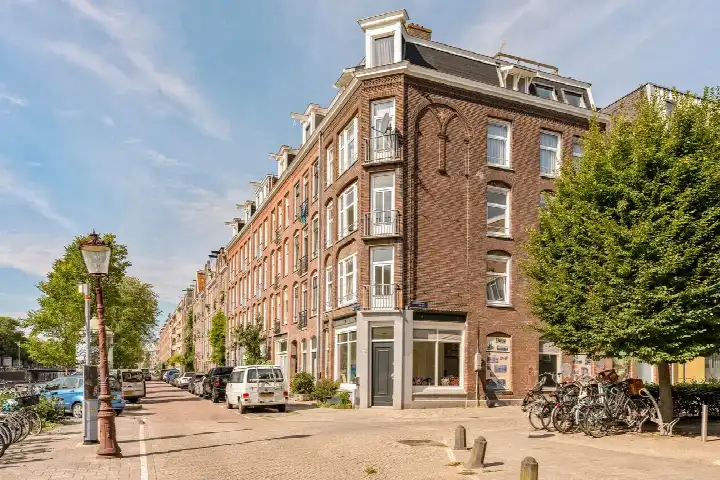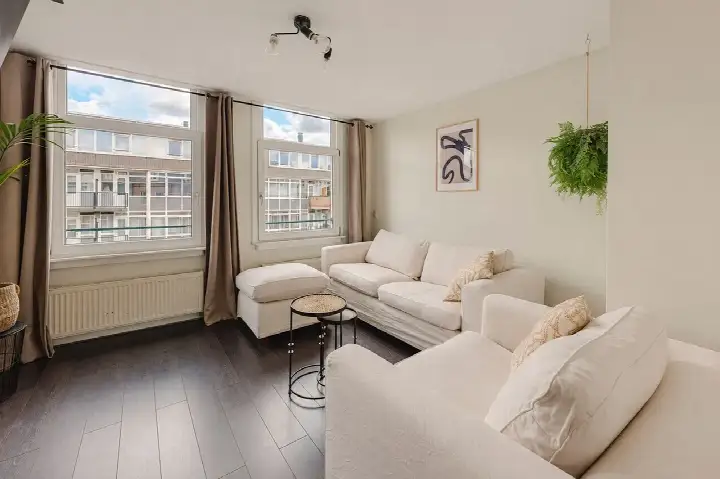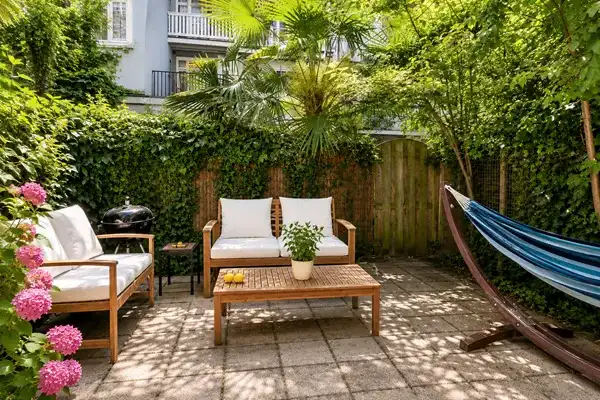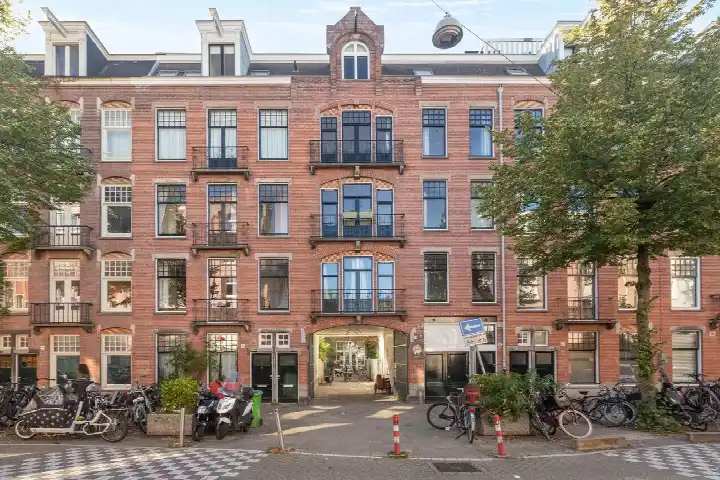





A classic Amsterdam apartment
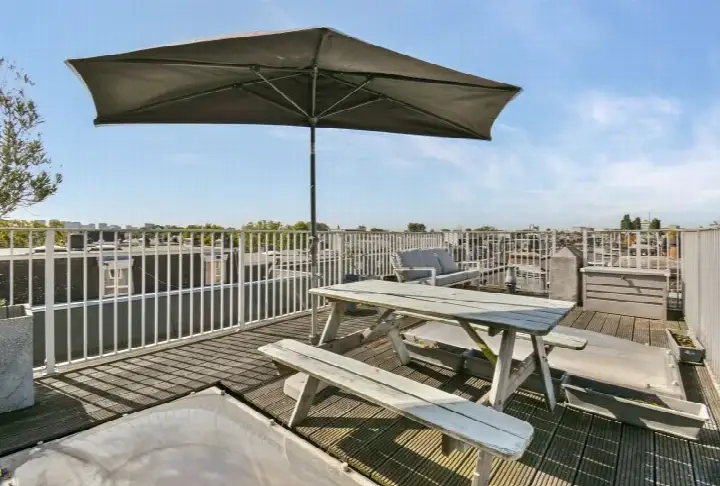
This apartment on Borgerstraat sits in the lively Borgerbuurt, a stone's throw from the Ten Katemarkt and the Kinkerstraat. With 66 m² and a C energy label, it's a manageable home in a sought-after part of town. The last known price of €550,000 was in line with the market, where the average apartment in the neighbourhood sold for around €537,000. For more context, see apartments in Amsterdam. This home has not been online since 9 July 2026.
The Borgerbuurt
The Borgerbuurt is a dense, multicultural neighbourhood with a real village feel. Two residents who have lived here for over 40 years describe it as a 'cosy mixed neighbourhood' with 'something for everyone, young and old together'. One notes that safety is decent but some streets could use better lighting, and that rubbish disposal depends on the residents. The area has plenty of schools and supermarkets, and accessibility is good, though older residents may miss removed bus stops. The neighbourhood has a high address density of over 11,000 per km², making it very urban. Learn more about the Borgerbuurt neighbourhood.
Life on the street
Your daily shopping is sorted: a SPAR is just around the corner, and an Albert Heijn is a couple of streets away. For fresh produce, the Ten Katemarkt is a five-minute walk. There are several primary schools within walking distance, including Basisschool Het Winterkoninkje and Kindcentrum De Kinkerbuurt, both just a few minutes away. The neighbourhood is part of the municipality of Amsterdam, which offers extensive amenities and public transport connections.
Source
When this home was still on the market, it was listed through several channels, including PB Makelaars o.z. and PB Makelaars o.z..
This summary was generated with AI and may contain errors. Always verify the details with the provider.
Features
Details of this home
Transfer
Price


Construction
Frequently asked questions
About Borgerstraat 143A, Amsterdam
Was €550,000 a fair price for this apartment?
The asking price of €550,000 was close to the average sale price in the Borgerbuurt, which was around €540,786 for apartments sold recently. The median asking price in the neighbourhood was €585,000, so this home was priced slightly below that. Given the 66 m² floor area, the price per m² was about €8,333, which was below the neighbourhood average of €10,022 per m². So it appeared priced.
What is the energy label and what does it mean?
The energy label is C, which is average for an older apartment in Amsterdam. In the Borgerbuurt, 33.3% of homes have label A, 50% have label B, and 16.7% have label C, so this home is on the lower end of the efficiency scale for the area.
How is the public transport in the Borgerbuurt?
The neighbourhood is well connected by tram and bus lines, with several stops on the Kinkerstraat and surrounding streets. The nearest train station is 3.2 km away, which is a bit of a walk but easily reachable by tram or bike. The area is very urban with a high address density, so public transport options are plentiful.
What is the neighbourhood like for families?
The Borgerbuurt has a mix of young and old residents, with about 315 households with children out of a total of 1,755 households. There are several primary schools within walking distance, such as Basisschool Het Winterkoninkje and Kindcentrum De Kinkerbuurt. The neighbourhood is multicultural and lively, with plenty of parks and playgrounds nearby.
How safe is the Borgerbuurt?
Residents give the neighbourhood a passing grade for safety, though one long-term resident notes that some streets could use better lighting. The total number of crimes recorded in the area is 241, which is moderate for a dense urban neighbourhood.
What are the nearby supermarkets?
There is a SPAR just 206 metres away, and an Albert Heijn at 256 metres, both within a few minutes' walk. Several other Albert Heijn locations are within 500-600 metres. The Ten Katemarkt, a large daily market, is also nearby for fresh produce and speciality foods.
How old is the building and what is its condition?
The building was constructed in 1904, typical of Amsterdam's 19th-century belt. The apartment has an energy label C, which suggests it has been updated with some insulation and double glazing, but the original character likely remains. The neighbourhood has 57.1% of homes built before 1945, so this is a classic Amsterdam apartment.
What is the parking situation like?
Parking in the Borgerbuurt is limited, as is common in central Amsterdam. The area has a high population density and narrow streets. Most residents rely on public transport, cycling, or parking permits. There are paid parking zones and some permit parking for residents, but availability can be tight.