



Two homes in the same city. One is for rent at €1,875 per month, the other for sale at €389,000. Convert that, and the home for sale equals over seventeen years of rent. In Breda, the same calculation would come to thirty years. Same country, completely different ratio between renting and buying.
At Buurtje.nl, we keep track of current rental and sales listings. For 32 municipalities with enough supply in both markets, we looked at the median monthly rent in the private sector and the median purchase price, and divided them. The result is a rough measure: how many years of rent does one home purchase cost? The result goes against intuition. It is precisely in the cities where renting is most expensive that buying is relatively most favourable.
First, the caveat
This is not financial advice and not a complete calculation. We compare bare asking prices, not what is paid after negotiation or at the notary. Mortgage interest, repayment, maintenance, and the rent that goes up every year are not included. And more importantly: the median rental home in our listings is smaller than the median home for sale, nationally about 85 versus 110 square metres. So part of the difference you see below compares a compact rental apartment with a more spacious home for sale. Where that significantly shifts the outcome, we mention it. See it as a rough thermometer of the relationship between the two markets, not as a precise break-even.
Nationally: over twenty years of rent
Across all 32 municipalities together, the median monthly rent in the private sector is €1,700 and the median purchase price is €435,000. One home purchase thus equals about 21 years of rent. If you correct for the fact that rental homes are smaller, and compare purely per square metre, that drops to about 16 years. Both figures tell the same story: renting in the Netherlands is no longer a cheap alternative.
Where buying is relatively favourable
The cities where one home purchase costs the fewest years of rent are almost all large cities with an expensive rental market:
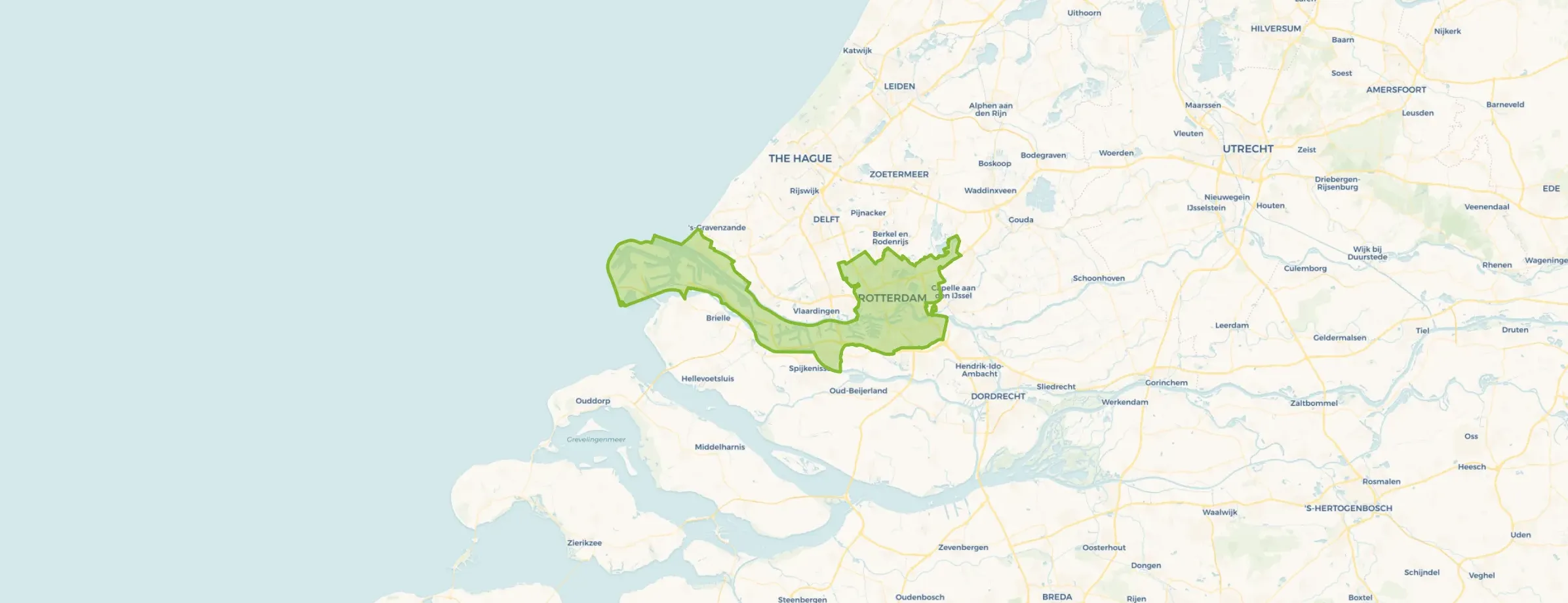
- Rotterdam: rent €1,875/mth, purchase €389,000, i.e. 17 years.
- The Hague: rent €1,885/mth, purchase €425,000, i.e. 19 years.
- Groningen: rent €1,200/mth, purchase €275,000, i.e. 19 years.
- Heerlen: rent €1,050/mth, purchase €259,000, i.e. 21 years.
- Amsterdam: rent €2,250/mth, purchase €575,000, i.e. 21 years.
Rotterdam stands out. Rents are high there, purchase prices relatively moderate for a large city, and that combination makes buying on paper the most attractive in the entire country. In Amsterdam, the correction per square metre does not help: there, homes for sale are on average smaller than rental homes, so the gap per metre actually becomes larger rather than smaller. In Amsterdam, you therefore pay a real premium for buying, even compared to the already high rents.
Where buying is relatively expensive
On the other side are mainly medium-sized cities outside the Randstad. There, rents are much lower, but purchase prices are not proportionally so, and thus the ratio increases:
- Zoetermeer: rent €1,258/mth, purchase €465,000, i.e. 31 years.
- Breda: rent €1,376/mth, purchase €495,000, i.e. 30 years.
- Tilburg: rent €1,228/mth, purchase €415,000, i.e. 28 years.
- Den Bosch: rent €1,458/mth, purchase €485,000, i.e. 28 years.
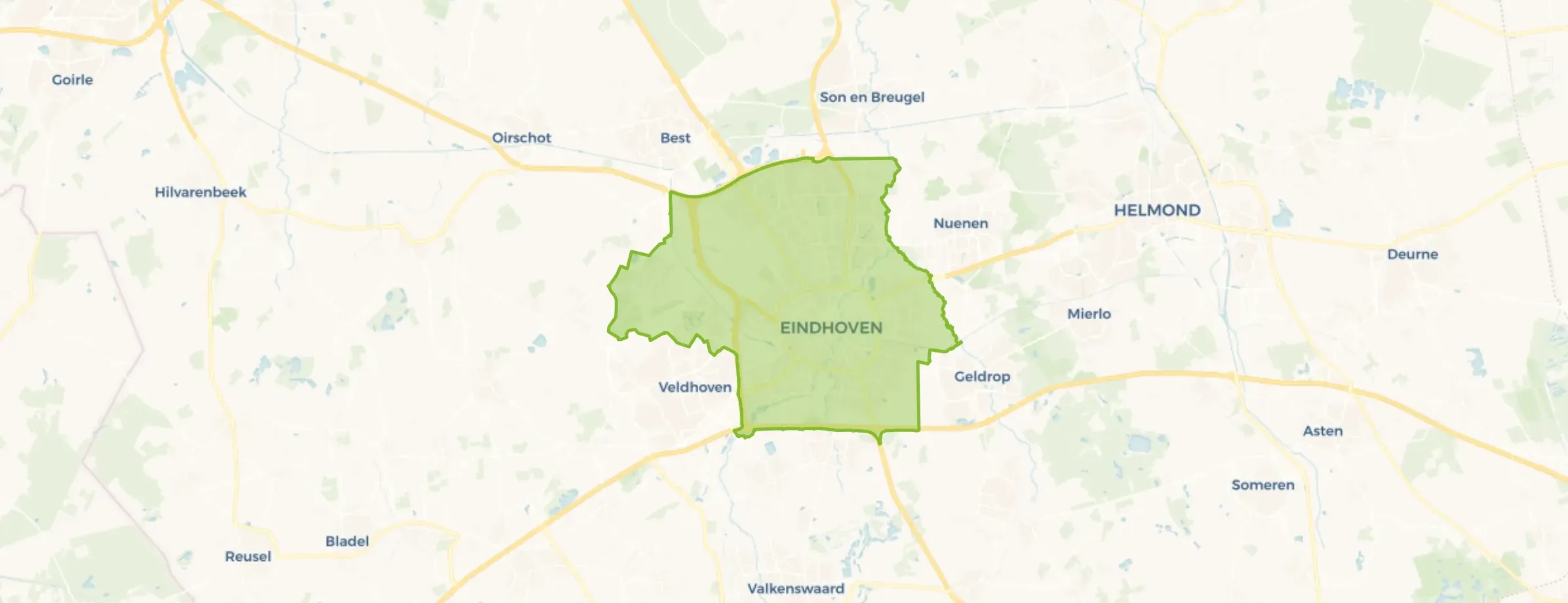
- Eindhoven: rent €1,450/mth, purchase €469,000, i.e. 27 years.
Here, a significant part of the size difference in the homes plays a role. In Zoetermeer, the median rental home is 73 square metres and the median home for sale is 113. If you correct for that, Zoetermeer drops from 31 to about 20 years, close to the national average. So the gap is real, but partly you are comparing a small rental apartment with a spacious home for sale. Anyone renting a home of the same size as buying in these cities will see the ratio much closer together.
What this means
The rough conclusion holds after all the reservations: renting is nowhere in the Netherlands a clearly cheaper alternative to buying. Where the rental market has risen the most, in the large cities, buying has actually become relatively more favourable, simply because rents are so high there. In medium-sized cities with a calmer rental market, that difference is smaller, and you pay a larger premium for ownership.
For anyone torn between renting and buying, this is a useful first check. Not as a definitive calculation, but as a feel for the market you are in. On Buurtje.nl, you can see the current rental and sales listings side by side per location, so you can check that ratio for your own city yourself.
Source: own current housing supply on Buurtje.nl, median asking prices in the private sector (no social housing, no room rentals). Asking prices are not transaction prices. Municipalities with at least 40 rental and 40 purchase homes in the supply.