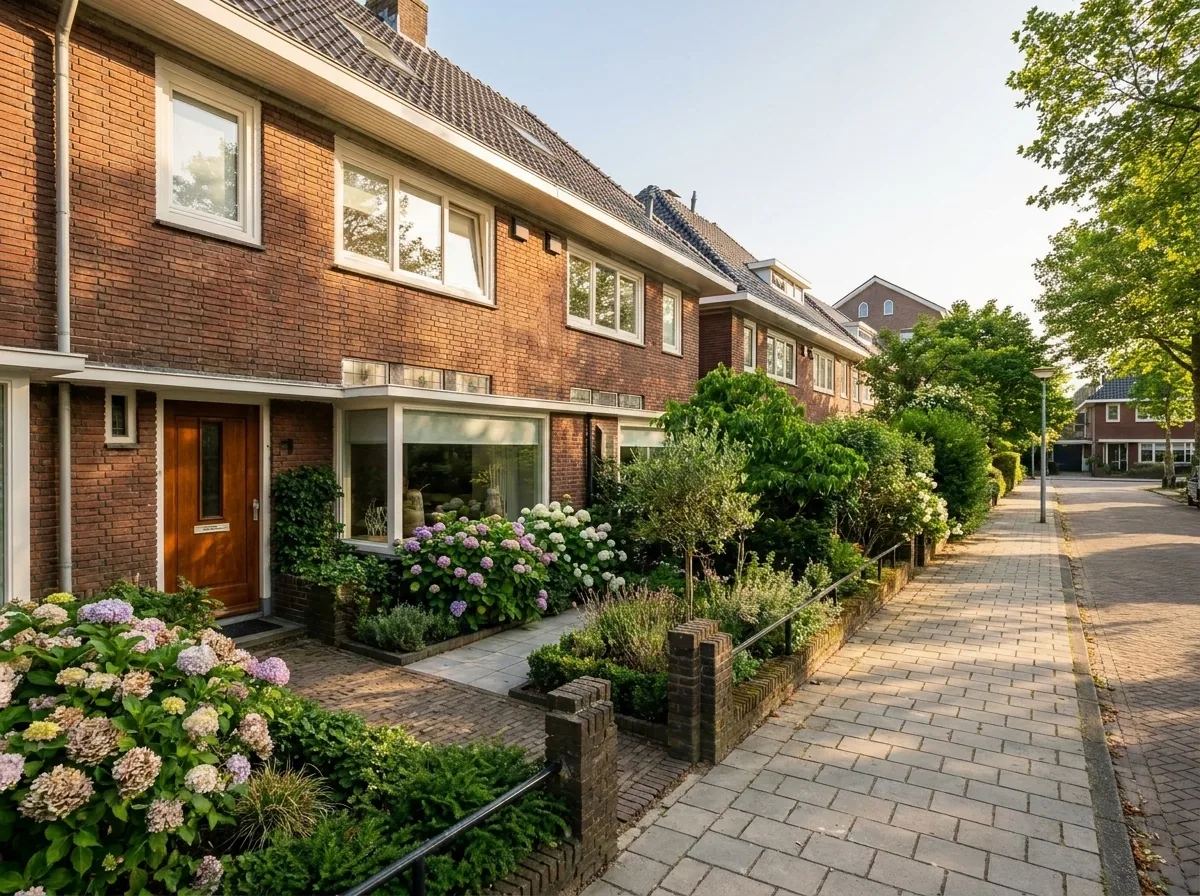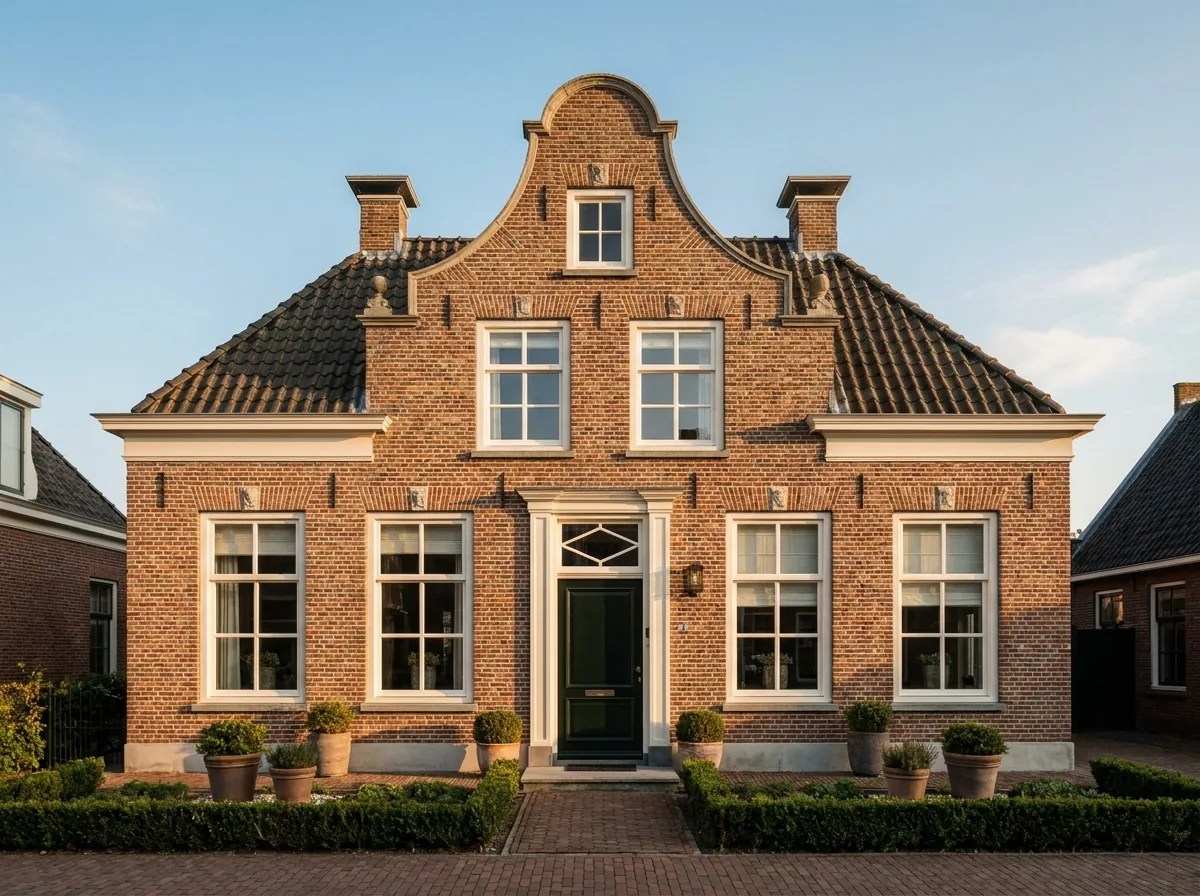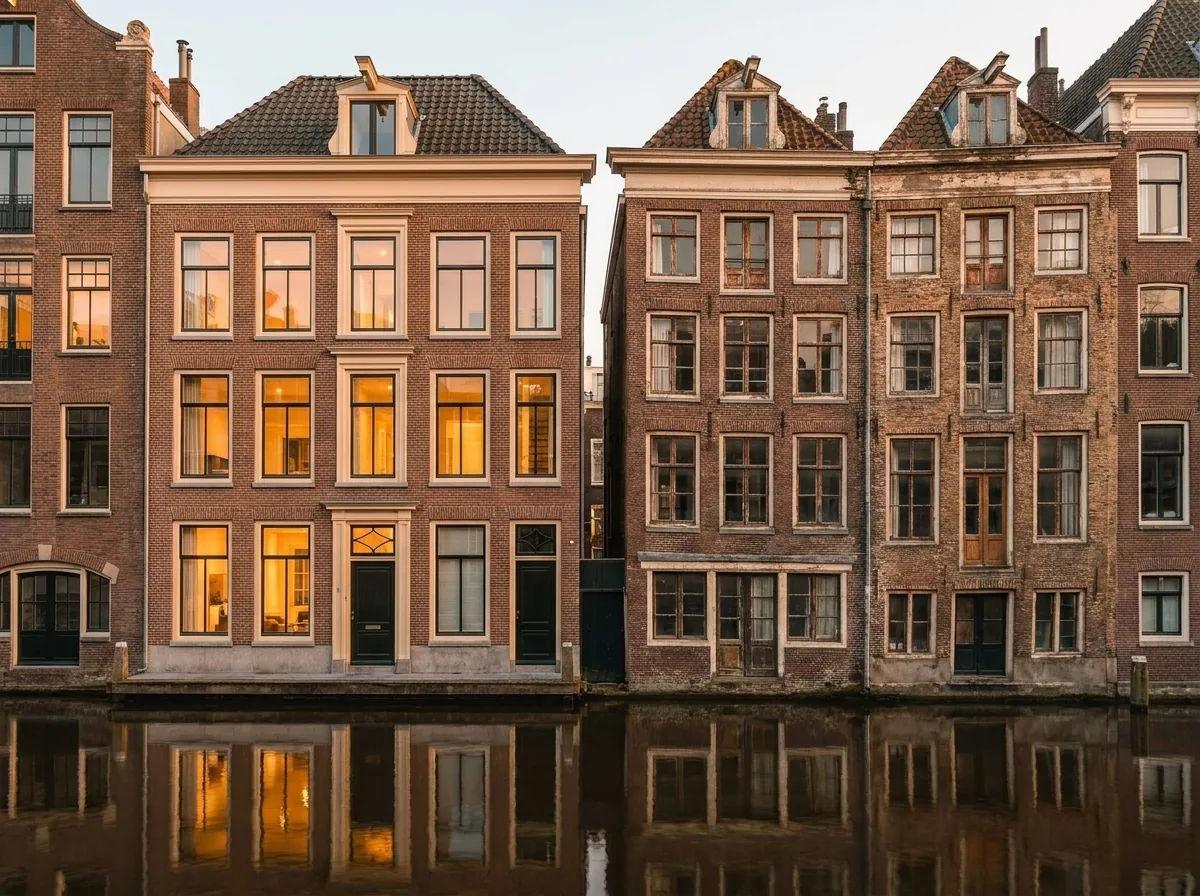
Two houses on the same street. Both built before 1945, both around a hundred square metres, both full of character. One has an A label after a major renovation, the other looks just as it did forty years ago: label G. What does that do to the asking price?
At Buurtje.nl we track the current housing market. We looked at all pre-war homes listed in the past eight months, compared how they are priced by energy label, and did the same for each province individually. The pattern is remarkably consistent. But before we show the figures, one important caveat that colours everything that follows.
No pure green premium
A pre-war property with an A label is almost never just well insulated. Almost always it comes with a complete renovation: new kitchen, new bathroom, new windows, sometimes an extension. So the label is not an isolated factor in our data; it is a highly visible proxy for "this house has recently been thoroughly overhauled". What you read below is in reality the price difference between a pre-war house that is ready to move into and one that still needs a lot of work. The label makes that difference visible.
Furthermore, buyers of pre-war homes often specifically seek out the original condition. A G label with untreated detailing, original windows and authentic floors is worth more to some enthusiasts, not less. That explains why the difference exists, but is not a factor of two.
The figures
We looked at ten provinces where supply was large enough to make comparisons (Drenthe and Flevoland had too few A-label listings to say anything meaningful). In all ten, the median asking price per square metre for an A-label home is higher than for a comparable G-label home. Not a single exception. The difference ranges from around 10% (Gelderland and Friesland) to over 36% (Groningen).
The five provinces with the largest relative premium:
- Groningen: label A €3,846/m² versus label G €2,816/m². Difference: €1,030/m², 37%.
- North Holland: €6,466 versus €4,824. Difference: €1,642/m², 34%.
- Limburg: €3,009 versus €2,302. Difference: €707/m², 31%.
- Overijssel: €3,960 versus €3,039. Difference: €921/m², 30%.
- Zeeland: €3,701 versus €2,989. Difference: €712/m², 24%.
For a house of 100 m², in Groningen that means a price difference of around €103,000 between "energetically good" and "energetically poor", within the same age category. In North Holland even €164,000, although there you have to deduct the most for location.
The lowest premiums are seen in Gelderland (+10%) and Friesland (+11%). Apart from the exact percentages, the differences are fairly spread regionally. One city really stands out, and it is not in any of the above provinces.
The exception: Amsterdam
In Amsterdam, the median asking price of a pre-war home with an A label is €8,764/m². For a comparable property with label G: €8,888/m². The G label is actually slightly higher, although that falls within the noise. That is a world of difference from the rest of the country.
The explanation is simple: in a market where every square metre is already heading towards nine thousand euros, the label barely has room to matter. Land price and location dominate. Anyone buying a pre-war property in Amsterdam is buying a neighbourhood and a house, not an energy label. We see the same pattern with properties sold just within the city centre of The Hague, although the province as a whole there is still +20%.
Why is the biggest difference in the regions?
The provinces with the largest premiums (Groningen, Limburg, Overijssel, Zeeland) have relatively low average m² prices. The absolute renovation cost (new windows, insulation, heat pump, bathroom) is the same as in the Randstad, but the base price of the home is much lower. So that same renovation weighs proportionally much more heavily in the final asking price.
In other words: a G-label property in Groningen is currently being offered without special features at around €282,000 (median, 100 m²). The same property thoroughly upgraded to label A comes to around €385,000. That difference of over €100,000 is a reasonable estimate of what buyers are willing to pay today for a major renovation, plus the peace of mind that they no longer have to do it themselves.
What do you do with this as a buyer or seller?
If you own a pre-war home with a low energy label and are torn between "sell as is" and "first make it more sustainable": the figures show that the market values your renovation. Outside the Randstad, in many cases you get a substantial part of the investment back. Within Amsterdam, hardly at all.
As a buyer, the opposite applies. If you dare to undertake a major renovation yourself, outside the Randstad you buy a G or F label for significantly less than a comparable but already renovated property. The price of that renovation is now well known to sellers, so do not count on a bargain, only on a fair division of the work still to come.
Want to see how prices vary by energy label for your own street? At buurtje.nl/koopwoningen you can filter by neighbourhood and label.
Source: own data Buurtje.nl, pre-war homes for sale (built before 1945, surface area 40-300 m², price €150,000-€1,500,000), online from September 2025 to May 2026. Private sales listings, excluding housing associations and room rentals. The same property listed on multiple websites counts once. All comparisons are median asking prices per square metre, not transaction prices, and may therefore differ from what is ultimately paid at the notary. Between 40 and 519 listings per province and label.