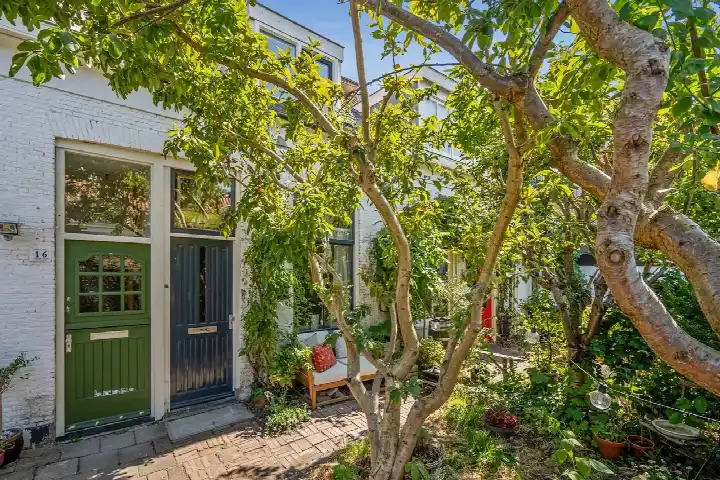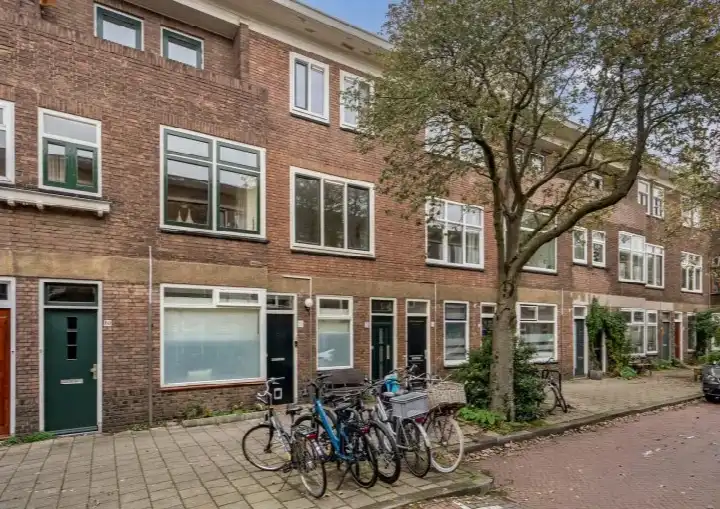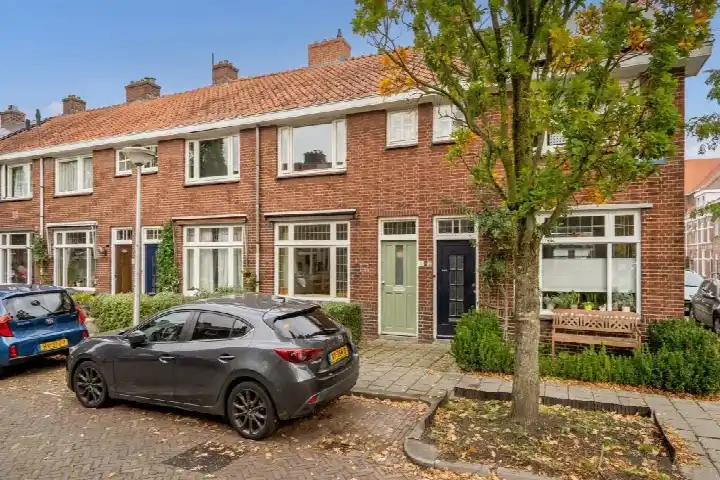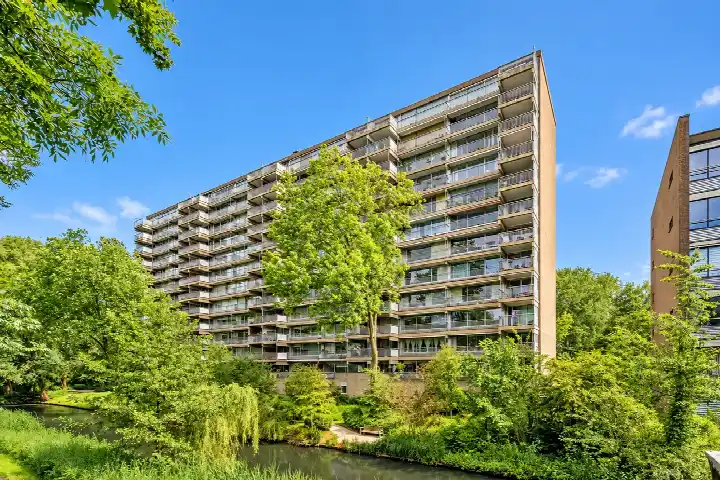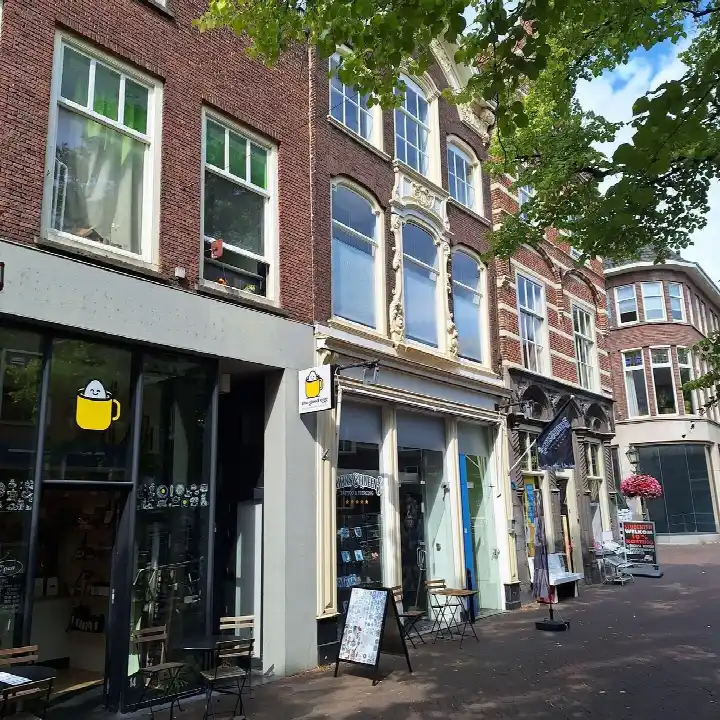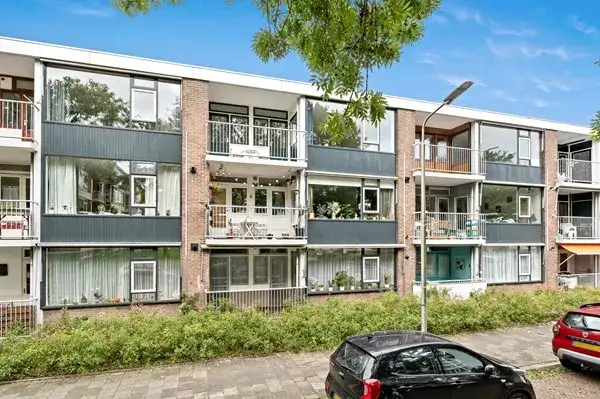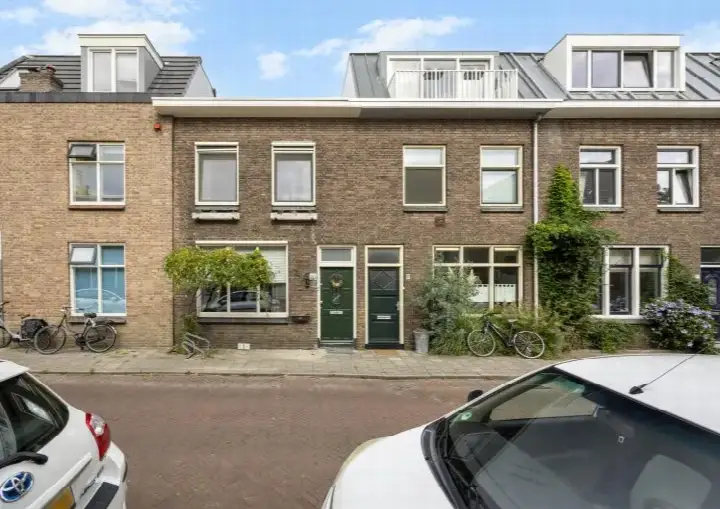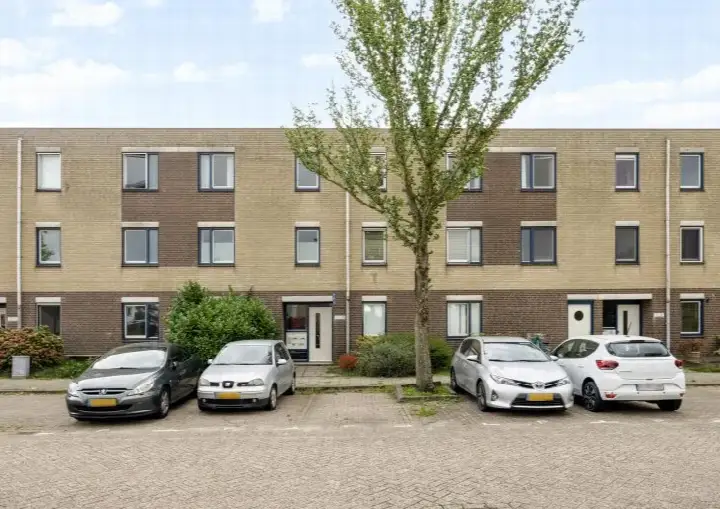





A 19th-century end-of-terrace house in Delft
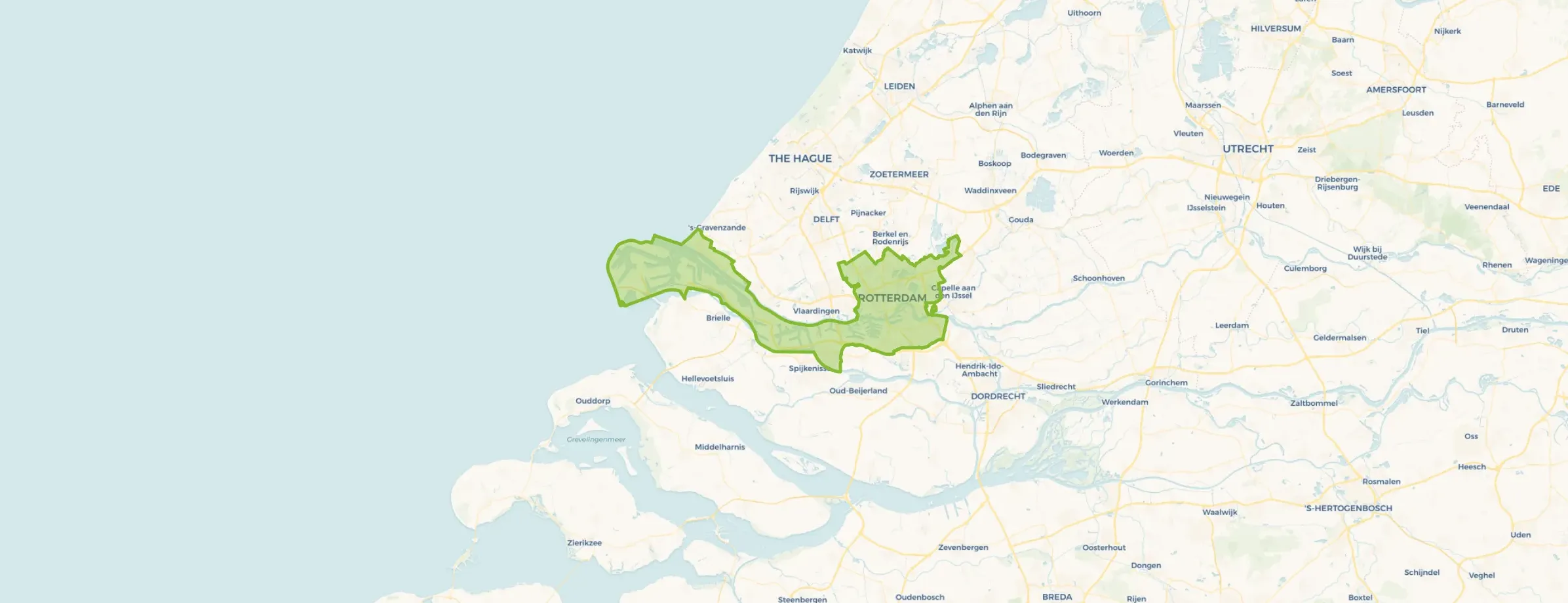
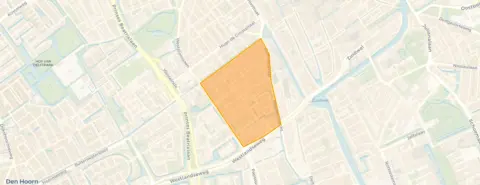
This end-of-terrace house from 1889 sits in the Westerkwartier, a lively part of Delft where the streets are lined with historic facades and the atmosphere is unmistakably urban. With a last known asking price of €375,000, the home was priced on the high side compared to the average for end-of-terrace houses in Delft, which typically go for around €417,000. The price per square metre, based on the agent's floor area, came to €7,075, well above the neighbourhood average of €5,737 per m². It was a compact home, and the price reflected that. This home has not been online since 27 August 2026.
Inside the home
According to the agent, the house had two rooms, one bedroom, and one bathroom spread over two floors, with a total volume of 230 m³. The living area was listed as 53 m² by the agent, while the BAG registration records 59 m². The plot measures 64 m² in both sources. The home has a front garden facing northeast, double glazing, and a central heating boiler. It was offered as freehold property, so there was no leasehold ground rent to worry about.
The Westerkwartier neighbourhood
The Westerkwartier neighbourhood is a dense, urban area with a mix of students, young professionals, and families. Residents of the district give it an average score of 7.63 out of 10, based on four reviews. One resident, who has lived here for 20 years, says: "The neighbours are friendly and everything is within easy cycling distance." Another resident is less positive, mentioning that "people live past each other" and complaining about litter and fast cyclists. The neighbourhood has around 2,960 inhabitants, and a large share of homes were built before 1945.
Amenities and transport
Daily errands are easy from here. A SPAR supermarket is on your doorstep, and an Albert Heijn is a ten-minute walk away. For primary education, Freinetschool Delft is just around the corner, while Stanislas vmbo mavo Delft is also close by. The GP practice Van Bentveld & Rijkée and the Hof van Delft Apotheek are both a couple of streets away. Bus stops at Hugo de Grootstraat and Station Delft are within a five-minute walk, with lines 61 and 40, 172 respectively. Delft train station is just around the corner, and the Reinier de Graaf Gasthuis hospital is a ten-minute walk. The municipality of Delft offers all this and more.
WOZ and address data
The WOZ value is not available for this property. According to public risk data at the address level, the noise level from road traffic is 52 dB Lden, which is above the standard, while railway and aircraft noise are below the standard. The foundation risk indication is medium, as the home was built before 1970 and the area is a KCAF attention zone. The climate risk indications are medium for pluvial flooding and heat stress, with a low flood risk. These are area-level indications, not an inspection of this specific home.
Source and agent
When this home was still on the market, it was offered via multiple channels, including V&W Makelaars Delft BV on Funda.
This summary was generated with AI and may contain errors. Always verify the details with the provider.
Features
Details of this home
Transfer
Price
Energy
 Save up to € 400 on your energy billCompare now
Areas and volume
 Insure your home and belongingsGet insured
Layout
Construction
Outdoor space
Frequently asked questions
About Pootstraat 82, Delft
What was the asking price for this house?
The asking price was €375,000. This was for an end-of-terrace house with a living area of 53 m² according to the agent, which worked out to €7,075 per m². The average price for homes in the Westerkwartier was €417,413, so this home was priced on the high side.
How many rooms does the house have?
According to the agent, the house had two rooms in total: one bedroom and one bathroom. The rooms are spread over two floors, and the total volume is 230 m³. The living area was listed as 53 m² by the agent, while the BAG registration records 59 m².
What is the energy label and what does it mean?
The energy label is E. The agent did mention that the home had double glazing, which could help with insulation, but the label itself indicated moderate energy efficiency.
What is the WOZ value of this property?
The WOZ value was the municipal valuation, which was used for property taxes, and it was not always included in the listing. Without this figure, it was not possible to compare the asking price to the official valuation.
What are the noise levels like in this area?
According to public risk data, the noise level from road traffic is 52 dB Lden, which is above the standard. Railway noise is 29 dB Lden and aircraft noise is 30 dB Lden, both below the standard. These are area-level indications, not measurements at the property itself.
What is the foundation risk for this house?
The foundation risk indication is medium. This is based on the fact that the house was built in 1889, before 1970, and the area is a KCAF attention zone where 89% of buildings were constructed before 1970. This is an area-level indication, not an inspection of this specific home.
What supermarkets are nearby?
There is a SPAR supermarket just 164 metres away, which is on your doorstep. An Albert Heijn is 725 metres away, about a ten-minute walk. Other options include an AH to go at 327 metres and an Aldi at 500 metres.
Which schools are close to this home?
Freinetschool Delft, a primary school, is 249 metres away, just around the corner. For secondary education, Stanislas vmbo mavo Delft is 234 metres away, and the Christelijk Lyceum Delft is 341 metres away. There are also several other schools within a short distance.
How far is the nearest train station?
Delft train station is just 284 metres away, which is about a five-minute walk. This makes it easy to travel to other cities. There are also bus stops nearby, including at Hugo de Grootstraat and Station Delft, with several bus lines.
What is the neighbourhood like?
The Westerkwartier is a dense, urban neighbourhood with a mix of residents. Residents of the district give it an average score of 7.63 out of 10. Some praise the friendly neighbours and cycling distance to everything, while others mention issues like litter and fast cyclists. The area has a high population density.