Rental homes in De Klenckebuurt, Amsterdam
Check the current rental property listings in De Klenckebuurt and compare prices, neighbourhood scores, and resident reviews to see if this quiet Amsterdam neighbourhood suits you.
Rental prices and market figures for De Klenckebuurt, Amsterdam
De Klenckebuurt is predominantly a rental neighbourhood: 66% of the 406 homes are rented, while 34% are owner-occupied. Those looking for a home to buy in De Klenckebuurt pay an average WOZ value of €590,000, which is clearly above the district average for Buitenveldert-Oost (€496,000) and the Amsterdam average (€517,000). This places the neighbourhood among the more expensive segments of the district.
In the free sector (excluding social housing), 55 homes were rented out over the past twelve months at an average rent of €2,135 per month, with an average floor area of 96 m². This works out to around €22 per m² per month. The range runs from €385 to €3,400 per month, indicating that both smaller apartments and larger homes come onto the market. Only 9% of the housing stock is owned by a housing association; 57% falls under other (private or commercial) landlords. Social rented homes are therefore relatively scarce. For current rental prices and available rental homes in De Klenckebuurt, check the overview at the top of this page.
Living in De Klenckebuurt, Amsterdam
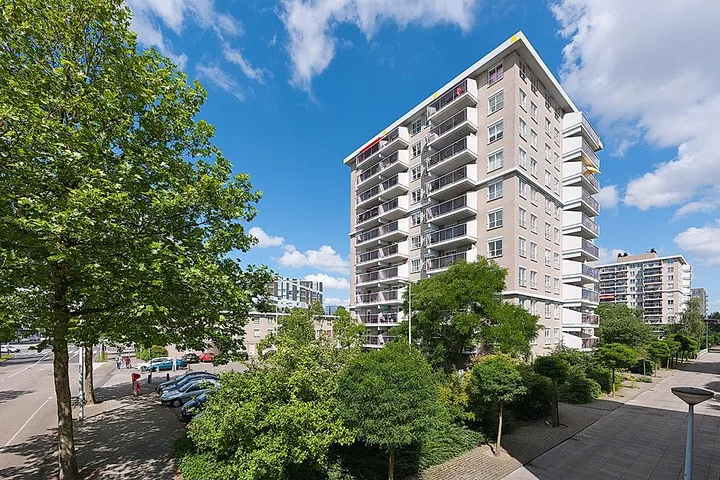
De Klenckebuurt is located in the southern part of Amsterdam, wedged between the A10 and Amstelpark, as part of the Buitenveldert-Oost district. The neighbourhood was built during the post-war expansion wave of the 1960s and 1970s and has a quiet, green character that contrasts sharply with the bustle of Amsterdam's city centre. The streets are wide, there is relatively much greenery, and the housing types mainly consist of porch apartments and gallery flats from that period, supplemented by a limited number of single-family homes. The architecture is functional and solid, but certainly not spectacular.
What characterises the neighbourhood is the relatively older population: the largest age group consists of those aged 65 and over (290 out of 840 residents), followed by the 25-45 age group (285 people). You notice this in the street scene: it is quiet, many people walk towards Amstelpark, and the atmosphere is more sedate than lively. The average household income of €57,900 is above both the district average (€48,100) and the Amsterdam average (€44,276), indicating a relatively affluent resident population.
Facilities in De Klenckebuurt
For daily groceries, you can go to the supermarkets on Europaboulevard and at the nearby Groot Gelderlandplein shopping centre, within walking distance via Buitenveldertselaan. Groot Gelderlandplein offers not only supermarkets but also a wide range of shops, eateries and services. For sports and recreation, Amstelpark right next door is a major asset: a spacious park with, among other things, a mini-golf course, playgrounds and catering facilities. Sports clubs and tennis parks are also nearby. Primary schools in and around the neighbourhood serve the relatively small group of families with children; the wider choice of schools lies in adjacent neighbourhoods. Healthcare facilities match the ageing population, with several GP practices and pharmacies within short distance.
Accessibility
The accessibility of De Klenckebuurt is one of its stronger points. RAI metro station (line 51) and tram stops in the area connect the neighbourhood quickly with Amsterdam's city centre; expect around 15 minutes travel time to the centre. Bus lines towards Amstelveen and Schiphol run via Europaboulevard. By car, the A10 (Amsterdam ring road) is reachable within a few minutes, which also facilitates connections to the A2 towards Utrecht and the A4 towards The Hague. Cycling to the city centre takes an average of 20 to 25 minutes via the cycle path along the Amstel. Parking in the neighbourhood usually requires a permit; free parking is limited, which is a point of attention for car owners.
Residents appreciate the peace and accessibility, but sometimes mention the lack of a lively dining and drinking scene in the neighbourhood itself as a downside. One resident writes: "It's wonderfully quiet here compared to the rest of Amsterdam, but for a night out you really have to leave the neighbourhood." See more experiences on the neighbourhood page of De Klenckebuurt for a complete picture of what residents think.
Compared to neighbouring community Buitenveldert-Oost-Midden, De Klenckebuurt has a slightly more enclosed location near the A10, but benefits more from the proximity of Amstelpark. The equally nearby Amstelpark area attracts a similar audience, while Buitenveldert-Zuidoost has more new-build elements. Those considering renting in De Klenckebuurt consciously choose peace and greenery over urban liveliness.
Is a rental home in De Klenckebuurt right for you?
De Klenckebuurt is most suitable for seniors, peace-seekers and dual-income couples who appreciate space and greenery and consciously avoid the hustle and bustle of the city centre. Rental prices in the free sector, averaging €2,135 per month, are on the higher side, so this is a difficult market for starters on a limited budget. Available rental homes in De Klenckebuurt are usually rented out quickly; make sure you have your documents (payslips, employer's statement) ready immediately. For social housing, there is a long waiting time via Woningnet; you can register via amsterdam.nl. If you prefer to buy, you can view the range of homes for sale in De Klenckebuurt as an alternative.
What residents say about De Klenckebuurt
Residents of De Klenckebuurt rate the neighbourhood positively on average, with the highest scores for greenery, peace and public transport accessibility. They are less enthusiastic about the nightlife and shopping facilities directly in the neighbourhood itself. One resident aptly describes it: "Ideal if you just want to come home to a quiet street after a busy workday, but not if you're looking for cosiness around the corner." All reviews and neighbourhood scores per category can be found on the reviews and neighbourhood data of De Klenckebuurt. This kind of resident data is information you won't find at neighbourhood level on any other housing site.
Compare rental homes in and around De Klenckebuurt
Unsure if De Klenckebuurt is the right choice? Also check the range of rental homes in Buitenveldert-Oost for a broader picture of the district, or explore neighbourhoods like Jordaan and Haarlemmerbuurt if you're looking for more urban liveliness. For a complete overview of all rental homes in Amsterdam, you can filter by price, floor area and energy label. Buurtje.nl combines current housing listings from multiple sources with resident reviews and neighbourhood data, so you not only find a home but also know for sure whether the neighbourhood suits you.
Frequently asked questions
What is the average rent in De Klenckebuurt, Amsterdam?
In the free sector (excluding social housing), the average rent in De Klenckebuurt is €2,135 per month, with an average living area of 96 m². That works out to about €22 per m² per month. The range runs from €385 to €3,400 per month, depending on the size and type of property. Social housing is cheaper, but the housing association stock in the neighbourhood is limited to around 9% of the housing stock.
Are there social housing properties in De Klenckebuurt?
Social housing is relatively scarce in De Klenckebuurt: only 9% of the housing stock is owned by a housing association. The vast majority (57%) is owned by private or commercial landlords. Those looking for social housing can register via Woningnet at amsterdam.nl, but should expect long waiting times, which in Amsterdam typically amount to several years.
What is it like to live in De Klenckebuurt?
De Klenckebuurt is a quiet, green post-war neighbourhood in the south of Amsterdam, directly bordering the Amstelpark. The atmosphere is calm and the population is relatively older; the largest age group consists of those aged 65 and over. Residents appreciate the peace, greenery and good public transport connections, but sometimes miss liveliness and dining options directly in the neighbourhood. The average income (€57,900) is clearly above the Amsterdam average, which partly explains the relatively high rents.
Is De Klenckebuurt suitable for seniors?
De Klenckebuurt is particularly suitable for seniors and older residents. The largest age group in the neighbourhood already consists of those aged 65 and over (290 out of 840 residents), which partly determines the quiet atmosphere and the range of amenities. There are care facilities, GP practices and pharmacies in the immediate vicinity, and the Amstelpark offers excellent walking opportunities. The neighbourhood is well accessible by public transport, also for those who do not drive.
How is the accessibility of De Klenckebuurt?
De Klenckebuurt is well accessible by public transport: metro station RAI (line 51) and various tram stops connect the neighbourhood to Amsterdam city centre in about 15 minutes. Bus lines run towards Amstelveen and Schiphol via the Europaboulevard. By car, the A10 is reachable within a few minutes. Cycling to the city centre takes an average of 20 to 25 minutes. Parking usually requires a permit; free parking is limited.
What amenities are there in De Klenckebuurt?
For daily groceries, supermarkets are accessible via the Europaboulevard and shopping centre Groot Gelderlandplein, within walking distance of the neighbourhood. The Amstelpark offers extensive recreational opportunities, including walking paths, a mini-golf course and dining options. Primary schools and sports clubs are present in and around the neighbourhood. Those looking for a larger range of shops or dining options will need to go to adjacent neighbourhoods or Amsterdam city centre.
How quickly are rental properties let in De Klenckebuurt?
Rental properties in De Klenckebuurt are generally let quickly, partly due to the limited supply in the free sector: in the past twelve months, 55 properties were let. Make sure you can respond immediately to a property for rent in De Klenckebuurt with your documents ready, such as recent payslips and an employer's statement. The current letting time in days can be found at the top of this page. Acting quickly is a clear advantage in this market.