Rental homes in Juniusbuurt, Delft
Check the current rental property listings in Juniusbuurt and find out through neighbourhood data and resident reviews whether this Delft neighbourhood suits you.



Rental prices and market figures for Juniusbuurt, Delft
Juniusbuurt is predominantly a rental neighbourhood: 85% of the approximately 650 homes are rented, with only 15% being owner-occupied. Of these rental homes, 32% are owned by housing corporations (social housing), while 53% are in the hands of other landlords (private sector and private landlords). For tenants looking for a home in the private sector, 59 homes have been rented over the past twelve months at an average rent of €1,030 per month. The range runs from €721 to €1,415 per month, with the average home measuring around 41 m². This works out to a price of about €25 per m², which is relatively affordable for Delft. Note: these figures concern only the private sector and exclude social housing.
The WOZ value in Juniusbuurt averages €215,000, clearly lower than the district average of Buitenhof (€246,000) and well below the Delft average of €322,000. This makes it one of the more affordable neighbourhoods in the city. For the current supply and the most recent average rent, you can consult the overview at the top of this page, which is updated daily.
Living in Juniusbuurt, Delft
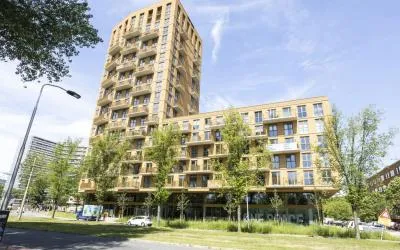
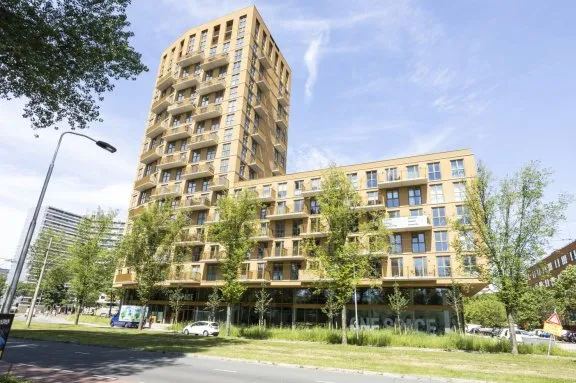
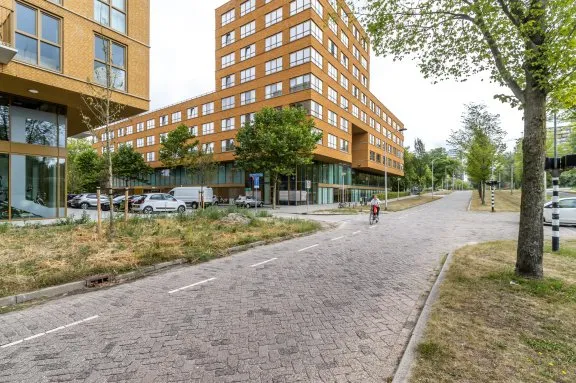
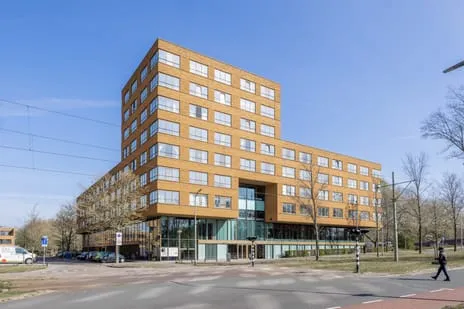
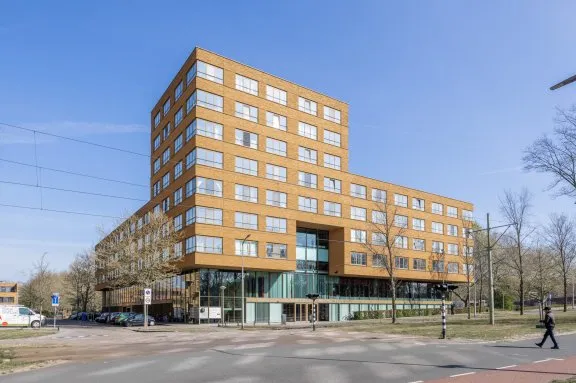
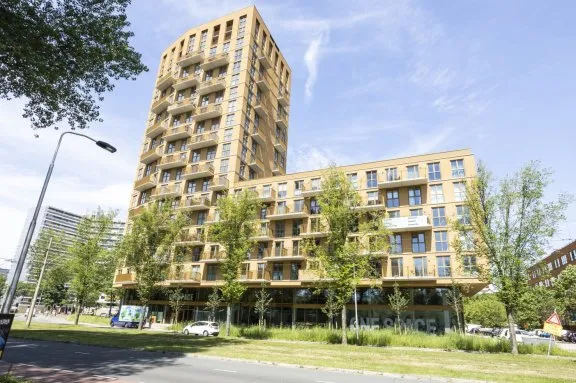
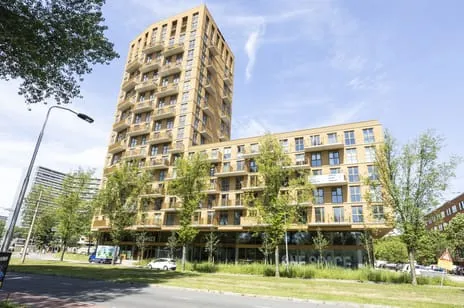
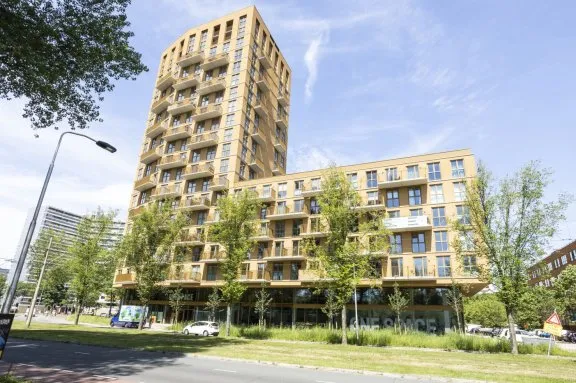
Juniusbuurt is located in the Buitenhof district, on the southwestern side of Delft. It is a compact, post-war neighbourhood consisting largely of porch flats and gallery apartments from the 1960s and 1970s, supplemented by a limited number of single-family homes. The buildings are functional and austere in nature: wide streets, little embellishment, but also little bustle. The neighbourhood has a distinctly urban character without the dynamism of the city centre. Residents describe it as quiet and orderly, although the appearance of the public space is dated in some places.
The population composition is striking: of the 835 residents, the largest group is between 25 and 45 years old (over 500 people), and no fewer than 495 households are single-person households. Only 15% are married. This characterises the neighbourhood: it is a place where starters, young professionals and people in a transitional life stage have settled, not so much a family neighbourhood.
Facilities in Juniusbuurt
For daily shopping, residents rely on the shops in and around the nearby Buitenhof shopping centre, within walking distance of the neighbourhood. These include a supermarket and various service providers. Primary schools in the immediate vicinity primarily serve families from the wider Buitenhof district. For sports, there are opportunities in the neighbourhood via the adjacent green strips and sports facilities in Buitenhof. Wilhelminapark and other green areas are quickly accessible by bike. The catering industry in Juniusbuurt itself is limited; those who want to eat or go out head to the City Centre, about a ten-minute bike ride away.
Accessibility
Delft Station is about two kilometres away, easily reachable by bike in about eight minutes. From the station, you can travel to Den Haag Centraal or Rotterdam Centraal in less than fifteen minutes. By bus, there are connections towards the centre of Delft and surrounding districts. By car, the neighbourhood connects to the arterial roads towards the A13 (The Hague-Rotterdam), which you can reach in a few minutes. Parking in Juniusbuurt is mainly regulated via permit holders, so expect a parking permit if you have a car. Cycling is by far the most common way to get in and out of the neighbourhood.
Residents appreciate the tranquillity and central location, but are sometimes critical of the state of the public space. One resident writes on the neighbourhood page of Juniusbuurt: "It is quiet here and you live close to everything, but the neighbourhood could use a bit more attention in terms of maintenance." That image recurs more often in the reviews: the location is strong, the appearance of the neighbourhood itself calls for investment.
Compared to sister neighbourhoods in Buitenhof, Juniusbuurt has a similar character. The Gillisbuurt and the Fledderusbuurt have a similar post-war building style and population composition. If you are looking for a bit more greenery or a slightly quieter street scene, you could also look at Buitenhof-Noord. The average income in Juniusbuurt (€29,900) is slightly above the district average of Buitenhof (€28,500), but remains below the Delft average of €34,700.
Is renting in Juniusbuurt right for you?
Juniusbuurt is most suitable for starters on the rental market, young professionals and people who want to live affordably with a good connection to The Hague and Rotterdam. The high proportion of single-person households (495 out of 650 homes) says enough: this is not a typical family neighbourhood. The average home size in the private sector is 41 m², which implies compact apartments. If you are looking for a rental home with more space for a family, it is better to look at adjacent neighbourhoods or districts such as Vrijenban or Voordijkshoorn.
For social housing, you must register with a housing corporation, such as Woonbron or Vestia, which are active in the Delft region. Waiting lists can be long; start on time. In the private sector, available rental homes go quickly: respond promptly and ensure your documents (payslips, employer's statement) are immediately available. If renting is not your preference, also check the supply of homes for sale in Juniusbuurt, although the owner-occupied segment here is limited.
What residents say about Juniusbuurt
On the Juniusbuurt page, resident reviews are available via Buurtje.nl, collected from more than 1,500 sources. Residents rate the neighbourhood positively for accessibility and affordability, but give lower scores for the appearance of the public space and the level of facilities directly in the neighbourhood. One resident puts it this way: "It's nice that you can live here affordably and be in the city quickly, but the neighbourhood itself has little allure." All reviews and sub-scores per category can be found on the neighbourhood page.
Comparing rental homes in and around Juniusbuurt
Are you looking for a home to rent in Juniusbuurt but also want to explore the surroundings? The neighbourhoods in Buitenhof are close together and offer similar rental prices. Also check what is available for rent in the Reinier de Graafbuurt or in Het Rode Dorp, which has a slightly more idiosyncratic character. For a broader overview of all rental homes in Delft or the supply in the entire Buitenhof district, Buurtje.nl offers filtered overviews with neighbourhood scores, demographic data and resident reviews alongside the current housing supply. More information about living and residing in the municipality can also be found on the website of the municipality of Delft.
Frequently asked questions
What is the average rent in Juniusbuurt, Delft?
In the free sector (excluding social housing), an average rent of €1,030 per month was recorded in Juniusbuurt over the past twelve months. The range runs from €721 to €1,415 per month, with an average area of 41 m², which works out to about €25 per m². Social housing is usually much cheaper, but waiting lists and income requirements apply.
Are there social housing units in Juniusbuurt?
Yes, about 32% of the housing stock in Juniusbuurt is owned by housing associations and therefore falls under social housing. To qualify for a social housing unit, you must register with a housing association active in the Delft region, such as Woonbron or Vestia. Be prepared for waiting lists; the earlier you register, the better your chances.
What is it like to live in Juniusbuurt?
Juniusbuurt is a quiet, post-war neighbourhood on the southwest side of Delft, with porch flats and gallery flats from the 1960s and 1970s. Residents appreciate the affordable rents and good accessibility to the city centre and motorway, but are sometimes critical of the appearance of public spaces. The neighbourhood mainly attracts young professionals and starters.
Is Juniusbuurt suitable for starters on the rental market?
Yes, Juniusbuurt is very much a starter neighbourhood. The average rent of €1,030 per month in the free sector is relatively low for Delft, and the homes are compact (average 41 m²). Of the 835 residents, the largest group is between 25 and 45 years old, and almost 60% of households consist of a single person. Families looking for more space are better off in surrounding neighbourhoods.
How accessible is Juniusbuurt?
Delft Station is about two kilometres away, easily reachable by bike in about eight minutes. From the station, you can reach Den Haag Centraal or Rotterdam Centraal in less than a quarter of an hour. By car, the neighbourhood connects quickly to the A13. Parking is via a permit system. The bicycle is the most used mode of transport for daily trips to the city centre.
What amenities are there in Juniusbuurt?
For daily groceries, residents rely on the Buitenhof shopping centre, within walking distance of the neighbourhood. There you will find supermarkets and various service providers. Primary schools are located in the wider Buitenhof district. Restaurants and more extensive shopping facilities can be found in Delft city centre, about a ten-minute bike ride away.
How quickly are rental homes let in Juniusbuurt?
Rental homes in Juniusbuurt are generally let quickly, especially in the free sector. Last year, 59 free-sector homes were rented out in the neighbourhood. Make sure you have documents such as payslips and an employer's statement ready so you can respond immediately as soon as a home is offered for rent. The current average letting time in days is at the top of this page.