





2 homes for sale in De Buurt, Drechterland
Discover the current supply of homes for sale in De Buurt and compare prices, neighbourhood scores, and resident reviews to determine if this quiet Drechterland neighbourhood suits you.


House prices and market figures for De Buurt, Drechterland
The owner-occupied market in De Buurt is pronounced. With 86% owner-occupied homes in the housing stock, this is a neighbourhood where homeownership is the norm. Only 14% of homes are rented, of which 10% through a housing association. The average WOZ value is €436,000, which is clearly higher than the average for the district Venhuizen (€374,000) and also above the municipal average of Drechterland (€399,000). De Buurt is therefore among the more expensive parts of the municipality.
Over the past twelve months, ten homes were sold here, with an average purchase price of €667,700. Prices ranged from €315,000 to €995,000, indicating that both more modest homes and substantial detached houses changed hands. The average living area was 178 m², which works out at a price of around €3,750 per square metre. The supply mainly consists of larger single-family homes and detached houses; apartments are hardly found here. At the top of this page, view the current supply, current asking prices and the average time to sell for the most recent market situation.
Living in De Buurt, Drechterland
The name says it all: De Buurt is a neighbourhood in the most literal sense of the word. It is a small, close-knit residential area in the rural outskirts of the municipality of Drechterland, located in the vicinity of Venhuizen in West-Friesland. Its character is rural and quiet, with open polder skies and little traffic. Anyone looking for a home here consciously chooses space, tranquillity and a village environment, not urban dynamism.
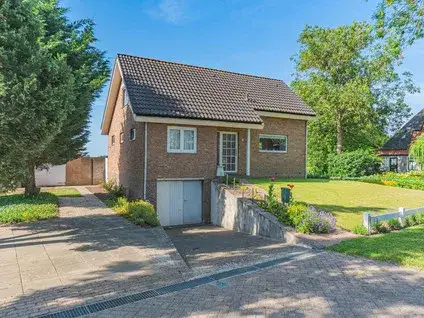
The housing types are predominantly spacious. Detached houses and semi-detached homes dominate the streetscape, often with a large garden. The construction period varies, but part of the housing stock dates from the second half of the twentieth century, supplemented by newer buildings. Buying an apartment in De Buurt is not a realistic option: this type of home is virtually absent here.
In terms of amenities, De Buurt itself is sparse. For daily groceries, schools and sports clubs, you rely on nearby Venhuizen. There you will find a primary school, a supermarket and a village centre with local shops. Sports clubs such as a football club and other associations are active in the heart of Venhuizen. For a larger range of shops or a hospital, Hoorn is the designated city, about ten to fifteen minutes away by car.
Accessibility by car is good via the N506 and N307, which connect to the A7 towards Amsterdam and Hoorn. By car, you can reach Hoorn in about twenty minutes. Public transport is more limited: bus services run via Venhuizen to Hoorn and surrounding towns, but the frequency is modest. For daily commuters, a car is almost indispensable. Cyclists benefit from quiet polder routes, although distances to larger places are not insignificant.
Residents particularly appreciate De Buurt for its peace and space. On the main neighbourhood page of De Buurt, reviews and neighbourhood scores per category can be found. One resident describes it as: "You really live out here, you see the horizon and you know your neighbours. That's exactly why we came to live here." Criticism mainly focuses on the limited walking distance to amenities and the dependence on the car. Compared to Centrum Venhuizen, where amenities are within walking distance, De Buurt is quieter and less central. Relative to De Hout en Blokdijk and Zuiderdijk, De Buurt shares the rural character, but the exact location and housing density differ.
For whom is a home in De Buurt a good choice?
De Buurt best suits families and those aged 50-plus who consciously choose space and tranquillity over urban convenience. The demographic composition confirms this: the largest age group is 45 to 65 years, almost half of households are married, and families with children are well represented. First-time buyers will find it difficult: with an average purchase price of €667,700 and a lower limit of €315,000, the entry threshold is high. Overbidding is realistic in this segment. Those considering renting as an alternative can also look at rental homes in De Buurt, although that supply is limited given the small rental sector.
What residents say about living in De Buurt
Resident reviews on Buurtje.nl give a consistent picture: the neighbourhood scores well on peace, safety and the quality of the living environment. Residents are less enthusiastic about the level of amenities and accessibility without a car. One resident writes: "It's wonderfully quiet here and the neighbours know each other. But without a driving licence, you're nowhere here." View all ratings and sub-scores per category on the page of De Buurt for a complete picture of what is going on among current residents.
Comparing homes for sale in and around De Buurt
Buurtje.nl brings together the housing supply from more than 1,500 sources in one place, supplemented by neighbourhood scores, resident reviews and district data that you won't find in this combination anywhere else. This way, you can not only compare a home, but also assess the neighbourhood itself before making a decision. Also view the supply in the wider district via homes for sale in Venhuizen, explore other parts of the municipality such as Hoogkarspel or Westwoud, or view the overall overview of homes for sale in Drechterland. More information about the municipality can be found on the website of the municipality of Drechterland.
What does a home for sale cost in De Buurt, Drechterland?
Over the past twelve months, the average sale price in De Buurt was €667,700. Prices ranged from €315,000 to €995,000. The average living area was 178 m², resulting in a price of approximately €3,750 per square metre. It is a relatively expensive segment within the municipality of Drechterland, partly due to the spacious housing types that dominate here.
What is the WOZ value of homes in De Buurt?
The average WOZ value in De Buurt is €436,000. This is higher than the average for the Venhuizen district (€374,000) and also above the municipal average of Drechterland (€399,000). De Buurt thus belongs to the more valuable residential areas within the municipality.
What is it like to live in De Buurt?
Living in De Buurt means choosing peace, space and a rural character in the West-Frisian polder landscape. The neighbourhood is small-scale with approximately 1,200 residents and a high proportion of owner-occupied homes. Residents appreciate the tranquillity and social cohesion, but also indicate that you are dependent on the car and nearby Venhuizen for daily amenities.
Is De Buurt suitable for families with children?
De Buurt is certainly attractive for families seeking space and a safe, quiet living environment. Families with children form the largest household group, and the homes are on average spacious (178 m²). For schools and sports clubs, families rely on Venhuizen, which is a short distance away. First-time buyers will experience the high entry price as a barrier.
How accessible is De Buurt?
By car, De Buurt is easily accessible via the N506 and N307, with a connection to the A7 towards Hoorn and Amsterdam. Hoorn can be reached in about fifteen to twenty minutes. Public transport is limited: there are bus connections via Venhuizen, but the frequency is low. A private car is a practical necessity for most residents.
What type of homes can I buy in De Buurt?
The supply in De Buurt mainly consists of spacious single-family homes, semi-detached houses and detached houses. Buying apartments in De Buurt is virtually impossible; this type of home is almost entirely absent in the neighbourhood. The housing stock comprises 484 homes, of which 86% are owner-occupied. The construction period varies, with a mix of post-war homes and newer buildings.
Are there many homes for sale in De Buurt and how quickly are they sold?
The supply in De Buurt is limited: over the past twelve months, ten homes changed hands. That is few for a neighbourhood with nearly 500 homes, meaning there is rarely much choice at the same time. At the top of this page you can see how many homes are currently for sale and the average selling time in days. Acting quickly is advisable in this segment.