





6 homes for sale in E-buurt, Amsterdam
Discover homes for sale in E-buurt and compare current asking prices, neighbourhood scores and district data directly on this page.



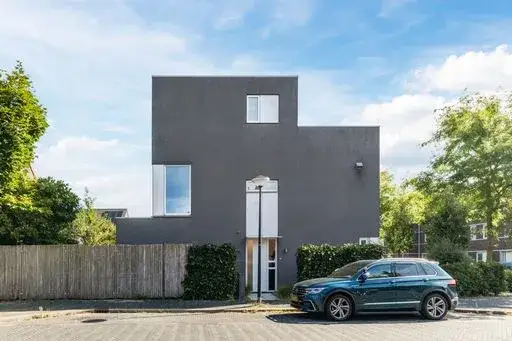

House prices and market figures for E-buurt, Amsterdam
In E-buurt, almost half of the housing stock consists of owner-occupied homes: 49% of the 657 homes are owned, the rest are rented (32% of which through a housing association). This gives the neighbourhood a mixed character, with a blend of tenants and owners living side by side.
The average WOZ value in E-buurt is €509,000. This is higher than the district average of Ganzenhoef en omgeving (€369,000), but slightly below the Amsterdam average of €517,000. E-buurt is therefore one of the more expensive neighbourhoods within the district, but still just affordable compared to the city average.
Based on the past twelve months, 6 homes were sold, with an average purchase price of €586,167. Sale prices ranged from €469,000 to €698,000. The average living area was 116 m², which works out at a price of approximately €5,050 per square metre. These are mainly porch flats and gallery flats from the 1960s and 1970s, with the occasional single-family home. At the top of the page, you can see the current asking prices and selling times of the current listings.
Living in E-buurt, Amsterdam
E-buurt is part of the Bijlmer, the area of Amsterdam-Zuidoost built in the 1960s as a modernist residential neighbourhood on pilotis. The large, green-surrounded apartment blocks with their characteristic honeycomb structure still define the streetscape. Anyone buying a home here is buying in a neighbourhood that is very much in flux, but also has its own pace.
The character of E-buurt is urban and multicultural. Residents come from dozens of countries, and you can see this in the shops, on the streets and in the primary schools. The neighbourhood is not a quiet VINEX suburb, nor a bustling city centre. It is more a place where people simply live, do their shopping and take their children to school, without much fuss.
For daily groceries, you can go to the Ganzenhoef shopping centre, within walking distance of most homes in the neighbourhood. There you will find a supermarket, a pharmacy and a few smaller shops. For a wider range, the Amsterdam Zuidoost shopping centre (the former ArenAPoort area) is easily accessible by bike. Children in the neighbourhood attend one of the primary schools in the immediate vicinity, including schools known for their diverse population and multilingual approach.
Green space is present but limited. The neighbourhood has some parks and grass areas between the apartment blocks, but for large parks you need to go a bit further. Nelson Mandelapark, one of the larger green lungs of Amsterdam-Zuidoost, is accessible by bike and offers space for sports and relaxation.
Accessibility is one of E-buurt's strong points. Ganzenhoef metro station (line 53, the Gein line) is within walking distance and takes you to Amsterdam Central in about twenty minutes. The A9 ring road is also quickly accessible for those who work or travel by car. Residents give accessibility a 7.0, which is clearly the highest sub-score in the rating.
The overall resident score for E-buurt is 5.1 out of 10, based on reviews on the neighbourhood main page of E-buurt. Safety (4.0) and sense of community (4.0) score the lowest. One resident writes: "Accessibility is fine, but in the evening the neighbourhood doesn't always feel safe." This image recurs in the reviews: the location is practical, but liveability still has room for improvement. Housing scores a relatively good 6.0, which aligns with the affordable prices for the space you get.
Compared to neighbourhoods such as G-buurt-West and G-buurt-Noord, which are also part of the Ganzenhoef en omgeving district, E-buurt has a similar character. Prices are in the same order of magnitude, but E-buurt has slightly higher WOZ values than the district average suggests.
Who is a home in E-buurt interesting for?
E-buurt attracts buyers looking for space for their money. With an average transaction price of €586,167 and an average living area of 116 m², you get relatively many square metres by Amsterdam standards. This makes the neighbourhood attractive for young families and movers who can no longer afford the city centre. First-time buyers may find the entry level of €469,000 still achievable, but will likely have to overbid in a market with limited supply. Keep in mind that only 6 homes were sold in the past twelve months, meaning supply is scarce and transactions can happen quickly. Those who want to get to know the neighbourhood before buying can also first look at rental homes in E-buurt as a temporary step.
What residents say about E-buurt
E-buurt receives an average rating of 5.1 out of 10, based on resident reviews. Accessibility stands out positively with a 7.0. Safety, green space and sense of community each score a 4.0. One resident describes the neighbourhood as: "Accessibility is fine, but in the evening the neighbourhood doesn't always feel safe." This gives an honest picture of what to expect. See all reviews and sub-scores on the neighbourhood page of E-buurt. The municipality of Amsterdam is actively working on the further development of Amsterdam-Zuidoost; more information can be found at amsterdam.nl.
Compare homes for sale in and around E-buurt
Buurtje.nl bundles listings from more than 1,500 sources in one place, supplemented with resident scores and neighbourhood data that you won't find in this combination anywhere else. This way, you can not only filter by price or surface area, but also assess whether a neighbourhood suits you before scheduling a viewing. In addition to E-buurt, you can also view listings in the wider district via homes for sale in Ganzenhoef en omgeving, or compare with other Amsterdam neighbourhoods such as the Haarlemmerbuurt or the Jordaan. For a complete overview of all homes for sale in Amsterdam, you can also search at the municipal level.
What is the cost of a home in E-buurt?
The average purchase price in E-buurt over the past year was €586,167, based on 6 sold homes. Prices ranged from €469,000 to €698,000. The average living area was 116 m², which works out to about €5,050 per square metre. Keep in mind that supply is limited and transactions can happen quickly.
What is the WOZ value in E-buurt?
The average WOZ value in E-buurt is €509,000. This is significantly higher than the average for the Ganzenhoef and surroundings district (€369,000), but slightly below the Amsterdam average of €517,000. E-buurt is therefore one of the more expensive neighbourhoods within the district.
What is it like to live in E-buurt?
Living in E-buurt means living in an urban, multicultural environment with many apartment blocks from the 1960s and 1970s. The neighbourhood has a down-to-earth, everyday character with practical amenities within walking distance. Residents give the neighbourhood an average score of 5.1 out of 10. Accessibility scores well (7.0), but safety and green spaces are perceived as less favourable.
Is E-buurt suitable for families with children?
E-buurt can be an option for families looking for relatively more living space for their budget. With an average sold area of 116 m², there is usually enough space. There are primary schools in the area and some green spaces between the apartment blocks, although a larger park like Nelson Mandelapark is only accessible by bike. The low safety score (4.0) is something to consider.
How is the accessibility of E-buurt?
Accessibility is E-buurt's strongest point, with a resident score of 7.0. Ganzenhoef metro station (line 53) is within walking distance and takes you to Amsterdam Central in about twenty minutes. The A9 ring road is quickly reachable for drivers. Surrounding neighbourhoods and the city centre are also easily accessible by bike.
What type of homes are for sale in E-buurt?
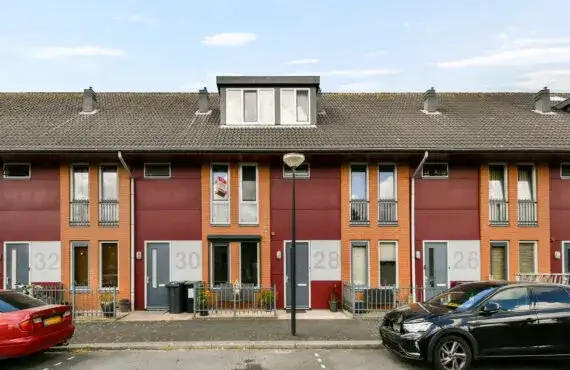
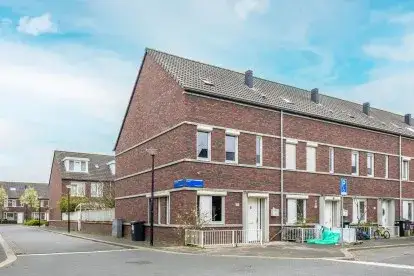
The supply mainly consists of apartments in porch and gallery flats, built in the 1960s and 1970s as part of the Bijlmermeer. Occasionally, a single-family home comes on the market. Buying an apartment in E-buurt therefore often means choosing a flat with relatively large living areas by Amsterdam standards.
How safe is E-buurt and what do residents say about it?
Safety is a point of concern in E-buurt. Residents give this aspect a 4.0 out of 10, the lowest sub-score along with sense of community and green spaces. One resident writes: "The accessibility is fine, but the neighbourhood doesn't always feel safe in the evening." The municipality of Amsterdam is investing in the further development of Amsterdam-Zuidoost, but if safety is a high priority, it is advisable to visit the neighbourhood at different times before buying a home.
It's super nice and nice and quiet, the only thing is that more rubbish bins need to be bought, but other than that everything is neat and tidy.
Auto-translated to English by AI