Homes for sale in Groesbeek Nijerf, Berg en Dal
Discover the current supply of homes for sale in Groesbeek Nijerf and view prices, selling times and neighbourhood data directly at the top of this page.

House prices and market figures Groesbeek Nijerf, Berg en Dal
The owner-occupied market in Groesbeek Nijerf is strong. Of the 866 homes in the neighbourhood, 72% are owner-occupied, giving the neighbourhood a clear ownership character. The average WOZ value is €356,000, which is higher than the district average of Groesbeek (€328,000) and also slightly above the municipal average of Berg en Dal (€349,000). Nijerf is therefore one of the more expensive neighbourhoods within the municipality.
Looking at the sales figures of the past twelve months, 15 homes have changed hands, with an average selling price of €517,167. Prices ranged from €370,000 to €795,000, indicating that both mid-range family homes and larger detached houses can be found in the neighbourhood. With an average living area of 134 m², the price per square metre comes to approximately €3,860. These are not entry-level prices. For the current supply and asking prices, you can consult the overview at the top of this page.
The housing supply mainly consists of ground-based homes, with a mix of semi-detached and detached houses. Apartments are scarce here. The 28% rental properties are largely filled by social housing (20%).
Living in Groesbeek Nijerf, Berg en Dal
Nijerf is the greener, quieter part of Groesbeek, located on the southeastern side of the village. The neighbourhood borders the Reichswald and the hilly surroundings that characterise the area around Berg en Dal. Those who live here have cycling distance to the forests and walking paths of the Groesbeek plateau, but also a typical village daily environment with sufficient basic amenities.
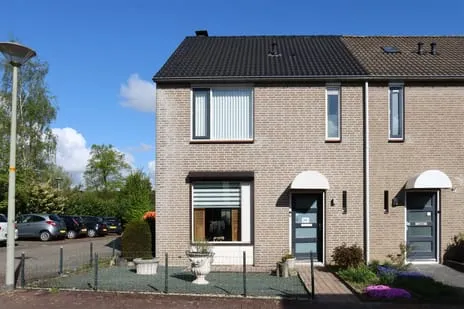
The homes in Nijerf largely date from the 1960s to the 1980s, with a recognisable streetscape of spacious plots, front gardens and detached or semi-detached houses. The building density is low compared to neighbourhoods such as Groesbeek Centrum-Noord or Groesbeek Centrum-Zuid, where it is more compact and busier. This makes Nijerf attractive for those seeking space and tranquillity, but less suitable for those who want everything within walking distance on a daily basis.
For daily groceries, residents rely on the centre of Groesbeek, a five to ten-minute bike ride away. There you will find, among others, an Albert Heijn and various other shops. Primary schools in Groesbeek are accessible within the village. For secondary education and a wider range of shops, Nijmegen is the logical destination, about twelve kilometres away.
Accessibility by car is via the N844 towards Nijmegen, with a travel time of about twenty minutes outside rush hour. A direct bus connection via line 5 of Arriva connects Groesbeek with Nijmegen Central. From Nijmegen, all intercity connections are available. A car is practically indispensable in Nijerf, as the neighbourhood is not designed for daily life without one.
The largest age group in Nijerf is 45 to 65 years (675 residents), followed by 25 to 45 years (495 residents). This profile fits a neighbourhood that has been stable for some time and where movers and established families set the tone. The share of households with children is the largest (365 households), which is also reflected in the quiet streets and the presence of playgrounds and sports fields in the area.
Residents particularly appreciate the tranquillity, the space and the proximity of nature. On the neighbourhood page of Groesbeek Nijerf you can find all resident reviews and scores per category. One resident wrote: "You live here quietly, the forests are literally around the corner and the neighbours still know each other. But for a night out you really have to go to Nijmegen." That sums up the atmosphere well: Nijerf is not a nightlife neighbourhood, but a place to call home.
If you compare Nijerf with Groesbeek Stekkenberg or Groesbeek De Drul-Oost, it stands out that Nijerf is on average more expensive and has a somewhat older and established resident profile. The atmosphere is similarly village-like, but the homes here are on average larger and the plots more spacious.
Does a home for sale in Groesbeek Nijerf suit you as a buyer?
Nijerf is most suitable for movers and families seeking space, wanting a garden and not dependent on daily amenities within walking distance. The average purchase price of over €517,000 makes buying a home in Groesbeek Nijerf financially heavy for starters, especially because the supply is limited and prices have risen in recent years. Those who still want to buy would do well to act quickly when something becomes available, because with 15 transactions in a year, the turnaround time is short. Seniors looking to downsize will find few apartments here. For those who first want to explore, the rental properties in Groesbeek Nijerf are a possible intermediate step.
What residents say about Groesbeek Nijerf
Residents of Nijerf generally give the neighbourhood positive ratings, particularly in the areas of greenery, tranquillity and social safety. They are less enthusiastic about the level of amenities and accessibility without a car. One resident described it as: "Wonderfully quiet living, but you are dependent on the car for almost everything." All scores per category and the full reviews can be read on the overview page of the neighbourhood.
Compare homes for sale in and around Groesbeek Nijerf
On Buurtje.nl you will find, in addition to the current housing supply, neighbourhood scores, resident reviews and district data in one place, compiled from more than 1,500 sources. This helps you not only find a home, but also assess whether the neighbourhood suits you. Want to explore the area more broadly? Also check the supply in the wider district via homes for sale in Groesbeek, or explore homes for sale in Berg en Dal as a whole. Other neighbourhoods worth comparing are Groesbeek De Drul-West and Beek. More information about the municipality can be found on the website of municipality Berg en Dal.
Frequently asked questions
What does a home cost in Groesbeek Nijerf?
The average purchase price in Groesbeek Nijerf over the past year was €517,167, based on 15 sold homes. Prices ranged from €370,000 to €795,000. With an average living area of 134 m², the price per square metre comes to approximately €3,860. These are not low prices, certainly not for a village outside the city.
What is the WOZ value in Groesbeek Nijerf?
The average WOZ value in Groesbeek Nijerf is €356,000. This is above the average for the Groesbeek district (€328,000) and also slightly higher than the municipal average of Berg en Dal (€349,000). Nijerf is thus one of the more expensive neighbourhoods within the municipality.
What is it like living in Groesbeek Nijerf?
Living in Groesbeek Nijerf means quiet and green living on the edge of the village, with the forests of the Reichswald within cycling distance. The neighbourhood has a quiet, established character with predominantly family homes on spacious plots. Residents appreciate the peace and greenery, but indicate that you are dependent on the car for many amenities.
Is Groesbeek Nijerf suitable for families with children?
Yes, Nijerf is a neighbourhood that suits families well. The largest group of households consists of families with children (365 households), the neighbourhood is quiet and there is plenty of outdoor space. Primary schools are accessible within Groesbeek. For secondary education, Nijmegen is the designated city, about twelve kilometres away.
How accessible is Groesbeek Nijerf?
By car, you can reach Nijmegen via the N844 in about twenty minutes outside rush hour. By public transport, bus line 5 of Arriva connects Groesbeek with Nijmegen Central, from where you can travel further by train. A private car is practically indispensable, as the neighbourhood is not designed for car-free living.
What types of homes are for sale in Groesbeek Nijerf?
The supply in Nijerf consists mainly of ground-based homes, particularly detached and semi-detached houses. Apartments are hardly to be found. Most homes were built between the 1960s and 1980s and have spacious plots. If you want to buy an apartment in Groesbeek Nijerf, you are in the wrong place; for that, the centre of Groesbeek is a better option.
Is there a lot of greenery in Groesbeek Nijerf?
Groesbeek Nijerf borders the forested area of the Groesbeeks plateau and the Reichswald. Walking and cycling paths are directly accessible from the neighbourhood. This makes Nijerf attractive for people who value nature and fresh air close to home. It is one of the most frequently mentioned plus points in resident reviews of the neighbourhood.