Homes for sale in Nijeveense Bovenboer, Meppel
Discover homes for sale in Nijeveense Bovenboer: a rural neighbourhood near Meppel with spacious homes and limited supply. View the current listings and latest market figures at the top of this page.

House prices in Nijeveense Bovenboer, Meppel
Nijeveense Bovenboer is a pronounced owner-occupied neighbourhood: 85% of the 48 homes are owned, and only 15% are rented out by private landlords. There are no social housing properties. This ratio immediately says something about the character of the neighbourhood: it is predominantly owners who have consciously chosen to live here.
The average WOZ value is €483,000, which is significantly higher than the district average of Nijeveen (€345,000) and well above the municipal average of Meppel (€289,000). This difference is no coincidence: the housing stock in Nijeveense Bovenboer largely consists of larger, detached or semi-detached homes on bigger plots, which explains the higher valuation.
In the past twelve months, one home was sold for €825,000. The average living area was 184 m², which works out at a price of over €4,480 per square metre. With only one transaction, you should interpret this figure cautiously, but it does confirm that this market segment sees little movement and that homes here rarely become available. For current asking prices and availability, you can consult the overview at the top of this page.
Living in Nijeveense Bovenboer, Meppel
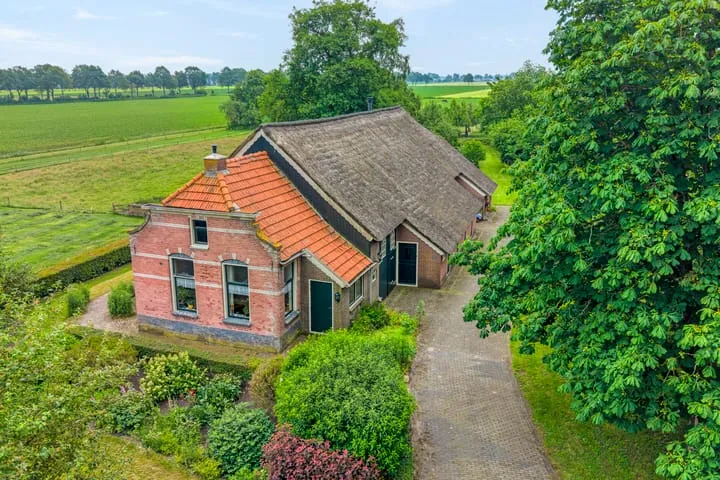
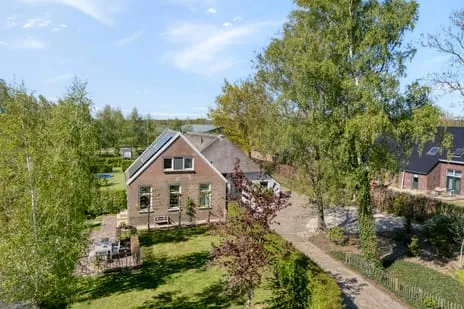
Nijeveense Bovenboer is not a neighbourhood in the classic sense. There are no shops, no corner café, and no busy streets. It is a rural ribbon on the north side of the village of Nijeveen, where farmyards, spacious detached homes, and open meadows alternate. Those who live here have consciously chosen it: peace, space, and a direct connection to the countryside are its main assets.
The built environment is varied. You will find older farmhouses converted into homes alongside more modern detached houses on large plots. The green character dominates: the neighbourhood borders the typical Drenthe peat landscape and the nearby polders. Walking and cycling along ditches and fields is a daily routine here, not a weekend outing.
For amenities, you go to the adjacent village of Nijeveen itself: there you will find a primary school, a small supermarket, a GP practice, and several sports clubs including a football club and a tennis club. For more extensive shopping or secondary education, you rely on Meppel, about five to ten minutes away by car via the N375. In Meppel itself, you will find the De Vorm shopping centre, the Isala hospital, and a wide range of schools.
In terms of accessibility, the neighbourhood is heavily car-oriented. There is a bus route between Nijeveen and Meppel, but the frequency is limited. Meppel station, with direct connections to Zwolle, Groningen, and Amsterdam, is reachable by car in about ten minutes. The connection to the A32 towards Zwolle and Leeuwarden is also easily accessible via the N375. For daily commuters, a car is almost indispensable.
The neighbourhood has about 140 residents, with a clear concentration in the 45 to 65 age group. Families with children form the largest household group. This fits the picture: these are often people in a later stage of life who consciously choose more space and less urban hustle. Young people and first-time buyers are hardly represented here, partly due to the high prices.
On the neighbourhood page of Nijeveense Bovenboer you can read what residents themselves write about their living environment, including scores per category. A recurring theme in the reviews is the peace: "You only hear the birds here and sometimes a tractor. That's exactly why we came to live here," says one resident. Criticisms usually focus on the limited public transport connections and the fact that you need a car for almost everything.
Compared to other neighbourhoods in the district, Nijeveense Bovenboer is the most rural and most expensive segment. Nijeveen Oost offers a more village-like living environment with more amenities within walking distance, while Danninge Erve and Spijkerserve offer more variety in housing types and price ranges. If you want to broaden the comparison, you can also look at homes for sale in Nijeveen as a whole.
Who is a home for sale in Nijeveense Bovenboer interesting for?
Nijeveense Bovenboer is primarily a neighbourhood for movers and people who have already built up some wealth. With an average sale price of €825,000, buying a home in Nijeveense Bovenboer is out of reach for first-time buyers or people on a median income. The neighbourhood mainly attracts families and people in their fifties who prioritise space, privacy, and a rural environment over urban convenience and are willing to pay for it.
An honest drawback: supply is extremely scarce. Homes rarely become available, and when they do, they involve large sums. Buying an apartment in Nijeveense Bovenboer is effectively not an option; that type of home simply does not exist here. If you want to be more flexible, you can also look at rental homes in Nijeveense Bovenboer, although that supply is also limited.
What residents say about Nijeveense Bovenboer
Residents appreciate Nijeveense Bovenboer mainly for the peace, the space, and the sense of privacy that you do not find in a more densely built neighbourhood. The green surroundings and low traffic levels consistently score highly. Residents are less positive about the dependence on the car and the distance to daily amenities. "You really have to plan everything, popping out quickly for something doesn't exist here," writes one resident. View all reviews and the full neighbourhood data on the neighbourhood information page.
Compare homes for sale in and around Nijeveense Bovenboer
On Buurtje.nl you will not only find the current housing supply from more than 1,500 sources, but also neighbourhood scores, resident reviews, and district data that help you assess whether a neighbourhood truly suits you. Compare Nijeveense Bovenboer with other neighbourhoods in the district via the overview of Nijeveen, or view the broader supply via homes for sale in Meppel. Other neighbourhoods worth comparing: Griftebuurt, Tussenboerslanden, and districts such as Koedijkslanden and Haveltermade. For municipal information about living and permits, you can visit the website of the municipality of Meppel.
Frequently asked questions
What does a home cost in Nijeveense Bovenboer?
In the past twelve months, one home was sold in Nijeveense Bovenboer, for €825,000. The average living area was 184 m², which works out to about €4,480 per square metre. Due to the very limited number of transactions, you should see this figure as an indication, not a stable market average. Supply is scarce and prices are well above the average for the municipality of Meppel.
What is the WOZ value in Nijeveense Bovenboer?
The average WOZ value in Nijeveense Bovenboer is €483,000. That is considerably higher than the district average of Nijeveen (€345,000) and well above the municipal average of Meppel (€289,000). This reflects the type of homes in the neighbourhood: predominantly spacious, detached or semi-detached houses on large plots in a rural setting.
What is it like to live in Nijeveense Bovenboer?
Living in Nijeveense Bovenboer means choosing peace, space and a rural character. The neighbourhood consists of a ribbon of farmsteads and detached houses on the edge of the village of Nijeveen, surrounded by open meadows and Drenthe peat landscape. Amenities are limited in the village itself; for a wider range you need to go to Meppel. Residents appreciate the tranquillity and privacy, but mention car dependency as an important point of attention.
Is Nijeveense Bovenboer suitable for families with children?
The neighbourhood has a clear family component: households with children form the largest group. The age group 45 to 65 dominates, suggesting that it is mainly movers who end up here. In nearby Nijeveen there is a primary school; for secondary education children depend on Meppel. The space and safe, quiet environment are appreciated by families, but the high purchase prices make this not a neighbourhood for young families on a limited budget.
How accessible is Nijeveense Bovenboer?
Nijeveense Bovenboer is heavily car-oriented. Via the N375 you can reach Meppel in about five to ten minutes, where Meppel station offers direct train connections to Zwolle, Groningen and Amsterdam. The connection to the A32 towards Zwolle and Leeuwarden is quickly accessible. There is a bus route between Nijeveen and Meppel, but the frequency is limited and not ideal for daily use. A car is practically indispensable.
What type of homes are for sale in Nijeveense Bovenboer?
The supply in Nijeveense Bovenboer consists almost exclusively of detached and semi-detached houses, often on spacious plots. Buying an apartment in Nijeveense Bovenboer is not possible; that type of home is not present here. The housing stock includes both converted farmhouses and more modern detached homes. With 48 homes in total and only 15% rental, supply is small and something rarely comes on the market.
Are there schools and amenities near Nijeveense Bovenboer?
Direct amenities in Nijeveense Bovenboer itself are hardly present; the neighbourhood has a purely residential character. In the adjacent village of Nijeveen you will find a primary school, a small supermarket, a GP practice and sports clubs such as a football and tennis club. For secondary education, extensive shopping and hospital care you depend on Meppel, about five to ten minutes' drive away.