





55 homes for sale in Sarphatiparkbuurt, Amsterdam
View the current supply of homes for sale in Sarphatiparkbuurt and discover if this neighbourhood suits you with neighbourhood scores, resident reviews, and market data.


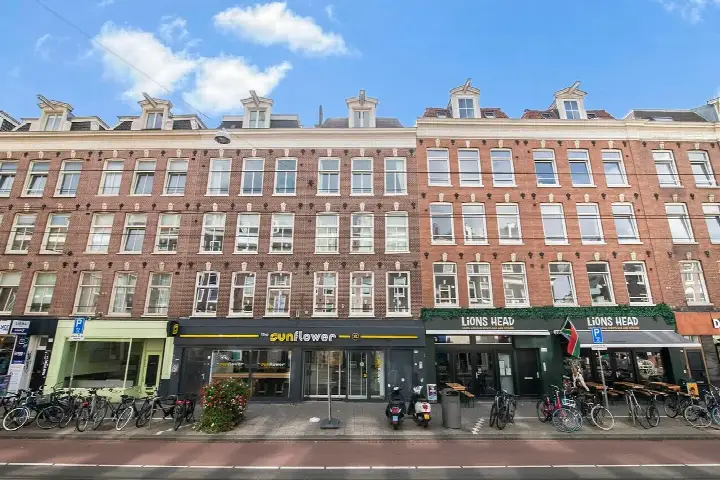
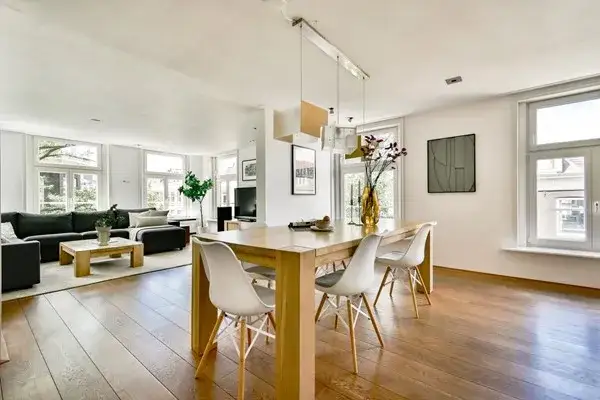





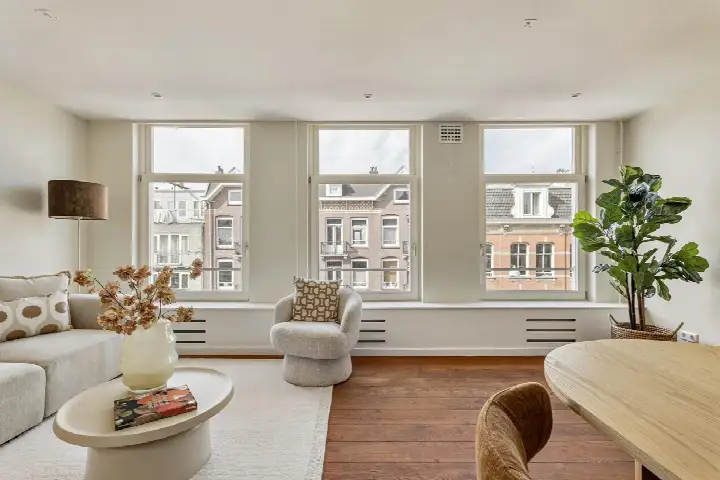



Stadhouderskade 119-1






House prices and market figures in the Sarphatiparkbuurt, Amsterdam
The Sarphatiparkbuurt is a neighbourhood where buying is not a given: only 24% of the 3,342 homes are owner-occupied. The rest are rental properties, a large proportion (57%) of which are owned by private and other landlords. This limited supply of homes for sale is reflected in the prices. The average purchase price over the past twelve months was €510,742, with a range of €280,000 to €1,450,000. With an average floor area of 52 m², this works out at around €9,822 per square metre. The WOZ value in the neighbourhood is €528,000, slightly lower than the average for the district of Oude Pijp (€558,000), but higher than the Amsterdam average of €517,000. The vast majority of what comes on the market are apartments, often in characteristic pre-war buildings of three to five storeys. Detached houses or single-family homes are hardly found here. See the overview at the top of this page for the current state of supply and the average time on the market.
Living in Sarphatiparkbuurt: city life around a green heart
The Sarphatiparkbuurt takes its name from the Sarphatipark, the green centre of the neighbourhood and one of the few real parks in the Pijp. That park largely determines the atmosphere: you have the hustle and bustle of the Albert Cuypmarkt and the Ferdinand Bolstraat within walking distance, but as soon as you step into the park it becomes quieter. On sunny days, the lawns are full of local residents, students and young families. It is not a large park, but it feels like a welcome breather in an otherwise densely built-up neighbourhood.
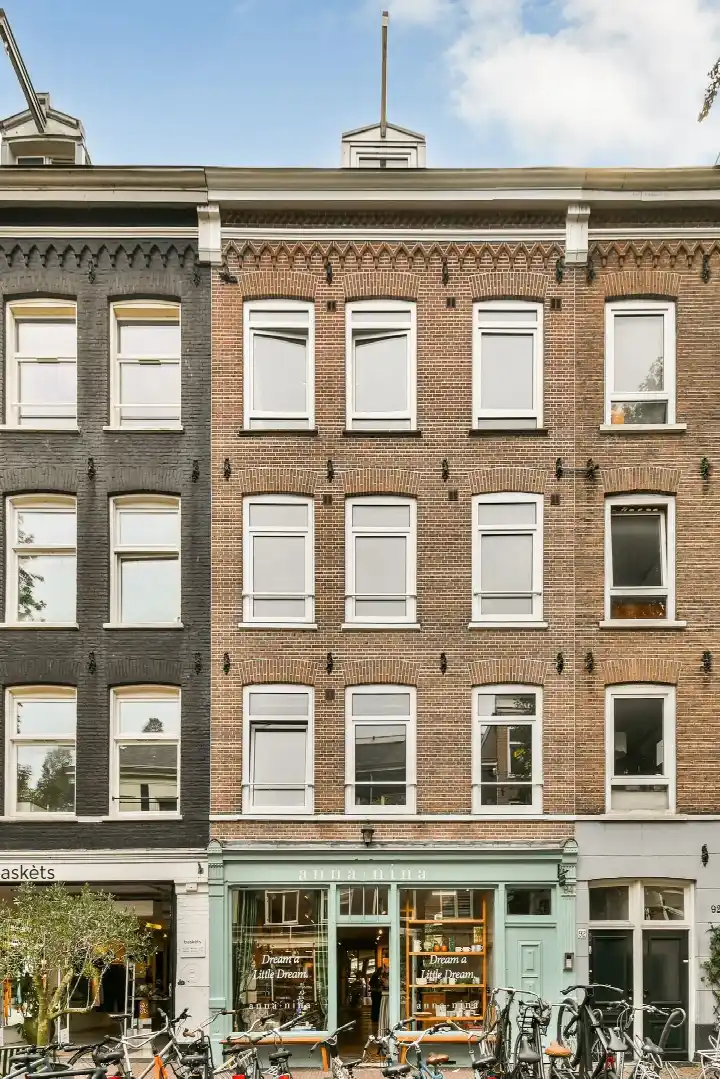
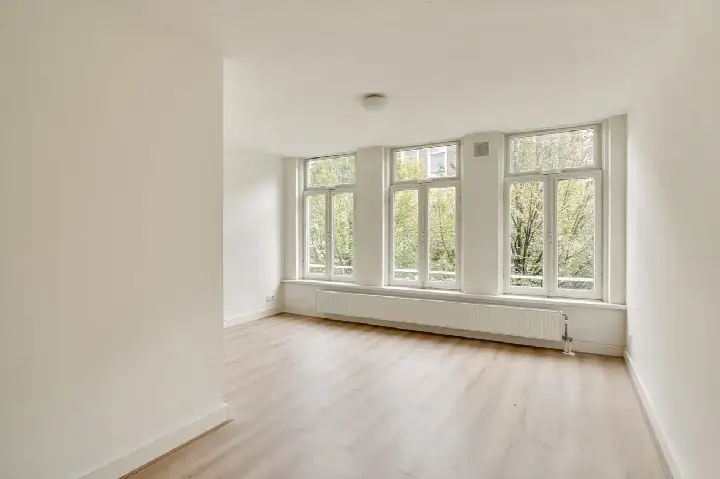
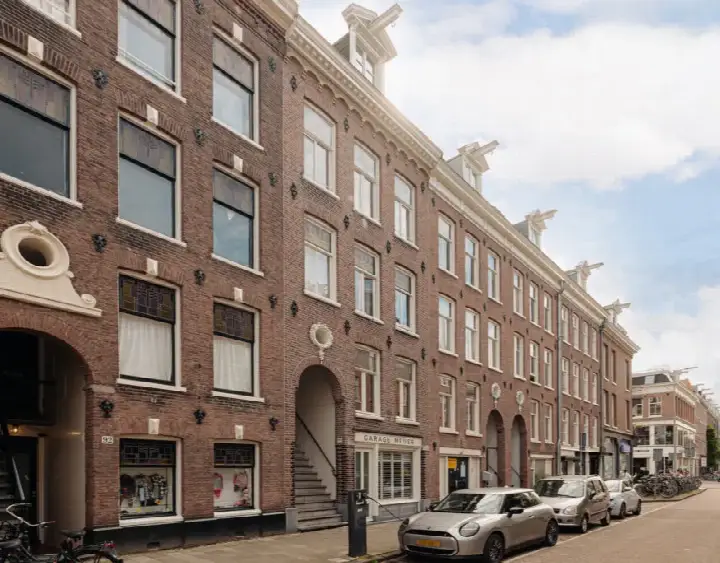
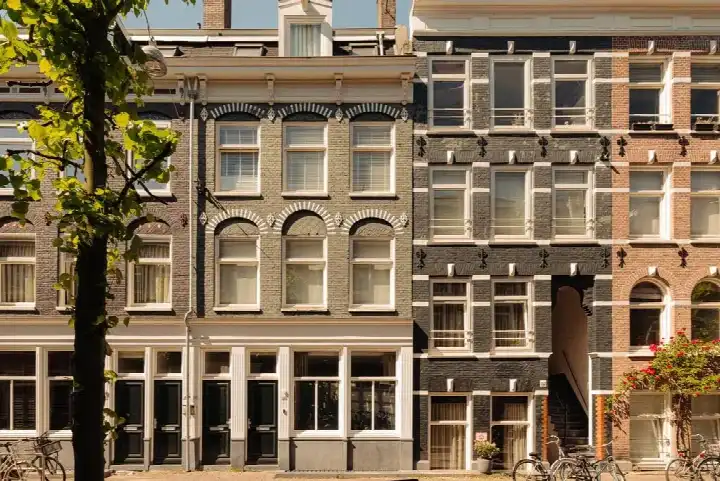
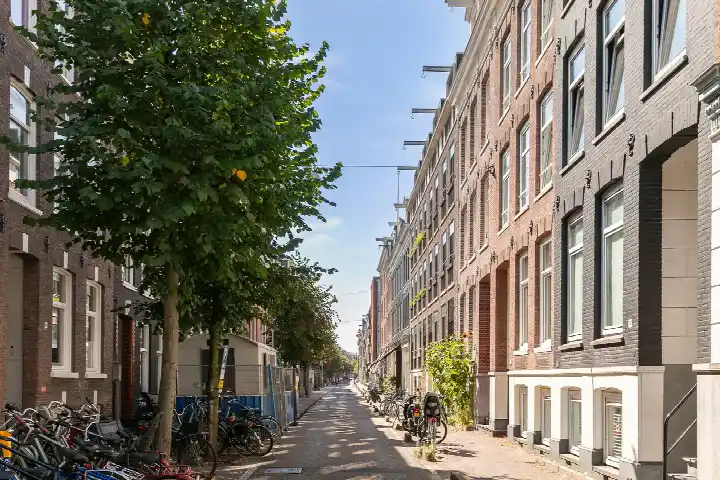
The homes were mostly built around 1900, in the typical Amsterdam architectural style with narrow, tall buildings and steep stairs. Most apartments are compact, often between 40 and 65 m². That suits the composition of residents: over 2,265 of the households are single-person households and the largest age group is 25 to 45 years old. It is a neighbourhood of young professionals and couples, with a high level of education (61% highly educated) and an average income of €48,300.
In terms of amenities, you are well catered for. The Albert Cuypmarkt is a few minutes' walk to the north. On the Ceintuurbaan and the Eerste van der Helststraat you will find a mix of cafés, restaurants and specialist shops. For daily groceries, there are several supermarkets in the immediate vicinity, including an Albert Heijn on the Ceintuurbaan. Basisschool De Pijp and childcare centres are present in the neighbourhood, although the supply is limited given the relatively low number of children (320 residents under 15).
Accessibility is good. De Pijp metro station (North/South line) is on the west side of the neighbourhood and takes you to Amsterdam Central in ten minutes. Tram lines on the Ferdinand Bolstraat and the Ceintuurbaan connect you to the rest of the city. By bike, you can reach Museumplein or Amstelstation in five minutes. Parking is difficult and expensive, as in most neighbourhoods within the ring. For more information about parking permits, see the website of the municipality of Amsterdam.
Residents give the Sarphatiparkbuurt a 7.0 out of 10. Rijkea, who has lived here for fifty years, describes it as a "cosy neighbourhood". That cosiness lies in the small scale: you know your neighbours, you have your regular spots. At the same time, the neighbourhood scores a consistent 7.0 on all subcategories, from safety to amenities. That suggests a neighbourhood without major outliers, but also without major pain points. More reviews and detailed neighbourhood data can be found on the page about the Sarphatiparkbuurt.
Compared to adjacent neighbourhoods such as the Frans Halsbuurt and the Gerard Doubuurt, the Sarphatiparkbuurt is slightly greener and slightly quieter due to the park. The Hemonybuurt to the east has a similar atmosphere but is closer to Amstelstation. Anyone who wants to compare the whole picture of the district can visit the overview of homes for sale in Oude Pijp.
Is a home for sale in the Sarphatiparkbuurt right for you?
The Sarphatiparkbuurt mainly attracts first-time buyers and young professionals who want to buy an apartment in a lively Amsterdam neighbourhood. With an average purchase price of over half a million euros and compact homes, it is not a neighbourhood for those looking for a lot of space. If you have a budget under €300,000, it will be tight. Overbidding is more the rule than the exception here. For families with children, the limited living space can be a disadvantage, although the proximity of the park is a plus. Seniors looking to downsize sometimes find suitable apartments here, but be aware of steep stairs in many buildings. If buying is not feasible, then check the supply of rental properties in the Sarphatiparkbuurt.
What residents say about the Sarphatiparkbuurt
The Sarphatiparkbuurt scores a 7.0 out of 10, based on reviews from residents. All subscores, from safety and accessibility to green spaces and education, come out at 7.0. Rijkea has lived here for half a century and sums it up succinctly: "Cosy neighbourhood." With only one review, the picture is still limited, so if you live or have lived here: share your experience on the review page of the Sarphatiparkbuurt.
Comparing housing supply around the Sarphatiparkbuurt
On Buurtje.nl you can view the supply of homes for sale from more than 1,500 sources, combined with neighbourhood scores and resident reviews. This way you not only see what is for sale, but also what it is really like to live there. Want to search more broadly? Then compare with the Hercules Seghersbuurt in the same district, or look at popular neighbourhoods such as the Jordaan and Grachtengordel-West. For the complete overview of homes for sale in Amsterdam you can also search at municipality level.
What does a home cost in the Sarphatiparkbuurt?
The average purchase price in the Sarphatiparkbuurt last year was €510,742. Prices range from €280,000 to €1,450,000. With an average floor area of 52 m², the price per square metre is approximately €9,822. Almost exclusively apartments are involved.
What is the WOZ value in the Sarphatiparkbuurt?
The average WOZ value in the Sarphatiparkbuurt is €528,000. That is slightly lower than the district average of the Oude Pijp (€558,000) and higher than the Amsterdam average of €517,000. The WOZ value is relevant for your municipal taxes and mortgage calculation.
What is it like to live in the Sarphatiparkbuurt?
Residents give the neighbourhood a 7.0 out of 10. It is a lively neighbourhood with the Sarphatipark as a green centre, the Albert Cuypmarkt within walking distance, and many restaurants and bars on the Ceintuurbaan. The neighbourhood mainly consists of young professionals and single-person households. A resident who has lived here for fifty years calls it a cosy neighbourhood.
Is the Sarphatiparkbuurt suitable for first-time buyers looking to purchase a home?
The neighbourhood is popular among first-time buyers and young professionals, given the large group of 25- to 45-year-olds (2,525 residents). With an entry price around €280,000 for the smallest apartments, it is possible, but overbidding is common. Expect compact homes with an average of 52 m².
How accessible is the Sarphatiparkbuurt?
Accessibility is good. De Pijp metro station (North/South line) is on the edge of the neighbourhood. Tram lines on the Ferdinand Bolstraat and Ceintuurbaan connect you to the rest of Amsterdam. By bike, you are quickly at the Museumplein or Amstelstation. Parking is expensive and scarce.
What type of homes are for sale in the Sarphatiparkbuurt?
The supply consists almost entirely of apartments in pre-war buildings, built around 1900. Typical are three- to five-storey buildings with steep stairs. The average floor area is 52 m². Single-family homes or detached houses are hardly available here.
How green is the Sarphatiparkbuurt compared to the rest of the Pijp?
The Sarphatiparkbuurt is relatively green for the Pijp thanks to the Sarphatipark, one of the few real parks in this part of Amsterdam. Residents rate the greenery a 7.0. In surrounding neighbourhoods such as the Frans Halsbuurt and Gerard Doubuurt, the public space is predominantly paved.
My neighbourhood for fifty years
Auto-translated to English by AI