Municipality in Drenthe
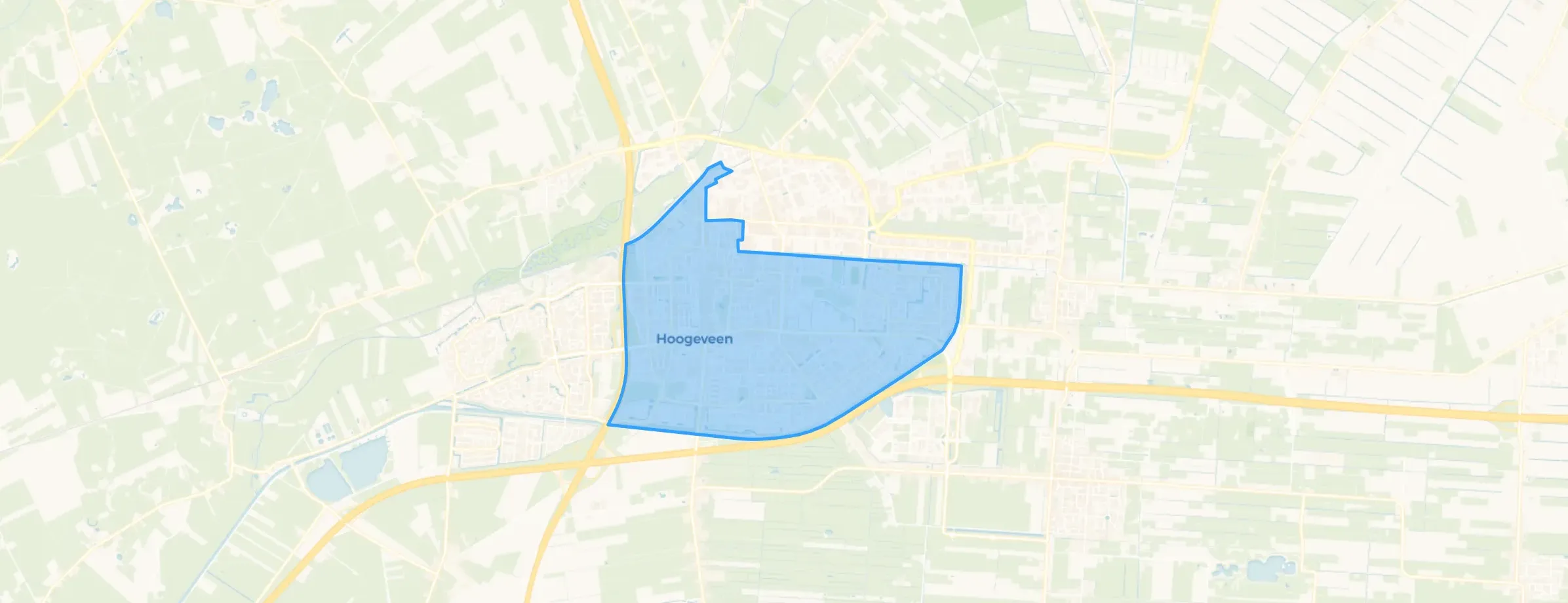
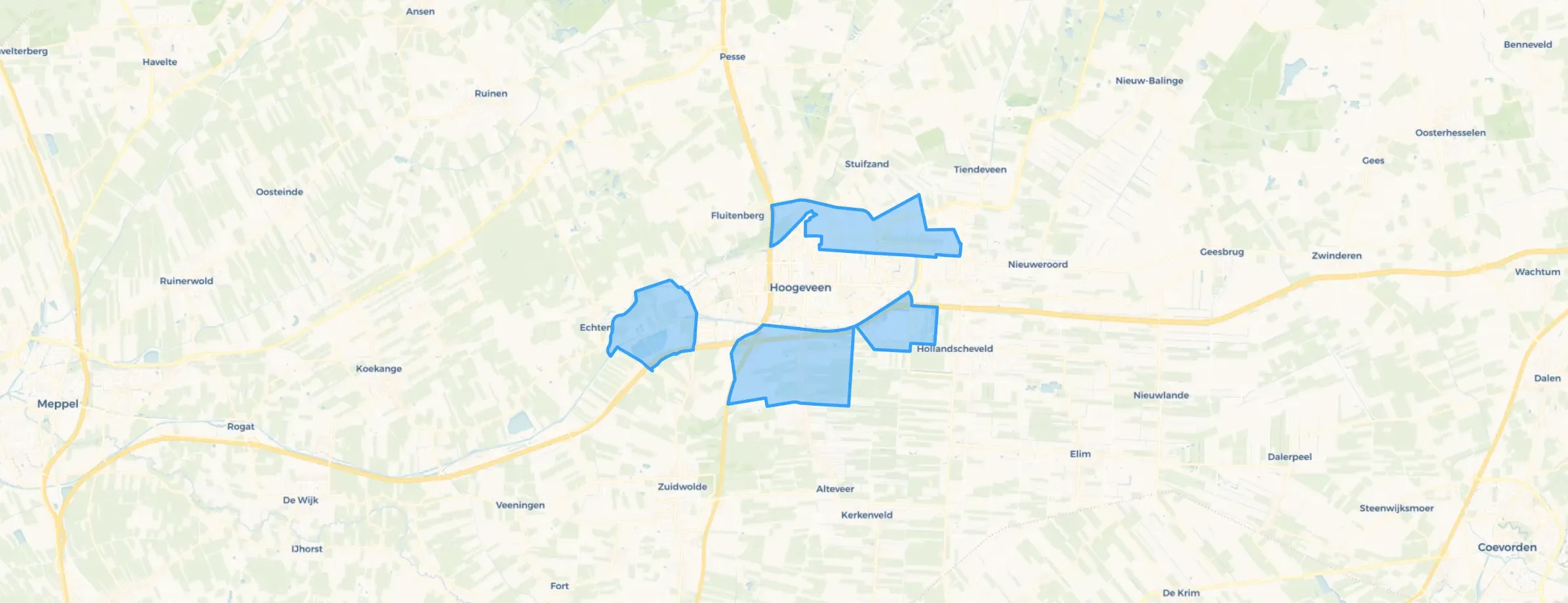
Hoogeveen is located in the province of Drenthe The municipality has a total area of 12.925 hectares, of which 12.754 hectares are land and 171 hectares are water. The municipality is coded as GM0118. The postcode area is 7901AA-7936TV.
Hoogeveen has 56.906 residents. Of these, 50,3% are men and 49,7% are women. Most residents are 45 to 65 years (26,2%). The other age groups are 23,5% for '25 to 45 years', 23,1% for '65 years or older', 14,9% for '0 to 15 years' and 12,3% for '15 to 25 years'. Of the residents, 46,3% is unmarried, 40,1% is married, 7,8% is divorced and 5,8% is widowed. 48.298 residents originate from the Netherlands, 2.836 come from Europe and 5.772 come from countries outside Europe.
There are 25.129 households in Hoogeveen. 36,4% of these are single-person households, 30,1% households without children and 33,5% households with children. The average household size is 2,2 persons. The national average is 2,1 persons.
In Hoogeveen there are 45.500 income recipients. The average income per income recipient is €35.600, which is €6.600 (16%) lower than the national average of €42.200. Per resident, the average income is €29.400, which is €5.500 (16%) lower than the national average of €34.900. Most residents of Hoogeveen are educated to an intermediate level. 47,7% have an intermediate education (HAVO, VWO or MBO 2-4), 33,4% have a lower education (VMBO or MBO 1) and 18,9% have a university or higher professional education (HBO/WO).
Of the 56.906 residents, around 71% are in paid employment, which amounts to 40.403 people. This is 1% lower than the national average of 72%. The majority of workers are in salaried employment (86%), while 14% are self-employed. In Hoogeveen, 29% of residents receive a benefit. The largest group is those receiving a state pension (AOW). 11.830 people receive this benefit.
In Hoogeveen there are 25.911 homes with an average assessed value (WOZ) of €286.000. Of these, around 96% are occupied and 4% unoccupied. Most homes are owner-occupied. This amounts to 38% rental homes and 62% owner-occupied homes. Of the homes, 62% privately owned, 28% owned by housing associations and 10% owned by other landlords. The most common construction periods in Hoogeveen are 1950-1970 (25%) and 1970-1980 (19%).
There are currently no homes for sale in Hoogeveen. The most recently listed home is Buizerdlaan 123 by Bruins Makelaardij op Funda. No homes were sold in Hoogeveen over the past year.
There are currently no homes for rent in Hoogeveen. The most recent home is Pottingastraat 62, offered by www.thuiskompas.nl. No homes were let in Hoogeveen over the past year.
No recent rental data available for Hoogeveen.
In Hoogeveen there are 18.068 addresses with a registered energy label. The most common labels are A (36%), C (23%) and B (14%). On average, an address in Hoogeveen uses 2.620 kWh of electricity per year. This is 3% above the national average of 2.550 kWh. Natural gas consumption, at 900 m³ per year, is 13% above the national average of 800 m³.
I've lived in Noordscheschut for almost my entire life and it's a very cosy village. Everyone always gives each other a wave and people chat among themselves. Top place to live!
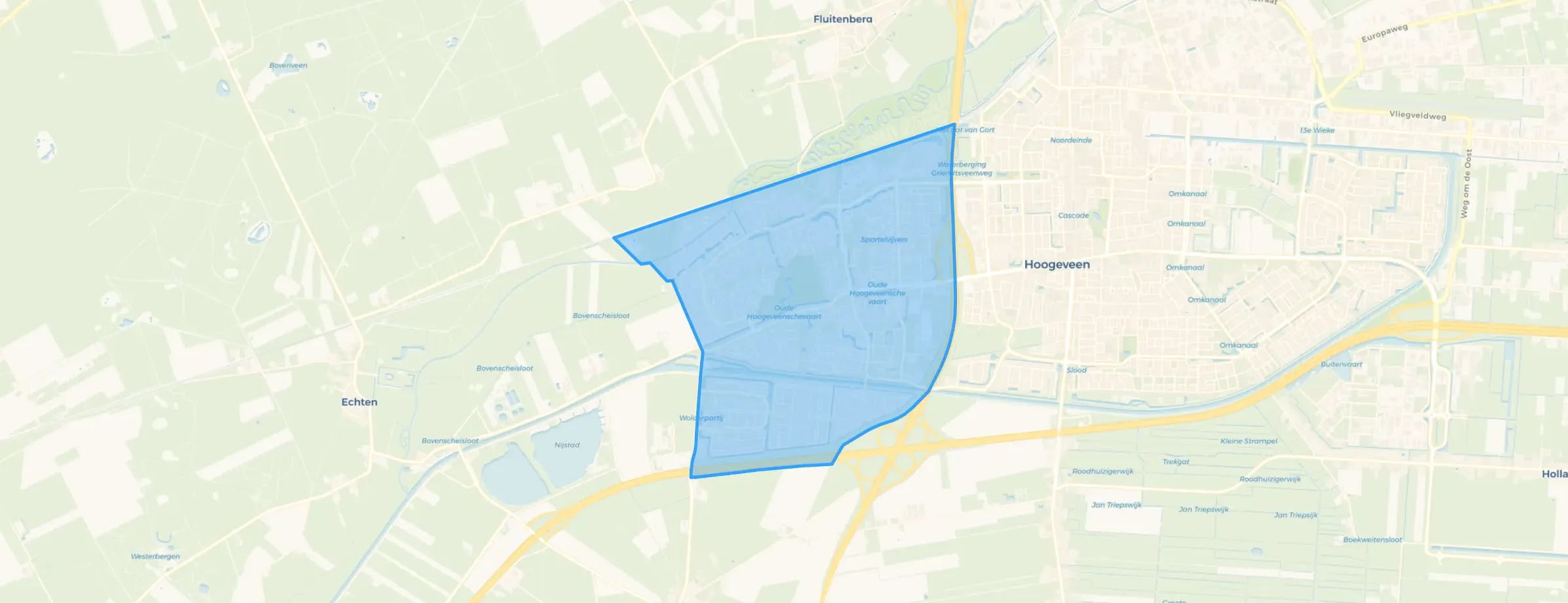
Auto-translated to English by AII live close to the park, where you can take nice walks, sit on benches, which I advocated for at the time. The beautiful art bench also looks great again. The festival has just been held again. You can also play a game with discs there, together or alone. In winter with snow, children can slide down the hill with a sled or tyre. The petting zoo is nearby. People with dogs talk to each other and dogs play together. The old Hoogeveense Vaart lies in front of my house, with an old street lined with oak trees along it. An old bridge also spans the water. People often sit there fishing. A wonderfully quiet spot in Hoogeveen. The bus 'De Bij' runs regularly in the area. Most daily necessities you can buy in the shopping centre. Doctor's practice and pharmacy within walking distance, what more could you want. Maybe a few extra benches, one at the parking spot near the doctor's practice please..
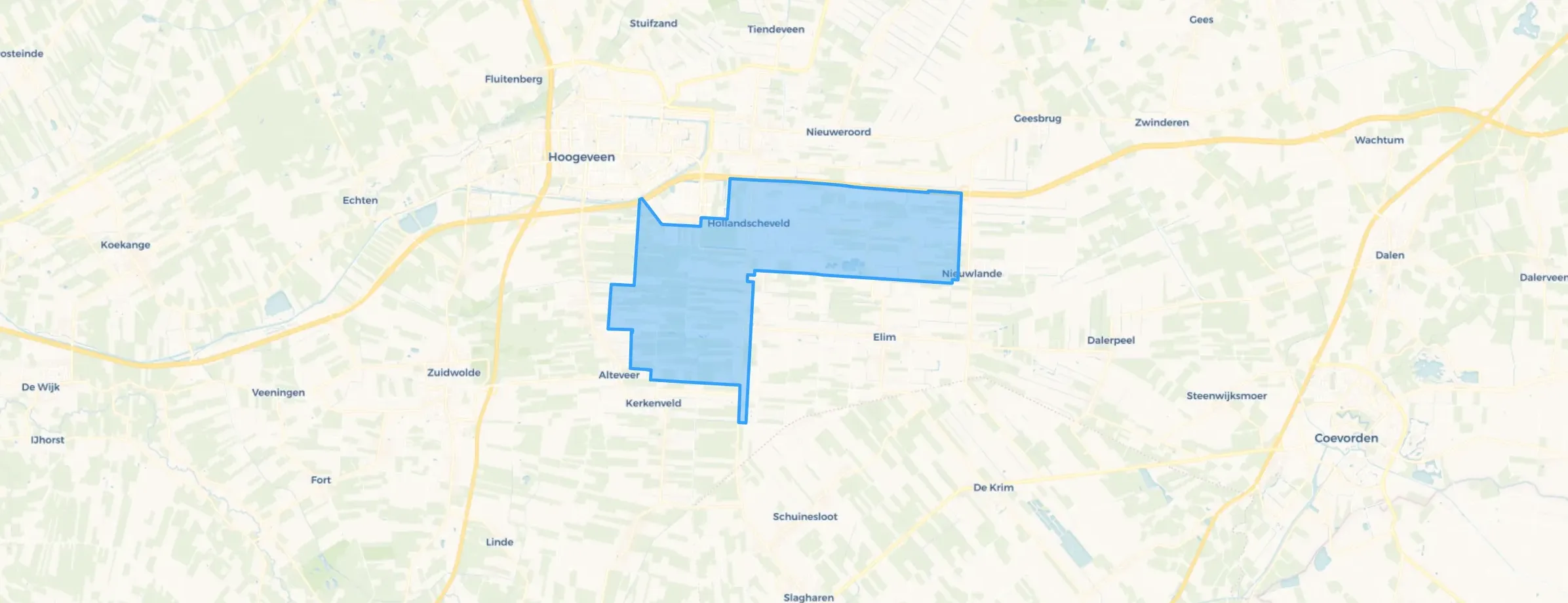
Auto-translated to English by AIDue to the distances between the large town of Hoogeveen and the villages of Alteveer and Kerkenveld, accessibility and amenities are quite limited. The only way to reach a built-up area is by bike or car. And for amenities and education, you have to go to those areas. But the people are friendly and the neighbourhood is safe.
Auto-translated to English by AINice neighbourhood where people look out for each other, help each other and tolerate each other. Sometimes there is a bit of nuisance from youth, but it never lasts long and never gets out of hand because the neighbourhood keeps an eye on things so the police don't have to get involved. Only a shame that the houses are old and in need of replacement. That's the only downside.
Auto-translated to English by AIAll amenities in the neighbourhood for now, but if the council gets its way it will get worse. Many shops have already left the Tamboerpassage because the council preferred them to move to the Hoofdstraat, despite the fact that many residents who are often not very mobile now have to walk a long way from many shops. As for the eye-catcher; it is meant for empty cans and drink cartons but is filled at least several times a week by antisocial neighbours who dump large rubbish bags full of junk in it, making the opening unusable and the rubbish ending up on the grass.
Auto-translated to English by AIAlways nice to live here. Neighbours are generally friendly, you can walk the dog nicely. Lots of nice spots in the neighbourhood. Little litter on the streets. Sometimes a lot of dog poop. Lots of space. Green village. Also a beautiful village. I have no personal experience with the schools, but other people are satisfied with them. There is a public primary school and a Christian one. There are fun activities in summer, especially the festival week. The village is close to the motorway.
Auto-translated to English by AII think our neighbourhood is really nice, it's conveniently close to school and other places
Auto-translated to English by AIA very cosy neighbourhood with many amenities nearby, you have 2 supermarkets, a hairdresser, tattoo shop, several clothing stores, pharmacy, doctor and dentist and much more, so you basically have everything in the area. Also, many things are organised, for example in the playground for children.
Auto-translated to English by AIThe housing stock is mainly post-war — 63% was built between 1945 and 1990.
Over the past year a home for sale in Hoogeveen was listed for an average of €411,553 (€3,311 per m²). That is 22% below the Dutch national average.
A rental home in Hoogeveen cost an average of €1,360 per month (€11 per m²). That is 37% below the national average.
Residents give Hoogeveen a 7.6 out of 10 based on 18 reviews. The strongest score is for accessibility (8.2), the weakest for nature and greenery (7.2).
The housing supply in Hoogeveen is remarkably efficient: 52% has an A, A+ or B label. The average natural gas consumption per household is 900 m³ per year.
From Hoogeveen you can on average reach a supermarket at 1.0 km, a GP at 1.4 km, a railway station at 4.2 km, a primary school at 0.7 km (as the crow flies, source: CBS).
Right now you will find 233 homes for sale and 22 homes for rent in Hoogeveen.