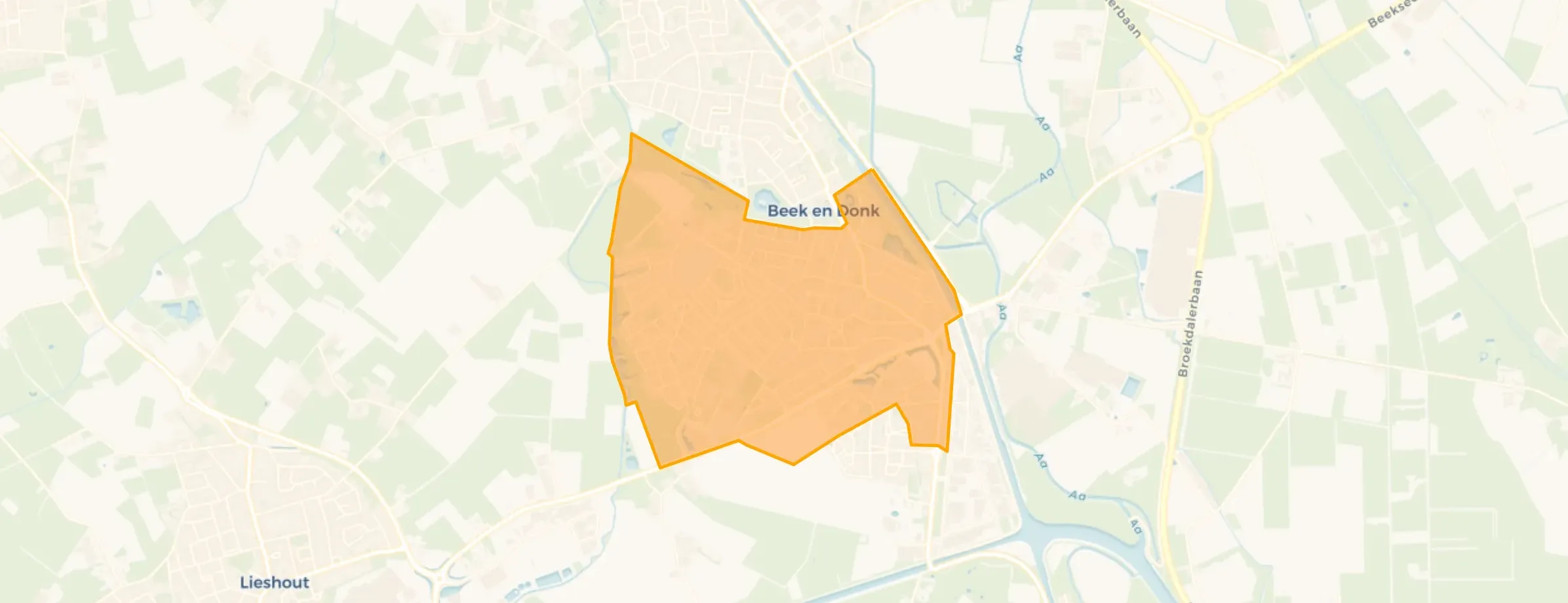
Neighbourhood in Laarbeek
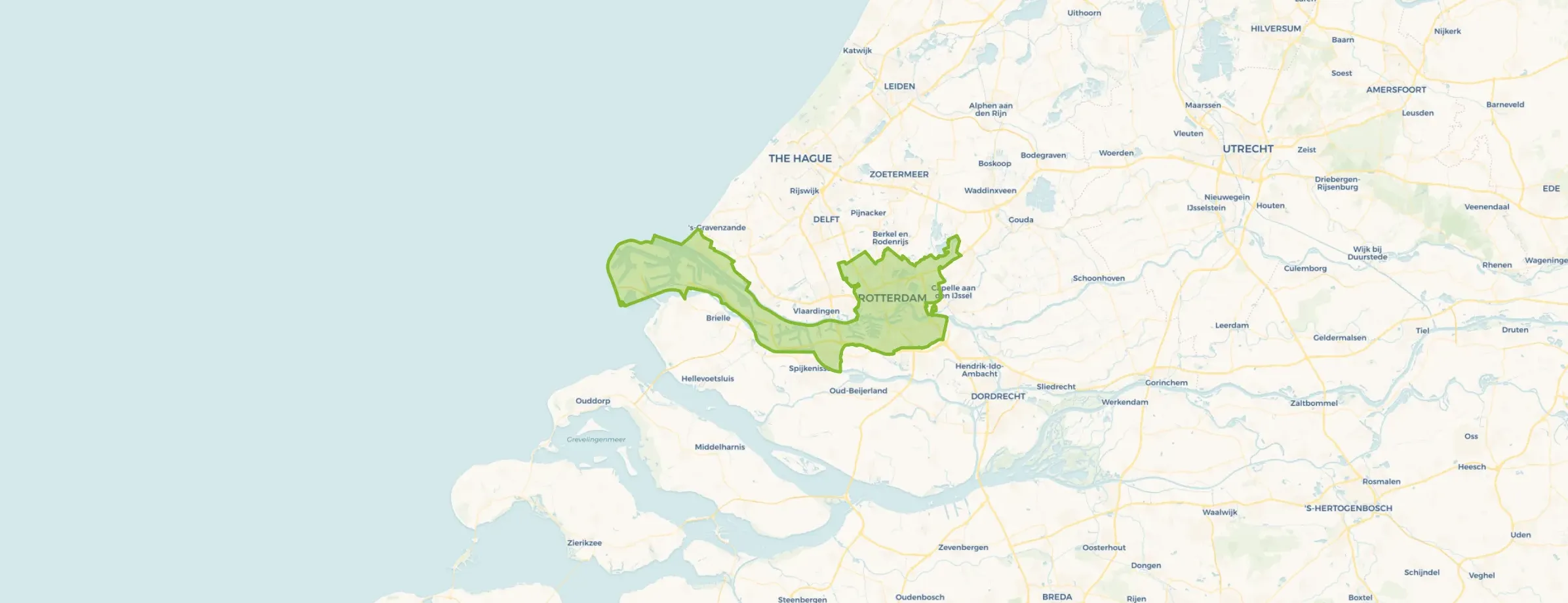
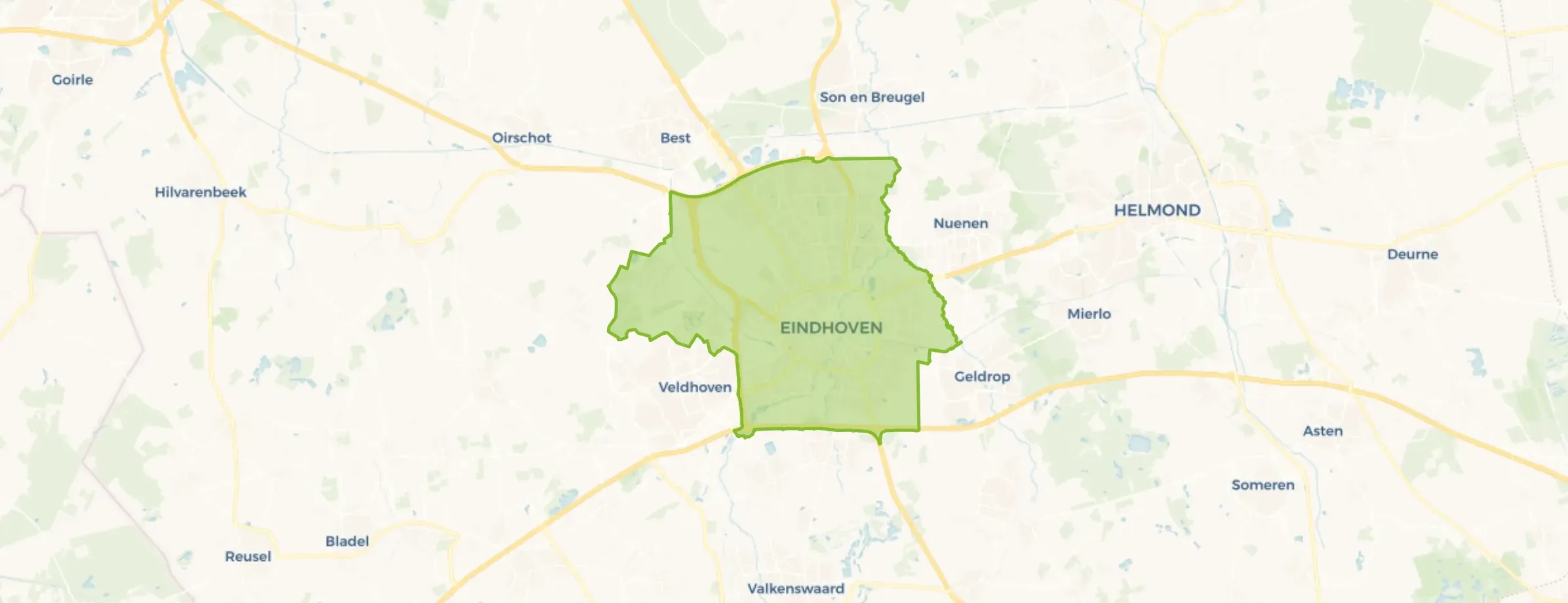
Beek is located in the province of Noord-Brabant, in the municipality of Laarbeek, in the district Beek en Donk The neighbourhood has a total area of 184 hectares, of which 179 hectares are land and 4 hectares are water. The neighbourhood is coded as BU16590000. The postcode area is 5741BC-5741XZ.
Four residents rate the neighbourhood as good with a score of 7.9. They describe it as 'Cosy and relaxing environment', 'Quiet neighbourhood with many different types of people.' and 'Quiet and good atmosphere'. Residents are positive about the neighbourhood: nearly all aspects score well. In particular, accessibility, greenery, housing are seen as strong points.
Beek has 5.760 residents. Of these, 49,9% are men and 50,1% are women. Most residents are 25 to 45 years (25,3%). The other age groups are 25,0% for '45 to 65 years', 22,0% for '65 years or older', 17,0% for '0 to 15 years' and 10,7% for '15 to 25 years'. Of the residents, 47,0% is unmarried, 40,0% is married, 7,2% is divorced and 5,6% is widowed. 4.885 residents originate from the Netherlands, 410 come from Europe and 460 come from countries outside Europe.
There are 2.470 households in Beek. 31,2% of these are single-person households, 30,8% households without children and 38,1% households with children. The average household size is 2,3 persons. The national average is 2,1 persons.
In Beek there are 4.600 income recipients. The average income per income recipient is €39.100, which is €3.100 (7%) lower than the national average of €42.200. Per resident, the average income is €32.100, which is €2.800 (8%) lower than the national average of €34.900. Most residents of Beek are educated to an intermediate level. 49,6% have an intermediate education (HAVO, VWO or MBO 2-4), 27,1% have a lower education (VMBO or MBO 1) and 23,3% have a university or higher professional education (HBO/WO).
Of the 5.760 residents, around 75% are in paid employment, which amounts to 4.320 people. This is 3% higher than the national average of 72%. The majority of workers are in salaried employment (86%), while 14% are self-employed. In Beek, 26% of residents receive a benefit. The largest group is those receiving a state pension (AOW). 1.150 people receive this benefit.
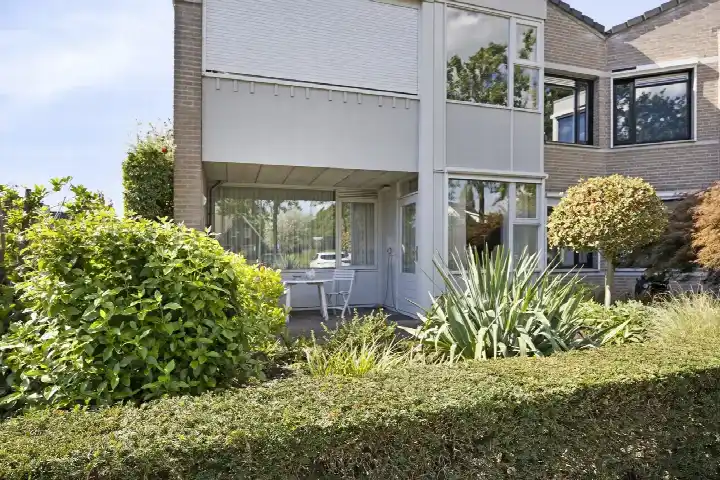
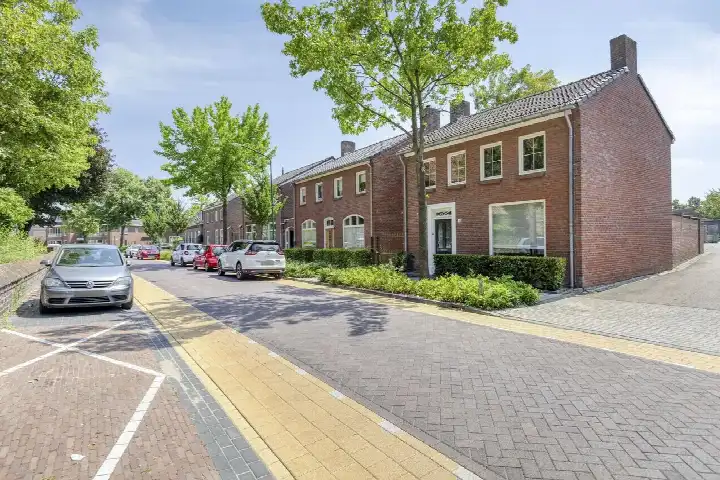
In Beek there are 2.501 homes with an average assessed value (WOZ) of €399.000. Of these, around 98% are occupied and 2% unoccupied. Most homes are owner-occupied. This amounts to 32% rental homes and 68% owner-occupied homes. Of the homes, 68% privately owned, 27% owned by housing associations and 5% owned by other landlords. The most common construction periods in Beek are 1970-1980 (28%) and 1950-1970 (21%).
There are currently 14 homes for sale in Beek. The most recently listed home is Leliestraat 86 by Wijman & Jansen ERA makelaars. Over the past year, 111 homes were sold in Beek. On average, a home was sold within 43 days.
The average asking price for a home for sale in Beek over the past year was €479.532. This is 20% higher than the average assessed value (WOZ) of €399.000. The average asking price per m² of plot is €3.197.
There are currently no homes for rent in Beek. The most recent home is Beverstraat 37, offered by www.wooniezie.nl. No homes were let in Beek over the past year.
No recent rental data available for Beek.
In Beek there are 1.710 addresses with a registered energy label. The most common labels are A (36%), C (26%) and B (18%). On average, an address in Beek uses 2.830 kWh of electricity per year. This is 11% above the national average of 2.550 kWh. Natural gas consumption, at 860 m³ per year, is 8% above the national average of 800 m³.
It's really a nice area to live in, I've lived here all my life and never wanted to live anywhere else. Lots of amenities in the neighbourhood, enforcement officers who patrol regularly, also plenty of schools.
Auto-translated to English by AIApart from my neighbours, I actually have very little contact with anyone from the neighbourhood. When I meet someone on the street, I always say hello, and most people in the neighbourhood say hello back pleasantly. I like that. I also feel safe in my neighbourhood because nothing bad ever happens that would make me feel less safe. The education in the neighbourhood is fine; there are several primary schools and also a secondary school. I also think the greenery in the neighbourhood is good; there are quite a lot of trees and enough small parks where you can walk. Amenities, such as schools, supermarkets, drugstores, and restaurants, are also plentiful. Moreover, Beek is easily accessible, and all streets are tidy and accessible.
Auto-translated to English by AIEveryone gets along well with each other and it's quiet and well-maintained. No street litter or overflowing bins.
Auto-translated to English by AIWe live on a paved road where cars and motorcycles are allowed to drive 50 km/h. Previously, we had to cross the dangerous road. With and without small children!!! A few years ago, the municipality built a roundabout, making crossing safer and reducing the speed of cars. From Beek you can easily reach Helmond, Eindhoven, or the motorways to Nijmegen and Utrecht, Den Bosch, Venlo, etc. In this neighbourhood we have a WhatsApp neighbourhood watch and volunteers who walk a daily round through the village wearing an orange vest, where you can always go. The municipality keeps the trees and hedges along the road tidy, and there is almost never any litter in our neighbourhood.
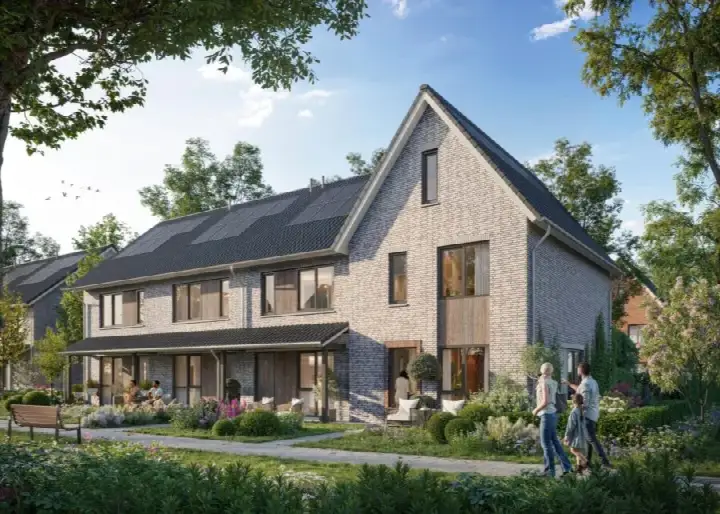
Auto-translated to English by AIThe housing stock is mainly post-war — 61% was built between 1945 and 1990. In addition, the most common type is terraced houses (40%).
Over the past year a home for sale in Beek was listed for an average of €458,036 (€3,511 per m²). That is 13% below the Dutch national average. Last quarter prices fell by 6%.
Residents give Beek a 7.9 out of 10 based on 4 reviews. Especially accessibility (8.5) scores well; cleanliness (7.3) receives the lowest rating.
Buurt Beek has 5,760 residents. Many families: 38% of the households have children.
The housing supply in Beek is remarkably efficient: 53% has an A, A+ or B label. The average natural gas consumption per household is 860 m³ per year.
From Beek you can on average reach a supermarket at 0.7 km, a GP at 1.0 km, a railway station at 7.8 km, a primary school at 0.5 km (as the crow flies, source: CBS).
Right now you will find 25 homes for sale in Beek.