District in Groningen
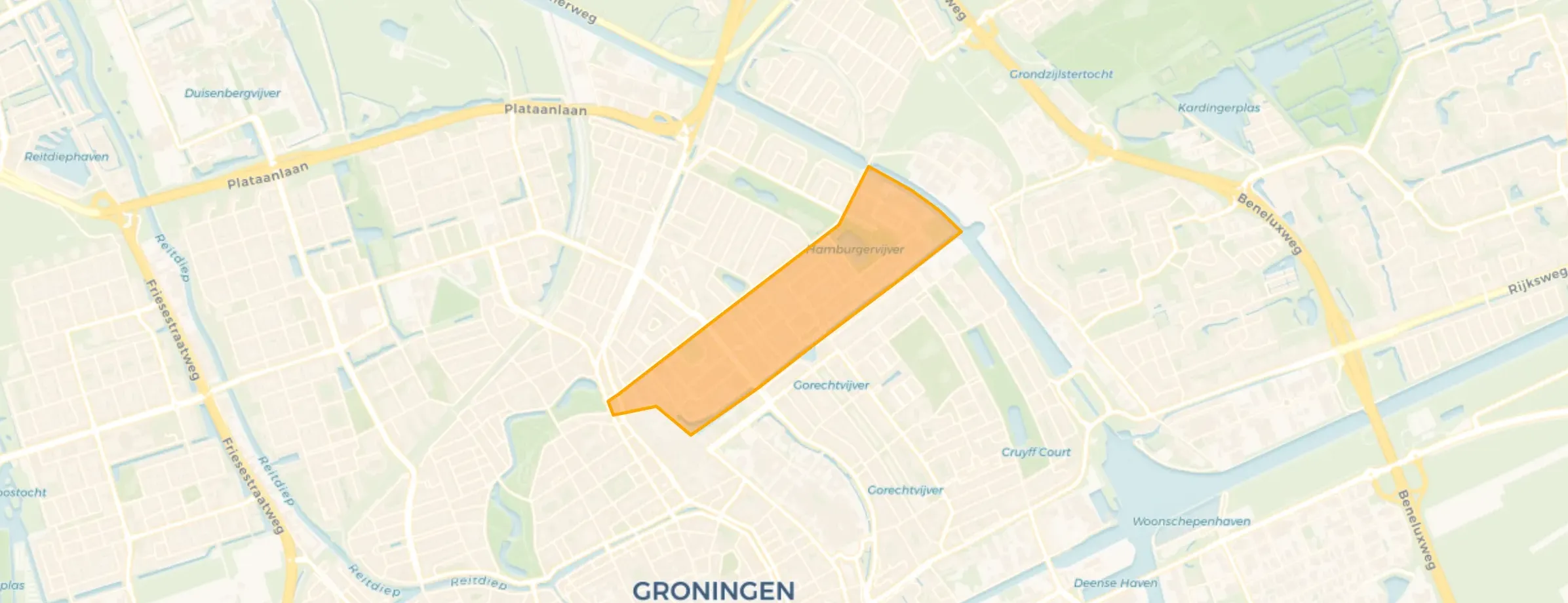
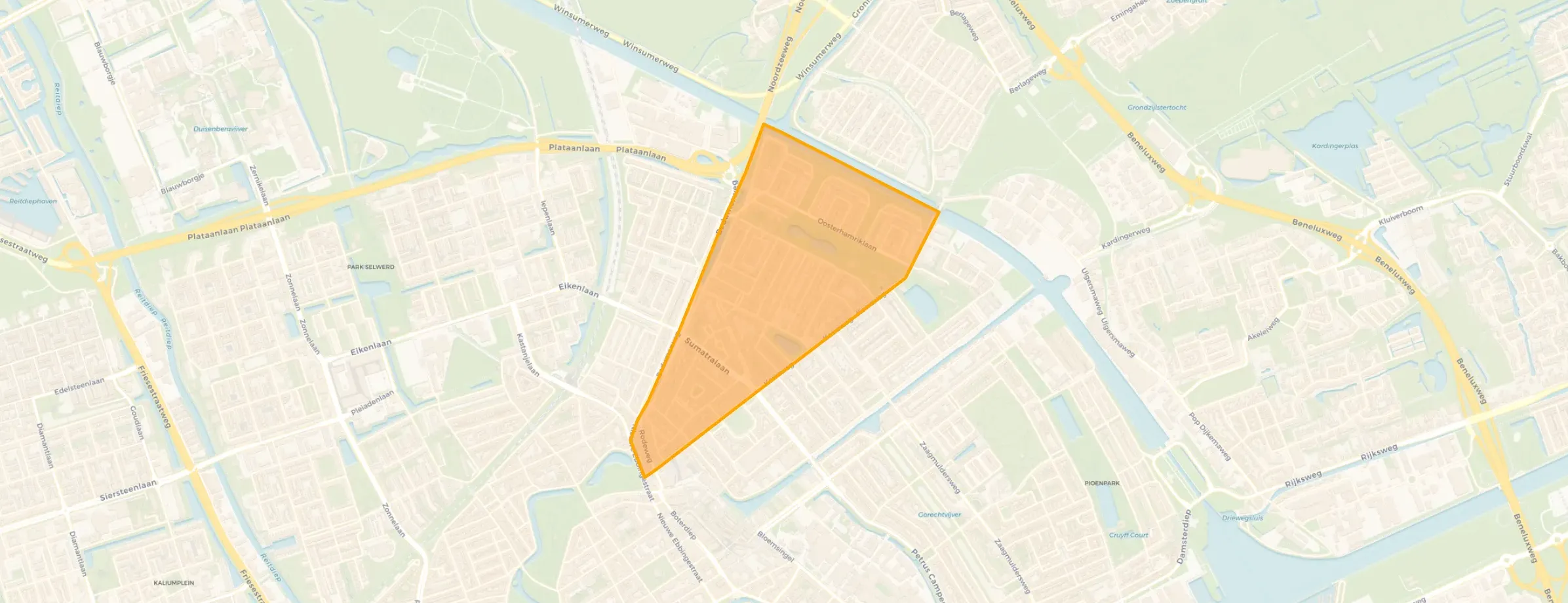
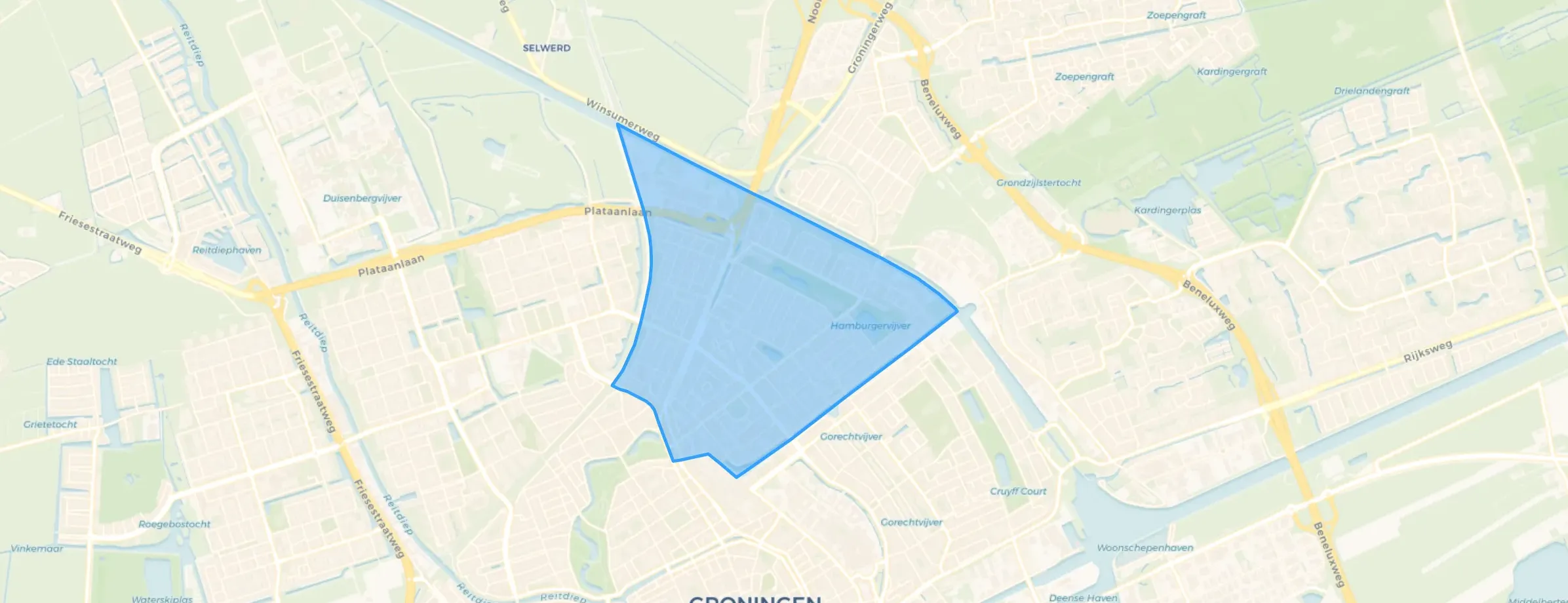
Oud-Noord is located in the province of Groningen, in the municipality of Groningen The district has a total area of 186 hectares, of which 178 hectares are land and 9 hectares are water. The district is coded as WK001403. The postcode area is 9714AA-9741CN.
Oud-Noord has 19.120 residents. Of these, 49,4% are men and 50,7% are women. Most residents are 25 to 45 years (38,3%). The other age groups are 29,2% for '15 to 25 years', 15,7% for '45 to 65 years', 9,5% for '0 to 15 years' and 7,4% for '65 years or older'. Of the residents, 81,6% is unmarried, 11,0% is married, 6,0% is divorced and 1,5% is widowed. 12.320 residents originate from the Netherlands, 2.260 come from Europe and 4.545 come from countries outside Europe.
There are 13.280 households in Oud-Noord. 71,3% of these are single-person households, 16,8% households without children and 11,9% households with children. The average household size is 1,4 persons.
In Oud-Noord there are 15.600 income recipients. The average income per income recipient is €27.200, which is €8.600 (24%) lower than the national average of €35.800. Per resident, the average income is €23.900, which is €5.300 (18%) lower than the national average of €29.200. Most residents of Oud-Noord are highly educated. 42,1% have a university or higher professional education (HBO/WO), 41,7% have an intermediate education (HAVO, VWO or MBO 2-4) and 16,2% have a lower education (VMBO or MBO 1).
Of the 19.120 residents, around 60% are in paid employment, which amounts to 11.472 people. This is 5% lower than the national average of 65%. The majority of workers are in salaried employment (90%), while 10% are self-employed. In Oud-Noord, 20% of residents receive a benefit. The largest group is those receiving a social assistance benefit. 1.590 people receive this benefit.
In Oud-Noord there are 10.805 homes with an average assessed value (WOZ) of €242.000. Of these, around 95% are occupied and 5% unoccupied. Most homes are rental properties. This amounts to 82% rental homes and 18% owner-occupied homes. Of the homes, 18% privately owned, 51% owned by housing associations and 31% owned by other landlords. The most common construction periods in Oud-Noord are 1925-1950 (38%) and 1950-1970 (17%).
There are currently no homes for sale in Oud-Noord. The most recently listed home is Tweede Hunzestraat 25A by Slim. Makelaardij op Funda. No homes were sold in Oud-Noord over the past year.
There are currently no homes for rent in Oud-Noord. The most recent home is Beren 27, offered by ikwilhuren.nl. No homes were let in Oud-Noord over the past year.
No recent rental data available for Oud-Noord.
In Oud-Noord there are 10.136 addresses with a registered energy label. The most common labels are A (36%), C (18%) and B (12%). On average, an address in Oud-Noord uses 1.790 kWh of electricity per year. This is 36% below the national average of 2.810 kWh. With an annual consumption of 820 m³ per address, natural gas consumption is 36% below the national average of 1.280 m³.
Very beautiful neighbourhood in Groningen. Lots of facilities such as various schools, gym, playgrounds and plenty of supermarkets and other shops. What is unpleasant is that there is often rubbish next to the bins. Furthermore, the neighbourhood has many nice small parks and you are within no time in a quiet natural environment where you can enjoy walking, running, cycling etc. All in all, this neighbourhood is perfect for students but also for families and other city dwellers.
Auto-translated to English by AIOld neighbourhood, generally low income.
Auto-translated to English by AII feel at home in this neighbourhood. Very diverse, safe and easily accessible.
Auto-translated to English by AIMy neighbourhood is quite cosy, though sometimes dirty because rubbish isn't put in the bins, so hygiene isn't always great. Lots of students, so sometimes there aren't enough places to park your bike. There isn't really a neighbourhood association or other communities that I'm part of. The area also has a primary school, a university of applied sciences, a nice park, several playgrounds and plenty of other amenities. Definitely a safe neighbourhood, but the houses are very old. All in all, a great place to live.
Auto-translated to English by AINice neighbourhood with lots of nature, close to the centre but very quiet.
Auto-translated to English by AIPleasant neighbours all around, cosy, many amenities in the area, fairly green, people greet each other or have a chat. Annual neighbourhood party. Easily accessible from both sides of the ring road. Safe feeling of living. Both students, elderly and families.
Auto-translated to English by AII haven't lived here very long, but I'm especially a fan of the green surroundings and walking routes. I was also surprised that people from my block like to chat and know each other reasonably well. On the street I don't always feel very safe, because there are relatively many people with (visible) mental health and/or drug problems. Yet after living here for a short time, I noticed that I need to worry less than I thought and most people are very friendly here. I am less of a fan of the amenities here; only the Plus supermarket is in the neighbourhood, but that's not necessarily very affordable for everyone. Furthermore, there isn't much within walking distance. I also notice that, for example, on my street there is quite a lot of litter (now also a lot of old fireworks) and the gardens are generally not maintained. This could certainly be improved (:
Auto-translated to English by AInice park, close to the centre, two supermarkets nearby, also two hairdressers, community centre with many activities and cheap lunch/dinner around the corner. Second-hand clothing shop, flower shop and a few other shops, including two cafeterias, a pizza delivery, in short plenty of amenities. And also just over 5 minutes by bike from the centre.
Auto-translated to English by AI
The housing stock is predominantly pre-war — 72% of the homes date from before 1945. In addition, the most common type is flats (85%).
Over the past year a home for sale in Oud-Noord was listed for an average of €295,072 (€3,759 per m²). Last quarter prices rose by 9%.
A rental home in Oud-Noord cost an average of €993 per month (€17 per m²).
Residents give Oud-Noord a 7.6 out of 10 based on 25 reviews. The strongest score is for safety (8.1), the weakest for education (6.5).
Wijk Oud-Noord has 19,120 residents. The largest age group is 25 to 45 years (38%). Notably, 71% of the households are single-person households.
From Oud-Noord you can on average reach a supermarket at 0.5 km, a GP at 0.7 km, a railway station at 1.4 km, a primary school at 0.9 km (as the crow flies, source: CBS).
Right now you will find 112 homes for sale and 52 homes for rent in Oud-Noord.

Buurtje.nl uses cookies to make the site work and to improve it. In doing so, we process data such as your IP address and the pages you visit.
We use this data for three purposes: running the website (functional), measuring visits so we can improve Buurtje.nl (analytics), and — if you allow it — tailoring ads to your interests (marketing).
How we handle your data is described in our privacy policy. You can change your preferences at any time via 'Cookie preferences' at the bottom of every page.
Choose per category which cookies we may place. Read more in our privacy policy.