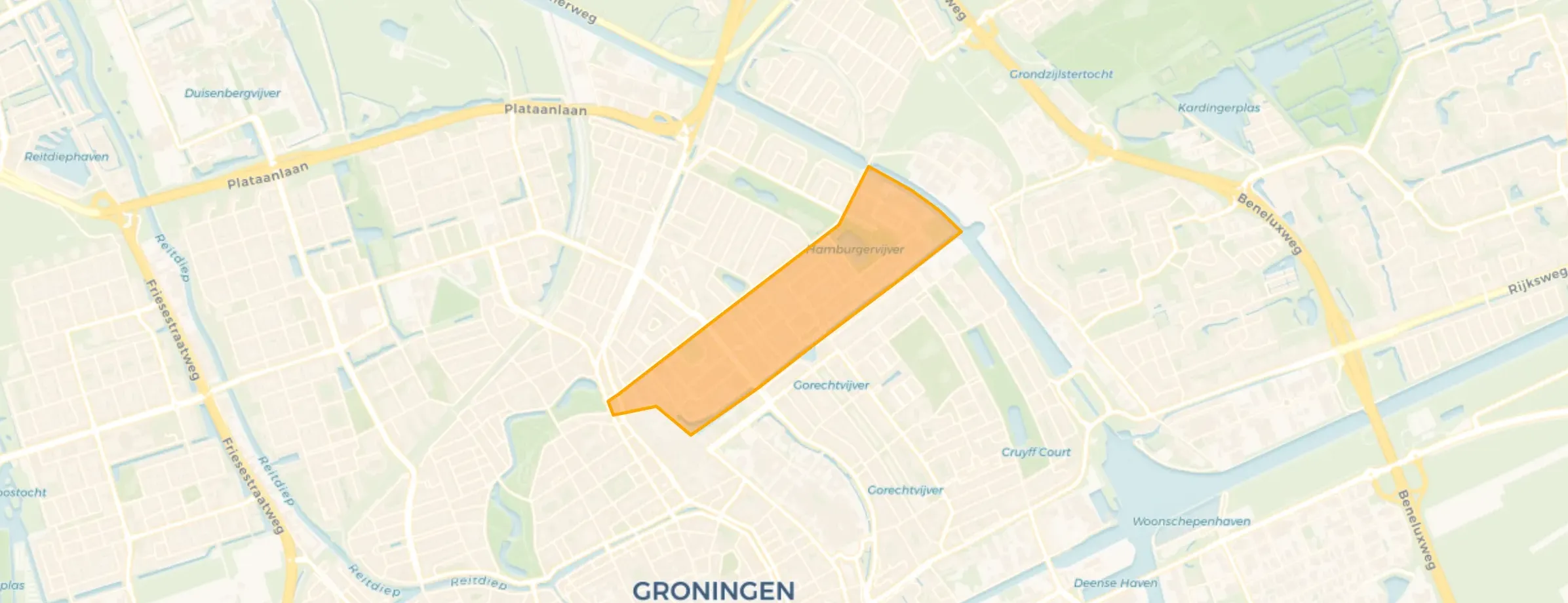
Neighbourhood in Groningen
Professorenbuurt is located in the province of Groningen, in the municipality of Groningen, in the district Oud-Noord The neighbourhood has a total area of 57 hectares, of which 53 hectares are land and 4 hectares are water. The neighbourhood is coded as BU00140302. The postcode area is 9714AA-9714KE.
14 residents rate the neighbourhood as good with a score of 7.6. They describe it as 'prettige buurt.', 'The neighbourhood that has everything' and 'Busy neighbourhood full of families and students'. Aspects such as safety, amenities, greenery are rated well in this neighbourhood, while housing and community score less well.
Professorenbuurt has 6.430 residents. Of these, 46,6% are men and 53,4% are women. Most residents are 15 to 25 years (38,5%). The other age groups are 36,2% for '25 to 45 years', 12,1% for '45 to 65 years', 6,9% for '0 to 15 years' and 6,5% for '65 years or older'. Of the residents, 84,5% is unmarried, 10,8% is married, 3,6% is divorced and 1,1% is widowed. 4.595 residents originate from the Netherlands, 910 come from Europe and 925 come from countries outside Europe.
There are 4.535 households in Professorenbuurt. 71,6% of these are single-person households, 19,4% households without children and 9,0% households with children. The average household size is 1,4 persons. The national average is 2,1 persons.
In Professorenbuurt there are 5.700 income recipients. The average income per income recipient is €33.100, which is €9.100 (22%) lower than the national average of €42.200. Per resident, the average income is €29.800, which is €5.100 (15%) lower than the national average of €34.900. Most residents of Professorenbuurt are highly educated. 49,1% have a university or higher professional education (HBO/WO), 44,5% have an intermediate education (HAVO, VWO or MBO 2-4) and 6,3% have a lower education (VMBO or MBO 1).
Of the 6.430 residents, around 73% are in paid employment, which amounts to 4.694 people. This is 1% higher than the national average of 72%. The majority of workers are in salaried employment (90%), while 10% are self-employed. In Professorenbuurt, 11% of residents receive a benefit. The largest group is those receiving a state pension (AOW). 350 people receive this benefit.
In Professorenbuurt there are 3.349 homes with an average assessed value (WOZ) of €276.000. Of these, around 95% are occupied and 5% unoccupied. Most homes are rental properties. This amounts to 69% rental homes and 31% owner-occupied homes. Of the homes, 31% privately owned, 20% owned by housing associations and 49% owned by other landlords. The most common construction periods in Professorenbuurt are 1925-1950 (61%) and 2010-2020 (12%).
There are currently no homes for sale in Professorenbuurt. The most recently listed home is Reigerstraat 12 by NAMACO Groningen op Funda. No homes were sold in Professorenbuurt over the past year.
There are currently no homes for rent in Professorenbuurt. The most recent home is Petrus Driessenstraat 22, offered by Nova Vastgoed. No homes were let in Professorenbuurt over the past year.
No recent rental data available for Professorenbuurt.
In Professorenbuurt there are 2.610 addresses with a registered energy label. The most common labels are A (27%), C (17%) and D (12%). On average, an address in Professorenbuurt uses 1.780 kWh of electricity per year. This is 30% below the national average of 2.550 kWh. With an annual consumption of 720 m³ per address, natural gas consumption is 10% below the national average of 800 m³.
Ik woon hier nu, met ups en downs qua lawaai/herrie, nu 12,5 jaar. Altijd gekozen om hier toch te blijven, gezien de fijne buren en nette straat, met de mooie Hamburgervijver om de hoek waar ik graag eens zit te relaxen. Alle voorzieningen vlakbij en bushalte aan de kade, ideaal als je vaak en graag reist :). Ik voel me hier onderhand erg veilig, in al die tijd alleen eens een brand geweest maar verder kun je hier rustig je leventje leven, veelal hoog opgeleide buren, wat prettig is in het contact. Ik ben blij dat ik hier nog steeds woon.
Auto-translated to English by AIVery beautiful neighbourhood in Groningen. Lots of facilities such as various schools, gym, playgrounds and plenty of supermarkets and other shops. What is unpleasant is that there is often rubbish next to the bins. Furthermore, the neighbourhood has many nice small parks and you are within no time in a quiet natural environment where you can enjoy walking, running, cycling etc. All in all, this neighbourhood is perfect for students but also for families and other city dwellers.
Auto-translated to English by AIMy neighbourhood is quite cosy, though sometimes dirty because rubbish isn't put in the bins, so hygiene isn't always great. Lots of students, so sometimes there aren't enough places to park your bike. There isn't really a neighbourhood association or other communities that I'm part of. The area also has a primary school, a university of applied sciences, a nice park, several playgrounds and plenty of other amenities. Definitely a safe neighbourhood, but the houses are very old. All in all, a great place to live.
Auto-translated to English by AIPleasant neighbours all around, cosy, many amenities in the area, fairly green, people greet each other or have a chat. Annual neighbourhood party. Easily accessible from both sides of the ring road. Safe feeling of living. Both students, elderly and families.
Auto-translated to English by AIA good neighbourhood, but a lot of waste from the Orientals on the street.
Auto-translated to English by AII think it's a nice neighbourhood! Often there is rubbish from the shop in the street. Otherwise, it's a fun neighbourhood!
Auto-translated to English by AIBecause of the many 'students' and junkies in my complex, I don't feel very safe.. also had a break-in at my previous home and now have very unpleasant neighbours. The housing association does nothing about it
Auto-translated to English by AII think it's quite a nice neighbourhood
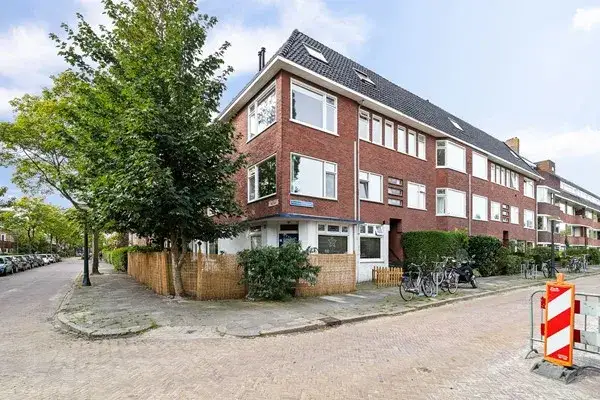
Auto-translated to English by AIThe housing stock is predominantly pre-war — 81% of the homes date from before 1945. In addition, the most common type is flats (84%).
Over the past year a home for sale in Professorenbuurt was listed for an average of €352,412 (€4,628 per m²). That is 33% below the Dutch national average. Last quarter prices rose by 40%.
A rental home in Professorenbuurt cost an average of €1,012 per month (€16 per m²). That is 53% below the national average.
Residents give Professorenbuurt a 7.6 out of 10 based on 14 reviews. The strongest score is for safety (8.5), the weakest for community (6.8).
Buurt Professorenbuurt has 6,430 residents. The largest age group is 15 to 25 years (38%). Notably, 72% of the households are single-person households.
From Professorenbuurt you can on average reach a supermarket at 0.5 km, a GP at 0.6 km, a railway station at 1.7 km, a primary school at 0.6 km (as the crow flies, source: CBS).
Right now you will find 74 homes for sale and 20 homes for rent in Professorenbuurt.