Neighbourhood in Rotterdam
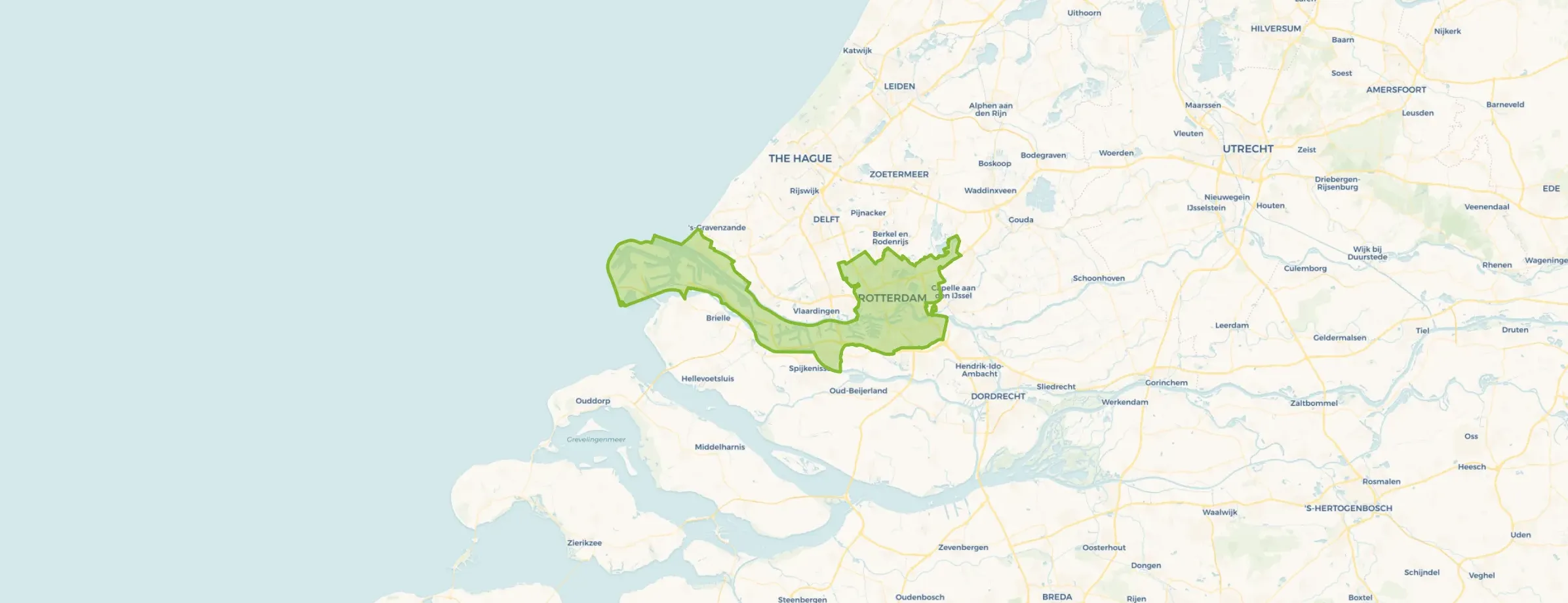
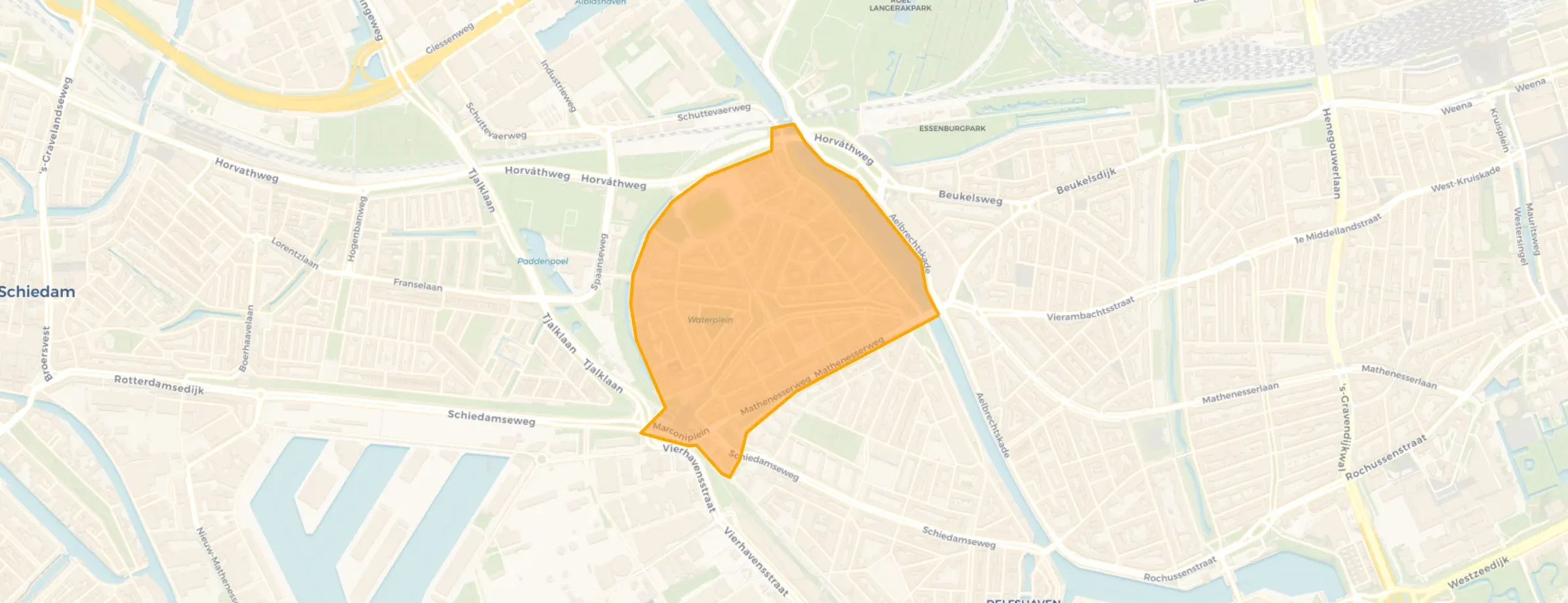
Spangen is located in the province of Zuid-Holland, in the municipality of Rotterdam, in the district Delfshaven The neighbourhood has a total area of 65 hectares, of which 60 hectares are land and 5 hectares are water. The neighbourhood is coded as BU05990323. The postcode area is 3022GM-3027XZ.
Five residents rate the neighbourhood as good with a score of 7.3. They describe it as 'Good neighbourhood', 'Cosy Spangen' and 'Local but nuisance'. Residents experience big differences in this neighbourhood: accessibility, amenities, housing receive high ratings, while greenery and cleanliness are mentioned as weak points.
Spangen has 10.020 residents. Of these, 50,4% are men and 49,6% are women. Most residents are 25 to 45 years (32,4%). The other age groups are 23,9% for '45 to 65 years', 18,2% for '0 to 15 years', 15,0% for '15 to 25 years' and 10,5% for '65 years or older'. Of the residents, 60,9% is unmarried, 28,1% is married, 8,9% is divorced and 2,1% is widowed. 1.860 residents originate from the Netherlands, 1.000 come from Europe and 7.155 come from countries outside Europe.
There are 4.450 households in Spangen. 43,4% of these are single-person households, 18,0% households without children and 38,7% households with children. The average household size is 2,2 persons. The national average is 2,1 persons.
In Spangen there are 7.600 income recipients. The average income per income recipient is €33.000, which is €9.200 (22%) lower than the national average of €42.200. Per resident, the average income is €25.500, which is €9.400 (27%) lower than the national average of €34.900. Most residents of Spangen are educated to a lower level. 40,6% have a lower education (VMBO or MBO 1), 37,2% have an intermediate education (HAVO, VWO or MBO 2-4) and 22,2% have a university or higher professional education (HBO/WO).
Of the 10.020 residents, around 63% are in paid employment, which amounts to 6.313 people. This is 9% lower than the national average of 72%. The majority of workers are in salaried employment (81%), while 19% are self-employed. In Spangen, 23% of residents receive a benefit. The largest group is those receiving a state pension (AOW). 910 people receive this benefit.
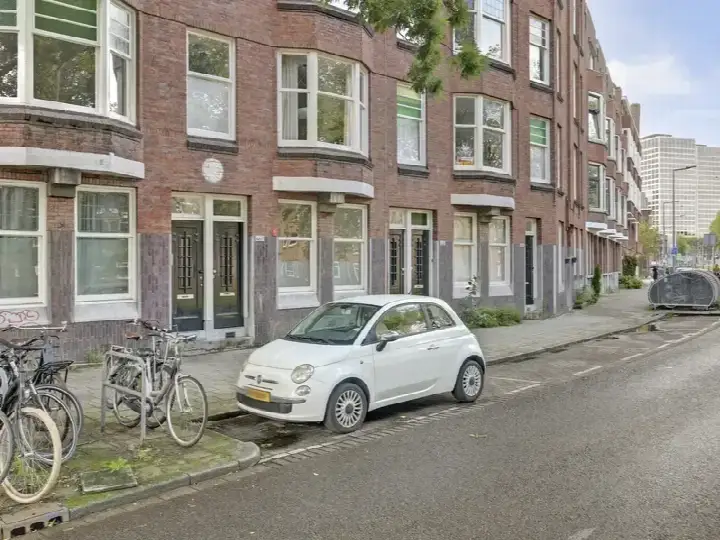
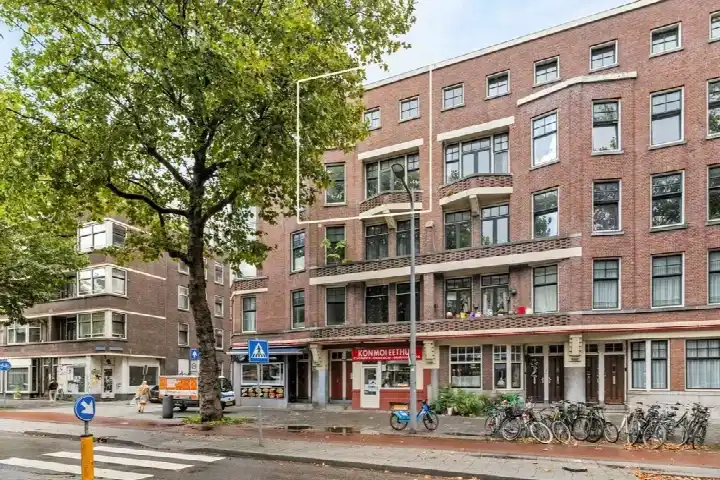
In Spangen there are 4.173 homes with an average assessed value (WOZ) of €289.000. Of these, around 95% are occupied and 5% unoccupied. Most homes are rental properties. This amounts to 73% rental homes and 27% owner-occupied homes. Of the homes, 27% privately owned, 61% owned by housing associations and 12% owned by other landlords. The most common construction periods in Spangen are 1900-1925 (48%) and 1925-1950 (21%).
There are currently 30 homes for sale in Spangen. The most recently listed home is Mathenesserdijk 107A by D&S Makelaardij Schiedam. Over the past year, 220 homes were sold in Spangen. On average, a home was sold within 64 days.
The average asking price for a home for sale in Spangen over the past year was €346.193. This is 20% higher than the average assessed value (WOZ) of €289.000. The average asking price per m² of plot is €3.683.
There are 3 homes for rent in Spangen. The most recent home is Mathenesserweg 98A, offered by Tweelwonen Leiden B.V.. Over the past year, 21 homes were let in Spangen. On average, a listing was let within 33 days.
The average rent for a rental home in Spangen over the past year was €2.300 per month. Per m² of plot area that is €17 per month.
In Spangen there are 3.290 addresses with a registered energy label. The most common labels are A (41%), B (31%) and C (12%). On average, an address in Spangen uses 2.030 kWh of electricity per year. This is 20% below the national average of 2.550 kWh. With an annual consumption of 760 m³ per address, natural gas consumption is 5% below the national average of 800 m³.
I've lived here for 12 years and we almost never had any problems
Auto-translated to English by AII've lived in Rotterdam West my whole life. Since 2013 I've been living in Spangen with my children. We really enjoy living here. I have a nice house with a large garden and I have nice neighbours. What I do find a shame is the amount of litter and rubbish and large groups of youngsters on the playgrounds for the children with scooters and fatbikes who also leave all their rubbish behind and 'chase away' the children. There is a lot to do in the neighbourhood for children and the metro/tram station is within walking distance. There should be more greenery and more facilities for older youth. More bins on the street instead of just waste containers.
Auto-translated to English by AIIt's a bit of a chaotic neighbourhood but I'm happy with my little house
Auto-translated to English by AII've lived my whole life (45 years) in Rotterdam West and wouldn't want to leave. Personally, I've had no negative experiences in the neighbourhood. Of course, the area was worse in my youth, but even then I had a good time. It's better now, but I do notice that a lot is deteriorating again. In terms of litter on the streets and young people looking for trouble. That's a shame, because it's so nice here. There should be more greenery and more neighbourhood watch, and I think more facilities for young people. Because the neighbourhood and playground work hardly does anything anymore, there's too little for young people aged about 12 to 20 to do, and they end up hanging around and doing silly things out of boredom. A kind of community centre or youth club where they can 'hang out' and do things together could provide a solution. For the younger children, there's plenty to do here, but the mess left by the older youth is not nice. Otherwise, I'm very satisfied here.
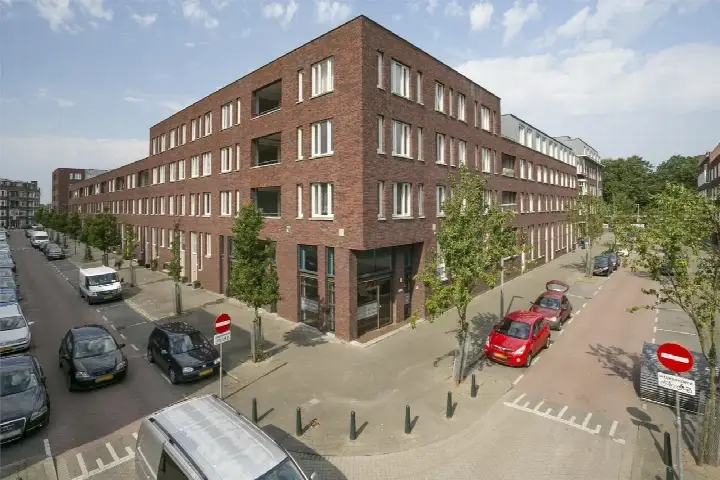
Auto-translated to English by AIThe Spangen neighbourhood in Rotterdam is known for its rich history, with iconic buildings such as the Justus van Effenblok, and the area has undergone a mix of cultural diversity and urban renewal. In recent years, the area has received much attention for improvements in liveability and safety, making it a dynamic and developing neighbourhood.
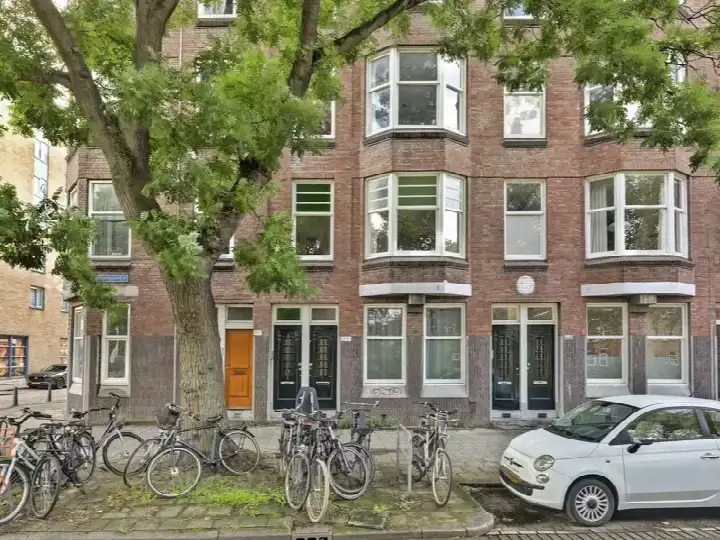
Auto-translated to English by AIThe housing stock is predominantly pre-war — 65% of the homes date from before 1945. In addition, the most common type is flats (94%).
Over the past year a home for sale in Spangen was listed for an average of €350,332 (€4,143 per m²). That is 34% below the Dutch national average. Last quarter prices rose by 21%.
A rental home in Spangen cost an average of €2,178 per month (€21 per m²).
Residents give Spangen a 7.3 out of 10 based on 5 reviews. The strongest score is for accessibility (9.8), the weakest for cleanliness (5.0).
Buurt Spangen has 10,020 residents. The largest age group is 25 to 45 years (32%). Many families: 39% of the households have children.
The housing supply in Spangen is remarkably efficient: 51% has an A, A+ or B label. The average natural gas consumption per household is 760 m³ per year.
From Spangen you can on average reach a supermarket at 0.6 km, a GP at 0.5 km, a railway station at 2.2 km, a primary school at 0.4 km (as the crow flies, source: CBS).
Right now you will find 36 homes for sale and 4 homes for rent in Spangen.