Sam van Houtenstraat 273D
Dudokbuurt, Amsterdam
 Neighbourhood
A first home in Geuzenveld
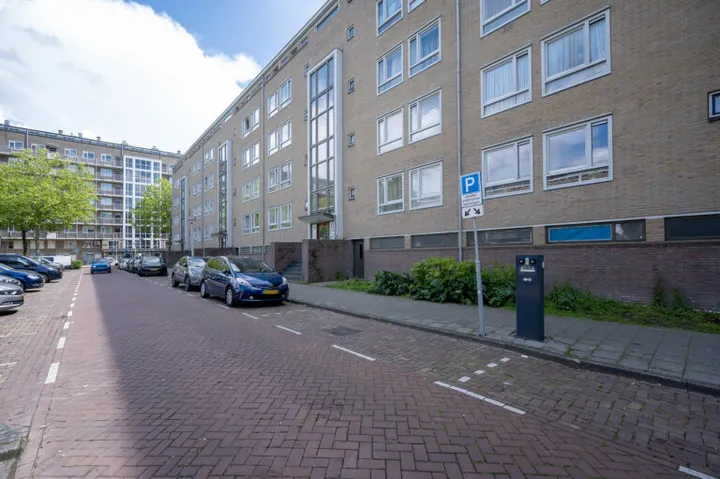
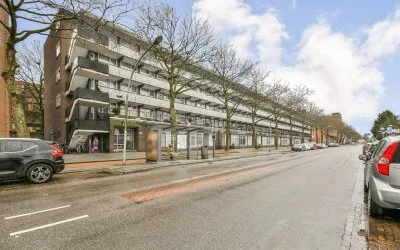
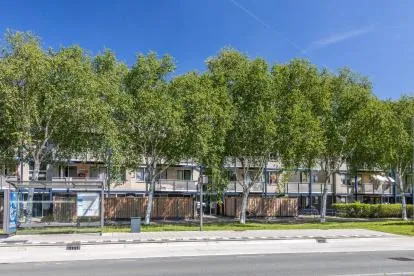
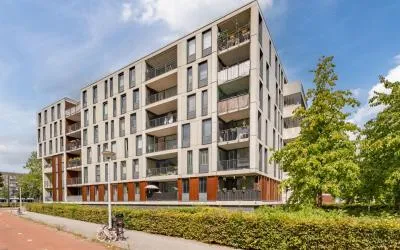
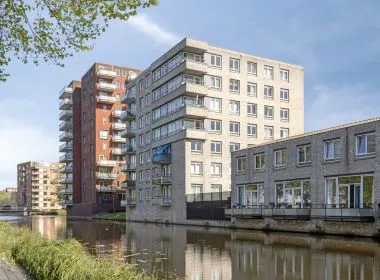
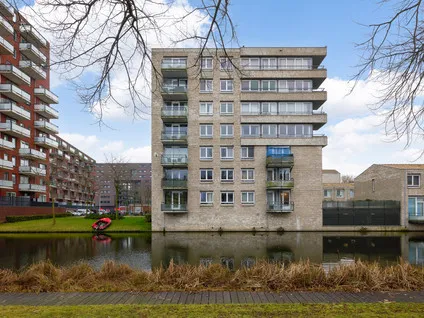
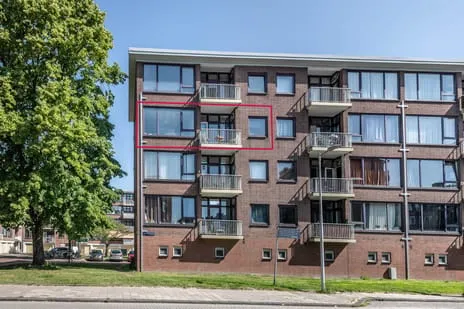
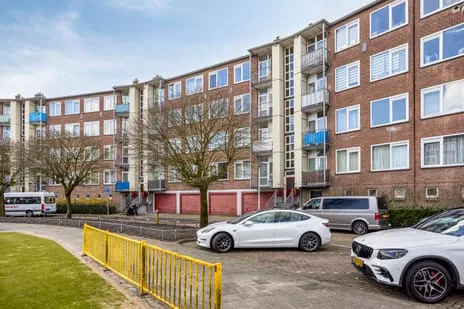
This apartment on the fourth floor of a 1956 building sits in the Dudokbuurt, a quiet residential pocket of Geuzenveld in Amsterdam Nieuw-West. The asking price of €370,000 is on the high side compared to the neighbourhood average of €408,857, but it's a compact home in a city where space comes at a premium. For context, there are currently 14 apartments for sale in the neighbourhood, and the average price per square metre here is €5,357. If you're looking at apartments in Amsterdam, this one is priced at €5,692 per m² according to the agent.
The home itself
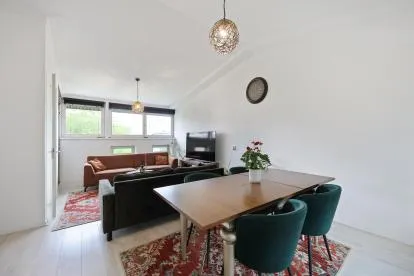
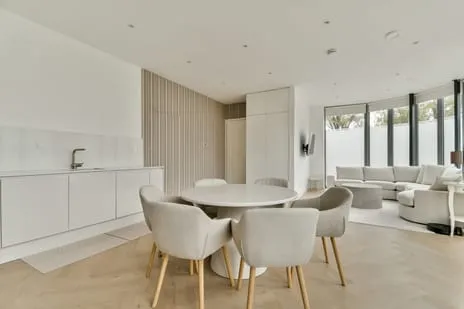
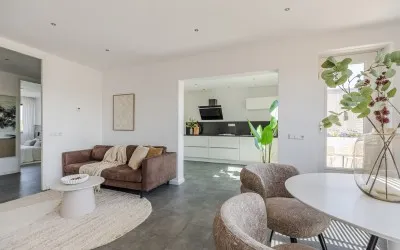
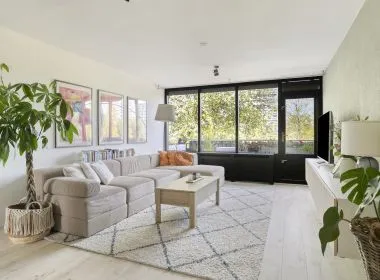
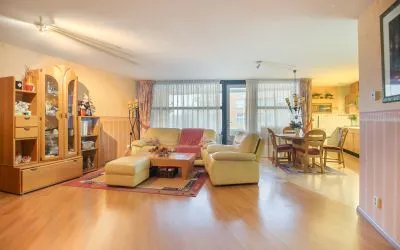
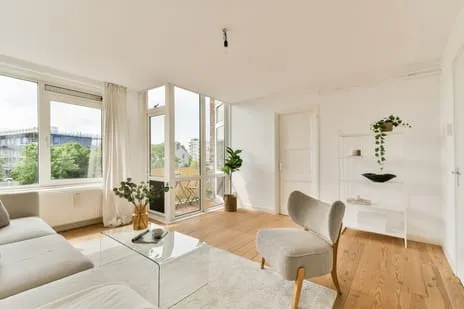
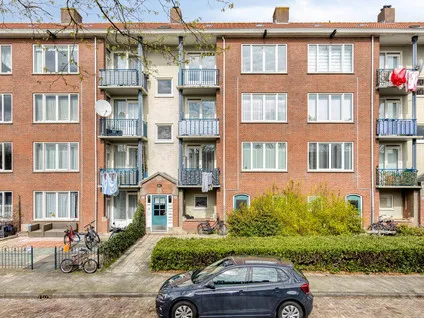
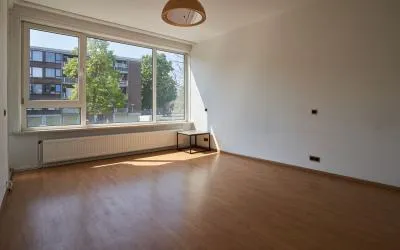
The agent describes this as a three-room, two-bedroom, one-bathroom upper apartment on a single floor, with a volume of 232 m³. It's fully insulated and heated by district heating. The living area is listed as 65 m² by the agent, while the BAG registration records 62 m², a small discrepancy that's not uncommon. The home was built in 1956 and has an energy label C.
Life in the Dudokbuurt
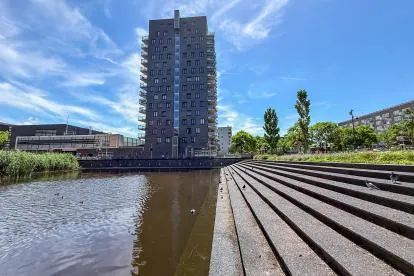
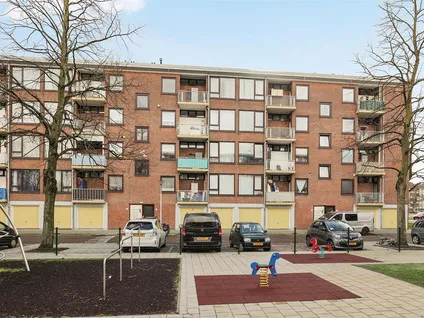
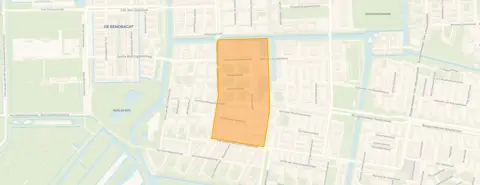
The Dudokbuurt is a post-war neighbourhood with a mix of low-rise and mid-rise housing, mostly built between 1945 and 1970. It's a family-friendly area: 40% of households have children, and 45% are single-person households. The neighbourhood has a young feel, 34% of residents are between 25 and 45. Across the municipality of Amsterdam, residents give an average score of 7.35 out of 10 (based on 252 reviews). One resident says: "Quiet, peaceful, relaxed, green, social and a nice mix of people." Another notes: "The neighbourhood has clear advantages: good connections by tram, bus and ferry/boat, plenty of supermarkets, gyms and practical amenities nearby." But they also mention a drawback: structural low-frequency noise from shipping on the Amsterdam-Rijnkanaal. For a closer look at the area, check out the Dudokbuurt neighbourhood.
Amenities and transport
Your daily errands are covered: Vomar is on your doorstep, Albert Heijn is just around the corner, and Lidl is a couple of streets away. The nearest primary school, Goeman Borgesiusschool, is a five-minute walk. For healthcare, the BENU Geuzenveld Apotheek is just around the corner, and the nearest GP is in Halfweg, about 2.8 km away. Bus stops are close: Sam van Houtenstraat serves lines 21, 61 and N82. Amsterdam Sloterdijk station is a ten-minute walk. For more on the wider area, see the municipality of Amsterdam.
WOZ and address data
The WOZ value is not available for this property, so no comparison with the asking price can be made. Regarding address risks: the area has a medium foundation risk indication (built on peat soil, with possible wooden piles or shallow foundations, an area-level indication, not an inspection of this home). Noise from road traffic (53 dB Lden) and air traffic (51 dB Lden) exceeds the norm, while railway noise (33 dB Lden) does not. Pluvial flooding and flood risk are low, but heat stress is medium, both now and in 2050.
Source
At the time of writing, the home is offered via multiple channels, including Makelaar in Amsterdam B.V. and Makelaar in Amsterdam B.V..
This summary was generated with AI and may contain errors. Always verify the details with the provider.
Features
Details of this home
Transfer
Price
Energy
 Save up to € 400 on your energy billCompare now
Areas and volume
 Insure your home and belongingsGet insured
Layout
Construction
Outdoor space
The WOZ value is set annually by the municipality with 1 January as its reference date, and therefore lags the market by about a year. It is an estimated market value, not a sale price.
Frequently asked questions
About Sam van Houtenstraat 273D, Amsterdam
What is the asking price and how does it compare to other homes in the neighbourhood?
The asking price is €370,000. In the Dudokbuurt, the average asking price for apartments is €408,857, and the median is €400,000. Prices range from €285,000 to €600,000. The average price per square metre in the neighbourhood is €5,357, while this home is listed at €5,692 per m² based on the agent's floor area. So it's priced above the neighbourhood average per square metre.
How many rooms and bedrooms does the apartment have?
According to the agent, the apartment has three rooms, two bedrooms, and one bathroom. It's on a single floor (the fourth living layer) and has a volume of 232 m³. The living area is listed as 65 m² by the agent, while the BAG registration records 62 m².
What is the energy label and what does it mean?
The energy label is C. This is a mid-range label, meaning the home is reasonably energy-efficient but not top-tier. The home is fully insulated and heated by district heating, which helps keep energy costs manageable. In the neighbourhood, 69.2% of homes have label A, 7.7% have label B, and 7.7% have label C.
What are the noise levels like in the area?
The address has noise from road traffic at 53 dB Lden, which is above the norm. Air traffic noise is 51 dB Lden, also above the norm. Railway noise is 33 dB Lden, which is within limits. These are area-level indications. One resident mentioned structural low-frequency noise from shipping on the Amsterdam-Rijnkanaal, which can be noticeable indoors, especially at night.
What supermarkets and schools are nearby?
Vomar is 150 m away, Albert Heijn is 249 m, and Lidl is 345 m. For primary schools, Goeman Borgesiusschool is 264 m away, and Oecumenische basisschool Timotheusschool is 421 m away. There are also several other primary schools within walking distance.
What is the Dudokbuurt neighbourhood like?
The Dudokbuurt is a post-war neighbourhood in Geuzenveld, Amsterdam Nieuw-West. It's a family-friendly area with a mix of housing, mostly built between 1945 and 1970. Residents describe it as quiet, peaceful, and green, with good connections. However, some note noise from shipping. The neighbourhood has a young population, with 34% aged 25-45.
Is there a risk of foundation issues?
The foundation risk indication for this address is medium. The area is built on peat soil, and the home was built in 1956, which may mean wooden piles or shallow foundations. This is an area-level indication, not an inspection of this specific property. 100% of properties in this postcode area were built before 1970, which is a KCAF attention area.
What public transport options are available?
The nearest bus stop is Sam van Houtenstraat, 59 m away, serving lines 21, 61, and N82. Other stops within a few hundred metres include Michel de Klerkhof and Aalbersestraat. Amsterdam Sloterdijk train station is 2.8 km away, about a ten-minute walk.
What is the WOZ value of this property?
The WOZ is the municipal valuation used for taxes, but it's not available for this home in the data we have.
Statistics for Dudokbuurt
Figures on residents, liveability and the housing market
| Sale price | €408,857 | €400,000 |
|---|---|---|
| Sale per m² | €5,357 | – |
| Rent price | €2,198 p/m | €2,350 p/m |
| Rent per m² | €27 p/m | – |
Experiences from Geuzenveld
How residents experience their district
Little interaction with neighbours, I don't like walking on the street in the evening. But plenty of shops and greenery.
Auto-translated to English by AIStatistics for Geuzenveld
Figures on residents, liveability and the housing market
| Sale price | €520,625 | €504,925 |
|---|---|---|
| Sale per m² | €5,321 | – |
| Rent price | €2,023 p/m | €2,079 p/m |
| Rent per m² | €22 p/m | – |
Experiences from Amsterdam
How residents experience their municipality
IJburg is a new district still under development and it's getting better with all the amenities and a beach nearby. And you're also quickly out of the city and into the greenery.
Auto-translated to English by AIQuiet, peaceful, relaxed, green, social and a nice mix of people
Auto-translated to English by AII lived here for about 12 years. The neighbourhood has clear advantages: good connections by tram, bus and ferry/boat, plenty of supermarkets, gyms and practical amenities nearby. For me, however, there was one major drawback: structural low-frequency noise, demonstrably coming from commercial shipping on the Amsterdam-Rijnkanaal. If you are sensitive to that, it can be very burdensome. In my case, it was clearly noticeable indoors, especially at night. Neighbours said they slept with earplugs and extra insulation offered limited to no solution. The municipality took measurements at the time and acknowledged that the noise was significant, but indicated they could do little or nothing about it because the source fell outside their direct authority. My honest advice: visit this neighbourhood not only during the day, but also in the evening and at night, and pay specific attention to low-frequency humming or vibrations. For people sensitive to noise, I would personally strongly advise against this location.
Auto-translated to English by AINo public transport!
Auto-translated to English by AINice, quiet and reasonably cosy neighbourhood. Good accessibility, the Amsterdam Forest nearby. Lots of different facilities within walking distance. Nice to live here with a family and pets! Quite a few schools within cycling distance. Hygiene in the neighbourhood is above the average level in Amsterdam. VUmc very close by.
Auto-translated to English by AIAt the end of the Silodam lies the striking MVRDV building. Surrounded by water on all sides. Every apartment has a view of the IJ and/or the Oude Houthaven. The views are therefore phenomenal and every day is different due to the weather. The sunrises and sunsets are unbeatable. Because the building is at the end of the Silodam, there is no through traffic and every person is either a resident or a visitor. This makes it, by Amsterdam standards, an exceptionally safe living environment. There is little turnover. The residents of this building form a close-knit community. A nice mix of families with and without children and single people who help each other where needed. And that too is a special quality in an increasingly transient Amsterdam. Within walking distance are the Haarlemmerdijk and the markets where you can find all the hustle and bustle if you feel like it. On the Silodam there is peace and quiet, a delight for body and mind. The wind, the seagulls, the waves on the IJ, the boats, occasionally a cruise ship, and every 5 years Sail! A little paradise in Amsterdam? Absolutely!
Auto-translated to English by AIBecause we are on the outskirts, there is no through traffic. In the middle of the street a large playground with a table tennis table and a small football pitch. And playground equipment. Behind our house only meadows.
Auto-translated to English by AIIt's a nice quiet neighbourhood on the edge of the city but still close to many good amenities that a city has to offer. The neighbourhood is still becoming more beautiful.
Auto-translated to English by AIStatistics for Amsterdam
Figures on residents, liveability and the housing market
| Sale price | €822,865 | €693,182 |
|---|---|---|
| Sale per m² | €8,885 | – |
| Rent price | €2,790 p/m | €2,602 p/m |
| Rent per m² | €34 p/m | – |
Location and amenities
Sam van Houtenstraat 273D, Amsterdam








Risks and environmental factors
Noise, foundation and climate around this address
Noise levels
Foundation risk
Rainwater flooding
Flooding
Heat stress

Similar homes
View more homes nearby