


If you buy a home with a good energy label in the Netherlands, you are allowed to borrow more in 2026 than for the same home with label G. That sounds generous, but how generous is it compared with the price gap you see in the listings? We set this year's rules against the asking prices of roughly 61,000 homes currently for sale in our listings.
Two caveats first. These are asking prices, not sale prices, and in a tight market buyers often pay more. And a better label rarely comes on its own. An A+++ home is usually newer, larger and more often in a new-build estate. So the price gap below is not all down to "the label"; it is everything that tends to come with it.
How much extra you can borrow in 2026
Your maximum mortgage in the Netherlands depends mainly on your income. On top of that, you may borrow an extra amount if the home is energy efficient, and an extra amount to improve a less efficient home. These are the amounts that have applied since 1 January 2026:
| Energy label | Extra when buying | Extra for improvements |
|---|---|---|
| E, F, G | €0 | €20,000 |
| C, D | €5,000 | €15,000 |
| A, B | €10,000 | €10,000 |
| A+, A++ | €20,000 | €10,000 |
| A+++ | €25,000 | €0 |
| A++++ | €30,000 | €0 |
| A++++ with an energy performance guarantee (10 years) | €40,000 | €0 |
What changed this year: for A+++ the extra amount dropped from €30,000 to €25,000, and for the most efficient homes with an energy performance guarantee from €50,000 to €40,000. The €10,000 for improvements on an A+++ home was scrapped. The Dutch government explains that these homes are already so efficient there is little left to save, especially now that solar panels earn less after the end of net metering (the salderingsregeling).
Note the difference between the two columns. The "when buying" amount is extra room because the home is already efficient. The "for improvements" amount can only be spent on measures such as insulation or a heat pump. You can combine them: buy a home with label C and insulate it straight away, and you get €5,000 plus up to €15,000.
How big is the price gap really?
Across the country, sellers ask a median of €509,500 for a home with label A or B, against €425,000 for label E, F or G. That gap of over €80,000 says little on its own, because these are very different homes. Half of the homes with a poor label were built before 1936; the typical A or B home dates from around 1993.
A fairer comparison is to take one type of home and look at the price per square metre. Here are the terraced houses in our listings, the most common family home in the country:
| Label | Median asking price | Per m² | Median floor area |
|---|---|---|---|
| E, F, G | €399,000 | €3,860 | 107 m² |
| C, D | €439,000 | €3,720 | 119 m² |
| A, B | €489,000 | €3,950 | 125 m² |
| A+, A++ | €569,000 | €4,260 | 134 m² |
| A+++ | €585,500 | €4,560 | 135 m² |
Two things stand out. Between label G and label B there is hardly any difference per square metre: a terraced house with A or B costs about €90 more per m² than one with E, F or G. For a 120 m² house that is around €11,000, almost exactly the €10,000 extra you may borrow with label A or B. Labels C and D are even slightly cheaper per m² than E to G, probably because the oldest houses are often in expensive town centres.
The real jump comes at A+ and above. A terraced house with A+++ costs roughly €700 more per m² than one with a poor label. At 120 m² that is over €80,000, while you may only borrow €25,000 extra. But those homes are often brand new: half of all A+++ homes in our listings were built in 2021 or later, so you are mostly paying for a new build, not for the label.
Apartments show a similar picture. A flat with E, F or G has a median asking price of about €4,490 per m², with A or B €5,060, and with A+++ €6,010.
Where the efficient homes are
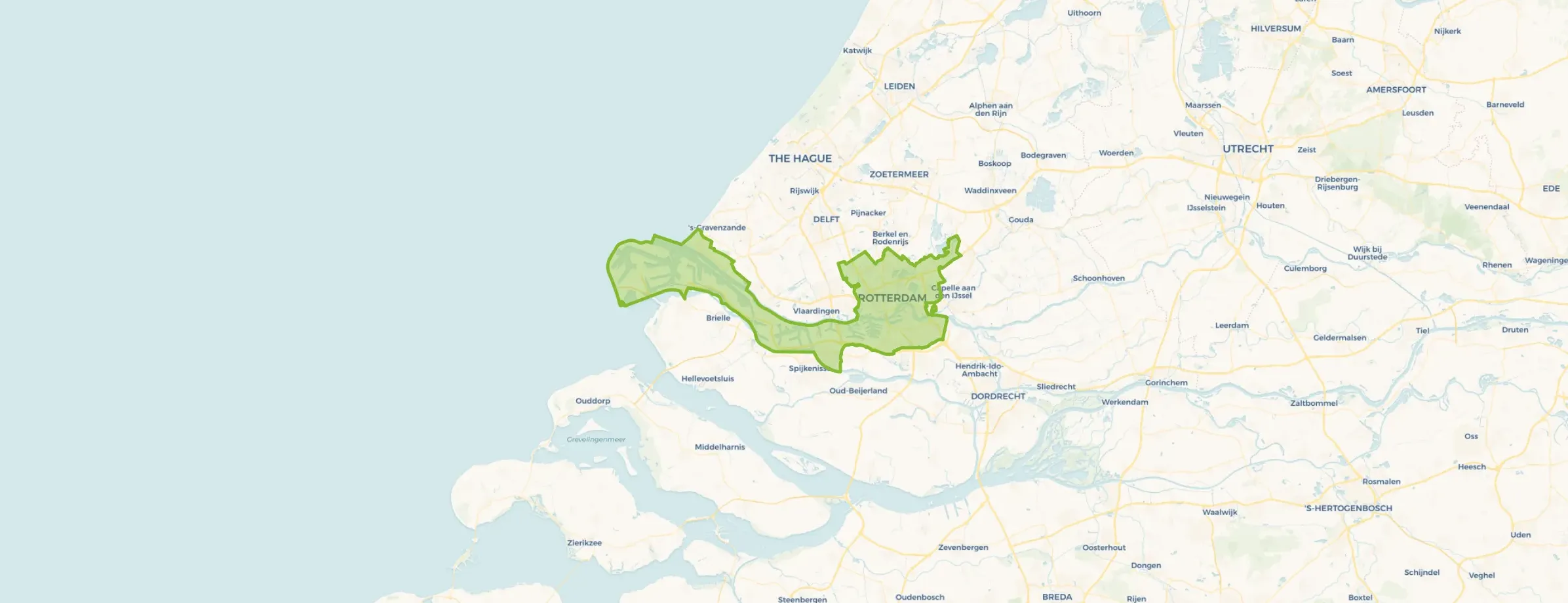
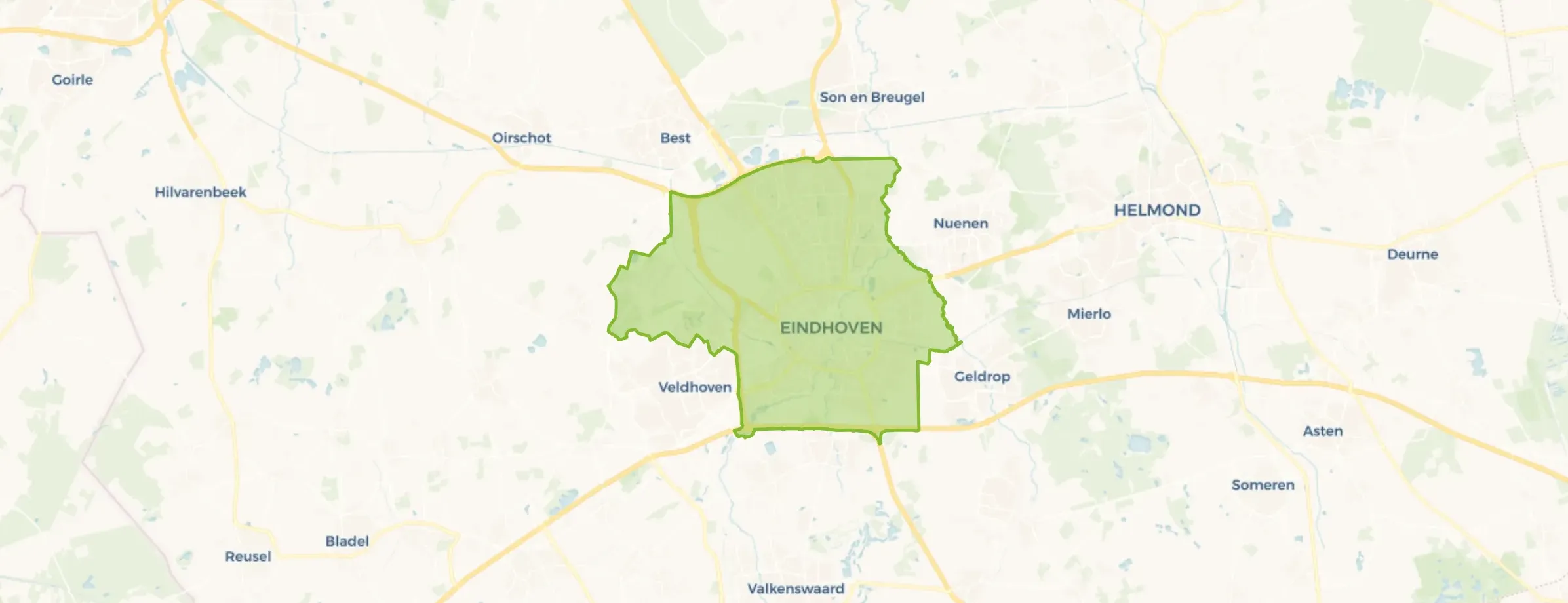
Of all homes for sale with a known label, 14% currently have A+ or better and 13% have E, F or G. That varies a lot by city. In Almere, which was largely built after 1975, almost no home with a poor label is on the market. In The Hague and Enschede, one in five homes has E, F or G.
| Municipality | Label A+ or better | Label E, F or G |
|---|---|---|
| Almere | 26% | almost 0% |
| Haarlemmermeer | 26% | 8% |
| Utrecht | 20% | 13% |
| Eindhoven | 19% | 7% |
| Rotterdam | 16% | 14% |
| Amsterdam | 16% | 11% |
| Tilburg | 14% | 13% |
| Haarlem | 13% | 15% |
| Groningen | 11% | 15% |
| Apeldoorn | 10% | 19% |
| The Hague | 10% | 20% |
| Enschede | 9% | 22% |
So if you are searching in The Hague, Apeldoorn or Enschede, you are likely to come across a home where you can use the full €20,000 for improvements. In Almere or Haarlemmermeer you are more likely to benefit from the extra purchase allowance.
What this means for your search
- Compare per m², not per house. A home with label B is barely more expensive per m² than one with label F, and the €10,000 extra often covers the difference.
- A poor label can be an opportunity. With €20,000 extra for insulation and installations you can improve an older home step by step without using your own savings. Do find out first what is actually needed: roof, floor and glazing cost very different amounts in a 1930s house than in a 1970s terrace.
- The extra room for new builds has shrunk. If you are aiming for an A+++ home, you can borrow €5,000 less extra than last year.
- Check the registered label. The extra room applies to the label officially registered for the home. A seller saying the house is "really more like a B" won't help you at the bank.
A mortgage adviser will work out what fits your situation, as your income and the value of the home decide the rest. Our mortgage calculator gives you a first idea of what you can borrow on your income. Then browse homes for sale by city, and set up a saved search to get new listings by email.