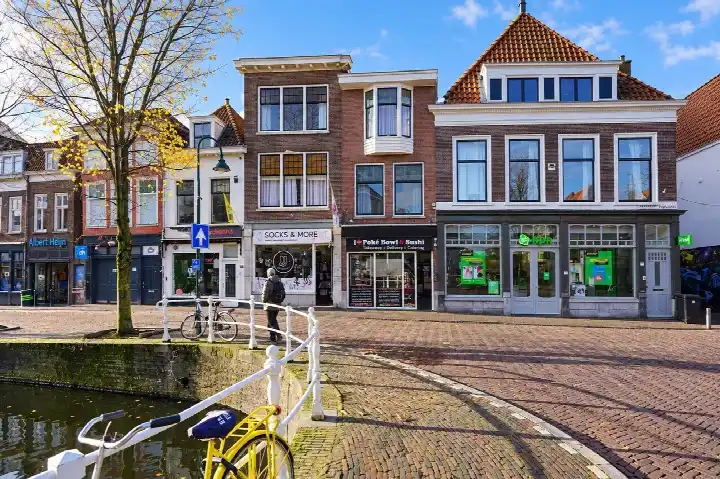
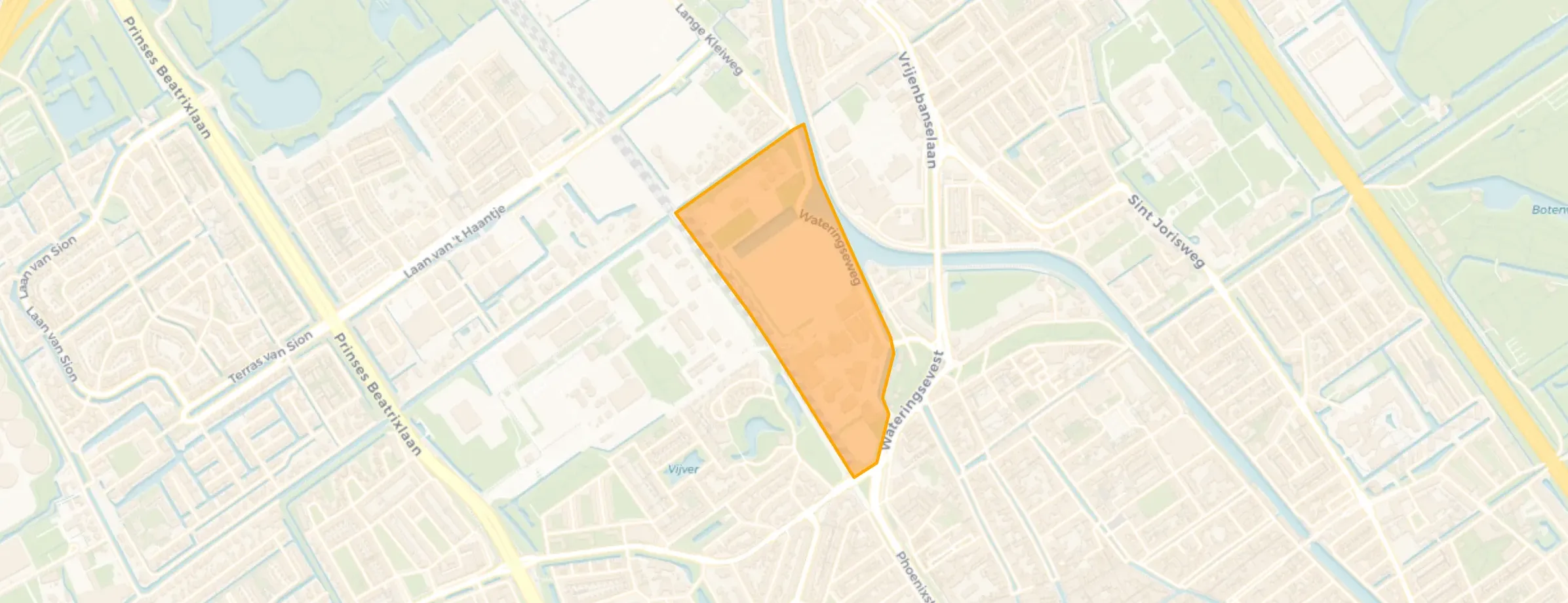
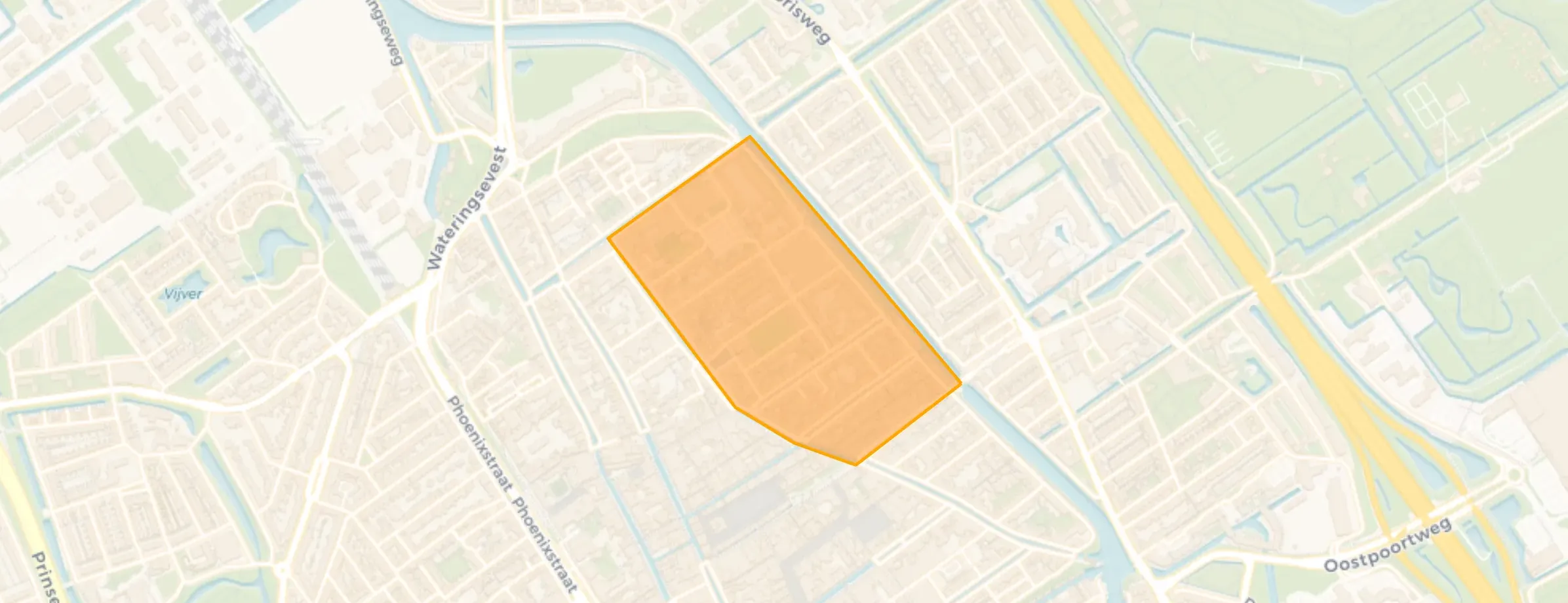
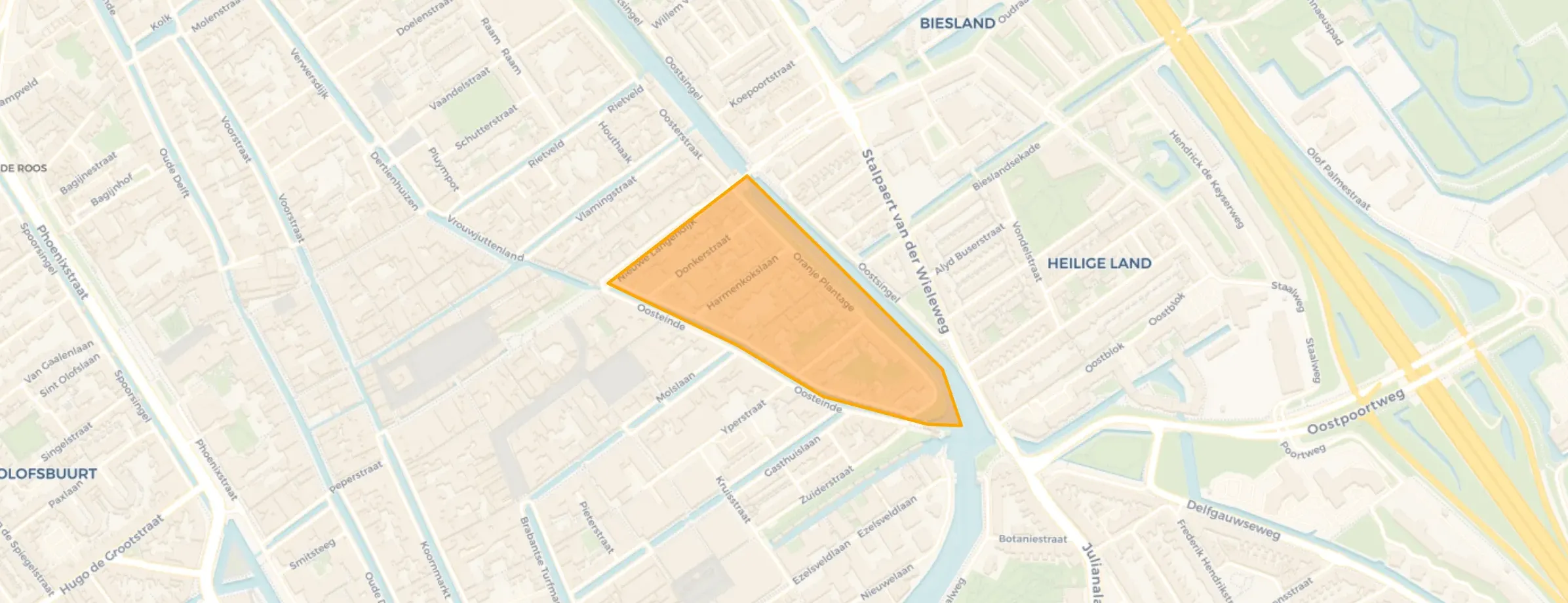
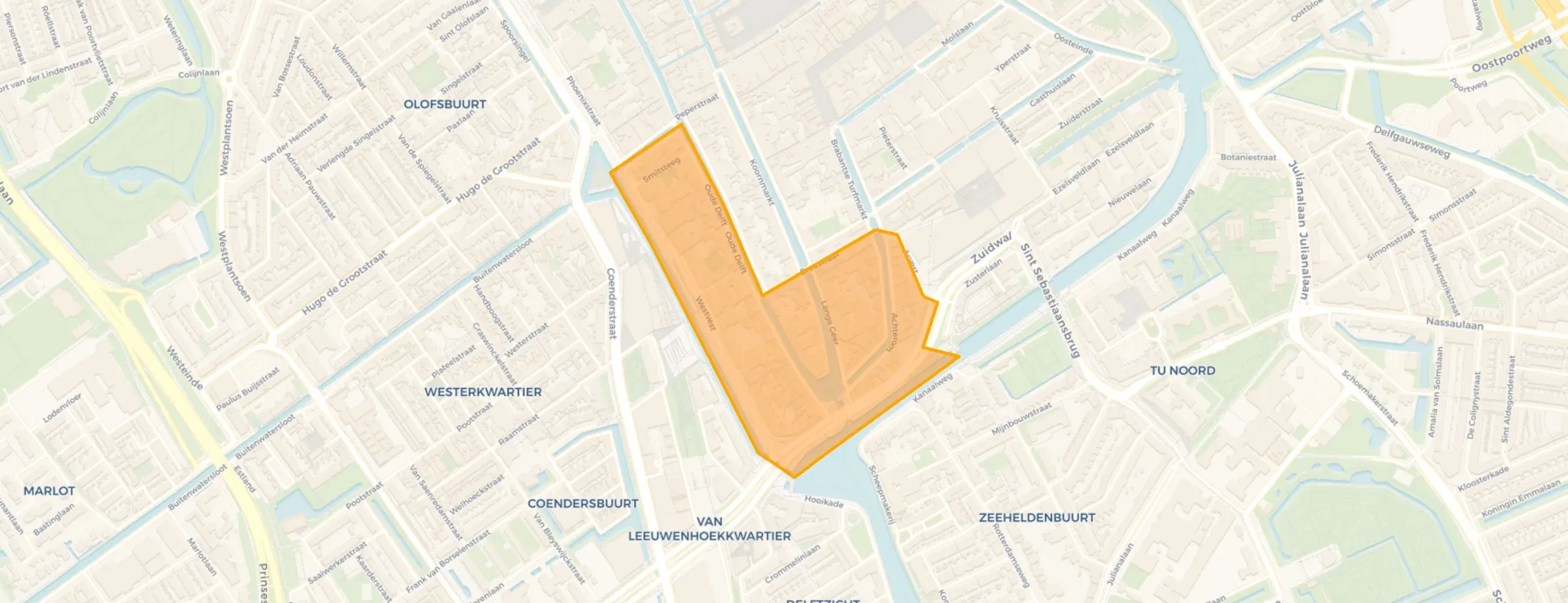
District in Delft
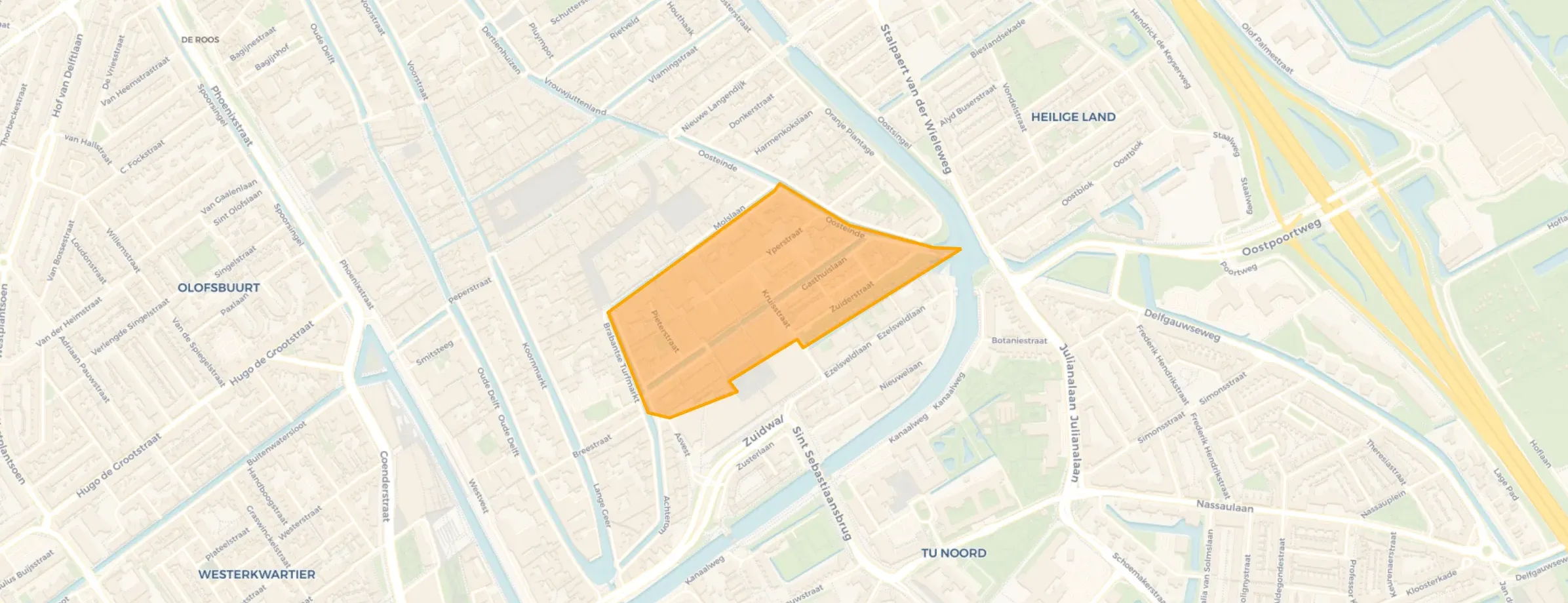
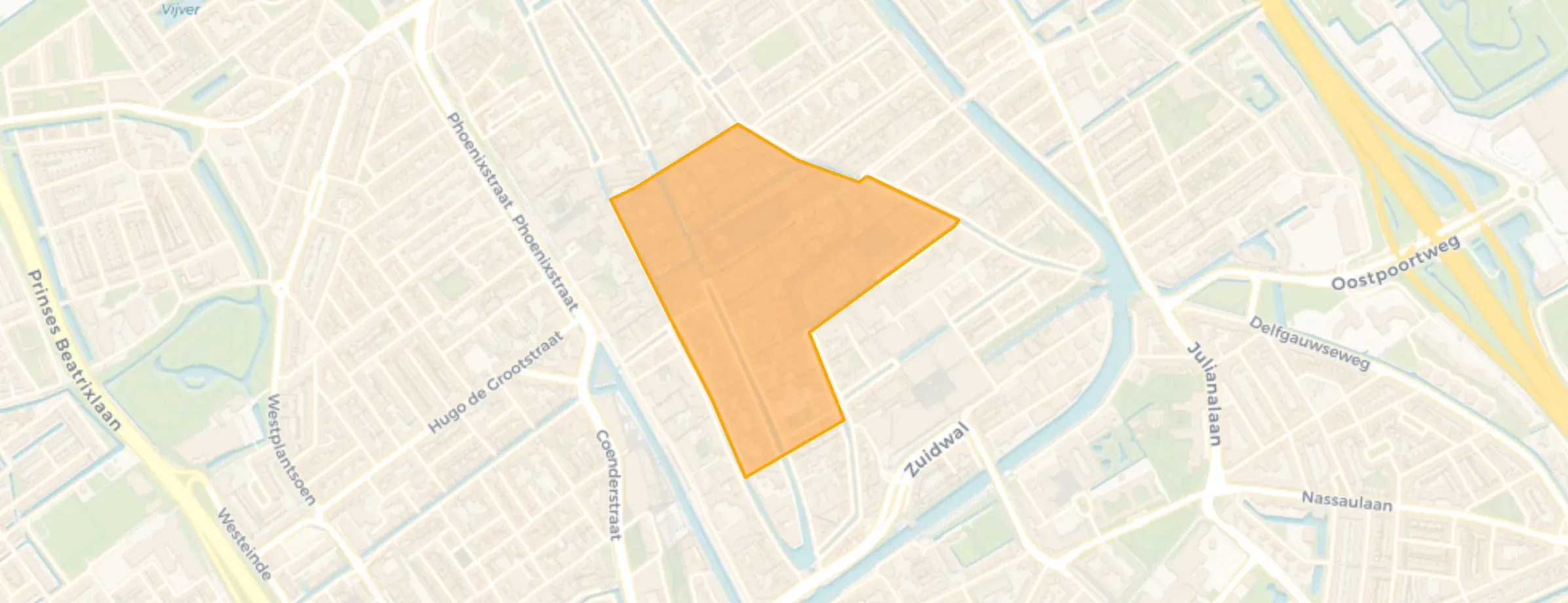
Binnenstad is located in the province of Zuid-Holland, in the municipality of Delft The district has a total area of 148 hectares, of which 136 hectares are land and 12 hectares are water. The district is coded as WK050311. The postcode area is 2611AG-2613AX.
Binnenstad has 13.920 residents. Of these, 55,4% are men and 44,6% are women. Most residents are 25 to 45 years (32,6%). The other age groups are 28,5% for '15 to 25 years', 19,0% for '45 to 65 years', 14,3% for '65 years or older' and 5,6% for '0 to 15 years'. Of the residents, 70,0% is unmarried, 22,1% is married, 5,8% is divorced and 2,1% is widowed. 7.805 residents originate from the Netherlands, 2.945 come from Europe and 3.170 come from countries outside Europe.
There are 9.540 households in Binnenstad. 69,5% of these are single-person households, 21,1% households without children and 9,3% households with children. The average household size is 1,4 persons. The national average is 2,1 persons.
In Binnenstad there are 11.900 income recipients. The average income per income recipient is €42.800, which is €600 (1%) higher than the national average of €42.200. Per resident, the average income is €38.800, which is €3.900 (11%) higher than the national average of €34.900. Most residents of Binnenstad are highly educated. 63,0% have a university or higher professional education (HBO/WO), 29,4% have an intermediate education (HAVO, VWO or MBO 2-4) and 7,6% have a lower education (VMBO or MBO 1).
Of the 13.920 residents, around 67% are in paid employment, which amounts to 9.326 people. This is 5% lower than the national average of 72%. The majority of workers are in salaried employment (83%), while 17% are self-employed. In Binnenstad, 17% of residents receive a benefit. The largest group is those receiving a state pension (AOW). 1.770 people receive this benefit.
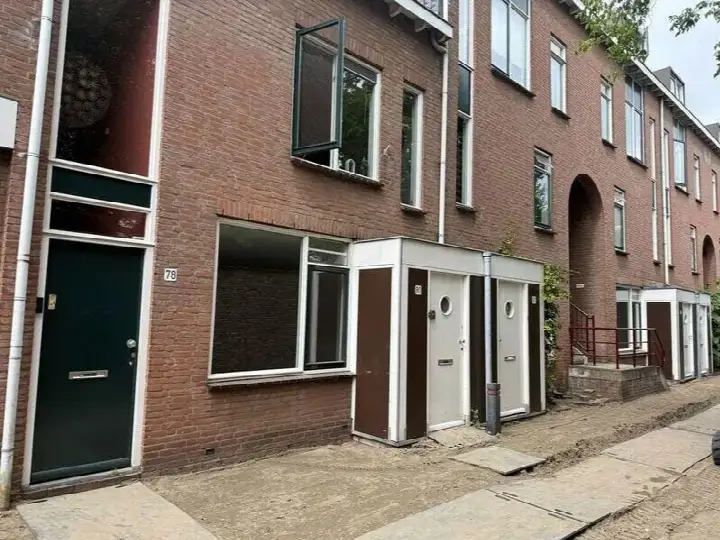
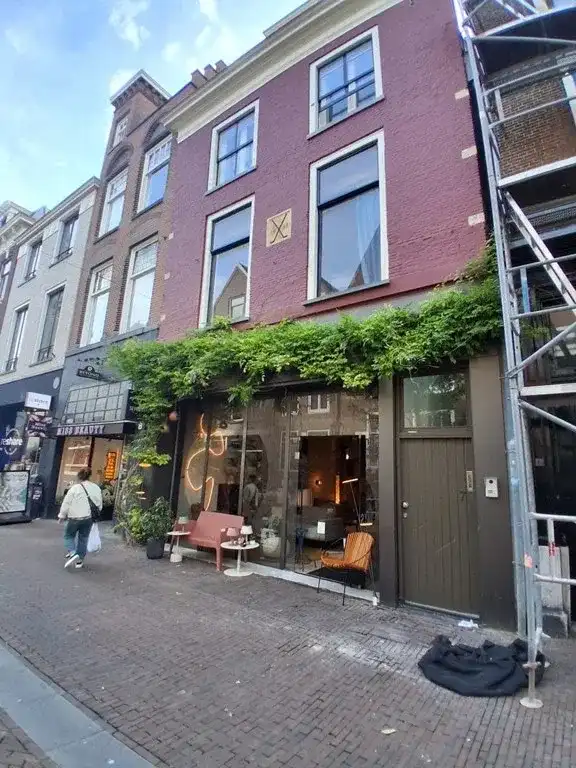
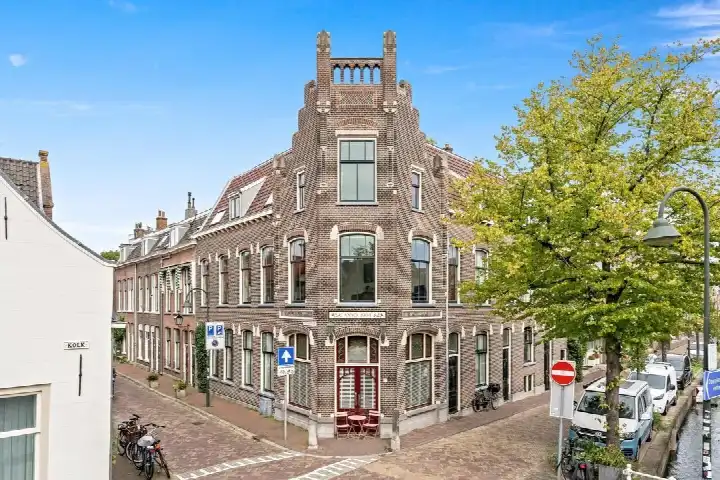
In Binnenstad there are 7.148 homes with an average assessed value (WOZ) of €437.000. Of these, around 91% are occupied and 9% unoccupied. Most homes are rental properties. This amounts to 60% rental homes and 40% owner-occupied homes. Of the homes, 40% privately owned, 20% owned by housing associations, 39% owned by other landlords and 1% of unknown ownership. The most common construction periods in Binnenstad are 1700-1900 (32%) and 1980-1990 (15%).
There are currently no homes for sale in Binnenstad. The most recently listed home is Annastraat 2 by Van Daal Makelaardij. No homes were sold in Binnenstad over the past year.
There are currently no homes for rent in Binnenstad. The most recent home is Brabantse Turfmarkt 47-1, offered by Oude Delft Makelaardij op Pararius. No homes were let in Binnenstad over the past year.
No recent rental data available for Binnenstad.
In Binnenstad there are 4.702 addresses with a registered energy label. The most common labels are C (26%), A (19%) and B (12%). On average, an address in Binnenstad uses 2.150 kWh of electricity per year. This is 16% below the national average of 2.550 kWh. With an annual consumption of 750 m³ per address, natural gas consumption is 6% below the national average of 800 m³.
Of ik ergens prettig woon, is voor mij afhankelijk van de omgeving en de buren. Voor mij betekent dit dat er de mogelijkheid is om een wederkerige connectie op te bouwen, die zorgt voor gezelschap en tegelijkertijd bijdraagt aan vertrouwen en een gevoel van veiligheid. Voor de mensen die daar behoefte aan hebben, moet dit in de wijk of straat mogelijk zijn.
Auto-translated to English by AIQuiet neighbourhood with everything you need nearby. The only hassle is finding parking spaces. There isn't often nuisance or anything.
Auto-translated to English by AIIt is often dirty, there is a lot of rubbish in my street next to the container, that is the only bad thing, that's why we get vermin in the street, mice, rats for example
Auto-translated to English by AIMy neighbourhood is a pleasant, accessible environment. There are many amenities nearby and the shops are easily reachable. However, there is often litter on the street and we have occasionally had mice in the neighbourhood as a result. Placing more bins could possibly prevent this. However, there are very few houses available and everything is unaffordable. Housing could therefore be better.
Auto-translated to English by AII've lived here since birth and I really like it here. It's always quiet and we're situated behind a bit of nature. Now they're trying to build a restaurant right in front of our house, which is less good because then we'll have people in our garden later in the evening and there'll be no privacy left. Also think of the parking spaces we pay for, which would no longer be available, noise pollution, and so on. So without all that hassle, it's definitely a perfect place to live.
Auto-translated to English by AIA supermarket less than 3 minutes' walk away, neighbours who lend out their deep fryer for New Year's so we could make oliebollen (if they got some too) and a really pleasant atmosphere in the neighbourhood. It's very central and close to everything in Delft. I never feel like I have to be careful with my belongings here, or that someone might break in, lots of children playing in the street and a parking garage for permit holders a 1-minute walk away.
Auto-translated to English by AII think it's a nice neighbourhood. Occasionally inconvenient with the rubbish system and taking the glass away, not a huge amount of green, and sometimes difficult to see streets coming from the right so you don't get priority from others.
Auto-translated to English by AI.
Auto-translated to English by AIThe housing stock is predominantly pre-war — 55% of the homes date from before 1945. In addition, the most common type is flats (75%).
Over the past year a home for sale in Binnenstad was listed for an average of €561,698 (€6,075 per m²). Last quarter prices rose by 9%.
A rental home in Binnenstad cost an average of €1,959 per month (€26 per m²).
Residents give Binnenstad a 7.8 out of 10 based on 11 reviews. Especially safety (8.7) scores well; housing (6.5) receives the lowest rating.
Wijk Binnenstad has 13,920 residents. The largest age group is 25 to 45 years (33%). Notably, 70% of the households are single-person households.
From Binnenstad you can on average reach a supermarket at 0.4 km, a GP at 0.6 km, a railway station at 1.5 km, a primary school at 0.6 km (as the crow flies, source: CBS).
Right now you will find 111 homes for sale and 32 homes for rent in Binnenstad.