Homes for sale in Binnenstad, Delft
View the current supply of homes for sale in Binnenstad, Delft. Compare prices, check neighbourhood scores and read what residents think of the area.

What does a home cost in the Binnenstad of Delft?
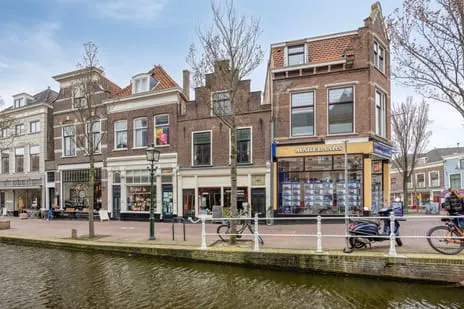
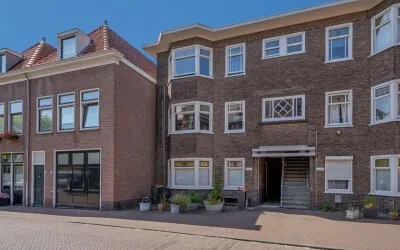
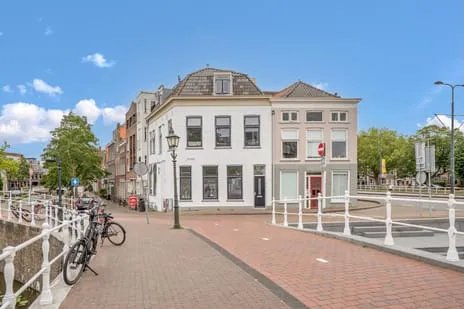
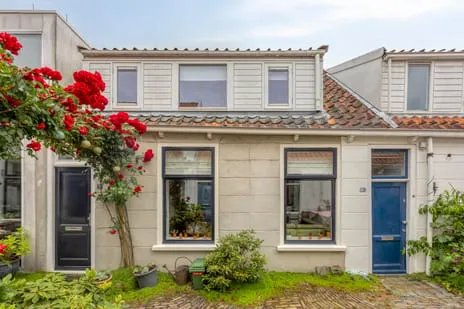
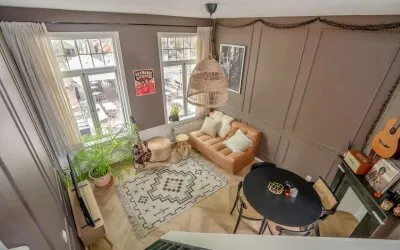
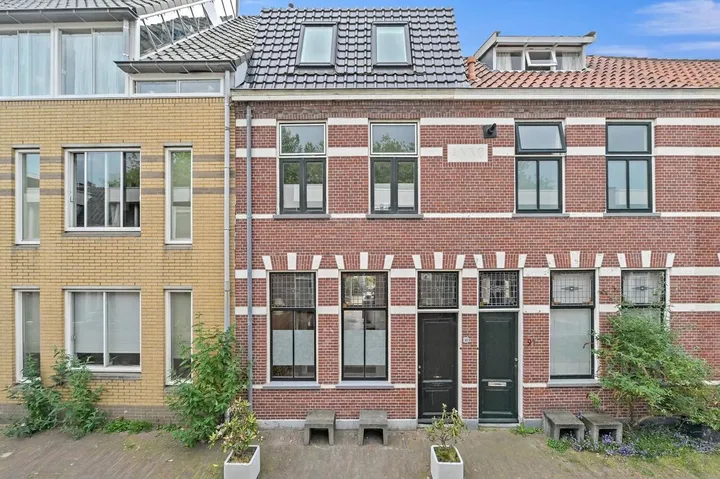
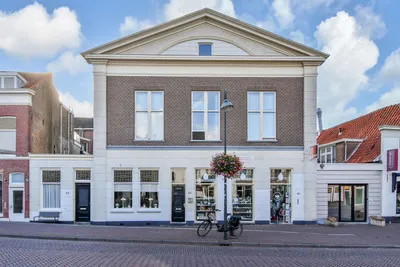
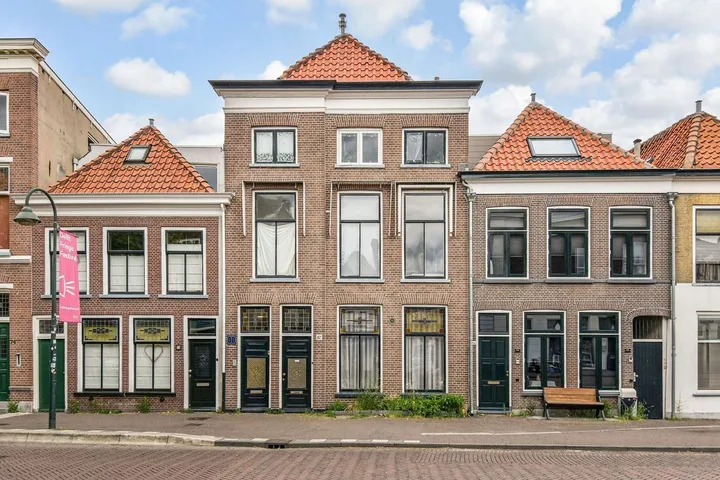
The Binnenstad of Delft is a sought-after neighbourhood where purchase prices are well above the municipal average. The average WOZ value is €408,000, while in the whole of Delft it is €322,000. In the past twelve months, 124 homes changed hands for an average purchase price of €589,016, with a range from €165,000 to €2,950,000. This shows how diverse the supply is: from a compact apartment on a side street to a monumental canal house. Only 39% of the housing stock is owner-occupied, the remaining 61% is rental. This makes supply relatively limited. The majority of owner-occupied homes are apartments and upper-floor units, although in neighbourhoods such as Centrum-Oost and het Centrum you will also find larger single-family homes and townhouses. At the top of this page, see the current supply and the average asking price at this moment.
Living in the Binnenstad: canals, cosiness and the occasional mouse
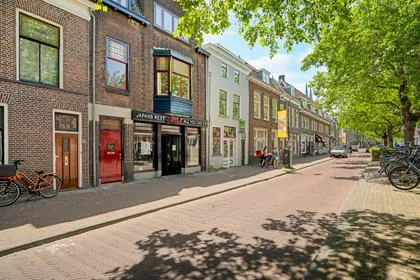
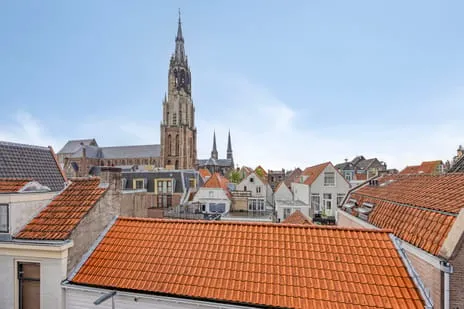
The Binnenstad of Delft is all about short distances and a lively streetscape. Residents give the neighbourhood a 7.9 out of 10 on Buurtje.nl, with notably high scores for amenities (8.9), safety (8.7) and education (8.5). Resident Frank sums it up succinctly: a supermarket a three-minute walk away, neighbours who lend out their deep fryer for oliebollen at New Year, and the feeling that you can walk the streets safely anywhere. That sense of community comes up more often in the reviews on the Binnenstad neighbourhood page. The Markt, the Nieuwe Kerk and the Vermeer Centrum are around the corner, as are supermarkets (Albert Heijn on Brabantse Turfmarkt, Jumbo near the station), specialist shops and eateries on the Beestenmarkt and Vrouwjuttenland.
For families with children, primary schools such as De Schatkaart and Paulus are nearby, and the Grotius College for secondary education. Green space scores lowest at 7.2: the neighbourhood is paved, although the Agathaplein and the Delftse Hout just outside the neighbourhood offer some respite. Resident Vic, who lives on a canal, cites the lack of green space as a downside, along with the sometimes inconvenient waste collection system. That waste problem comes up more often. Resident Danisha writes that rubbish often lies next to the containers, attracting pests. The municipality of Delft is working on improvements to waste collection, but it remains a point of attention.
In terms of accessibility, the neighbourhood scores 8.2. Delft Station lies on the southern edge of the Binnenstad, in the Stationsbuurt, with intercity trains taking you to The Hague in twelve minutes and to Amsterdam in forty minutes. Bus lines 40, 55 and 69 connect the neighbourhood with surrounding towns. The A13 motorway is reachable within five minutes, although parking in the Binnenstad itself is expensive and limited: a permit costs around €200 per year and waiting lists are not uncommon. The neighbourhood has nearly 14,000 residents, the largest group being between 25 and 45 years old. With 65% highly educated and many single-person households (6,785 out of over 8,000), the Binnenstad has a young, urban profile, partly due to the proximity of TU Delft.
Is the Binnenstad right for you as a buyer?
Buying a home in Binnenstad is particularly interesting for starters with an above-average budget, dual-income couples without children, and those moving up who want to live centrally. Buying an apartment in Binnenstad starts at around €165,000 for a small studio-type property, but for a larger apartment you can quickly expect €400,000 or more. Overbidding is common, so keep that in mind along with additional costs such as transfer tax (2%), notary and valuation fees. Families will find good schools here, but little outdoor space. For more garden and greenery, you could look at Hof van Delft or Voordijkshoorn. If buying is not yet an option, then check out the supply of rental homes in Binnenstad as an alternative.
Searching for a home to buy in the Delft Binnenstad
On Buurtje.nl, you combine the current housing supply with neighbourhood scores, resident reviews and neighbourhood statistics, so you not only find a home but also know what it's really like to live there. Compare the Binnenstad with adjacent neighbourhoods such as Vrijenban or Delftse Hout, or view the full overview of homes for sale in Delft.
Frequently asked questions
What is the average purchase price of a house in Binnenstad, Delft?
The average purchase price in Binnenstad, Delft over the past year was €589,016. Prices vary widely: from €165,000 for a small apartment to €2,950,000 for the most expensive homes. The average floor area of sold homes is 109 m².
What additional costs do I incur when buying a home in Binnenstad?
In addition to the purchase price, you pay transfer tax (2% for homes), notary fees for the deed of transfer and mortgage deed, and valuation costs. Expect around 4-6% in buyer's costs. In Binnenstad, bidding above the asking price is common, so keep a financial buffer.
What is the WOZ value in Binnenstad, Delft?
The average WOZ value in Binnenstad is €408,000. That is significantly higher than the Delft average of €322,000. The WOZ value affects your municipal taxes, such as property tax.
What type of home for sale can I find in Binnenstad, Delft?
The supply consists largely of apartments and upper-floor homes, often in historic buildings. Additionally, there are townhouses and canal houses, especially in Centrum and Centrum-Oost. Detached houses are rare. Only 39% of the housing stock is owner-occupied, so supply is limited.
Is buying an apartment in Binnenstad suitable for families?
There are good primary schools nearby, such as De Schatkaart and Paulus, and residents rate education at 8.5. Disadvantages for families are the limited green space, little outdoor space, and higher prices for larger homes. Families wanting more garden often also look at surrounding neighbourhoods like Hof van Delft.
Quiet neighbourhood with everything you need nearby. The only hassle is finding parking spaces. There isn't often nuisance or anything.
Auto-translated to English by AIIt is often dirty, there is a lot of rubbish in my street next to the container, that is the only bad thing, that's why we get vermin in the street, mice, rats for example
Auto-translated to English by AIMy neighbourhood is a pleasant, accessible environment. There are many amenities nearby and the shops are easily reachable. However, there is often litter on the street and we have occasionally had mice in the neighbourhood as a result. Placing more bins could possibly prevent this. However, there are very few houses available and everything is unaffordable. Housing could therefore be better.
Auto-translated to English by AII've lived here since birth and I really like it here. It's always quiet and we're situated behind a bit of nature. Now they're trying to build a restaurant right in front of our house, which is less good because then we'll have people in our garden later in the evening and there'll be no privacy left. Also think of the parking spaces we pay for, which would no longer be available, noise pollution, and so on. So without all that hassle, it's definitely a perfect place to live.
Auto-translated to English by AIA supermarket less than 3 minutes' walk away, neighbours who lend out their deep fryer for New Year's so we could make oliebollen (if they got some too) and a really pleasant atmosphere in the neighbourhood. It's very central and close to everything in Delft. I never feel like I have to be careful with my belongings here, or that someone might break in, lots of children playing in the street and a parking garage for permit holders a 1-minute walk away.
Auto-translated to English by AII think it's a nice neighbourhood. Occasionally inconvenient with the rubbish system and taking the glass away, not a huge amount of green, and sometimes difficult to see streets coming from the right so you don't get priority from others.
Auto-translated to English by AI.
Auto-translated to English by AIWith 20 years of experience in this neighbourhood, living comfort very much depends on the neighbours, in my case mainly the upstairs neighbours (and the neighbours at the front, the square). The house is very noisy and is poorly maintained by the WB, in this case Stedelink (formerly Vestia). The building construction is poor, including the wooden floor (= my ceiling) which can cause a lot of nuisance. It's an art to explain this properly to your new neighbours because the WB doesn't mention it and doesn't want to do anything about it. The houses from the 1930s mostly don't have double glazing, poor locks and are poorly insulated. For Vesteplein numbers 26 and 30, there is an additional defect if you want to use the shed. The gate at the front was removed long ago (at the spot where the U-stal bicycle shed is now), meaning residents have to walk around to the gate on Gasthuislaan. The rental advertisement says you have a shed, but it's not very practical. Most new residents therefore don't use it. The neighbourhood (at the front) is very noisy, partly due to all the activities: restaurant, café, theatre, U-stal bicycle shed, cinema, "open" and the supply of people and goods and (unannounced) events. When I first moved in, none of this was there; it was built up over the years. If you are sensitive to light and flickering images, it is not advisable to live here (opposite the theatre). Theatre De Veste has many lights (and many windows), a light sign and flickering TV screens on the outside that can be very bright and significantly affect your (night's rest). This also wasn't there at the beginning; the "advertising" increased over time. If you plan to live here, come and have a look during a busy day/evening or during an event. You can then also see how busy it can be outside your door and how many bicycles are parked in front of the door (despite the bicycle shed on the corner) and how much nuisance that causes. It is possible that your home is difficult to enter due to the thick row of bicycles in front of the door. The U-stal bicycle shed also plays a major role in living comfort, as there are employees who do not (want to) take the living environment into account (noise and smoke nuisance) and the nuisance can continue until the middle of the night (closing time of the shed). What also happens regularly, especially at weekends, is drunken passers-by or people hanging around on the square. People sitting on the window frame or staying close to the houses or in the corner where the U-stal bicycle shed is, even in the middle of the night. This can sometimes be perceived as threatening or unsafe. Very striking are the new high rents; significant rents are being charged for new residents. This does not rhyme at all with the overdue maintenance of many homes and facilities such as balconies, sheds, roofs and gutters, drainage, facades, paving, trees, etc. Across the back, new tenants pay, for example, 1375 euros per month. Accessibility is fine as long as you don't come by car. Vesteplein is car-free and parking is only possible in the (underground) car park. Loading and unloading is only allowed under certain conditions. External facilities are also fine; everything you need is nearby within walking distance. Three supermarkets, a chemist, bookshop, clothing stores and various other shops such as Hema, snack bar, cinema, theatre, cafés, restaurants, etc. The neighbourhood is generally clean, can be very quiet but often also extremely busy. Especially the noise, you have to be able to handle that because the houses generally don't have double glazing and constructions that can shield you from it. If you think, because it's already so noisy and loud anyway, that you can party until the middle of the night and cause other disturbances, then please don't come and live here! What the neighbourhood needs is peace and quiet, especially at night. The neighbourhood is already lively enough.
Auto-translated to English by AI