District in Amsterdam
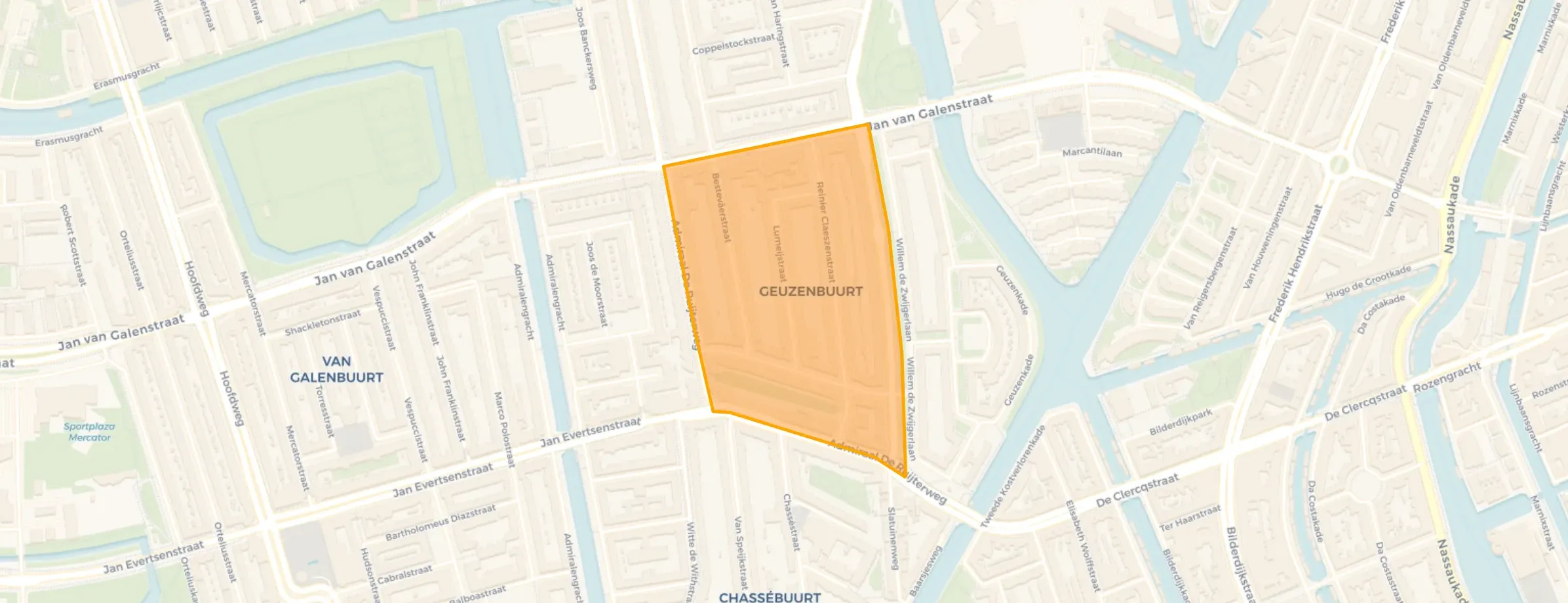
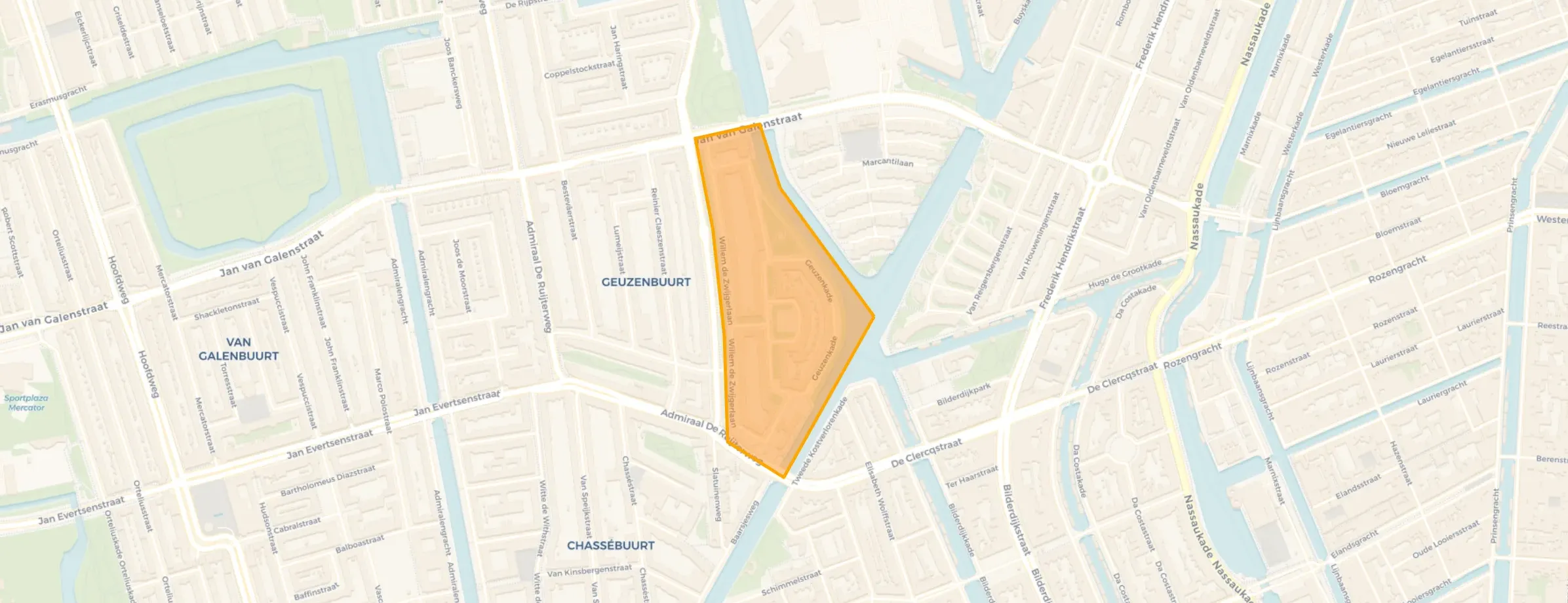
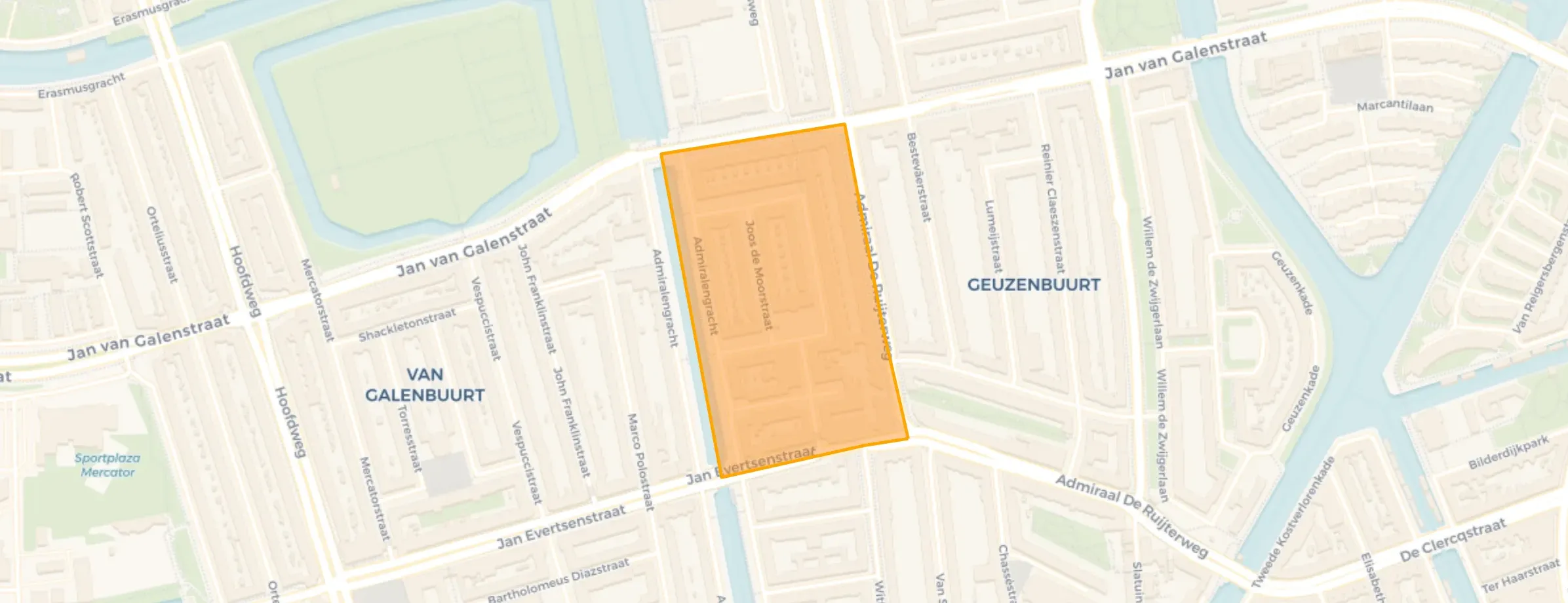
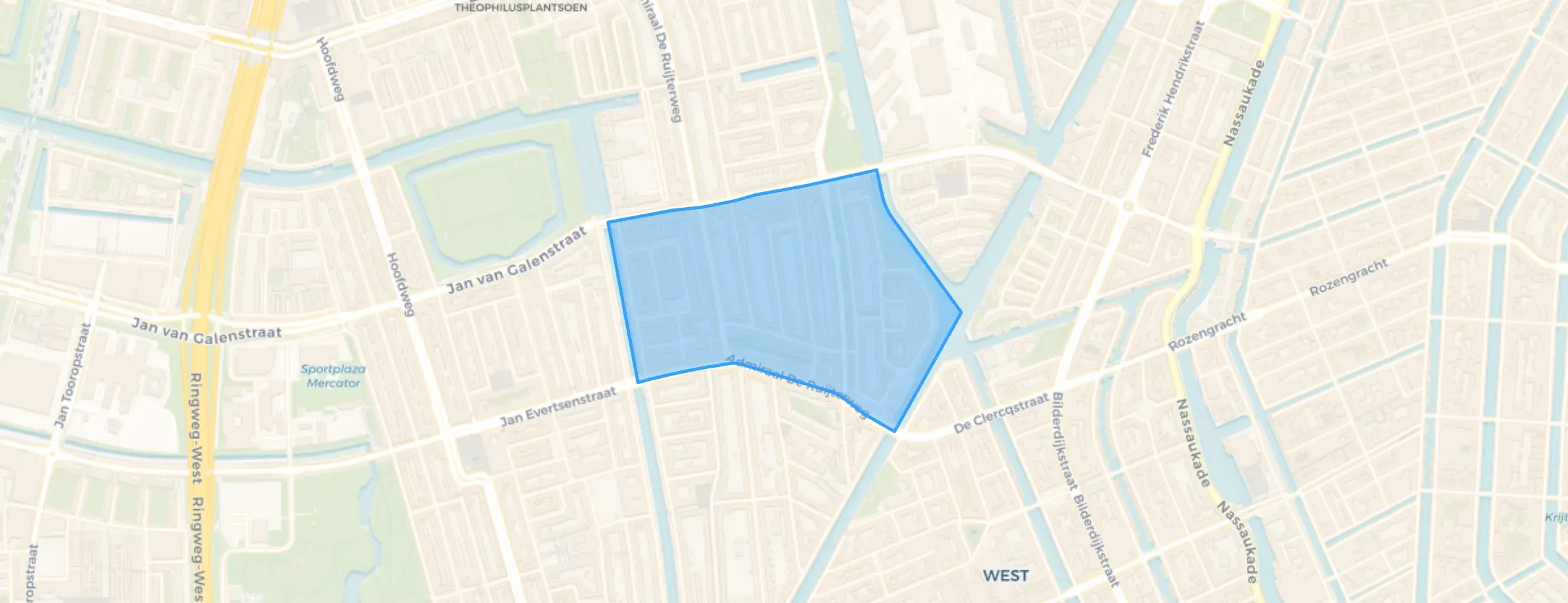
Geuzenbuurt is located in the province of Noord-Holland, in the municipality of Amsterdam The district has a total area of 29 hectares, of which 28 hectares are land and 2 hectares are water. The district is coded as WK0363EL. The postcode area is 1056BH-1056WT.
Geuzenbuurt has 6.560 residents. Of these, 47,5% are men and 52,6% are women. Most residents are 25 to 45 years (48,7%). The other age groups are 20,1% for '45 to 65 years', 12,0% for '15 to 25 years', 10,1% for '0 to 15 years' and 9,1% for '65 years or older'. Of the residents, 74,6% is unmarried, 17,9% is married, 6,0% is divorced and 1,6% is widowed. 3.225 residents originate from the Netherlands, 1.405 come from Europe and 1.930 come from countries outside Europe.
There are 3.940 households in Geuzenbuurt. 55,1% of these are single-person households, 28,8% households without children and 16,1% households with children. The average household size is 1,7 persons. The national average is 2,1 persons.
In Geuzenbuurt there are 5.700 income recipients. The average income per income recipient is €52.000, which is €9.800 (23%) higher than the national average of €42.200. Per resident, the average income is €45.300, which is €10.400 (30%) higher than the national average of €34.900. Most residents of Geuzenbuurt are highly educated. 64,2% have a university or higher professional education (HBO/WO), 22,8% have an intermediate education (HAVO, VWO or MBO 2-4) and 12,9% have a lower education (VMBO or MBO 1).
Of the 6.560 residents, around 78% are in paid employment, which amounts to 5.117 people. This is 6% higher than the national average of 72%. The majority of workers are in salaried employment (78%), while 22% are self-employed. In Geuzenbuurt, 16% of residents receive a benefit. The largest group is those receiving a state pension (AOW). 520 people receive this benefit.
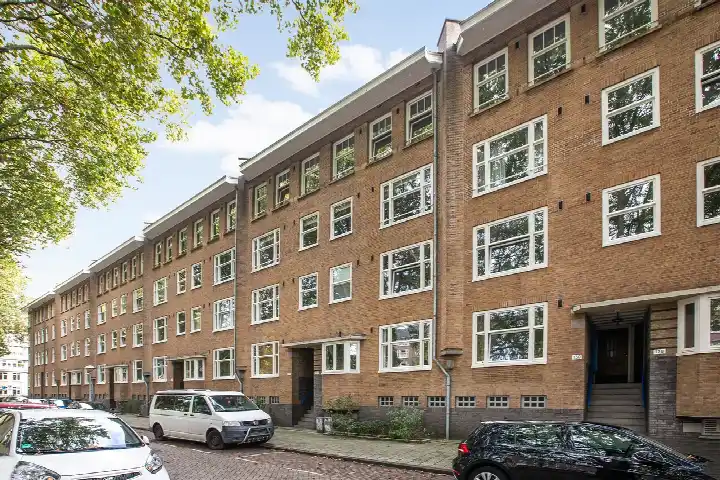
In Geuzenbuurt there are 3.777 homes with an average assessed value (WOZ) of €501.000. Of these, around 93% are occupied and 7% unoccupied. Most homes are rental properties. This amounts to 66% rental homes and 34% owner-occupied homes. Of the homes, 34% privately owned, 19% owned by housing associations and 47% owned by other landlords. The most common construction periods in Geuzenbuurt are 1925-1950 (66%) and 1900-1925 (30%).
There are currently no homes for sale in Geuzenbuurt. The most recently listed home is Reinier Claeszenstraat 53-3 by BIC Makelaardij op Funda. No homes were sold in Geuzenbuurt over the past year.
There are currently no homes for rent in Geuzenbuurt. The most recent home is Pieter van der Doesstraat 28-2, offered by ADDRESS AMSTERDAM op Funda. No homes were let in Geuzenbuurt over the past year.
No recent rental data available for Geuzenbuurt.
In Geuzenbuurt there are 3.592 addresses with a registered energy label. The most common labels are C (30%), D (19%) and A (16%). On average, an address in Geuzenbuurt uses 1.680 kWh of electricity per year. This is 34% below the national average of 2.550 kWh. With an annual consumption of 680 m³ per address, natural gas consumption is 15% below the national average of 800 m³.
It's nice there and friendly people. But a sense of togetherness is lacking and I don't have much contact with my neighbours either, which I regret. My primary school days in this neighbourhood were really perfect and the restaurants and shops are also very good. But there are many students and expats, which makes me feel a certain divide and not much community. I myself would like to move out, but that's certainly not possible in my neighbourhood because they are far too expensive.
Auto-translated to English by AINice and cosy, there is an ice cream shop and a playground called de ruige speeltijn but now it's for babies because everything is getting super small, which is a shame, but the rest is great. We get along well and some of my friends live very close by, which is also nice. But I do think there should be more playgrounds for older children, because babies are fine at home too, but older kids just end up on their phones or laptops, so more playgrounds for older children, that's the only thing.
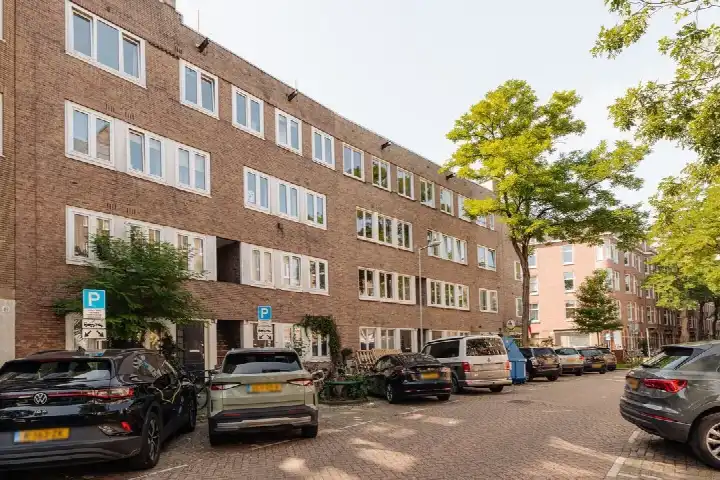
Auto-translated to English by AIThe housing stock is predominantly pre-war — 96% of the homes date from before 1945. In addition, the most common type is flats (100%).
Over the past year a home for sale in Geuzenbuurt was listed for an average of €573,954 (€8,797 per m²). Last quarter prices fell by 10%.
A rental home in Geuzenbuurt cost an average of €2,652 per month (€37 per m²). That is 23% above the national average.
Wijk Geuzenbuurt has 6,560 residents. The largest age group is 25 to 45 years (49%). Notably, 55% of the households are single-person households.
From Geuzenbuurt you can on average reach a supermarket at 0.4 km, a GP at 0.5 km, a railway station at 3.5 km, a primary school at 0.5 km (as the crow flies, source: CBS).
Right now you will find 64 homes for sale and 12 homes for rent in Geuzenbuurt.