Rental homes in L-buurt, Amsterdam
Discover the current supply of rental properties in L-buurt and compare rental prices, neighbourhood data, and resident reviews to determine if this Amsterdam neighbourhood suits you.
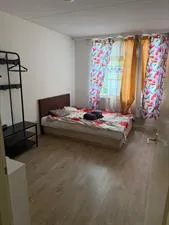

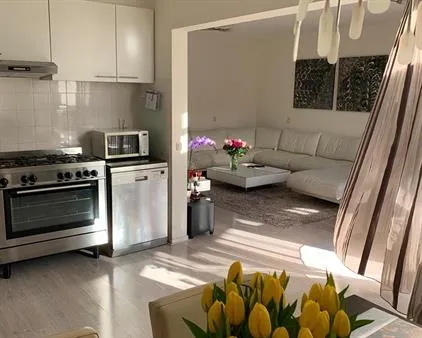
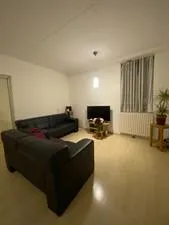
Rental prices and market figures for L-buurt, Amsterdam
L-buurt is predominantly a rental neighbourhood: 59% of the more than 1,600 homes are rented, compared to 41% owner-occupied homes. Of those rental homes, 19% are owned by a housing association (social housing) and 39% fall under other landlords (free sector and private rental). This means that a significant portion of the rental supply is in the free sector, but social housing is also available for those who qualify.
In the free sector (excluding social housing), the average rental price in L-buurt over the past year was €2,239 per month, with a range of €1,050 to €2,700 per month. The average home size was 76 m², resulting in a rental price of approximately €29.50 per m². During this period, 41 free-sector homes were rented out. The WOZ value is €314,000, almost equal to the neighbourhood average of Nellestein (€316,000), but significantly lower than the Amsterdam average of €517,000. This lower WOZ level translates into relatively more affordable rental prices compared to popular inner-city neighbourhoods. For the current supply and daily average rental price, we refer to the overview at the top of this page.
Living in L-buurt, Amsterdam
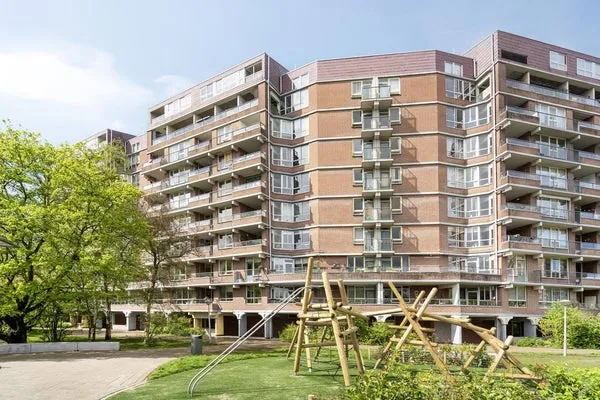
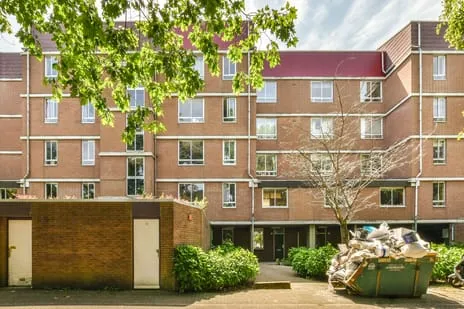
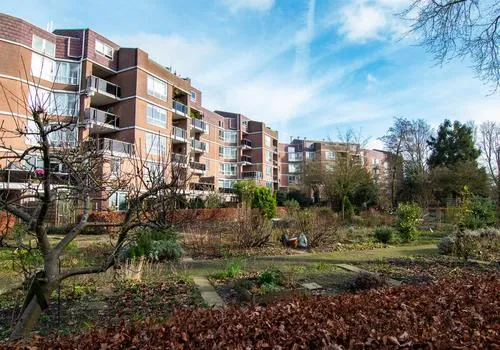
L-buurt is part of the district Nellestein in Amsterdam-Zuidoost, an area built in the 1960s and 1970s as a post-war expansion district. The neighbourhood is characterised by porch flats and gallery flats from that period, interspersed with single-family homes and terraced houses. The streetscape is green and spacious, with wide pavements, strips of greenery and playgrounds between the residential blocks. This makes the neighbourhood quieter and airier than many more densely built Amsterdam neighbourhoods, although the urban character is unmistakably present.
The average WOZ value of €314,000 and the average income of €35,400 per year are clearly below the Amsterdam average (€517,000 and €44,276 respectively). This reflects a neighbourhood that is more accessible than the city as a whole, but also less sought after by those looking for the city centre. The labour participation rate of 63% and the proportion of highly educated people at 62% show that the neighbourhood has a mixed but active population.
Facilities in L-buurt
For daily groceries, residents can go to supermarkets in the immediate vicinity, including shops in the nearby Nellestein shopping centre on Nellesteinweg. This small neighbourhood shopping centre offers a Lidl, a bakery and a few other shops within walking distance. For a larger selection, the Amsterdamse Poort shopping centre in Amsterdam-Zuidoost is accessible, about ten minutes away by metro. Primary schools are available in the immediate vicinity of Nellestein. For secondary education, students rely on schools elsewhere in Zuidoost. For recreation, the proximity of Gaasperplaspark is a major asset: this green recreational area with swimming water and walking paths is within cycling distance and attracts residents from the entire area. Sports clubs and outdoor sports facilities are present in the district.
Accessibility of L-buurt
Accessibility by public transport is reasonable. Gaasperplas metro station on line 53 (towards Central Station) is within walking distance of the neighbourhood and takes travellers to the centre of Amsterdam in about twenty to twenty-five minutes. Bus connections link the neighbourhood to other parts of Zuidoost. By car, the connection to the A9 and A2 is quickly reachable, making L-buurt attractive for people who regularly drive outside the city. Parking is still possible without a paid permit in most parts of the neighbourhood, which is a practical advantage compared to the busier city districts. Cycling to the centre takes about 35 to 45 minutes; for daily commuting by bike to the city centre, the distance is on the long side.
Residents appreciate the peace, space and green environment of the neighbourhood. On the neighbourhood page of L-buurt you can find all resident reviews and neighbourhood data. One resident writes: "It is quieter here than in the rest of Amsterdam, you have space and greenery around you, but you are still in the centre in fifteen minutes." Recurring criticisms are the limited dining and entertainment options in the neighbourhood itself and the distance to the lively city centre.
Those comparing L-buurt with sister neighbourhoods in Nellestein can also look at Gaasperpark, which directly borders the recreational area of the same name and has an even greener appearance, or Gaasperplas, which is similar in character but slightly closer to the metro station. Rental prices in these neighbourhoods are in the same order of magnitude as in L-buurt.
Is a rental home in L-buurt right for you?
L-buurt mainly attracts residents who seek space and peace within Amsterdam, without wanting to pay the high rental prices of the city centre. With an average free-sector rent of €2,239 per month, renting in L-buurt is cheaper than in neighbourhoods like the Jordaan or the Grachtengordel-West, but it still requires a substantial budget. Families benefit from the larger homes and greenery; the largest age group (25-45 years) shows that young families and dual-income couples have discovered the neighbourhood. Seniors (610 residents over 65) find the peace they seek. Starters and students considering renting an apartment in L-buurt must take into account the higher free-sector prices; for social housing, registering with an Amsterdam housing association (such as Rochdale or Ymere) via the WoningNet system is the designated route, but waiting lists are long. Those who buy instead of rent can view the supply of homes for sale in L-buurt as an alternative. Respond quickly to available rental homes: the supply in this neighbourhood is limited and homes are usually rented out quickly.
What residents say about living in L-buurt
Residents generally rate L-buurt positively for peace, greenery and accessibility by metro, but are less enthusiastic about the nightlife and facilities in the neighbourhood itself. One resident describes it as follows: "For Amsterdam, it is surprisingly quiet and affordable here, but you have to accept that you are not around the corner from everything the city has to offer." All ratings per category, such as safety, liveability and atmosphere, can be read on the reviews and neighbourhood data of L-buurt. These kinds of experiences from real residents are unique at neighbourhood level.
Comparing rental homes in and around L-buurt
Are you looking for a rental home in Amsterdam-Zuidoost but want to compare other options? Within the district rental homes in Nellestein offers a good starting point for the total supply in the area. Popular alternatives outside Zuidoost are the Haarlemmerbuurt or Burgwallen-Nieuwe Zijde, but rental prices there are significantly higher. For a broad overview of all available rental homes in the city, you can also view the total supply of rental homes in Amsterdam. Buurtje.nl combines current housing supply from more than 1,500 sources with resident reviews and neighbourhood data, so you not only find a home but also know whether the neighbourhood suits you. More information about the municipality can also be found on the official website of the municipality of Amsterdam.
Frequently asked questions
What is the average rent in L-buurt, Amsterdam?
In the free sector (excluding social housing), the average rent in L-buurt over the past year was €2,239 per month, with a range of €1,050 to €2,700 per month. The average home was 76 m², which works out to about €29.50 per m². Social housing is cheaper, but income requirements and long waiting lists via WoningNet apply.
Are there social housing units in L-buurt?
Yes, approximately 19% of the housing stock in L-buurt is owned by housing associations, which corresponds to social housing. To get a social housing unit in Amsterdam, you must register with WoningNet and qualify through corporations such as Rochdale or Ymere. Waiting lists in Amsterdam are long, sometimes more than ten years for popular housing types.
What is it like to live in L-buurt?
L-buurt is a post-war expansion district in Amsterdam-Zuidoost with a quiet, green and spacious character. Residents appreciate the space, the proximity of Gaasperplaspark and the metro connection to the city centre. Criticisms include the limited dining and shopping options in the neighbourhood itself and the distance from the lively Amsterdam city centre. The average income is €35,400 per year, clearly below the Amsterdam average.
Is L-buurt suitable for families with children?
L-buurt is certainly suitable for families. The spacious post-war development with single-family homes, playgrounds and greenery makes it a family-friendly environment. Primary schools are nearby and Gaasperplaspark offers plenty of outdoor space. The largest age group in the neighbourhood is 25-45 years, indicating that young families and dual-income couples are well represented here.
How accessible is L-buurt?
L-buurt is accessible via metro line 53 (Gaasperplas station), which takes about 20-25 minutes to Amsterdam Central Station. By car, the neighbourhood connects well to the A9 and A2. Parking is still possible in most street sections without a paid permit. Cycling to the city centre takes about 35-45 minutes, which is on the long side for daily commuting.
What amenities are there in L-buurt?
In the immediate vicinity, Nellestein shopping centre offers a Lidl and daily shops. For a larger range of shops, Amsterdamse Poort shopping centre is about ten minutes away by metro. Gaasperplaspark provides recreation, swimming water and walking paths within cycling distance. Primary schools are present in the district; for secondary education, students rely on schools elsewhere in Zuidoost.
How quickly are rental homes rented out in L-buurt?
The free-sector supply in L-buurt is limited: in the past year, 41 homes were rented out. Due to the relatively small supply, it is advisable to respond quickly to new homes for rent in L-buurt. Make sure you have documents such as an employer's statement, payslips and a copy of your ID ready to respond quickly when a home becomes available.