Rental homes in Sumatraplantsoenbuurt, Amsterdam
Looking for a rental property in Sumatraplantsoenbuurt? Check the current listings on this page and find out if this vibrant Amsterdam neighbourhood suits you.
Rental prices and market figures for Sumatraplantsoenbuurt, Amsterdam
The Sumatraplantsoenbuurt is a pronounced rental neighbourhood: over 76% of the housing stock of approximately 1,851 homes is rented out, compared to only 24% owner-occupied homes. If you want to see whether buying is an option, you can view the supply of homes for sale in Sumatraplantsoenbuurt separately. The vast majority of rental properties are owned by a housing association: 65% of all homes are owned by housing corporations, meaning a large share is social housing. Only about 11% are owned by other (private) landlords.
In the free sector, rental prices over the past twelve months averaged €1,926 per month, with a range of €925 to €2,700 per month. The average rented apartment or house had an area of 90 m², resulting in a price per square metre of approximately €21.40. Note: these are exclusively free-sector prices; social housing is not included and is generally significantly lower. In total, 13 free-sector homes were rented out in the neighbourhood over the past year, indicating a limited supply.
The average WOZ value in the Sumatraplantsoenbuurt is €500,000. That is slightly above the district average of Indische Buurt-Oost (€482,000), but still just below the Amsterdam average of €517,000. For the current availability of rental properties and the most recent average rent, please refer to the overview at the top of this page.
Living in Sumatraplantsoenbuurt, Amsterdam
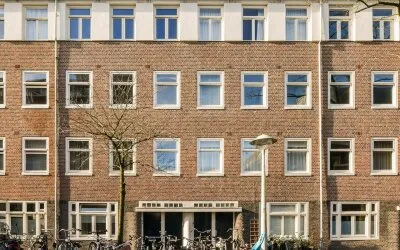
The Sumatraplantsoenbuurt is located in the eastern part of the Indische Buurt, a district named after the colonial street names from the early twentieth century. The neighbourhood has a compact, urban character with predominantly closed building blocks from the 1910s and 1920s. The housing types consist mainly of walk-up apartments and upper-floor flats, with occasional new-build projects. Green spaces in the neighbourhood are concentrated around the Sumatraplantsoen itself, a long park that gives the area its name and serves as an informal meeting place.
The population composition is young and diverse: the largest age group is 25- to 45-year-olds (over 1,370 of the 3,760 residents), and single-person households are the most common, with 975 units. The high proportion of highly educated residents (44%) and the relatively low labour participation rate (59%) fit a neighbourhood with young professionals and students, but also with a substantial share of residents in a more vulnerable position. The average income of €33,300 is below the Amsterdam average of €44,276, reflecting the mixed composition of the neighbourhood.
Facilities in the Sumatraplantsoenbuurt
For daily groceries, residents can go to the Albert Heijn on Javastraat, one of the main streets of the Indische Buurt. Javastraat also offers a varied range of smaller shops, bakeries, toko's and eateries that well reflect the multicultural identity of the neighbourhood. For schools, there are several primary schools in the immediate vicinity, including schools on Commelinstraat and Sumatrastraat. For sports, residents can use Flevopark, which is within cycling distance and offers opportunities for running, swimming (Flevoparkbad) and recreation. For sports clubs, there are options in the broader Indische Buurt and adjacent districts.
Accessibility of the Sumatraplantsoenbuurt
Public transport accessibility is good. Tram line 14 runs via Insulindeweg and connects the neighbourhood to Amsterdam city centre in about ten to fifteen minutes. Bus lines via Zeeburgerdijk and Insulindeweg provide additional connections. By bike, the centre is reachable in about twenty minutes via Czaar Peterstraat or Zeeburgerdijk. By car, the A10 ring road is quickly accessible via Insulindeweg or Zeeburgerdijk, making the neighbourhood attractive for commuters as well. Parking is only possible with a parking permit; free parking is hardly feasible in practice.
On the neighbourhood page of Sumatraplantsoenbuurt you can find resident reviews and detailed neighbourhood data. Residents appreciate the central location, the lively Javastraat and the mix of tranquillity at the park and urban dynamics around the corner. A recurring point of criticism is the parking pressure and the occasional nuisance in the evening hours around the hospitality concentrations. One resident describes it as: "I've lived here for four years now and the neighbourhood has a real character of its own. Javastraat is my daily shopping street, but you have to get used to the hustle and bustle and the lack of parking spaces." Compared to the nearby Flevopark neighbourhood, which is greener and slightly quieter, the Sumatraplantsoenbuurt has a more urban and lively profile. The Makassarpleinbuurt has similar buildings but a slightly different social composition.
Who is renting in Sumatraplantsoenbuurt interesting for?
Based on demographic data, the Sumatraplantsoenbuurt best suits young professionals and starters who want to live centrally with an urban environment within reach. Free-sector rental prices, averaging €1,926 per month, are on the higher side, requiring a substantial income. For families, the neighbourhood is less obvious due to the limited supply of larger homes and the urban density, although the proximity of Flevopark and primary schools partially compensates for this. If you are considering renting an apartment in Sumatraplantsoenbuurt through social housing, you should expect long waiting lists at housing associations such as Ymere and de Alliantie, which are active in the Indische Buurt. You can register via WoningNet Amsterdam. Respond quickly to free-sector listings: the number of available rental properties in the neighbourhood is limited and homes are usually rented out quickly. Prepare your documents (payslips, employer's statement, ID) so you can respond immediately. If renting turns out to be too expensive, it is worth also exploring the supply of homes for sale in the neighbourhood.
What residents say about living in Sumatraplantsoenbuurt
The resident reviews on Buurtje.nl give a mixed but predominantly positive picture of the Sumatraplantsoenbuurt. Residents give the neighbourhood good scores for liveliness, location and the range of facilities, while safety and parking score lower. One resident writes: "The atmosphere at the park is lovely in summer, but in the evenings it can be a bit restless in the streets around Javastraat. I wouldn't want to leave, but it's good to know what you're choosing." View all reviews and the full neighbourhood scores on the reviews and neighbourhood data of Sumatraplantsoenbuurt. These experiences from real residents provide a more honest picture than any property advertisement.
Comparing rental properties in and around the Sumatraplantsoenbuurt
If you are undecided between several neighbourhoods in Oost, there are good alternatives in the area. The Zeeburgerdijk-Oost is slightly quieter and has a different street profile, while the Makassarpleinbuurt is very similar in terms of buildings. Outside the Indische Buurt, the Haarlemmerbuurt and the Jordaan are also popular among renters looking for a similar urban atmosphere, although rental prices there are generally even higher. For a complete overview of the supply in the broader district, you can visit rental properties in Indische Buurt-Oost, or view all rental properties in Amsterdam for a broader perspective. Buurtje.nl combines current property listings with resident reviews and neighbourhood data from over 1,500 sources, so you not only find a home but also know whether the neighbourhood suits you.
Frequently asked questions
What is the average rent in Sumatraplantsoenbuurt, Amsterdam?
In the free sector, the average rent in Sumatraplantsoenbuurt over the past twelve months was €1,926 per month, with a range of €925 to €2,700 per month. The average rented property had an area of 90 m², which equates to approximately €21.40 per square metre. Social housing, which makes up the majority of the housing stock (around 65% owned by housing corporations), is significantly lower in price but is not freely available.
Are there social housing properties in Sumatraplantsoenbuurt?
Yes, a large proportion of homes in Sumatraplantsoenbuurt are owned by housing corporations: around 65% of all homes are corporation-owned. Active corporations in the Indische Buurt include Ymere and de Alliantie. You can register for social housing via WoningNet Amsterdam, but be prepared for long waiting lists, which in Amsterdam can easily run to several years.
What is it like to live in Sumatraplantsoenbuurt?
Sumatraplantsoenbuurt is an urban, mixed neighbourhood in Amsterdam-Oost with buildings from the 1910s and 1920s. The area has a lively character due to its proximity to the Javastraat, with shops, restaurants and a multicultural atmosphere. Residents appreciate the central location and the greenery of the Sumatraplantsoen, but mention parking pressure and evening bustle as drawbacks. The neighbourhood mainly attracts young professionals and starters.
Is Sumatraplantsoenbuurt suitable for starters and young professionals?
The neighbourhood suits starters and young professionals well: the largest population group is aged 25 to 45, and single-person households are the most common. The location, amenities and public transport connections make the area attractive for those seeking an active urban lifestyle. However, the average free-sector rent of €1,926 per month is a barrier; a stable income is necessary to qualify for a free-sector home.
How accessible is Sumatraplantsoenbuurt?
Sumatraplantsoenbuurt is well accessible by public transport: tram line 14 runs via the Insulindeweg and takes you to the city centre in about ten to fifteen minutes. By bike, the centre can be reached in around twenty minutes. By car, the A10 ring road is quickly accessible via the Insulindeweg or Zeeburgerdijk. Parking in the neighbourhood is only possible with a parking permit; free parking is practically unavailable.
What amenities are there in Sumatraplantsoenbuurt?
For daily groceries, there is an Albert Heijn on the nearby Javastraat, which also offers a wide range of specialist shops, toko's and eateries. Several primary schools are within walking distance in the neighbourhood and its immediate surroundings. For sports and recreation, Flevopark is within cycling distance, including the Flevoparkbad swimming pool. Healthcare facilities and a GP practice are also present in the area.
How quickly are rental properties in Sumatraplantsoenbuurt rented out?
The free-sector supply in Sumatraplantsoenbuurt is limited: only 13 free-sector homes were rented out in the neighbourhood over the past year. Due to the scarce supply and high demand in Amsterdam-Oost, properties are usually rented out quickly. It is advisable to have your documents such as payslips, employer's statement and proof of identity ready so you can respond immediately when a property becomes available for rent.