Homes for sale in Ambonpleinbuurt, Amsterdam
Discover homes for sale in Ambonpleinbuurt and view the current supply, average asking prices and selling times directly at the top of this page.

House prices and market figures for Ambonpleinbuurt, Amsterdam
The Ambonpleinbuurt is predominantly a rental neighbourhood: about 80% of the housing stock consists of rental properties, the majority of which are owned by housing associations. Only 20% of homes are owner-occupied. This limited owner-occupied segment makes the market relatively tight for those looking to buy a home.
The average WOZ value in the Ambonpleinbuurt is €445,000. That is lower than the average in the neighbouring Indische Buurt-West (€475,000) and clearly below the Amsterdam average of €517,000. However, actual transaction prices are higher: in the past twelve months, 26 homes were sold at an average purchase price of €494,923. Sale prices ranged from €325,000 to €700,000, with an average living area of 68 m². That works out to a price of approximately €7,280 per square metre. For current asking prices and selling times, you can consult the overview at the top of this page.
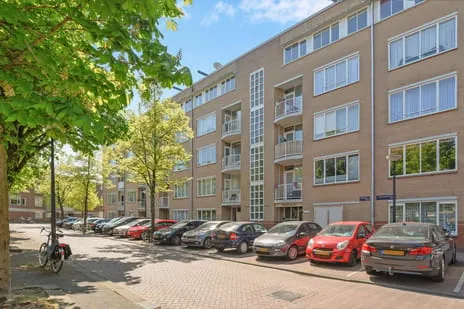
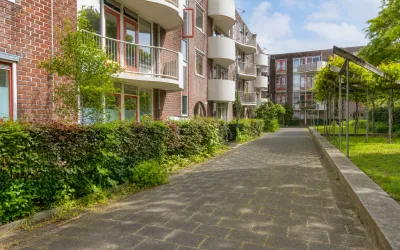
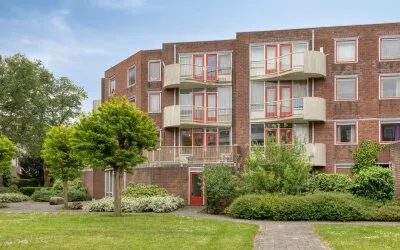
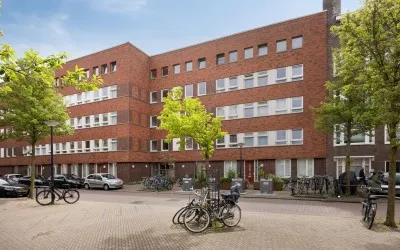
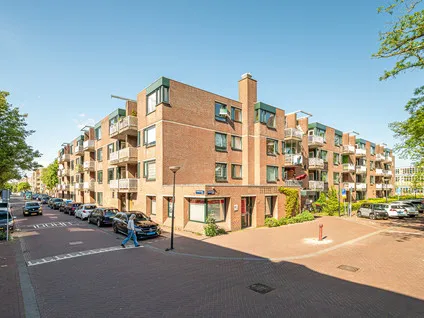
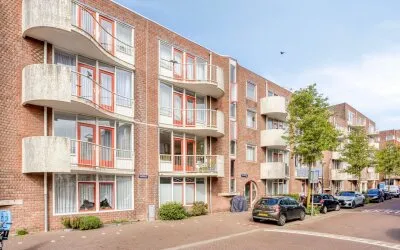
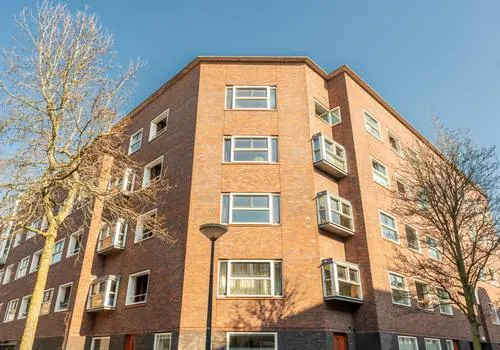
The supply consists almost exclusively of apartments, often in pre-war porch flats and upstairs-downstairs homes. Detached houses or single-family homes are hardly found here.
Living in Ambonpleinbuurt, Amsterdam
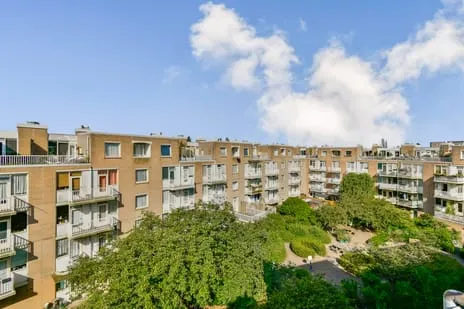
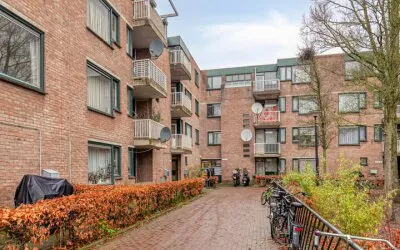
The Ambonpleinbuurt is located in the eastern part of Amsterdam, wedged between Molukkenstraat, Insulindeweg and Sumatrastraat. It is a compact, densely built neighbourhood with a distinctly urban character. The streets are named after former Dutch colonies in Asia, giving the neighbourhood its name: the Indische Buurt. The buildings largely date from the 1910s and 1920s, with closed building blocks, inner courtyards and the typical Amsterdam School architecture also seen in the Rivierenbuurt and De Pijp.
Ambonplein itself is the heart of the neighbourhood: a long, green square with trees and benches where residents meet. The square gives the neighbourhood something of a village-like centre in the middle of the city. Around the square you will find small shops, a neighbourhood café and the daily bustle of a mixed urban district. For larger groceries, you walk to Javastraat, the shopping street of the Indische Buurt, with supermarkets, toko's, greengrocers and eateries. The Albert Heijn and Dirk on Javastraat are the most used supermarkets in the immediate vicinity.
Families with children will find primary schools within walking distance, including schools on Sumatrastraat and surrounding areas. Flevopark, a few minutes away by bike, is the large green area for the neighbourhood: spacious, by the water and popular with runners, picnickers and dog owners. Closer to home, Ambonplein itself offers a small green space for children and the elderly.
In terms of accessibility, the Ambonpleinbuurt is well connected. Tram line 14 runs via Insulindeweg towards the city centre and Flevopark. Veemarkt metro station (line 54) and Muiderpoort station are within cycling distance and take you to Amsterdam Central or Amstel station within ten minutes. By car, you can quickly reach the A10 ring road via Insulindeweg, but parking in the streets around Ambonplein requires patience, especially in the evenings.
The neighbourhood has a mixed population with many young families, singles and residents from diverse backgrounds. The largest age group is 25 to 45 years old. Residents appreciate the liveliness and central location, but also mention parking pressure and the limited supply of owner-occupied homes as points of attention. One resident described the neighbourhood as follows: "Ambonplein is truly our square. You know your neighbours, the children play outside, and yet you are in the city centre in ten minutes." Read more experiences and view neighbourhood scores on the Ambonpleinbuurt overview page.
Compared to the adjacent Timorpleinbuurt-Noord and Timorpleinbuurt-Zuid, the Ambonpleinbuurt has a slightly quieter character thanks to the central square. The atmosphere is similar, but the owner-occupied segment is small in all three neighbourhoods. Those wanting more choice within the wider district can also look at the total supply of owner-occupied homes in Indische Buurt-West.
Is a home in Ambonpleinbuurt right for you?
Buying in Ambonpleinbuurt is particularly attractive for starters and young dual-income couples who want to live in an urban setting without the price level of the Grachtengordel or the Jordaan. With an average transaction price of nearly €495,000 and a range starting around €325,000, there is something to be found at the lower end of the market, although supply is limited. Expect popular apartments to sell quickly and that overbidding is not uncommon. Families looking for more space would be better off looking at larger homes elsewhere in Amsterdam. Those unsure whether buying is feasible at this time can also check out rental properties in Ambonpleinbuurt as a temporary alternative.
What residents say about the Ambonpleinbuurt
Residents particularly appreciate the neighbourhood for its sense of community, its location relative to the city centre and the green Ambonplein. Less positive are comments about parking nuisance and the limited availability of owner-occupied homes. A common sentiment: "Javastraat is our living room, but finding a parking spot after seven o'clock is a sport in itself." View all reviews, partial scores per category and the full neighbourhood data on the Ambonpleinbuurt page.
Compare owner-occupied homes in and around the Ambonpleinbuurt
Buurtje.nl combines housing supply from more than 1,500 sources with resident reviews and neighbourhood data, so you not only find a home but also know whether the neighbourhood suits you. Compare the Ambonpleinbuurt with neighbourhoods like Haarlemmerbuurt, the Jordaan or Grachtengordel-West for a broader picture of the Amsterdam owner-occupied market. More information about regulations, permits and municipal policy can be found on the website of the municipality of Amsterdam.
Frequently asked questions
What does a home for sale cost in Ambonpleinbuurt?
In the past twelve months, the average sale price in Ambonpleinbuurt was €494,923. Sale prices ranged from €325,000 to €700,000, with an average living area of 68 m². That works out to about €7,280 per square metre. Almost all properties are apartments in pre-war buildings.
What is the WOZ value in Ambonpleinbuurt?
The average WOZ value in Ambonpleinbuurt is €445,000. That is below the average for the Indische Buurt-West district (€475,000) and clearly below the Amsterdam average of €517,000. In practice, actual transaction prices are higher than the WOZ value.
What is it like living in Ambonpleinbuurt?
Ambonpleinbuurt is an urban, mixed neighbourhood with pre-war buildings and a recognisable centre: the green Ambonplein. The atmosphere is lively but not busy, with an active community. Residents appreciate the location, the Javastraat shopping street, and the proximity of Flevopark. Parking nuisance and the limited owner-occupied segment are mentioned as drawbacks.
Is Ambonpleinbuurt suitable for first-time buyers?
The neighbourhood attracts relatively many young residents between 25 and 45, and there are apartments at the lower end of the market from around €325,000. However, the supply of owner-occupied homes is limited, as 80% of homes are rental properties. First-time buyers should expect competition and the possibility of overbidding on popular properties.
How accessible is Ambonpleinbuurt?
Ambonpleinbuurt is well accessible by public transport. Tram line 14 connects the neighbourhood to Amsterdam city centre. Veemarkt metro station and Muiderpoort train station are within cycling distance and offer fast connections to Amsterdam Central and the rest of the city. By car, the A10 ring road is reachable via the Insulindeweg. Parking in the neighbourhood itself is a point of attention, especially in the evenings.
What type of homes are for sale in Ambonpleinbuurt?
The owner-occupied segment in Ambonpleinbuurt consists almost entirely of apartments, particularly in pre-war porch flats and upstairs-downstairs homes from the 1910s and 1920s. Single-family homes or detached houses are hardly found here. The average sold apartment has an area of 68 m².
Is there a lot of green space in Ambonpleinbuurt?
Ambonplein itself is an elongated green square that serves as a meeting place for the neighbourhood. For more extensive green space, Flevopark is the designated spot a few minutes away by bike: a spacious park by the water, popular for sports and recreation. Compared to some other Amsterdam neighbourhoods, the greenery is modest but easily accessible.