Homes for sale in Dapperbuurt, Amsterdam
Looking for a home to buy in the Dapperbuurt? Check the current listings on this page and discover what the neighbourhood has to offer.

House prices in the Dapperbuurt: market, WOZ value and what you pay
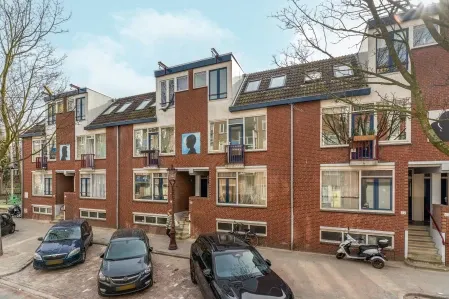
The Dapperbuurt is one of the more affordable neighbourhoods in Amsterdam-Oost, although prices have risen sharply in recent years. Of the more than 5,500 homes in the neighbourhood, only 26% are owner-occupied, while 74% are rented out. This limited owner-occupancy rate means relatively few homes come onto the market. The average WOZ value is €521,000, just above the Amsterdam average of €517,000. Over the past twelve months, 94 homes were sold at an average purchase price of €566,819, with a range from €275,000 to €1,450,000. These are almost exclusively apartments, as detached houses or terraced homes are rare in this 19th-century working-class neighbourhood. The average sold home had a floor area of 70 m². For current asking prices and availability, you can consult the overview at the top of this page.
Living in the Dapperbuurt: market, multiculturalism and everyday bustle
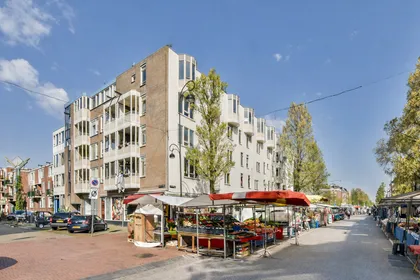
The Dapperbuurt is not a quiet dormitory neighbourhood. The area is alive, and you notice it as soon as you walk down the Dapperstraat, where the eponymous market is open every day of the week. Residents give the neighbourhood an average score of 7.5 out of 10 via the Dapperbuurt neighbourhood page, with a notably high score for accessibility (8.0) and amenities (7.8). Resident Jamila puts it aptly: her grandmother already lived here, and the neighbourhood has always been cosy and welcoming. Another resident describes the northern part of the neighbourhood as lively due to the market and many shops, with a distinct multicultural atmosphere. Sometimes busy and chaotic, but there is always something going on. Abad, who has lived in the Dapperbuurt for years, notes a clear improvement compared to a few years ago: new shops and less nuisance make the neighbourhood more pleasant to live in. This aligns with the safety score, which comes out at 7.5.
Living in the Dapperbuurt means living in a dense, urban environment with everything within reach. For daily groceries, you have the Dappermarkt, but also supermarkets like Albert Heijn and Lidl nearby. For green spaces, you have to walk a bit further: Oosterpark is within walking distance and is one of the quieter spots in the area. There are plenty of schools in the neighbourhood and its immediate surroundings, including primary schools with a diverse student population, which fits the composition of the neighbourhood. Accessibility is excellent: Wibautstraat metro station and tram lines 3 and 14 take you quickly to the city centre. By bike, you can reach Central Station in ten minutes. The connection to the A10 ring road via the Wibautstraat is well organised. The neighbourhoods Dapperbuurt-Noord and Dapperbuurt-Zuid each have their own character: the northern part is busier and more commercial, the southern part slightly quieter. Nearby is also Oostpoort, with a larger shopping centre and new-build homes.
The residents of the Dapperbuurt are young and diverse. The largest group is between 25 and 45 years old, and more than half have a high level of education. Single-person households form the largest category. This makes the neighbourhood popular with young starters and singles, but families also live here. The average income is €40,600, slightly below the Amsterdam average, which makes the neighbourhood somewhat more accessible than areas like the Jordaan or the Grachtengordel-West. Anyone considering buying in Amsterdam would do well to take the Dapperbuurt seriously as an alternative to more expensive neighbourhoods. The municipality of Amsterdam provides information on housing and permits via amsterdam.nl.
For whom is buying in the Dapperbuurt a good choice?
Buying a home in the Dapperbuurt is particularly interesting for young starters and dual-income couples who want to live in an urban setting without paying the highest Amsterdam prices. Due to the limited owner-occupancy rate of 26%, supply is scarce, and overbidding is more the rule than the exception in this market. Also take into account additional costs: transfer tax (2% for owner-occupation), notary fees and possible estate agent fees can quickly add up to several thousand euros on top of the purchase price. Those who need more time or seek flexibility can also look at rental homes in Dapperbuurt as an interim solution. Buying an apartment in the Dapperbuurt requires speed and preparation.
Searching for a home to buy in the Dapperbuurt: how Buurtje.nl helps
On Buurtje.nl you will not only find the current supply of homes for sale in the Dapperbuurt, but also resident reviews, neighbourhood scores and district data that you won't see so clearly compiled anywhere else. Compare the neighbourhood with alternatives such as the Haarlemmerbuurt or Burgwallen-Nieuwe Zijde, or view the full overview of homes for sale in Amsterdam to see what is available in the city.
Frequently asked questions
What does a home cost in the Dapperbuurt?
Over the past twelve months, 94 homes were sold in the Dapperbuurt, with an average purchase price of €566,819. The range runs from €275,000 to €1,450,000, depending on the size and condition of the property. The average sold home had an area of 70 m². The average WOZ value in the neighbourhood is €521,000.
What types of homes can you buy in the Dapperbuurt?
The Dapperbuurt largely consists of 19th-century buildings, so the supply is almost exclusively apartments. Detached houses or terraced houses are hardly to be found. If you want to buy an apartment in the Dapperbuurt, you will often find upstairs or downstairs apartment constructions in older buildings.
Is buying a home in the Dapperbuurt expensive compared to the rest of Amsterdam?
The average WOZ value in the Dapperbuurt (€521,000) is slightly above the Amsterdam average of €517,000. The realised sale prices, with an average of €566,819, are in line with the rest of the city. Compared to neighbourhoods like the Jordaan or the Grachtengordel, the Dapperbuurt is still relatively affordable, but here too, overbidding is common.
How accessible is the Dapperbuurt if you buy a home there?
The accessibility of the Dapperbuurt is good. Tram lines 3 and 14 run through or along the neighbourhood, and Wibautstraat metro station is a short bike ride away. By bike, you can reach Central Station in about ten minutes. Motorists can quickly reach the A10 ring road via the Wibautstraat.
What are the additional costs when buying a home in the Dapperbuurt?
In addition to the purchase price, as a buyer you pay transfer tax of 2% for owner-occupation, plus notary costs for the deed of transfer and the mortgage deed. Together, these costs quickly add up to 4 to 6% of the purchase price. Also allow for a structural survey and any estate agent fees. With an average purchase price of €566,819, this quickly amounts to tens of thousands of euros in additional costs.
Good and safe.
Auto-translated to English by AIDapperbuurt-Noord is vibrant thanks to the market and many shops; you can find everything there and there is a multicultural atmosphere. Sometimes busy and chaotic, but always something going on.
Auto-translated to English by AI. LET ME SAY A FEW YEARS AGO OOST WAS NOT SO GOOD BUT A LOT HAS CHANGED. I LIVE IN THE DAPPER, IT USED TO HAVE PROBLEMS WITH JUNKIES AND DEALERS SO IT HAS IMPROVED, ALSO WITH NEW SHOPS SO LET ME SAY IT HAS GOTTEN BETTER
Auto-translated to English by AIMy grandmother used to live here, so I always visited her here. The Dapperbuurt has always been very cosy and welcoming.
Auto-translated to English by AI