


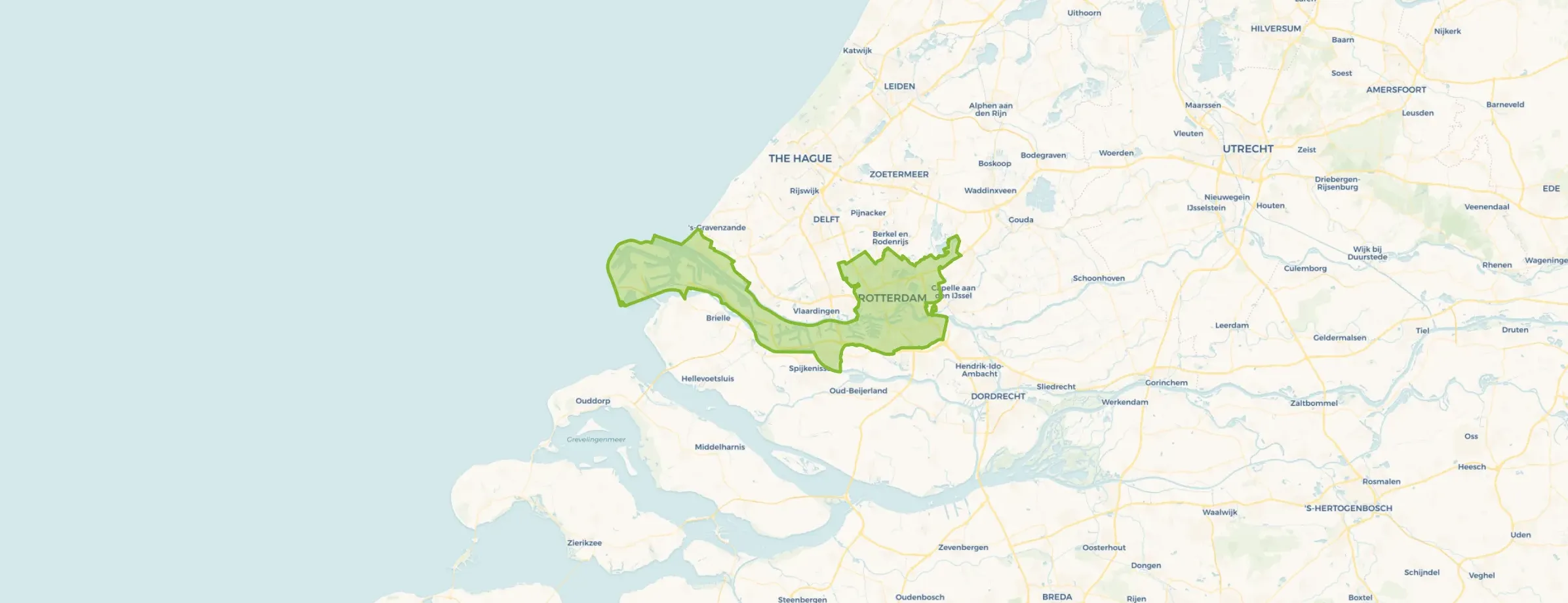



9 homes for sale in De Hoek, Nissewaard
Looking for a home to buy in De Hoek? Check the current supply, average asking price and time to sell right at the top of this page.







Purchase prices in De Hoek: affordable compared to Nissewaard, but rising
The owner-occupied market in De Hoek is relatively modest in size. Of the 1,247 homes in the neighbourhood, 42% are owner-occupied, with the remainder largely consisting of housing association rentals. The average WOZ value is €230,000, which is clearly below the municipal average for Nissewaard (€279,000). However, actual transaction prices are higher: in the past twelve months, owner-occupied homes in De Hoek sold for an average of €368,490, with a range of €335,000 to €425,000 and an average living area of 118 m². These are almost exclusively ground-floor family homes; apartments are hardly found in the supply. The current supply and average asking price can be found at the top of this page.
If you want to buy a home in De Hoek, it is wise to take into account that selling prices are noticeably above the WOZ value. This difference is visible throughout the municipality, but it is relatively large in De Hoek. If you also want to explore elsewhere in the municipality, you can take a look at owner-occupied homes in Nissewaard for a broader picture.
Green scores high, accessibility is a point of attention
Living in De Hoek feels quiet. The neighbourhood lies on the western edge of Spijkenisse, part of the municipality of Nissewaard, and has a clear residential character without much commercial activity. Residents on the neighbourhood page of De Hoek give the area an average of 6.1 out of 10. Green space scores notably high at 9.0: the neighbourhood borders polder areas and has spacious green strips and playgrounds between the homes. This makes it an attractive environment for families with young children. Safety (6.0) and amenities (6.0) are rated as adequate, but accessibility stands out negatively with a score of only 4.0. One resident aptly describes the situation: the peace and green are nice, but without a car you are dependent on limited public transport.
In terms of daily amenities, De Hoek is reasonably self-sufficient for a residential neighbourhood of this size. There are primary schools in the immediate vicinity, which is also reflected in the education score of 7.0. For a supermarket and more extensive shops, the centre of Spijkenisse is within cycling distance. The metro to Rotterdam Central departs from Spijkenisse station, a few minutes' drive or cycle from the neighbourhood. Travellers can reach Rotterdam in about 35 minutes. By car, you connect via the N57 to the regional road network towards Rotterdam and The Hague. Bus connections from the neighbourhood itself are limited, which explains the low accessibility score.
De Hoek consists of several sub-neighbourhoods. If you are looking for an owner-occupied home, you can also look in De Hoek-1 or De Hoek-2, where the supply per neighbourhood may differ in home type and price level. Comparable residential neighbourhoods in Nissewaard with their own character include Vierambachten and Gildenwijk, both of which have a slightly different profile in terms of amenities and accessibility.
For whom is buying in De Hoek a good choice?
De Hoek mainly attracts families with children, and this is reflected in the figures: families with children form the largest household group in the neighbourhood. The spacious green areas and relatively affordable entry price (compared to the rest of the region) make it interesting for movers and young families. First-time buyers can find an owner-occupied home here, but keep in mind additional costs such as transfer tax (2%) and notary fees. The supply is limited and the market is active, so acting quickly pays off. If buying is not feasible now, check out the rental homes in De Hoek as an alternative.
Searching for an owner-occupied home in De Hoek: how to use this overview
Buurtje.nl combines current housing supply with resident reviews and neighbourhood statistics, so you not only search for a home but also get to know the area. Use the filters at the top for price, surface area and energy label. If you want to compare with other neighbourhoods in the municipality, Centrum, Schiekamp and Hoogwerf offer a good reference framework. More about the municipality can be found on the website of Nissewaard.
What is the average price of a home for sale in De Hoek?
In the past twelve months, homes for sale in De Hoek sold for an average of €368,490. The range was from €335,000 to €425,000, with an average living area of 118 m². The WOZ value in the neighbourhood is €230,000, which is lower than the municipal average of Nissewaard (€279,000).
What are the additional costs when buying a home in De Hoek?
In addition to the purchase price, as a buyer you pay transfer tax (2% of the purchase price for existing homes, or 0% if you are a first-time buyer and meet the conditions), notary costs for the deed of transfer and mortgage deed, and possibly estate agent fees. For a home of €368,000, these additional costs quickly add up to €8,000 to €12,000.
What types of homes can you buy in De Hoek?
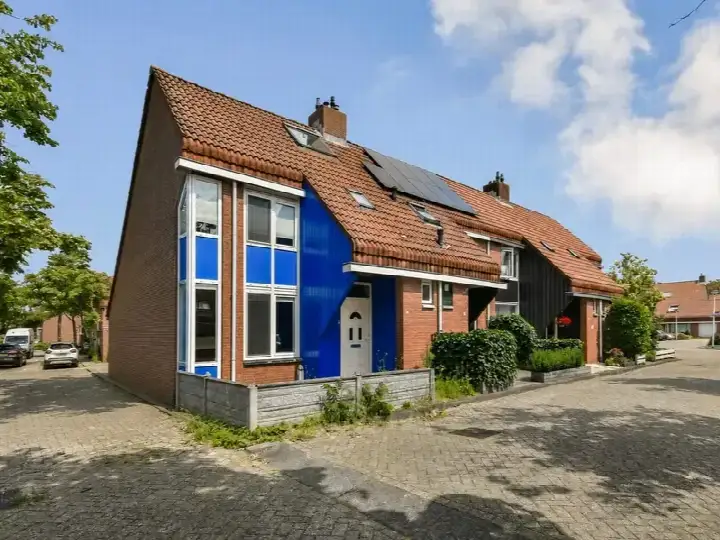
The supply in De Hoek consists almost entirely of ground-floor single-family homes, such as terraced houses and semi-detached houses. Buying an apartment in De Hoek is hardly possible; the supply for that is minimal. The neighbourhood has a typical residential character with spacious gardens and green streets.
How accessible is De Hoek by public transport?
Accessibility is a known point of attention in De Hoek: residents give this a score of 4.0 out of 10. Bus connections from the neighbourhood itself are limited. The nearest metro station is Spijkenisse, a few minutes' bike ride away, from where you reach Rotterdam Central in about 35 minutes. By car, you connect to the regional road network via the N57.
Is De Hoek a suitable neighbourhood for families with children?
Yes, De Hoek attracts relatively many families. Residents appreciate the greenery in the neighbourhood with a high score of 9.0 out of 10, and there are primary schools in the immediate vicinity (education score 7.0). The neighbourhood has a quiet character with playgrounds and polder area nearby, making it attractive for young children.
Quite representative of Spijkenisse I think, noisy, rubbish on the streets, but never boring. More and more community though, which makes it cosy.
Auto-translated to English by AI