Homes for sale in Tussen Dieringer en Radboud, Opmeer
Discover the current supply of homes for sale in Tussen Dieringer en Radboud and view prices, neighbourhood data and resident reviews directly on this page.
House prices and market figures Tussen Dieringer en Radboud, Opmeer
If you are looking for homes for sale in Tussen Dieringer en Radboud, you will find a neighbourhood that is almost entirely owner-occupied: 98% of the 149 homes are owner-occupied, only 2% are rented out via other landlords. There are no social housing units. This says something about the character of the neighbourhood: this is an owner-occupied area, where people have consciously chosen to live.
The average WOZ value is €339,000. That is lower than the average for the district Hoogwoud (€360,000) and also below the municipal average of Opmeer (€369,000). However, the realised sale prices over the past twelve months are significantly higher: an average of €455,000, with a range of €375,000 to €535,000. During that period, 4 homes were sold, with an average living area of 118 m². That works out to a price per square metre of approximately €3,856. These are predominantly detached and semi-detached homes in a rural setting, no apartments. For the current supply and the average asking price at this moment, you can refer to the overview at the top of this page.
Living in Tussen Dieringer en Radboud, Opmeer
Tussen Dieringer en Radboud is not a neighbourhood that stands out for its bustle or amenities within walking distance. It is a quiet, rural strip in the North Holland polder landscape, located between the ribbons of Hoogwoud. The name gives it away: the neighbourhood literally lies between two historic roads or plots, and that feeling of 'in-between' is what you encounter there. Space, tranquillity and a certain sense of privacy.
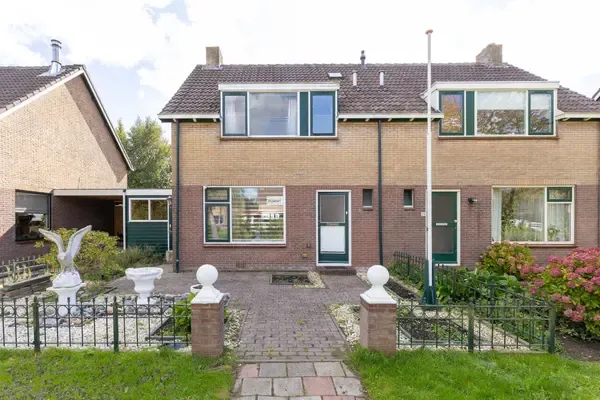
The housing stock largely consists of detached and semi-detached homes, mostly built in the 1980s and 1990s. Large plots, garages, and gardens bordering the open polder landscape are not uncommon here. Buying an apartment in Tussen Dieringer en Radboud is effectively not an option: the neighbourhood is designed for family homes and homes for people seeking space.
The neighbourhood has approximately 335 residents, with a clear concentration in the 45 to 65 age group and also a significant proportion of over-65s. Families with young children are fewer, although there are about 45 children under 15. Most households are without children, and nearly half of the residents are married. That profile fits the atmosphere: it is not a young starter neighbourhood, but an area where people have consciously chosen peace and space.
For daily groceries, you can quickly drive to the centre of Hoogwoud, where a supermarket and small local amenities are available. Primary schools in the area serve children from this neighbourhood, and for secondary education and larger shops, Opmeer or Hoorn is the designated direction. The municipality of Opmeer provides more information about local amenities and municipal services via its website: opmeer.nl.
In terms of accessibility, you are really dependent on the car here. The N243 and N241 are relatively quickly accessible and take you towards Hoorn, Alkmaar or the A7. Public transport is limited: there are bus routes in the region, but the frequency is low and there is no station in the immediate vicinity. If you commute daily to a large city, it is advisable to check travel times in advance.
Residents particularly appreciate the neighbourhood for its peace and space. On the neighbourhood main page of Tussen Dieringer en Radboud you will find all reviews and neighbourhood scores per category. One resident writes: "You really live out here, with views over the land and little traffic. That is exactly why we came to live here." Criticisms usually focus on the limited amenities within walking distance and the dependence on the car for almost everything.
Compared to neighbouring areas such as Langereis or Hoogwoud Centrum, Tussen Dieringer en Radboud is quieter and more self-contained. If you are looking for more liveliness or want to live closer to amenities, you could also look at Graaf Willem or the homes for sale in Hoogwoud as a whole.
Who is a home for sale in Tussen Dieringer en Radboud suitable for?
This neighbourhood best suits movers and people aged 45 and older who consciously choose peace, space and a rural living environment. Starters find it difficult to get a foothold here: with an average sale price of €455,000 and a lower limit of €375,000, a home here is out of reach without substantial equity or high mortgage capacity. Moreover, supply is limited, with only 4 sales in the past year. Overbidding is realistic. If you want to be more flexible or first get to know the neighbourhood, you could also look at rental homes in Tussen Dieringer en Radboud, although that supply is minimal given the low rental percentage.
What residents say about Tussen Dieringer en Radboud
Residents consistently describe the neighbourhood as quiet, green and well-organised. Scores are highest for liveability and living comfort, while amenities and accessibility score lower. That is an honest picture of what the neighbourhood has to offer and what it does not. One resident sums it up: "It is quiet here, the neighbours know each other and you have no trouble from passers-by. But for everything you need to get in the car." View all reviews and the full neighbourhood data on the page of Tussen Dieringer en Radboud.
Compare homes for sale in and around Tussen Dieringer en Radboud
Buurtje.nl bundles supply from more than 1,500 sources and combines that with resident reviews and district data, so you not only find a home but also understand whether the neighbourhood suits you. Want to search more broadly? Also check the supply in surrounding neighbourhoods such as Wester Boekel, Koningspade or Dokter Pool. For an overview of the entire municipality, you can visit homes for sale in Opmeer, or explore districts such as Spanbroek and De Weere as alternatives in the same region.
Frequently asked questions
What does a home cost in Tussen Dieringer en Radboud?
In the past twelve months, 4 homes were sold in Tussen Dieringer en Radboud, with an average purchase price of €455,000. Prices ranged from €375,000 to €535,000. With an average living area of 118 m², the price per square metre comes to approximately €3,856. These are mainly detached and semi-detached homes.
What is the WOZ value in Tussen Dieringer en Radboud?
The average WOZ value in Tussen Dieringer en Radboud is €339,000. This is below the average for the Hoogwoud district (€360,000) and also below the municipal average of Opmeer (€369,000). However, actual sale prices are significantly higher than the WOZ value, indicating an active market with limited supply.
What is it like to live in Tussen Dieringer en Radboud?
Living in Tussen Dieringer en Radboud means peace, space and a rural setting in the North Holland polder landscape. The neighbourhood consists mainly of detached homes on spacious plots, with little traffic and a clear residential environment. Residents appreciate the quietness and social cohesion, but note that you need a car for almost all amenities.
Is Tussen Dieringer en Radboud suitable for families with children?
The neighbourhood has a relatively older population, with the largest group aged 45 to 65 and also many over-65s. Families with young children are less common, although there are some children. Primary schools are accessible in the area, but for secondary education and more amenities you have to rely on Opmeer or Hoorn. This neighbourhood best suits those seeking peace and space, such as downsizers.
How accessible is Tussen Dieringer en Radboud?
Accessibility by car is reasonable: via the N243 and N241 you can reach the A7 towards Hoorn or Alkmaar relatively quickly. Public transport is limited; there are bus routes in the region but the frequency is low and there is no train station in the immediate vicinity. Daily commuting to a large city without a car is impractical here.
What types of homes are for sale in Tussen Dieringer en Radboud?
The supply consists almost exclusively of detached and semi-detached homes. Buying an apartment in Tussen Dieringer en Radboud is not a realistic option; the neighbourhood is designed as an owner-occupied area with spacious single-family homes. Most homes were built in the 1980s and 1990s and have an average living area of around 118 m². With 98% owner-occupied homes, there is hardly any rental supply.
Is there a lot of green space and what is the living environment like in Tussen Dieringer en Radboud?
The neighbourhood borders the open polder landscape of North Holland, providing plenty of greenery and spacious views directly from the home. There are no large parks or recreational areas within walking distance, but the polder nature around the neighbourhood offers ample space for walking and cycling. Residents describe the living environment as quiet and green, with little through traffic.