Homes for sale in Weesperbuurt, Amsterdam
Discover homes for sale in Weesperbuurt and find out, based on current listings, neighbourhood data and resident reviews, whether this Amsterdam neighbourhood suits you.

House prices and market figures Weesperbuurt, Amsterdam
The Weesperbuurt is predominantly a rental neighbourhood: about 70% of the housing stock consists of rental properties, a large part of which is owned by housing associations (28%) and other landlords (41%). Owner-occupied homes make up only 30% of the total, which keeps supply limited and prices firm. Over the past twelve months, 42 homes were sold, with an average purchase price of €641,357. The range runs from €400,000 to €1,150,000, depending on size and location. With an average living area of 71 m², this works out to a price per square metre of approximately €9,034. The WOZ value is €636,000, slightly below the district average of Weesperbuurt/Plantage (€656,000), but well above the Amsterdam average of €517,000. These are almost exclusively apartments, often in pre-war buildings along wide streets and canals. Current asking prices and selling times can be found at the top of this page.
Living in Weesperbuurt, Amsterdam
The Weesperbuurt is nestled between the Amstel river, the Singelgracht and the Plantage, and has an urban but not busy character. It is not a tourist neighbourhood, but neither is it a quiet residential area on the edge of the city. The atmosphere is mixed: young professionals who want to experience the city, but also older residents who have lived here for decades. About 65% of residents have a higher education, and the largest group consists of people between 25 and 45 years old. Single-person households dominate, with 1,400 out of a total of approximately 1,830 homes.
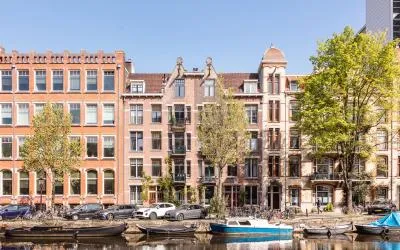
The buildings largely consist of pre-war canal houses and closed building blocks from the late nineteenth and early twentieth centuries, with high ceilings, large windows and narrow stairwells. Along the Weesperzijde, by the Amstel, there are also some more modern residential buildings. Parking is difficult and expensive; the neighbourhood largely falls under paid parking with long waiting times for a permit.
In terms of amenities, the neighbourhood is well provided. Supermarkets such as Albert Heijn are within walking distance, and the Utrechtsestraat with its restaurants, boutiques and daily shops is nearby. Amstelpark and the Hortus Botanicus are attractive green spaces within cycling distance. For primary education, there are schools in the immediate vicinity, including primary schools in the Plantage. Sports facilities can be found along the Amstel and in adjacent neighbourhoods.
Accessibility is a strong point. Weesperplein metro station (lines 51, 53 and 54) is within walking distance and offers quick connections to Amsterdam Central (about 5 minutes) and Schiphol. Tram lines 7 and 14 run through the neighbourhood. By bike, you can reach the centre in ten minutes. The A10 ring road is accessible by car in a few minutes via the Wibautstraat.
Residents appreciate the central location and the mix of tranquillity and urban vibrancy. On the neighbourhood main page of Weesperbuurt you can read all reviews and neighbourhood scores. One resident writes: "You live here in the middle of the city but it is surprisingly quiet. The Amstel around the corner completes it." Criticism often focuses on parking, the bustle on the Wibautstraat and the limited green space directly in the neighbourhood. Compared to neighbouring community Plantage, which feels greener and somewhat quieter, the Weesperbuurt is more urban and busier. The Sarphatistrook and Alexanderplein en omgeving are alternatives within the same district with a slightly different character.
Who is a home for sale in Weesperbuurt interesting for?
Buying in Weesperbuurt is especially attractive for singles and couples without children who want to live centrally and experience the city daily. First-time buyers with a limited budget will find little space here: the average purchase price of over €641,000 and the scarce supply make overbidding more the rule than the exception. Movers with their own capital and a good income are more realistically positioned. The average income in the neighbourhood is €48,900, slightly below the district average of €54,200. Families looking for space should look at neighbourhoods outside the ring. Those who are not yet sure whether buying is the right step can also look at rental properties in Weesperbuurt as an intermediate step. Keep in mind high service costs for VvE apartments and long lead times for bids.
What residents say about the Weesperbuurt
Residents appreciate the neighbourhood especially for its location, accessibility and urban atmosphere without tourist crowds. Points of criticism are parking, the Wibautstraat as a busy traffic artery and the lack of play space for children. One resident sums it up aptly: "Everything Amsterdam has to offer is within cycling distance here, but the neighbourhood itself is surprisingly quiet." View all reviews and sub-scores per category on the overview page of the Weesperbuurt, where residents score on safety, green space, amenities and atmosphere.
Compare homes for sale in and around the Weesperbuurt
Buurtje.nl combines current housing supply from more than 1,500 sources with resident reviews and neighbourhood data, so you not only find a home but also know whether the neighbourhood suits you. Compare the supply in the broader district Weesperbuurt/Plantage or view all homes for sale in Amsterdam for a broader overview. Popular alternatives elsewhere in the city are the Jordaan and the Haarlemmerbuurt. More information about living and residing in Amsterdam can be found on the municipal page, and official information about permits and parking is on the website of the municipality of Amsterdam.
Frequently asked questions
What does a home cost in Weesperbuurt?
Over the past twelve months, the average purchase price in Weesperbuurt was €641,357. The range runs from €400,000 to €1,150,000. With an average living area of 71 m², the average price per square metre is approximately €9,034. When buying in Weesperbuurt, be prepared to overbid, as supply is limited and demand is high.
What is the WOZ value in Weesperbuurt?
The average WOZ value in Weesperbuurt is €636,000. This is slightly below the average for the broader Weesperbuurt/Plantage district (€656,000), but significantly higher than the Amsterdam average of €517,000. The high WOZ value reflects the central location and the quality of the pre-war housing stock.
What is living in Weesperbuurt like?
Living in Weesperbuurt means an urban environment with good accessibility, a mixed population, and a quieter atmosphere than you might expect given its central location. The neighbourhood has a highly educated population, many single-person households, and an active street life along the Amstel and the Utrechtsestraat. Residents appreciate the location but mention parking and the Wibautstraat as drawbacks.
Is Weesperbuurt suitable for first-time buyers?
First-time buyers looking to buy an apartment in Weesperbuurt quickly find themselves in higher price brackets: the average purchase price is above €641,000 and supply is scarce. With 42 sales in twelve months, the market is active but not abundant. First-time buyers with a limited budget would be wise to also consider neighbouring areas or rental properties as an intermediate step.
How accessible is Weesperbuurt?
Weesperbuurt is excellently accessible by public transport. Weesperplein metro station provides direct connections to Amsterdam Central (approximately 5 minutes) and the rest of the city. Tram lines 7 and 14 run through the neighbourhood. By bike, you can reach the centre in ten minutes. By car, the Wibautstraat quickly connects to the A10 ring road. Parking in the neighbourhood itself is limited and falls under paid parking policy.
What type of homes are for sale in Weesperbuurt?
The supply consists almost exclusively of apartments in pre-war buildings, with characteristic high ceilings, large windows, and narrow stairwells. Along the Weesperzijde, some more modern residential buildings can also be found. Ground-level homes are rare. The average living area of sold homes over the past twelve months was 71 m².
Is there a lot of green space in Weesperbuurt?
Direct green space in Weesperbuurt itself is limited. The Amstel forms a green lung on the eastern side of the neighbourhood, and the Hortus Botanicus is within walking distance. Those looking for more park and play space are better off in the adjacent Plantage or along the Sarphatipark. Residents mention the lack of play space for children as one of the neighbourhood's drawbacks.