Municipality in Zuid-Holland
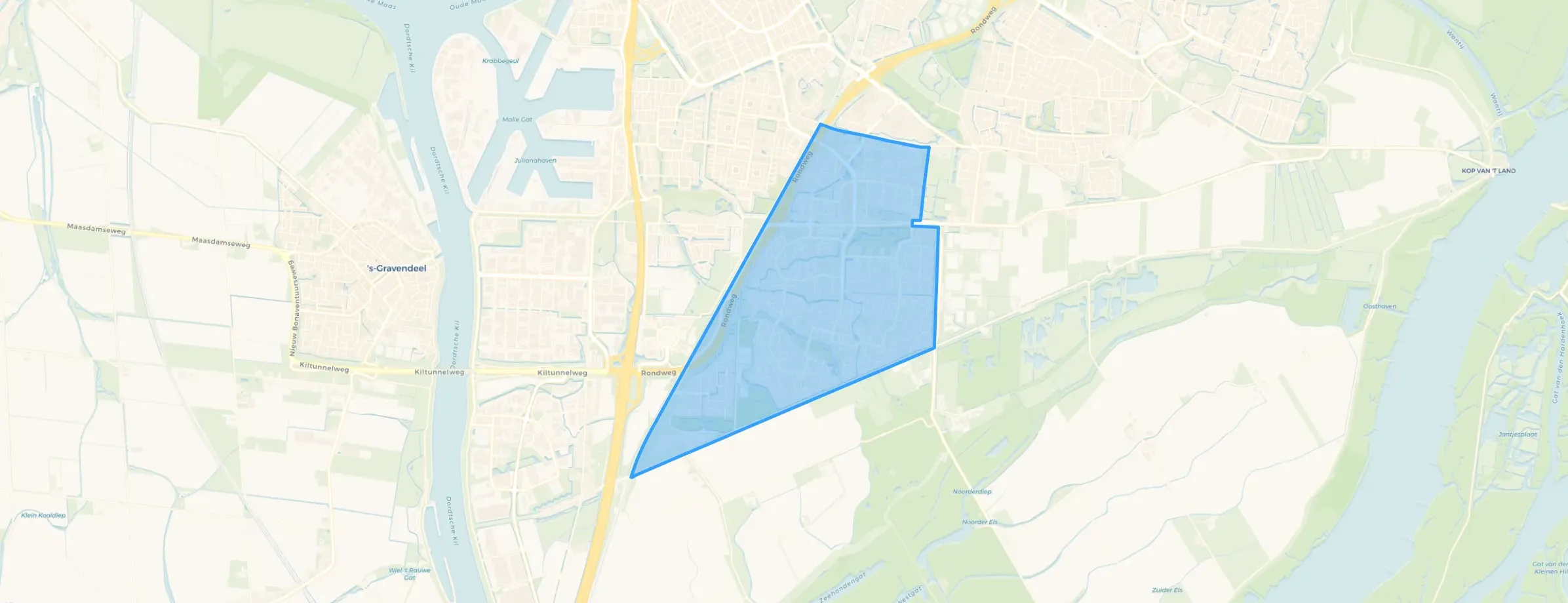
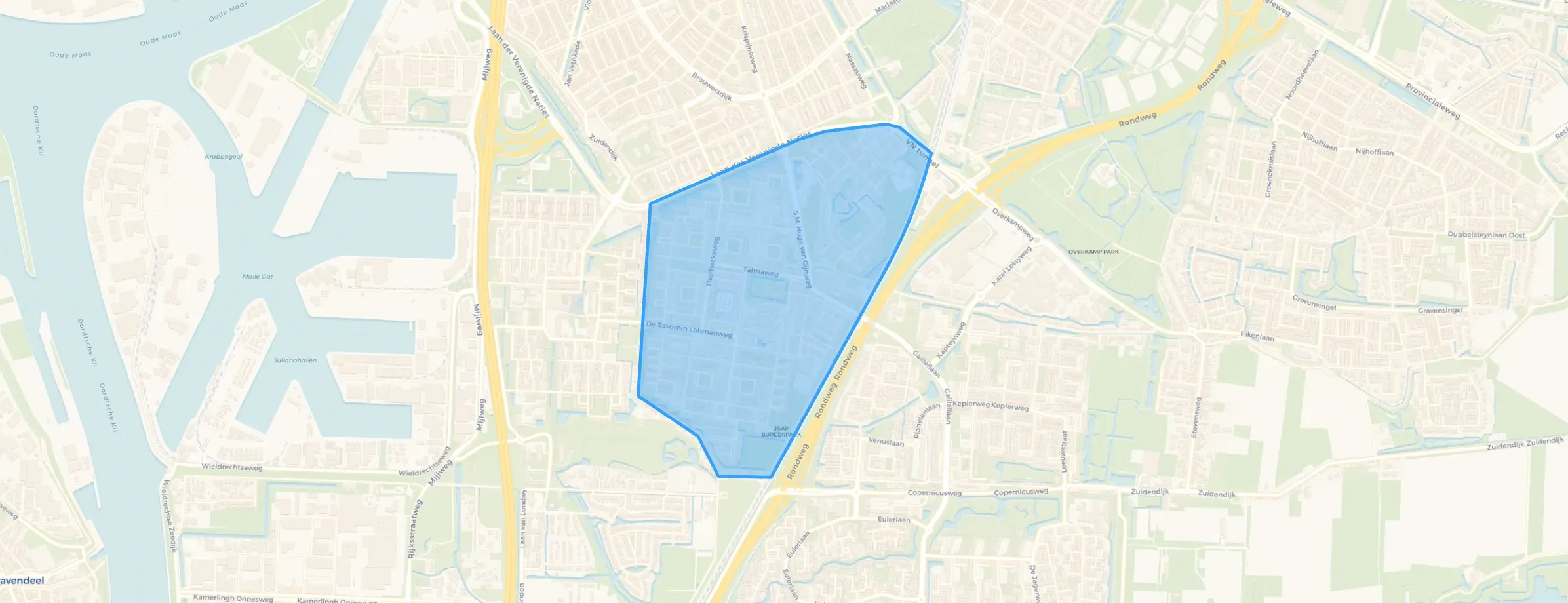
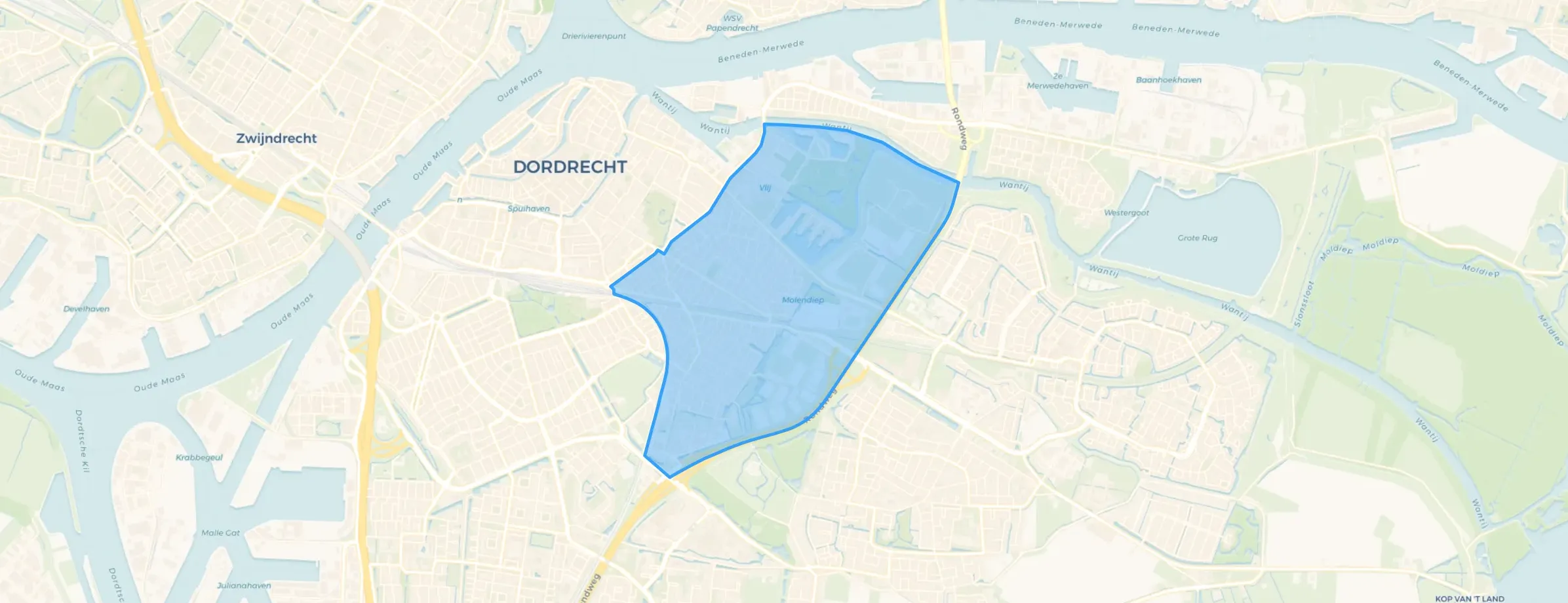
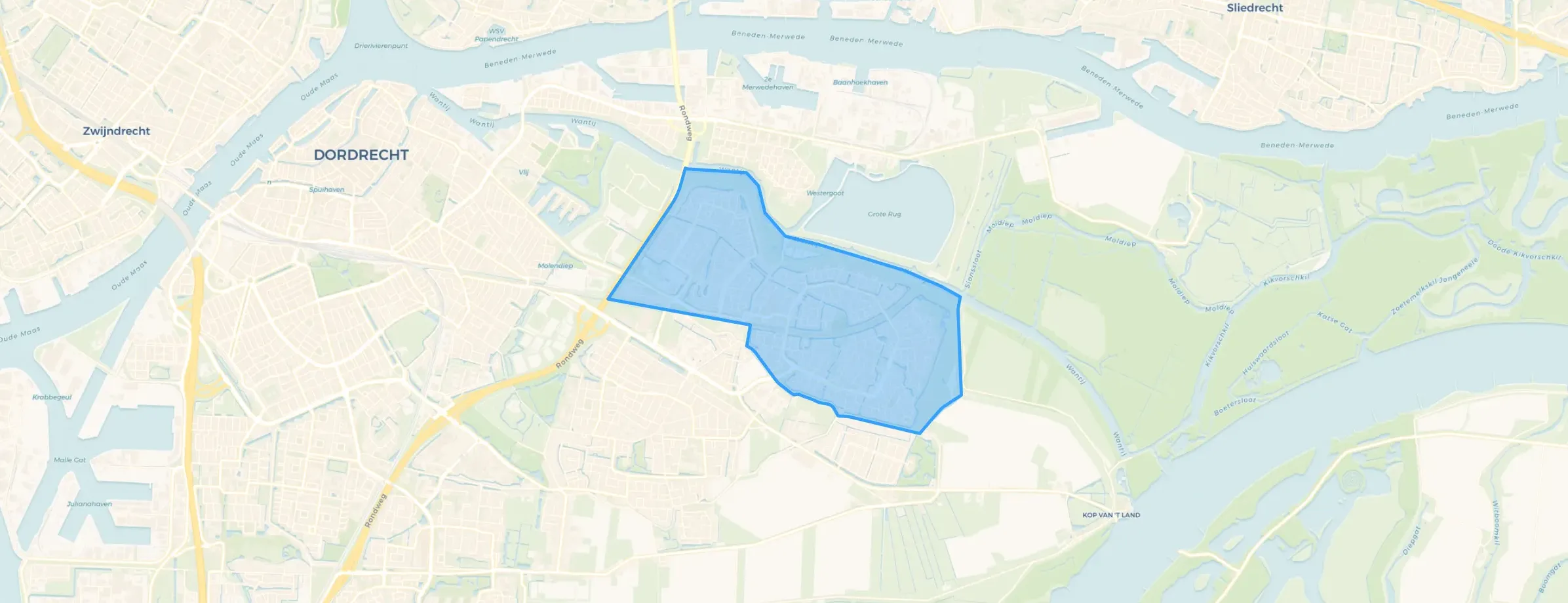
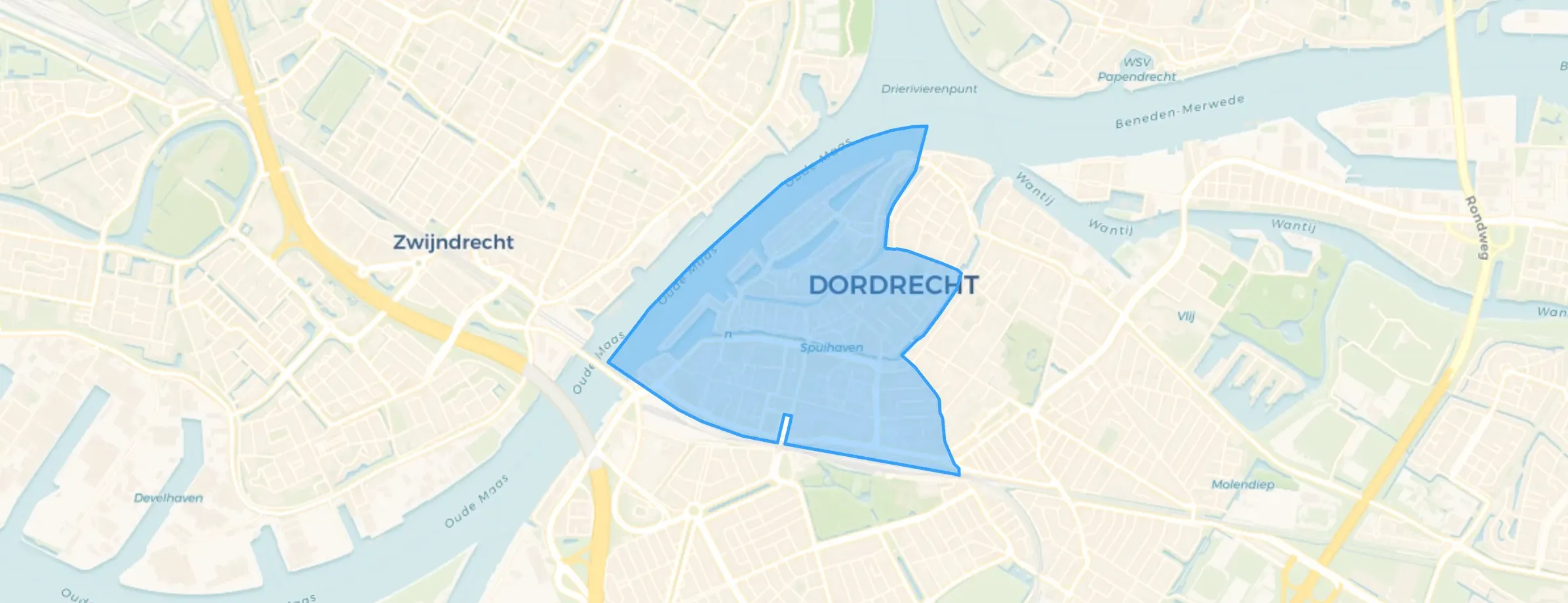
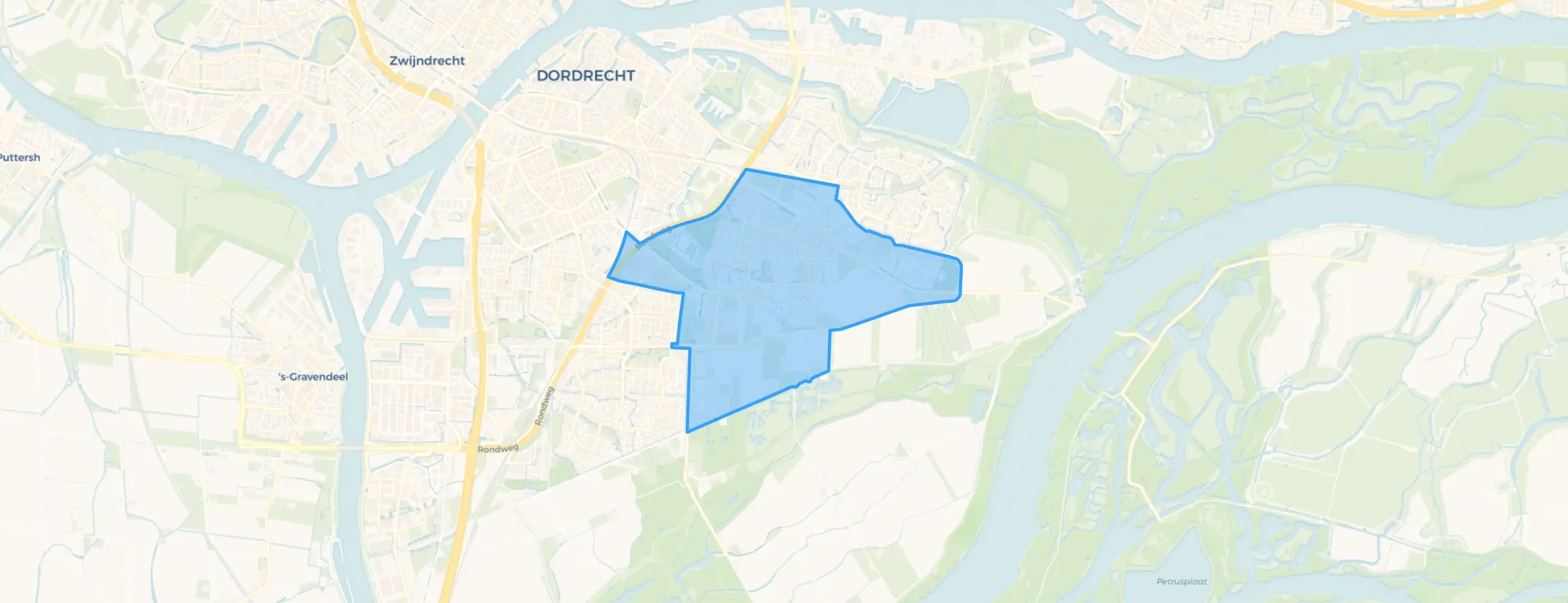
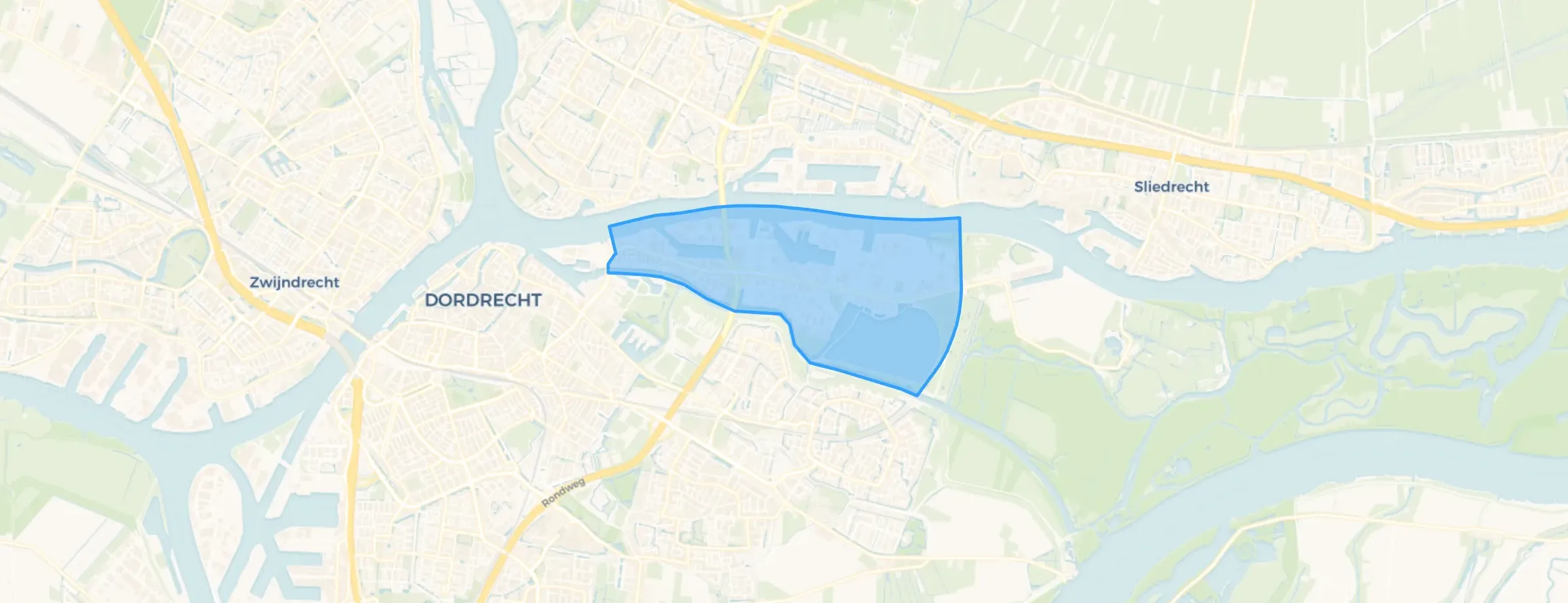
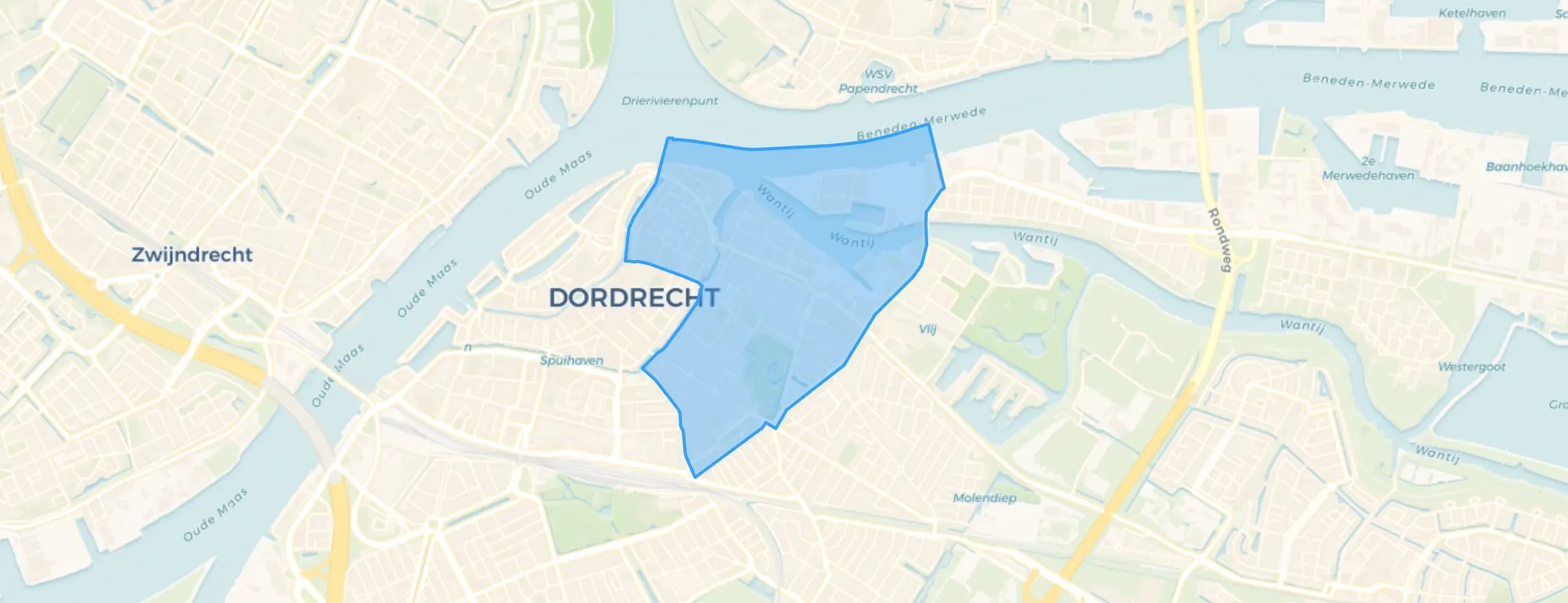
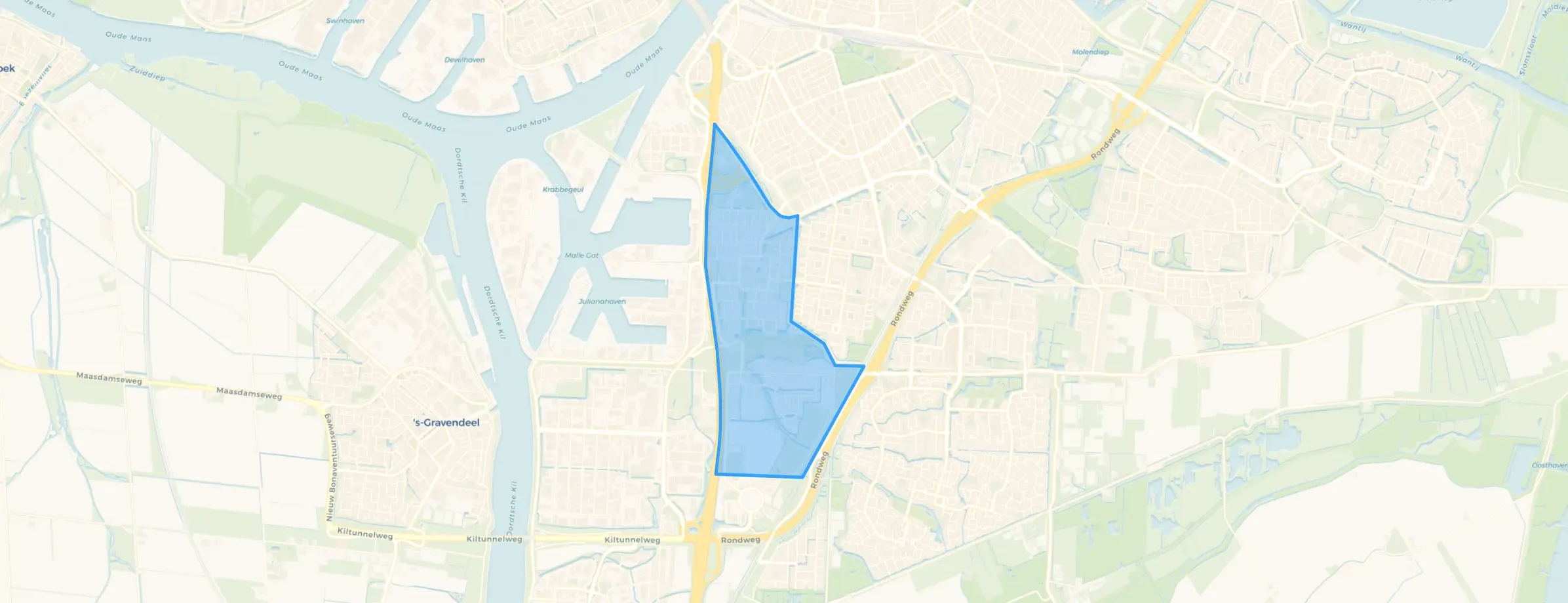
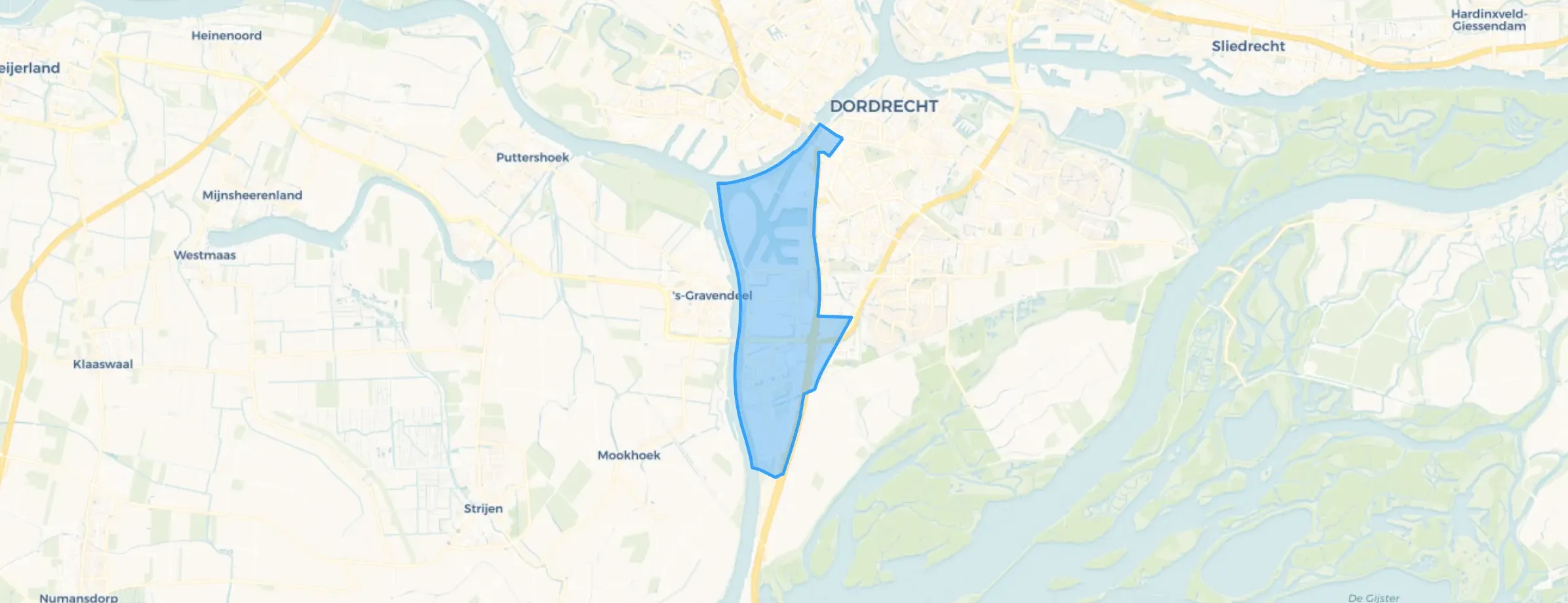
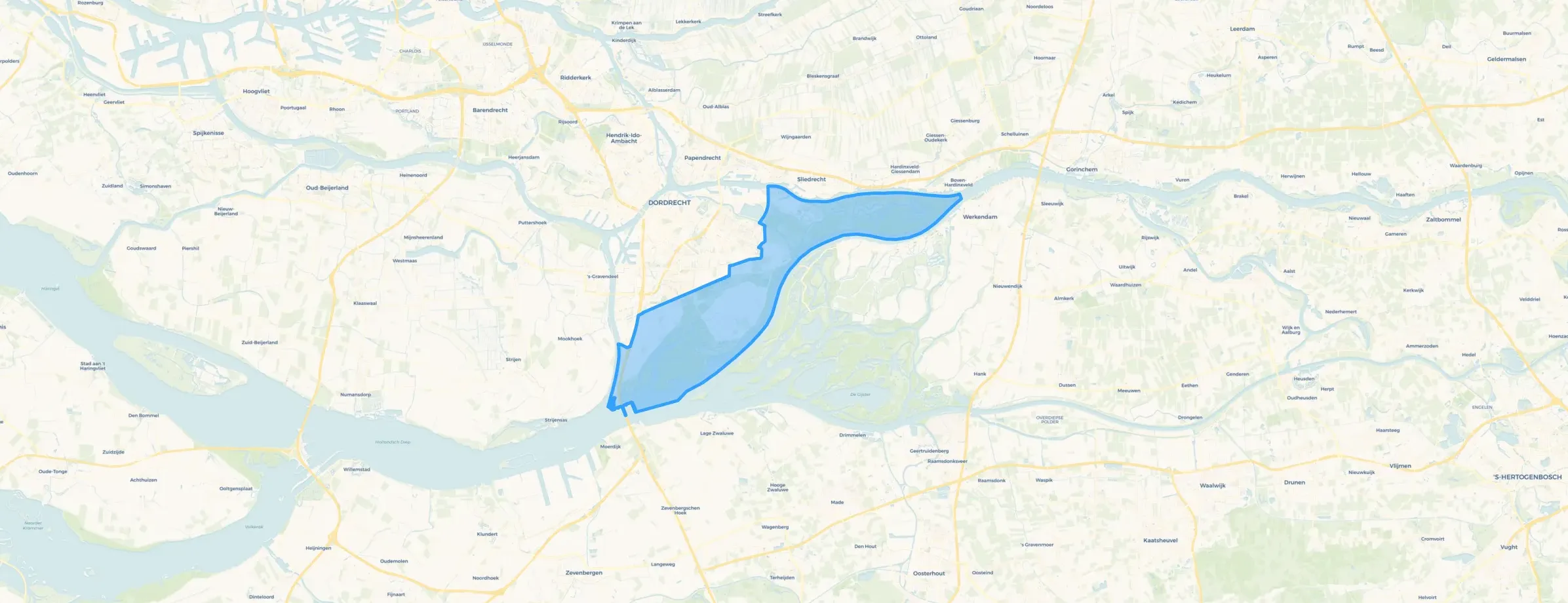
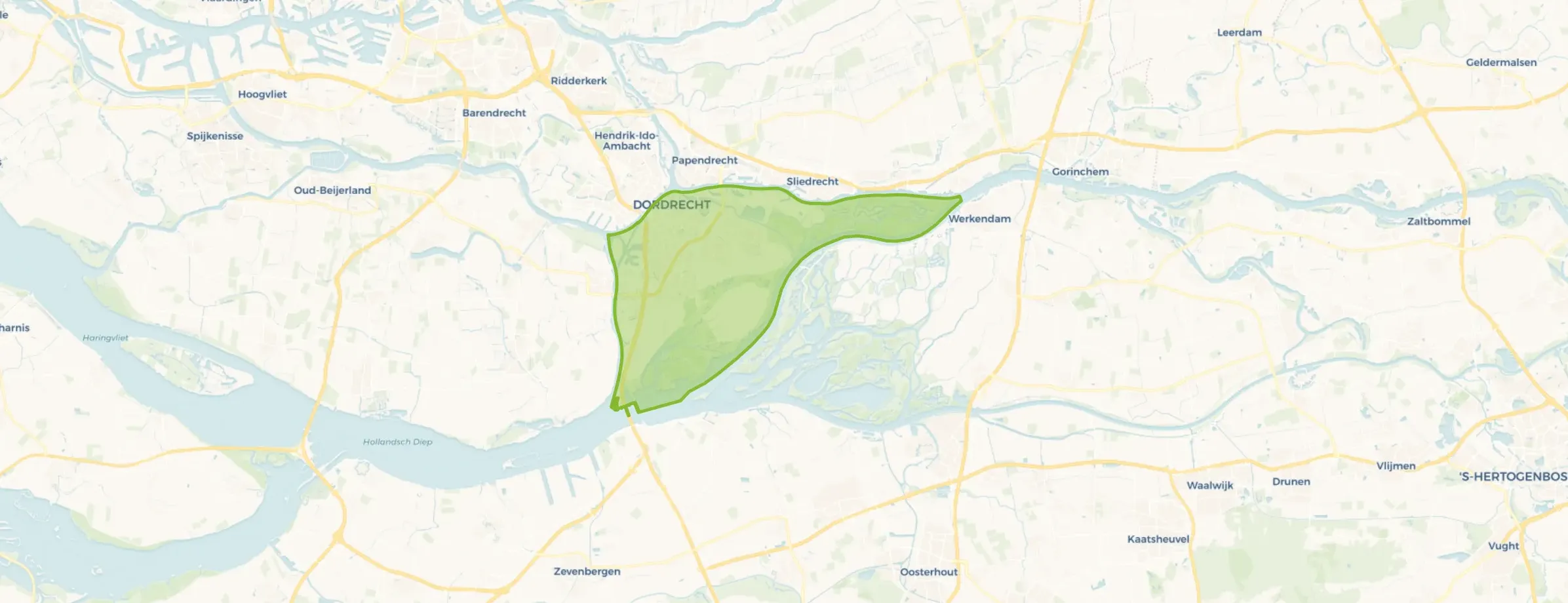
Dordrecht is located in the province of Zuid-Holland The municipality has a total area of 9.947 hectares, of which 7.756 hectares are land and 2.191 hectares are water. The municipality is coded as GM0505. The postcode area is 3311AA-3329LR.
Dordrecht has 122.070 residents. Of these, 49,6% are men and 50,4% are women. Most residents are 45 to 65 years (26,8%). The other age groups are 26,5% for '25 to 45 years', 20,0% for '65 years or older', 15,2% for '0 to 15 years' and 11,5% for '15 to 25 years'. Of the residents, 49,0% is unmarried, 37,2% is married, 8,9% is divorced and 4,9% is widowed. 80.488 residents originate from the Netherlands, 12.111 come from Europe and 29.471 come from countries outside Europe.
There are 57.353 households in Dordrecht. 40,8% of these are single-person households, 26,8% households without children and 32,4% households with children. The average household size is 2,1 persons.
In Dordrecht there are 95.700 income recipients. The average income per income recipient is €36.500, which is €700 (2%) higher than the national average of €35.800. Per resident, the average income is €29.900, which is €700 (2%) higher than the national average of €29.200. Most residents of Dordrecht are educated to an intermediate level. 42,6% have an intermediate education (HAVO, VWO or MBO 2-4), 29,4% have a lower education (VMBO or MBO 1) and 28,0% have a university or higher professional education (HBO/WO).
Of the 122.070 residents, around 63% are in paid employment, which amounts to 76.904 people. This is 2% lower than the national average of 65%. The majority of workers are in salaried employment (85%), while 15% are self-employed. In Dordrecht, 27% of residents receive a benefit. The largest group is those receiving a state pension (AOW). 21.630 people receive this benefit.
In Dordrecht there are 56.596 homes with an average assessed value (WOZ) of €296.000. Of these, around 95% are occupied and 5% unoccupied. Most homes are owner-occupied. This amounts to 42% rental homes and 58% owner-occupied homes. Of the homes, 58% privately owned, 28% owned by housing associations and 14% owned by other landlords. The most common construction periods in Dordrecht are 1950-1970 (24%) and 1970-1980 (16%).
There are currently no homes for sale in Dordrecht. The most recently listed home is Vondelstraat 63 by De Huizenbemiddelaar Dordrecht op Vastgoed Nederland. No homes were sold in Dordrecht over the past year.
There are currently no homes for rent in Dordrecht. The most recent home is Wijnstraat 213, offered by Verhuurmakelaar Hsiang op Funda. No homes were let in Dordrecht over the past year.
No recent rental data available for Dordrecht.
In Dordrecht there are 59.257 addresses with a registered energy label. The most common labels are C (27%), A (18%) and B (16%). On average, an address in Dordrecht uses 2.510 kWh of electricity per year. This is 11% below the national average of 2.810 kWh. With an annual consumption of 880 m³ per address, natural gas consumption is 31% below the national average of 1.280 m³.
Social residents who are there for each other. The children have plenty of playgrounds, supermarket nearby and affordable homes. Few bad tenants so little nuisance. Nature and Wantij within a stone's throw. Couldn't be better.
Auto-translated to English by AIIn itself a nice place to live with many amenities and good accessibility. But there is litter and dog poop everywhere, making it very grimy.
Auto-translated to English by AIMany homeless people in this neighbourhood.
Auto-translated to English by AIPeople get along well with each other and also look out for one another
Auto-translated to English by AIBeautiful walking area along the river the Wantij on the Maasstraat. Supermarket and primary school within walking distance. The community centre with the adjacent playground looks shabby, especially because of the old pole with satellite dishes, and there is also a very outdated asphalt square next to the community centre, which gives a desolate impression when you first enter the neighbourhood. That is a shame and gives a wrong impression of the cosy and beautiful neighbourhood. The renovated houses in the adjacent Noorderkwartier are of a beautiful architectural style from the 1920s and 1930s. Most people still say hello to each other here, as if you live in a village, especially the older residents who like to chat create a cosy and friendly atmosphere.
Auto-translated to English by AICentre so very accessible for young and old
Auto-translated to English by AIMy neighbourhood is often dismissed by outsiders as a deprived area. That word alone conjures up images of problems, statistics and stigma. But those who actually live here know that the story is much more layered than that. The flats and terraced houses are not new, sometimes even a bit worn. Stairwells bear the marks of years of use and in some places maintenance leaves something to be desired. Yet people live here who do their best every day to make something of it. Families who have lived on the same street for generations, young people playing football on the square until it gets dark, and elderly people watching everything from their balcony, missing nothing. You hear multiple languages mixed together here. Not because people live alongside each other, but because the neighbourhood is a mix of cultures, backgrounds and stories. Sometimes it clashes, sometimes it rubs, but often a form of togetherness emerges that you see less in 'nicer' neighbourhoods. Everyone knows who lives on the street, who needs help and who you'd better avoid. There are problems too. That cannot be denied. Unemployment, money worries and occasional nuisance are part of daily life. Police and enforcement patrol the area more often than in other neighbourhoods. But that doesn't mean there are no norms or values here. Calling each other out on behaviour doesn't always happen by the book.
Auto-translated to English by AII don't know everyone in my neighbourhood but most are friendly. The neighbourhood is close to the central station and close to the city centre, there is also a park and a dog park nearby. There is a special primary school at the end of the street. They organise something fun every year for Halloween. It is safe, almost nothing ever happens.
Auto-translated to English by AI
The most common type is flats (44%).
Over the past year a home for sale in Dordrecht was listed for an average of €411,844 (€3,874 per m²).
A rental home in Dordrecht cost an average of €1,672 per month (€19 per m²).
Residents give Dordrecht a 7.8 out of 10 based on 45 reviews. Especially safety (8.4) scores well; cleanliness (7.3) receives the lowest rating.
From Dordrecht you can on average reach a supermarket at 0.7 km, a GP at 0.9 km, a railway station at 1.9 km, a primary school at 0.7 km (as the crow flies, source: CBS).
Right now you will find 559 homes for sale and 44 homes for rent in Dordrecht.

Buurtje.nl uses cookies to make the site work and to improve it. In doing so, we process data such as your IP address and the pages you visit.
We use this data for three purposes: running the website (functional), measuring visits so we can improve Buurtje.nl (analytics), and — if you allow it — tailoring ads to your interests (marketing).
How we handle your data is described in our privacy policy. You can change your preferences at any time via 'Cookie preferences' at the bottom of every page.
Choose per category which cookies we may place. Read more in our privacy policy.