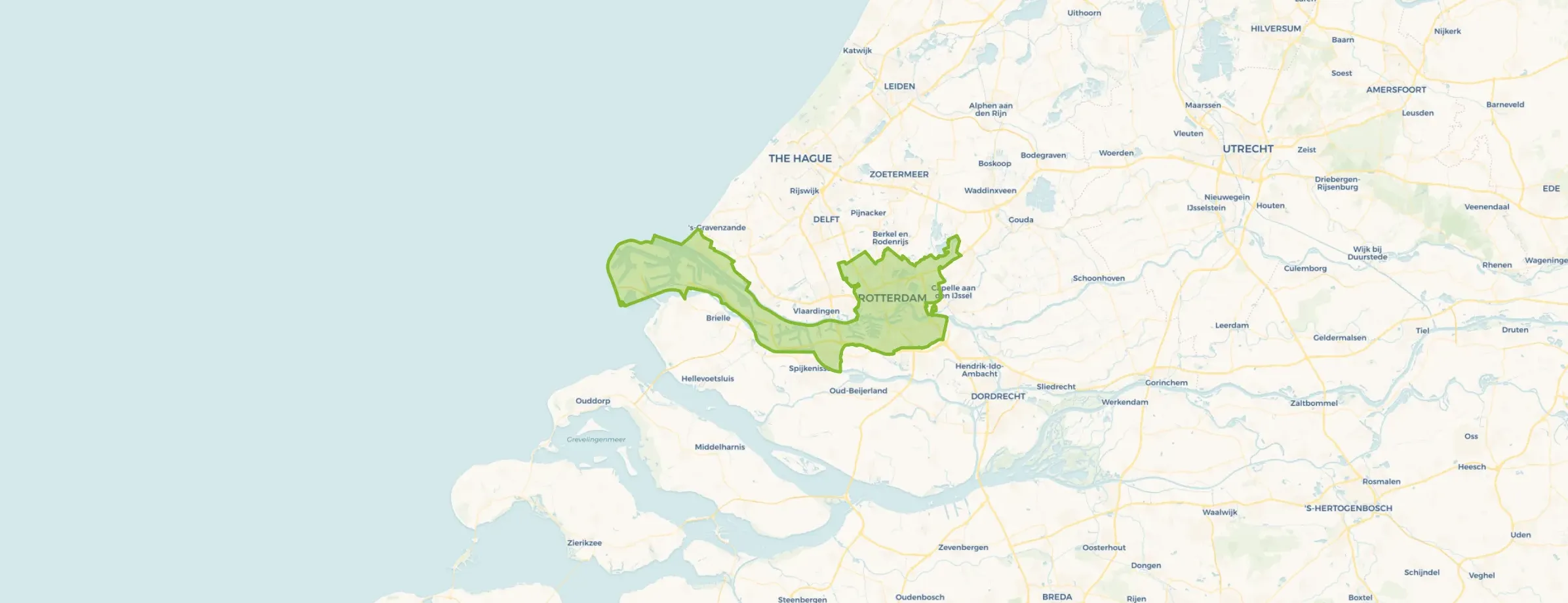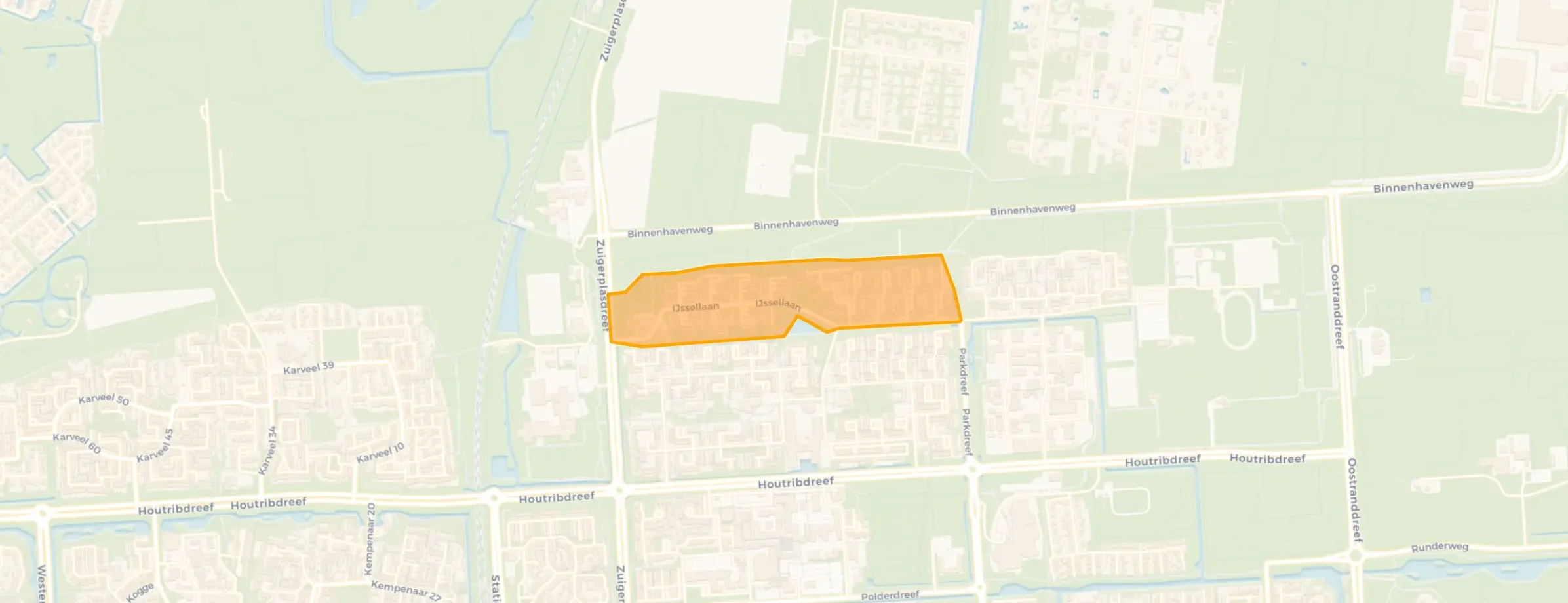
IJssellaan is located in the province of Flevoland, in the municipality of Lelystad, in the district Zuiderzeewijk. The neighbourhood has a total area of 20 hectares, of which 20 hectares are land and 0 hectares are water. The neighbourhood is coded as BU09950112. The postcode area is 8223DA-8223EB.
Two residents rate the neighbourhood as mediocre with a score of 4.9. They describe it as 'Going downhill fast!' and 'Neither good nor bad'. Based on a limited number of reviews, no clear trends are visible yet in this neighbourhood.
IJssellaan has 1.060 residents. Of these, 51,9% are men and 47,6% are women. Most residents are 25 to 45 years (30,2%). The other age groups are 24,1% for '45 to 65 years', 19,8% for '0 to 15 years', 15,1% for '15 to 25 years' and 11,3% for '65 years or older'. Of the residents, 59,4% is unmarried, 29,7% is married, 8,5% is divorced and 2,4% is widowed. 465 residents originate from the Netherlands, 120 come from Europe and 470 come from countries outside Europe.
There are 455 households in IJssellaan. 38,5% of these are single-person households, 20,9% households without children and 40,7% households with children. The average household size is 2,3 persons. The national average is 2,1 persons.
In IJssellaan there are 800 income recipients. The average income per income recipient is €30.000, which is €12.200 (29%) lower than the national average of €42.200. Per resident, the average income is €23.000, which is €11.900 (34%) lower than the national average of €34.900. Most residents of IJssellaan are educated to a lower level. 53,1% have a lower education (VMBO or MBO 1), 37,0% have an intermediate education (HAVO, VWO or MBO 2-4) and 9,9% have a university or higher professional education (HBO/WO).
Of the 1.060 residents, around 65% are in paid employment, which amounts to 689 people. This is 7% lower than the national average of 72%. The majority of workers are in salaried employment (87%), while 13% are self-employed. In IJssellaan, 24% of residents receive a benefit. The largest group is those receiving a state pension (AOW). 110 people receive this benefit.
In IJssellaan there are 402 homes with an average assessed value (WOZ) of €282.000. Of these, around 97% are occupied and 3% unoccupied. Most homes are owner-occupied. This amounts to 43% rental homes and 57% owner-occupied homes. Of the homes, 58% privately owned, 33% owned by housing associations and 9% owned by other landlords. The most common construction periods in IJssellaan are 1970-1980 (93%) and 2010-2020 (6%).
There are currently 2 homes for sale in IJssellaan. The most recently listed home is Ganzendiep 29 by De Boer Makelaardij en Assurantien Flevoland B.V.. Over the past year, 12 homes were sold in IJssellaan. On average, a home was sold within 51 days.
The average asking price for a home for sale in IJssellaan over the past year was €331.958. This is 18% higher than the average assessed value (WOZ) of €282.000. The average asking price per m² of floor area is €2.938.
There are currently no homes for rent in IJssellaan. No homes were let in IJssellaan over the past year.
No recent rental data available for IJssellaan.
In IJssellaan there are 255 addresses with a registered energy label. The most common labels are A (43%), C (30%) and B (17%). On average, an address in IJssellaan uses 2.590 kWh of electricity per year. This is 2% above the national average of 2.550 kWh. Natural gas consumption, at 910 m³ per year, is 14% above the national average of 800 m³.
Cars are increasingly double-parked. Ambulance or fire brigade can't reach us at the back of the street. Dustbins sometimes aren't emptied. Lots of litter on the street. Many labour migrants. Right next to us, 5 Poles. Enforcement says they know they're not allowed to live there but they can't just put them on the street. But we mainly suffer a lot of nuisance from these guys in summer. We can't buy another house ourselves, otherwise we'd have left already!
Auto-translated to English by AIThere are many different kinds of people in this neighbourhood from different cultures. That makes it nice on the one hand. But you also have young people here who act tough towards people older than them and they say yeah we'll stop but in the end it keeps going no matter what you do. There's also not much for young people to do in this neighbourhood; there should be more so that the young people have something to do in the Zuiderzeewijk in Lelystad. There's a park area here at the back and it's very nice to take a walk there. The cars drive too fast and I think enforcement should check more often in this neighbourhood or that the neighbourhood police officer should patrol more. And the maintenance of the houses could also be better. And there's often rubbish on the street and that should be reduced or should stop altogether.
Auto-translated to English by AIThe housing stock is mainly post-war — 74% was built between 1945 and 1990. In addition, the most common type is terraced houses (72%).
Over the past year a home for sale in IJssellaan was listed for an average of €389,717 (€3,212 per m²). That is 25% below the Dutch national average.
Buurt IJssellaan has 1,060 residents. The largest age group is 25 to 45 years (30%). Many families: 41% of the households have children.
The housing supply in IJssellaan is remarkably efficient: 52% has an A, A+ or B label. The average natural gas consumption per household is 910 m³ per year.
From IJssellaan you can on average reach a supermarket at 1.4 km, a GP at 1.3 km, a railway station at 3.0 km, a primary school at 0.9 km (as the crow flies, source: CBS).