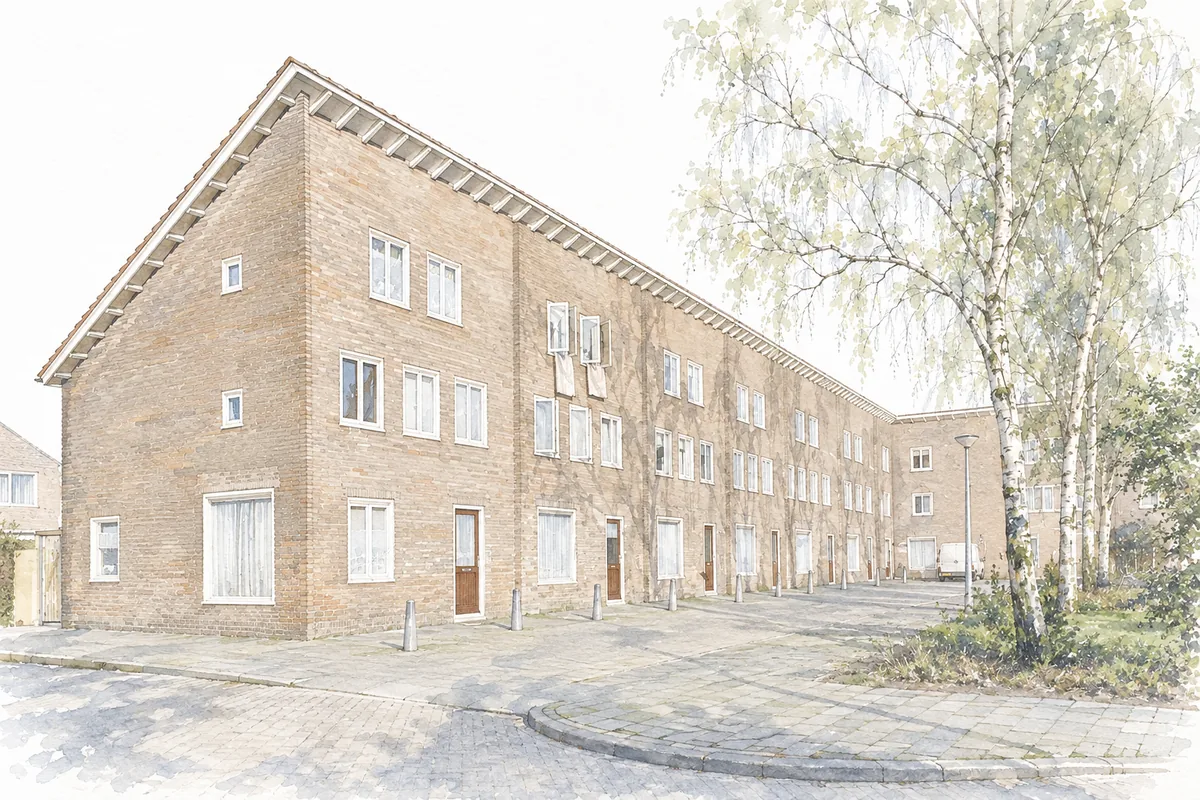



A bay window, stained glass above the front door, a long back garden and a staircase with a turn in it. For a lot of buyers in the Netherlands, a house from the 1930s is the house they really want. You can see that in the asking price. And once you live there, the costs often keep coming after the deed is signed.
We looked at our own current listings for sale: every home built between 1920 and 1940 (what Dutch buyers and estate agents usually mean by a "jaren 30" house) compared with homes from later decades. Two caveats first. These are asking prices, not what buyers end up paying. And an average says nothing about one particular house: some 1930s homes have been renovated from roof to floor, others have seen little since 1935.
How many 1930s homes are for sale?
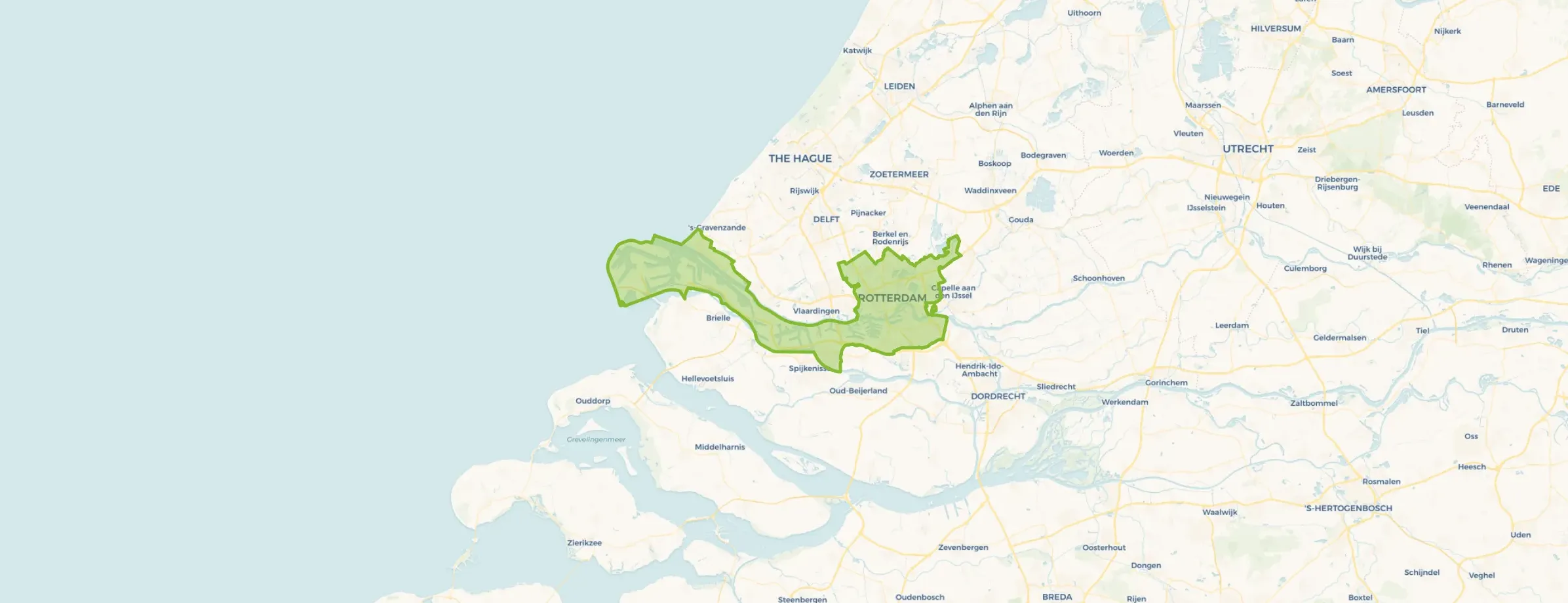
Just over one in eight homes for sale in our listings dates from 1920 to 1940: around 6,400 houses and 4,600 flats (upper and lower flats, walk-up blocks). In some cities the share is far higher. In The Hague one in three homes for sale is from this period and in Rotterdam more than a quarter, though most of those are flats. If you want a whole house from that era, the most choice is in cities such as Haarlem, Tilburg, Eindhoven and Apeldoorn.
You pay more per square metre
A 1930s house is not bigger than a terraced house from the 1970s or 1980s: the median is about 130 m² for both. Even so, the asking price per square metre is clearly higher.
| Built (houses) | Median asking price | Per m² | Label E, F or G |
|---|---|---|---|
| 1920 to 1940 | €525,000 | €4,200 | 36% |
| 1946 to 1970 | €450,000 | €3,790 | 23% |
| 1971 to 1990 | €460,000 | €3,630 | 3% |
| 1991 to 2010 | €550,000 | €3,960 | 0% |
The gap is widest for the ordinary terraced house. A mid-terrace home from the 1930s asks a median €4,320 per m², one from 1971 to 1990 €3,600. That is about 20 percent more, for a house that is on average slightly smaller (113 versus 120 m²). For detached houses there is hardly any difference with the early post-war villas: there the plot matters more than the year of construction.
Part of the premium is location. 1930s neighbourhoods usually sit just outside the old town centre, closer to the centre and the station than the later suburbs. But even within one city the differences are large:
- Groningen: 1930s houses about 37% more per m² than houses from 1971 to 1990
- Apeldoorn: about 36% more
- Arnhem and Haarlem: over 25% more
- Alkmaar, The Hague, Rotterdam and Eindhoven: between 18 and 23% more
In a few cities the premium disappears. In Tilburg, Enschede, Dordrecht and Maastricht, a house from between the wars asks roughly the same per m² as one from the 1970s or 1980s. Search there and you get the character without the surcharge.
The energy label: expect work
More than a third of the 1930s houses in our listings have an energy label of E, F or G. For houses from 1971 to 1990 it is 3 percent. The most common label is C (28%), followed by D (19%). One in ten has an A label: those are the homes that have already been thoroughly upgraded, and you find them at the top of the price range.
What estate agents say about insulation fits that picture. Of the 1930s houses where we have that information, almost 80 percent mention double glazing, over half roof insulation, 40 percent wall insulation and a third floor insulation. Only 6 percent are described as fully insulated. So the glazing has often been done. The floor and walls usually have not.
Whether the walls can be insulated depends on how the facade was built. Have a surveyor or insulation firm look at it, ideally before you make an offer. In some cases you can borrow extra on your mortgage for that work; see borrowing extra for an energy-efficient home. What the label tells you beyond that is covered in the energy label when buying or selling.
The foundations: more often a question than with newer homes
Every address on Buurtje.nl shows a foundation indication: low, medium or elevated. It is an estimate based on construction year, soil and groundwater, not an inspection of the house itself. Still, the difference between building periods is striking. Of the 1930s homes in our listings, 12 percent are marked elevated and half medium. For homes from 1971 to 1990 almost everything is low.
The reason is that houses built before 1970 on clay or peat often stand on wooden piles or on no piles at all. When groundwater drops, that can cause problems. If the indication is elevated, ask the seller whether a foundation survey has ever been done, and look for cracks above windows and doors and for doors that stick. More in foundation risk when buying a house.
Three extra checks for a house of this age
Lead water pipes
According to the Dutch government, only homes built before 1960 can still have lead pipes in use, so a 1930s house always falls into that group. Even if the visible pipes have been replaced, sections may remain under the floor or inside walls. You can have the tap water tested for lead, which the government says costs about €50. Replacing pipes from the water meter into the house is the owner's job, which after the sale means yours.
Asbestos
Materials made before 1994 may contain asbestos, the government notes. In a 1930s house it is usually not in the original building but in later additions: a shed or garage with corrugated sheets, old floor covering, a stove, boards behind a radiator. As long as it stays intact the risk is small. If you are going to break, saw or drill, have it checked first.
Wiring and heating
Look in the fuse box at how many circuits there are and whether there is a residual current device. In a house ninety years old the wiring has often been renewed in parts, and not always neatly. A building survey costs money, but for a house of this age it is money well spent. What you can check yourself during a viewing is in our viewing checklist.
Is it worth it?
That is not just a sum. A 1930s house often has higher ceilings, a garden of decent depth and a street with trees that have stood for eighty years. People happily pay for that, and they will again when you sell. But add to the asking price what it will cost to make it comfortable and efficient. With an F or G label and only double glazing that can add up, and that figure belongs in your offer, not in a surprise after you get the keys.
Searching yourself? On Buurtje.nl every home shows its construction year, energy label and foundation indication, and the neighbourhood page shows how residents rate their area. Browse homes for sale across the Netherlands or set up a saved search so a new 1930s house in your city lands in your inbox straight away.