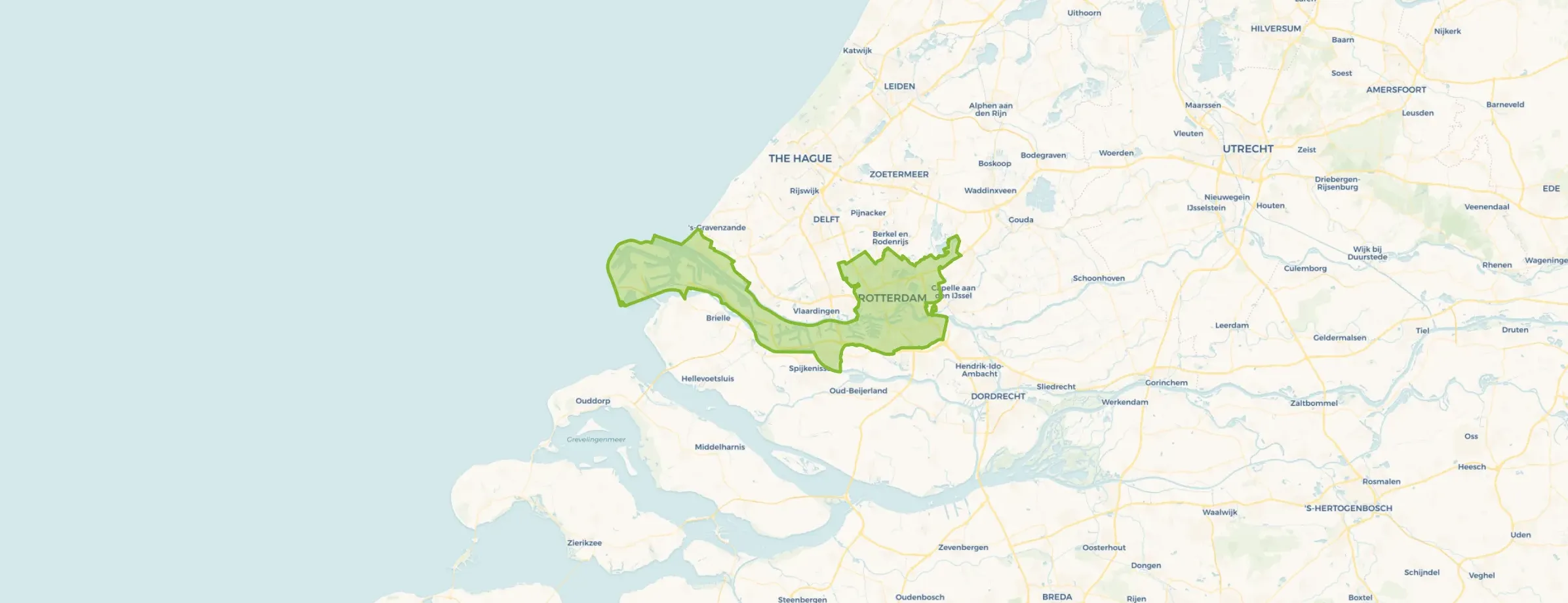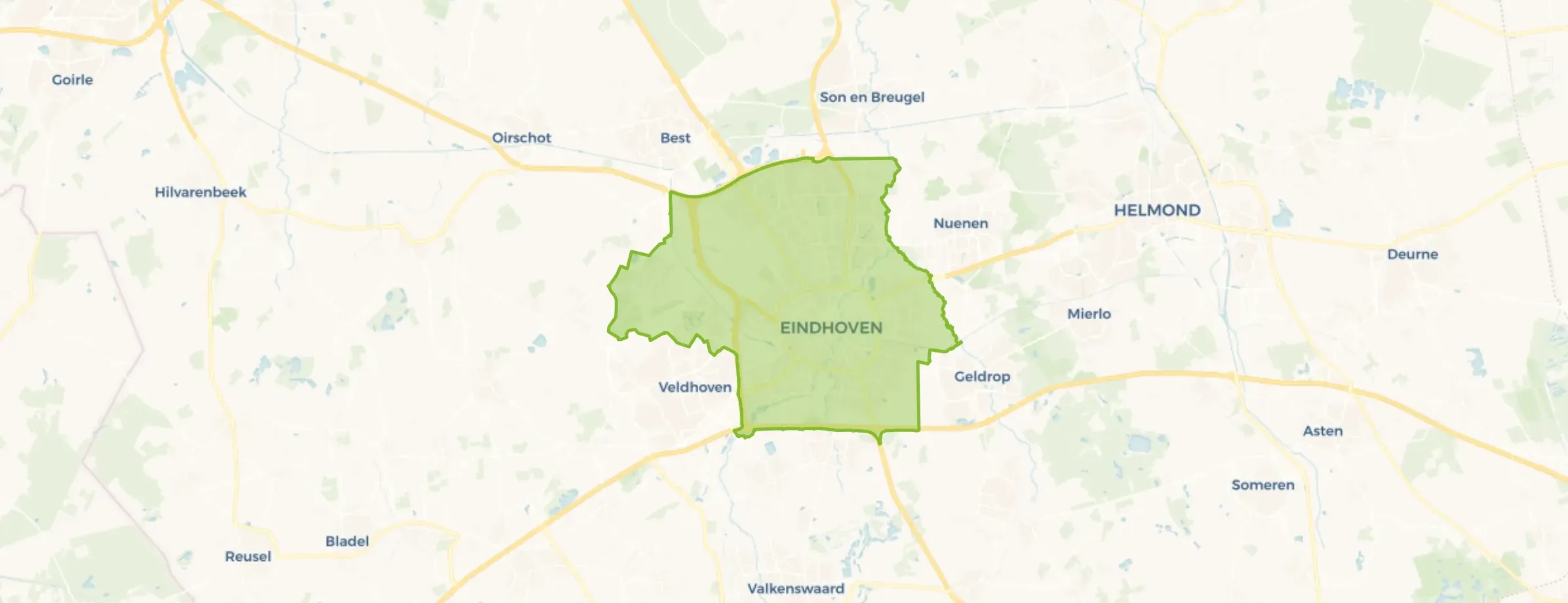
District in Horst aan de Maas
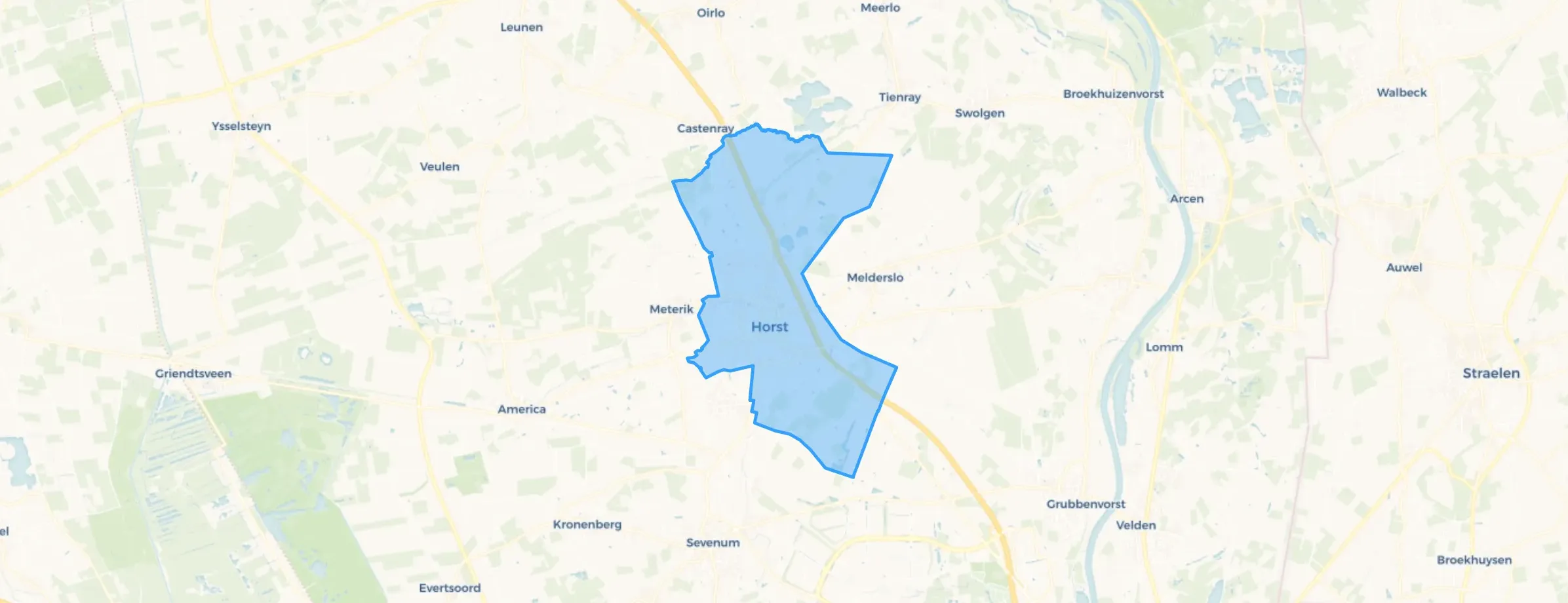
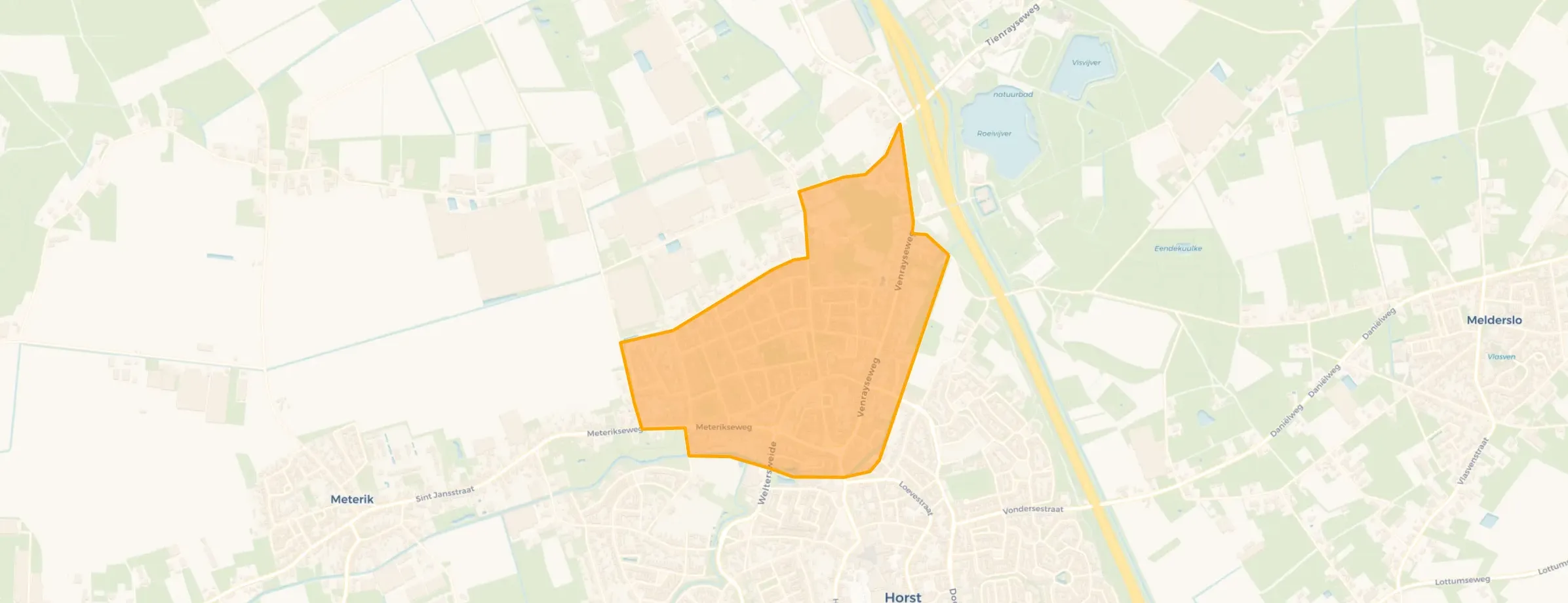
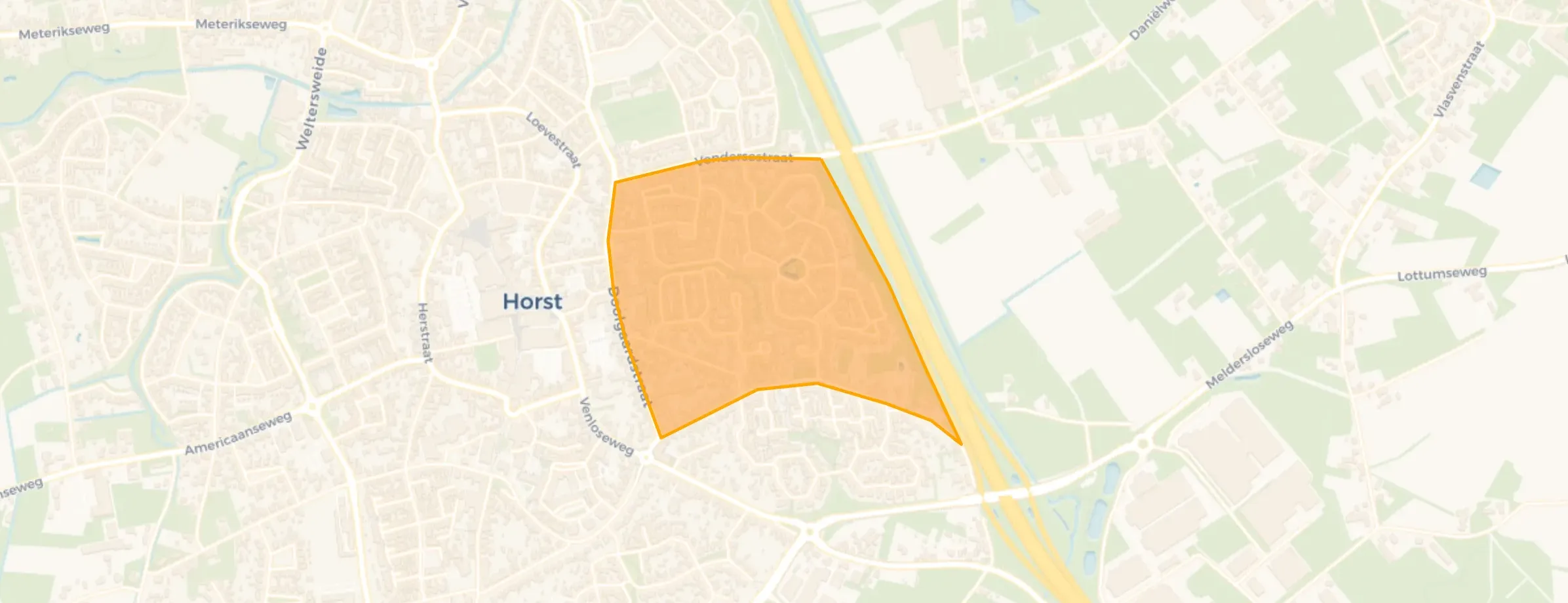
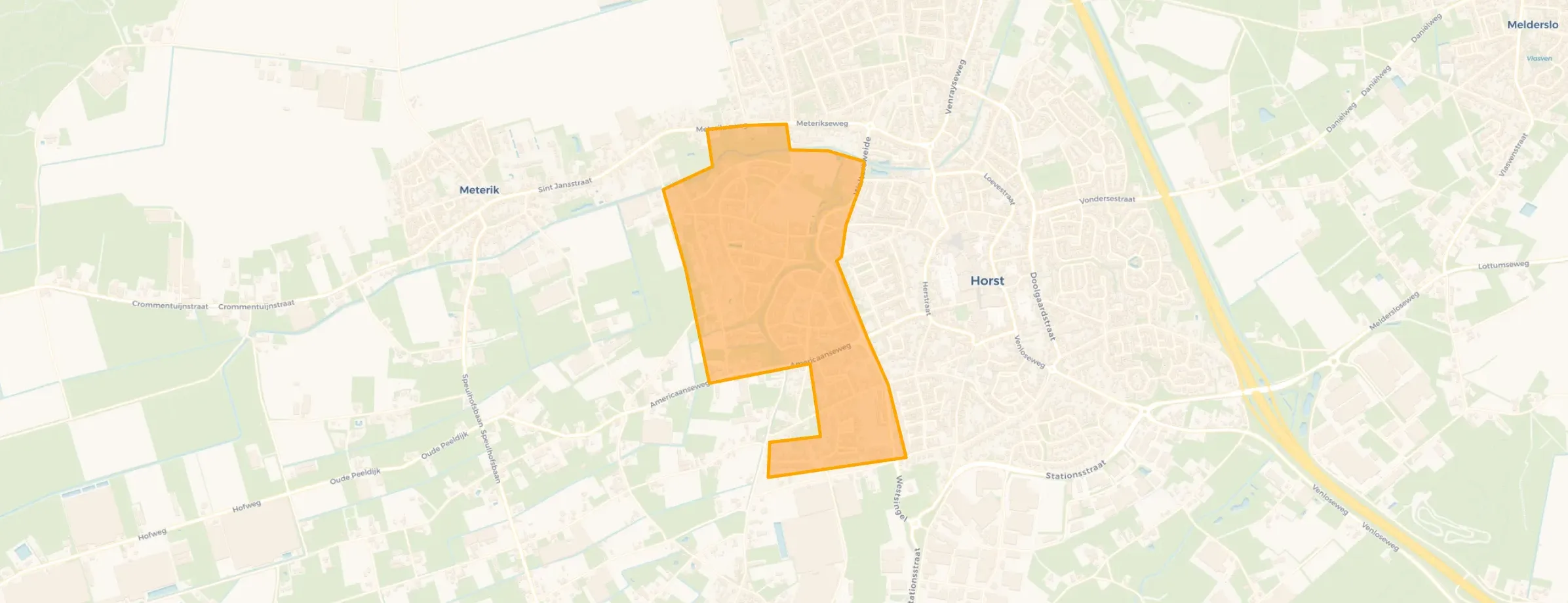
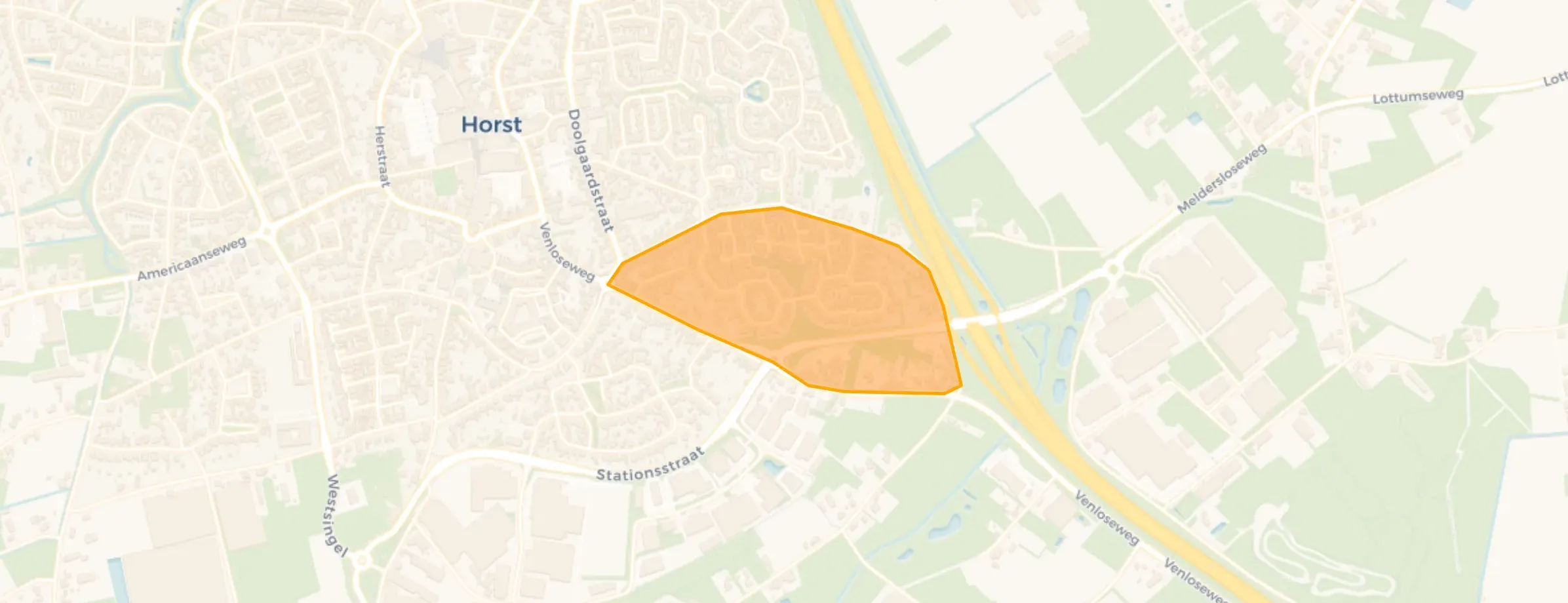
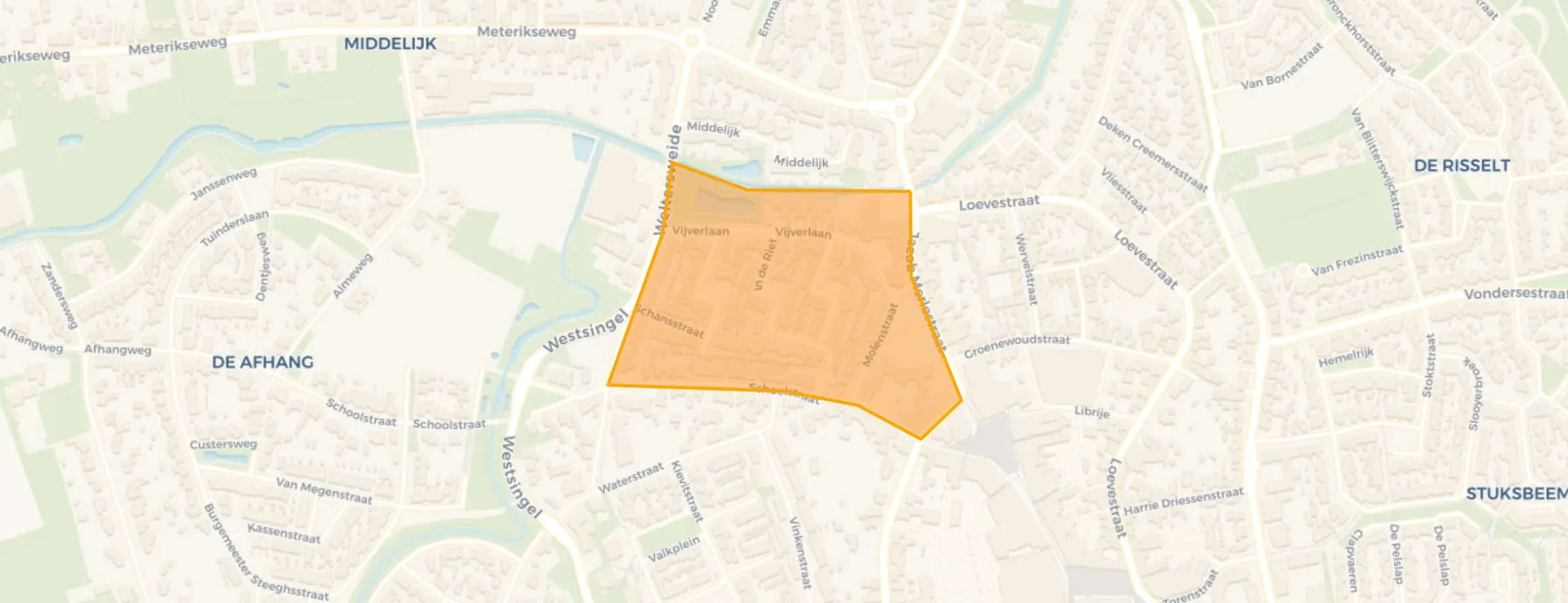
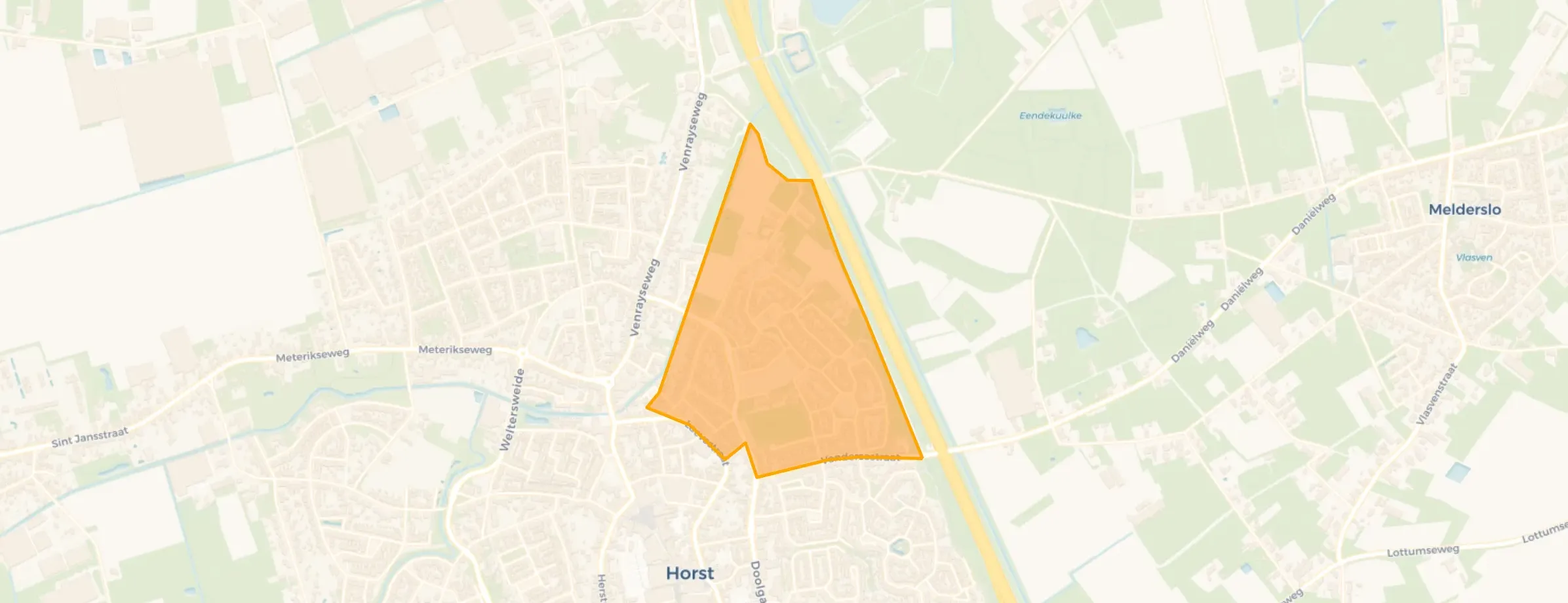
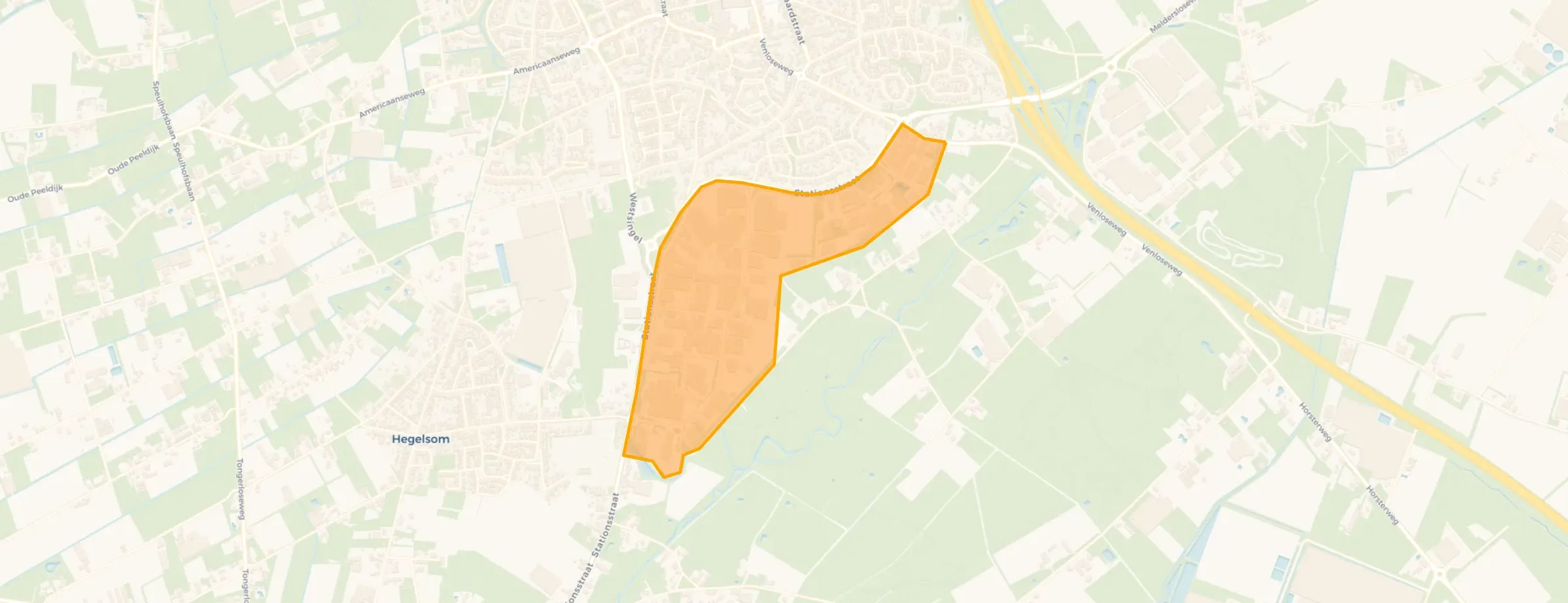
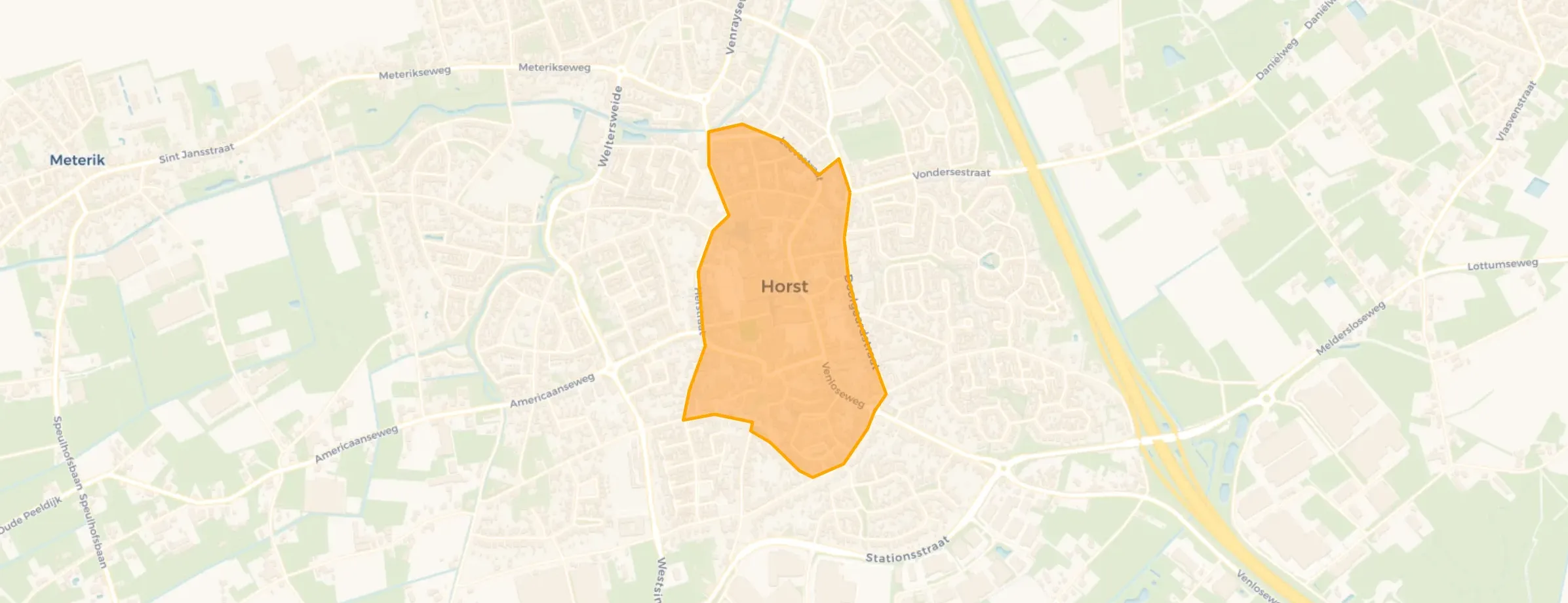
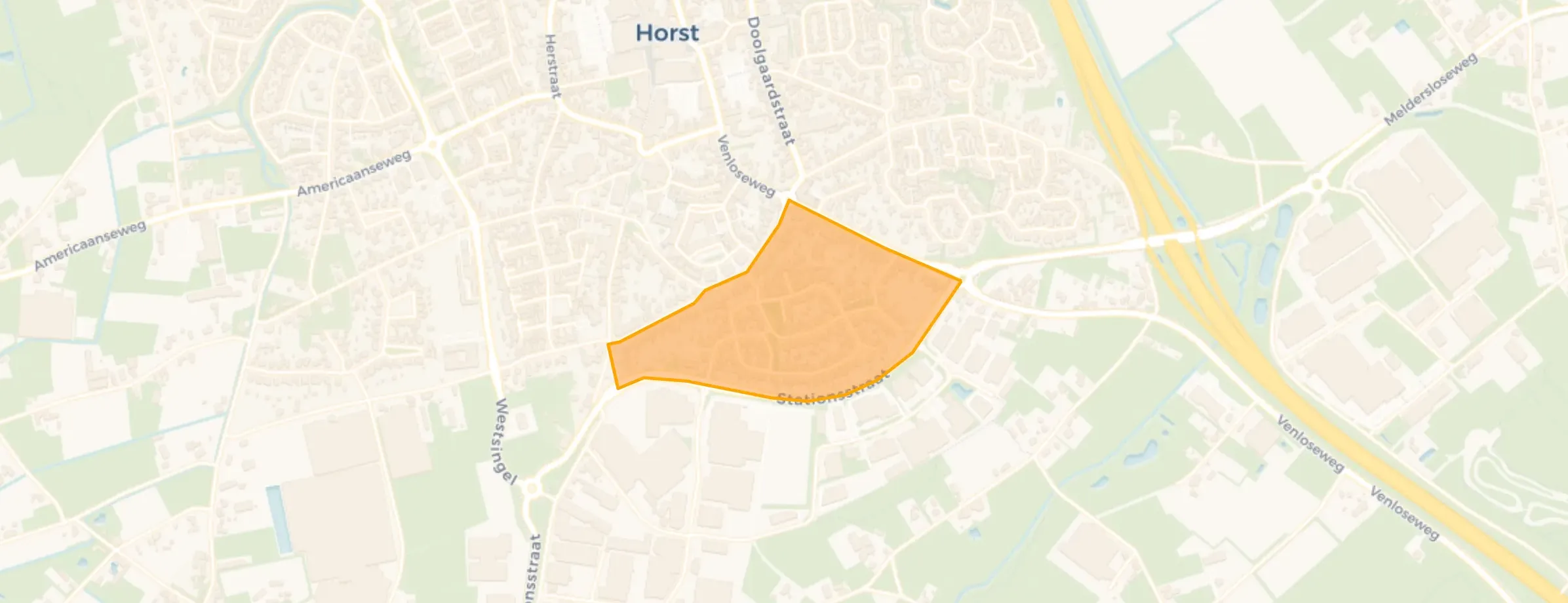
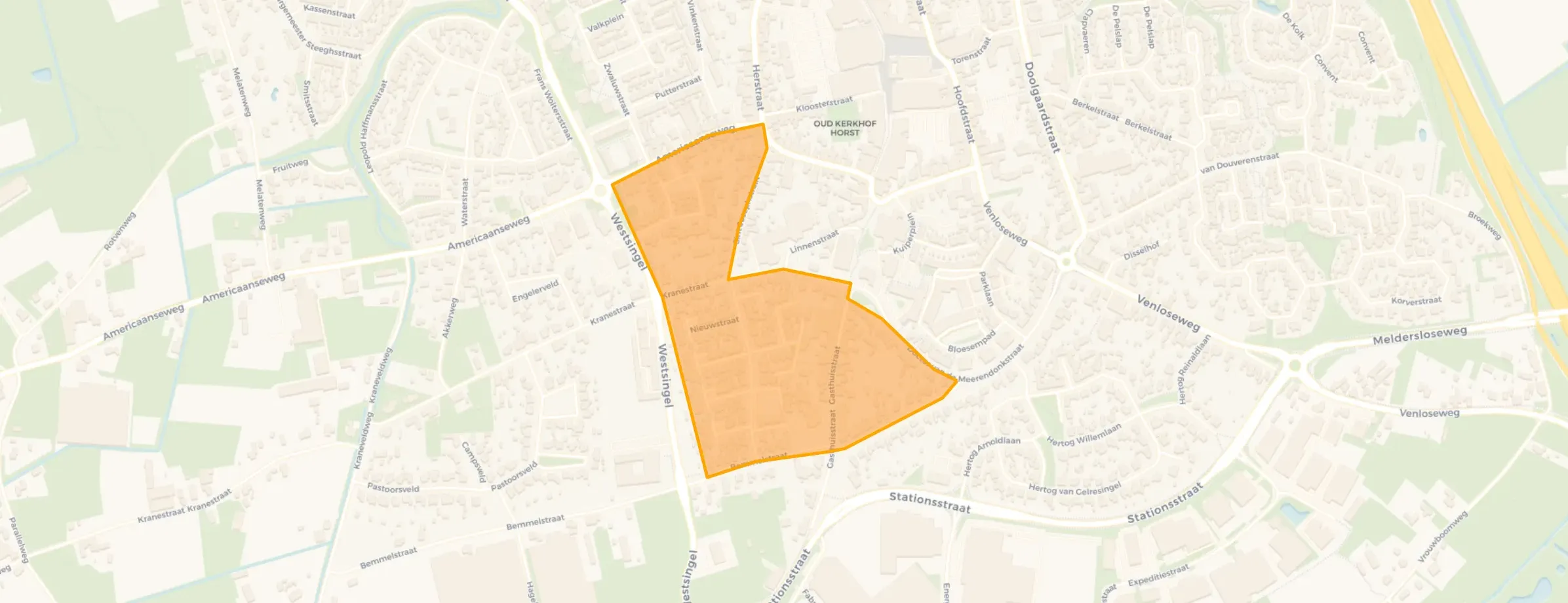
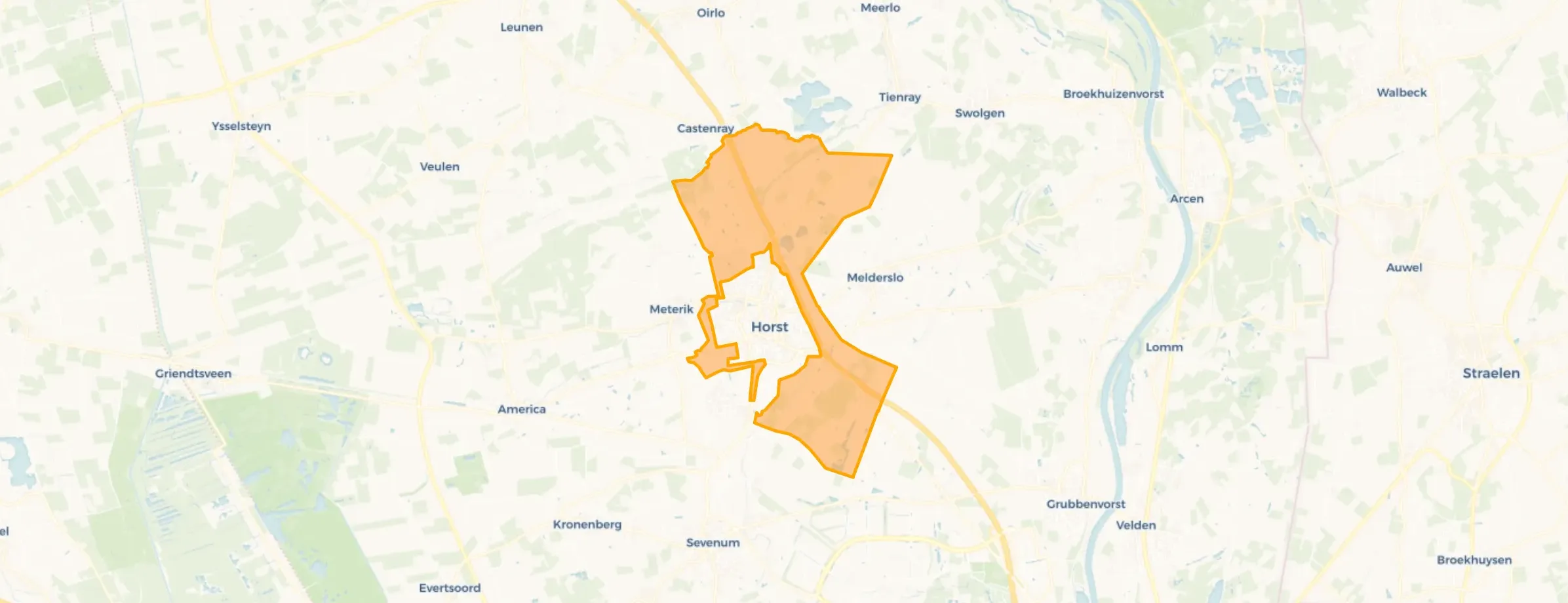
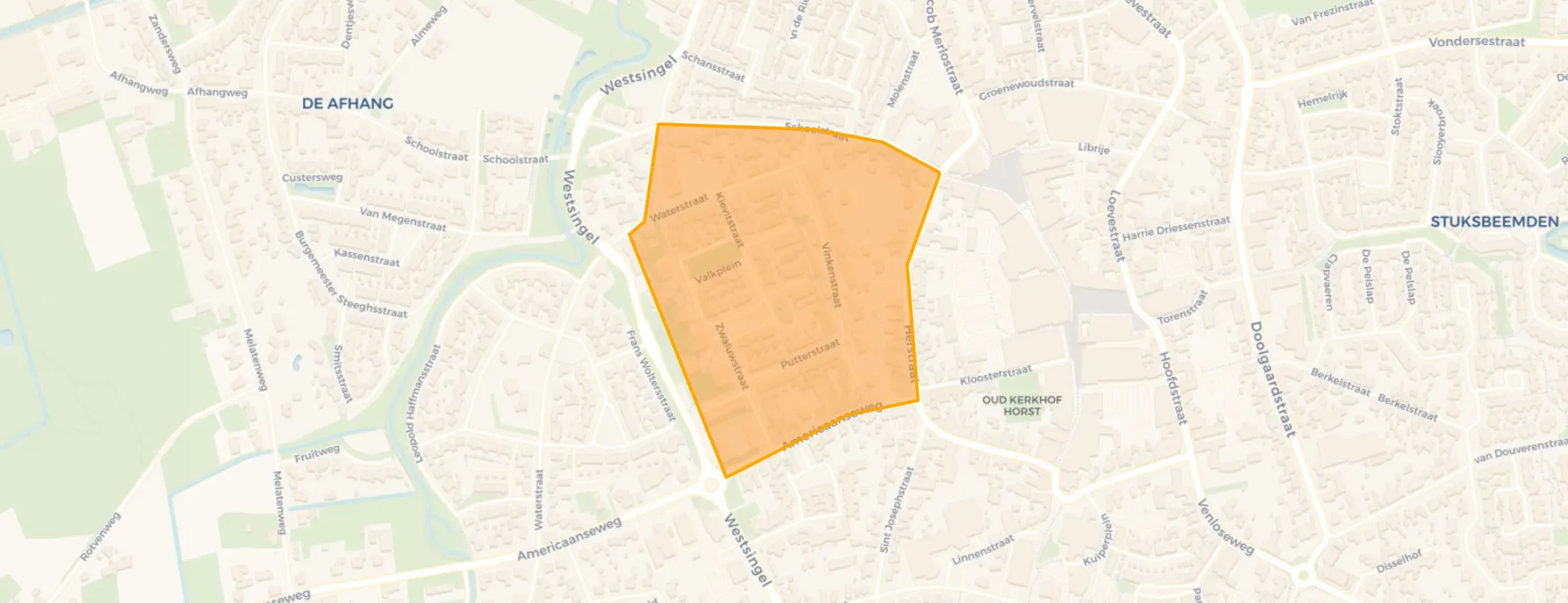
Horst is located in the province of Limburg, in the municipality of Horst aan de Maas The district has a total area of 1.862 hectares, of which 1.845 hectares are land and 18 hectares are water. The district is coded as WK150704. The postcode area is 5961AA-5962NW.
Horst has 13.460 residents. Of these, 49,5% are men and 50,5% are women. Most residents are 45 to 65 years (26,9%). The other age groups are 25,7% for '65 years or older', 23,5% for '25 to 45 years', 13,1% for '0 to 15 years' and 10,8% for '15 to 25 years'. Of the residents, 46,2% is unmarried, 40,3% is married, 7,2% is divorced and 6,2% is widowed. 11.330 residents originate from the Netherlands, 1.255 come from Europe and 875 come from countries outside Europe.
There are 6.245 households in Horst. 37,1% of these are single-person households, 32,9% households without children and 30,0% households with children. The average household size is 2,1 persons. The national average is 2,1 persons.
In Horst there are 11.300 income recipients. The average income per income recipient is €38.400, which is €3.800 (9%) lower than the national average of €42.200. Per resident, the average income is €33.300, which is €1.600 (5%) lower than the national average of €34.900. Most residents of Horst are educated to an intermediate level. 43,8% have an intermediate education (HAVO, VWO or MBO 2-4), 29,6% have a university or higher professional education (HBO/WO) and 26,6% have a lower education (VMBO or MBO 1).
Of the 13.460 residents, around 76% are in paid employment, which amounts to 10.230 people. This is 4% higher than the national average of 72%. The majority of workers are in salaried employment (88%), while 12% are self-employed. In Horst, 31% of residents receive a benefit. The largest group is those receiving a state pension (AOW). 3.160 people receive this benefit.
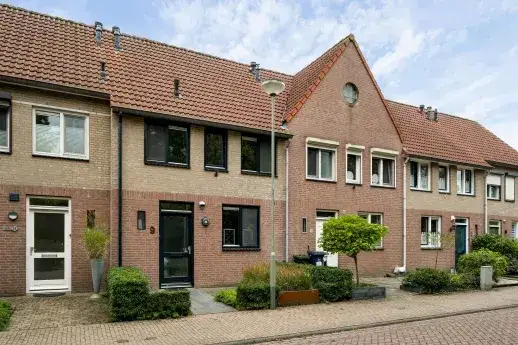
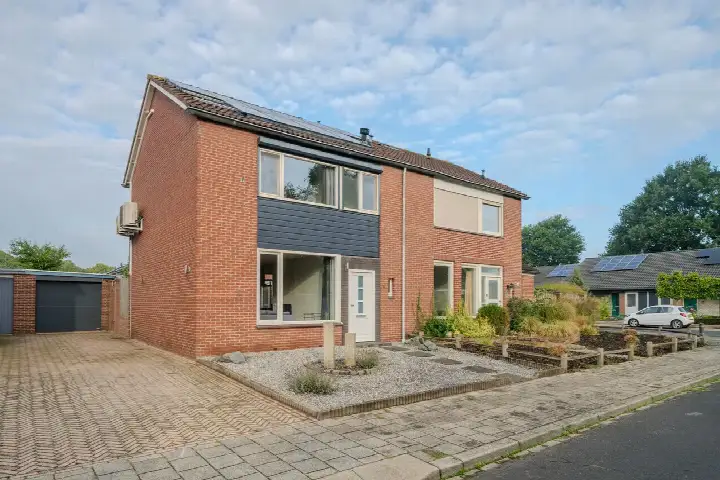
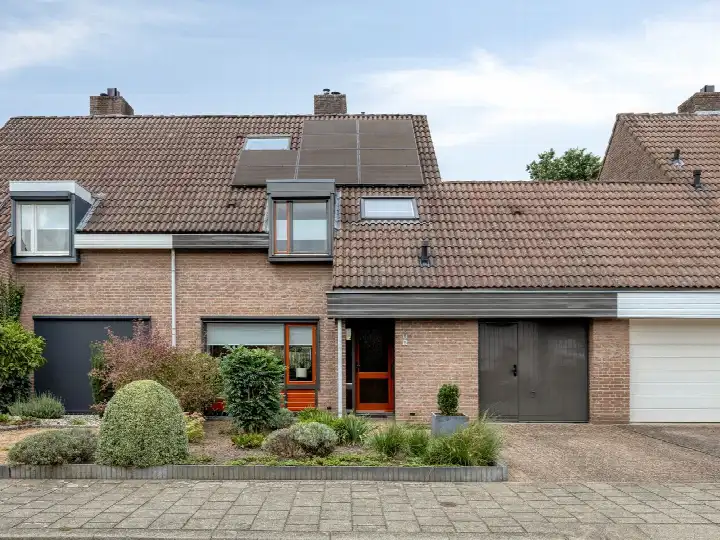
In Horst there are 6.115 homes with an average assessed value (WOZ) of €361.000. Of these, around 97% are occupied and 3% unoccupied. Most homes are owner-occupied. This amounts to 34% rental homes and 66% owner-occupied homes. Of the homes, 66% privately owned, 24% owned by housing associations and 10% owned by other landlords. The most common construction periods in Horst are 1950-1970 (20%) and 1970-1980 (16%).
There are currently no homes for sale in Horst. The most recently listed home is Van Frezinstraat 9 by InterMakelaars B.V. op Funda. No homes were sold in Horst over the past year.
There are currently no homes for rent in Horst. The most recent home is Weisterbeekstraat 14, offered by www.thuisinlimburg.nl. No homes were let in Horst over the past year.
No recent rental data available for Horst.
In Horst there are 4.059 addresses with a registered energy label. The most common labels are A (39%), C (18%) and B (16%). On average, an address in Horst uses 2.820 kWh of electricity per year. This is 11% above the national average of 2.550 kWh. Natural gas consumption, at 880 m³ per year, is 10% above the national average of 800 m³.
I give this neighbourhood a failing grade on several important aspects. Safety feels limited due to persistent nuisance and lack of supervision. The community is not close-knit; many residents move away quickly or pass away, resulting in little social cohesion. Hygiene leaves much to be desired. There is often rubbish on the streets and public spaces are poorly maintained. Housing is also of poor quality. Many homes are in bad condition, with deferred maintenance and conditions reminiscent of slums. Furthermore, the living environment is unpleasant due to constant noise pollution and air pollution. The lack of greenery and an attractive natural environment makes the neighbourhood even less pleasant to live in. All in all, this is an area where the quality of life is low and improvement is needed in many areas. Due to the poor living conditions, noise pollution and pollution, I recommend considering another neighbourhood. Avoid this area if you value peace, safety and a clean living environment.
Auto-translated to English by AII've been living here for 13 years now and I've actually never had any problems with the neighbours; it's always been pleasant. We help each other when needed in a difficult situation.
Auto-translated to English by AIFar too much nuisance in this street and area. Too busy roads with noise pollution and stench. Loitering youths shouting their heads off, even at night. Playground with screaming kids, early in the morning, when you couldn't sleep at night due to other nuisance. Lots of loud music, parties weekly in the area, continuing late into the night. Stench of tar or similar from farmers, businesses. Difficulty breathing or airing out the house. Restaurant with many car visitors, also nuisance from exhaust fumes, slamming car doors, loud talking. The house is very poorly insulated. All in all, an enclave of extremely poor living. Neighbour nuisance doesn't help either, weird Dutch people and their rotten characters. It destroys you as a person. I'm already looking for something else. There is no peace here and no healthy green environment. This requires a total renovation which the municipality and landlord don't want to do, just milk the citizen and drop dead.
Auto-translated to English by AIWe live near the motorway, it's awful, the noise pollution and smell pollution. Also when I have to cycle along the motorway, I suffer from stinging eyes, possibly remnants of the motorway get into my eyes. Little to no greenery in the area, only stone. Those few patches of grass are useless to a person, you can't relax in this village. The centre has many problems with loiterers and people who want to rob you. Many drunk people walk around in the centre and the outskirts, you can see those people are not happy either. People with mental health issues also walk around. Homeless people rummage through the bins while they need shelter. This municipality does nothing for its citizens, only collects money and occasionally accommodates someone, but you can forget about living pleasure in this village. Whatever you report to the municipality about noise pollution, car nuisance, smell pollution, health nuisance, it goes in one ear and out the other. Only a judge can fix this if they would cooperate with empathy for your fellow man. My golden tip, don't come and live in Horst, but go live far away from the motorway and main roads, preferably in the greenery (where in the Netherlands?) with healthy air and peace. Only crazy people can stick it out here.
Auto-translated to English by AIQuiet neighbourhood yet with all facilities and shops within walking distance. Lots of green and space. A large recreation and forest area 1 kilometre away, where there is even a nature trail. There are many playgrounds and equipment focused on outdoor play for children. There are several primary schools and a wide choice of secondary school communities. Horst also has a station, so after secondary education, further schools are easily accessible by public transport.
Auto-translated to English by AIThe housing stock is mainly post-war — 58% was built between 1945 and 1990.
Over the past year a home for sale in Horst was listed for an average of €497,983 (€3,440 per m²). Last quarter prices rose by 6%.
Residents give Horst a 4.9 out of 10 based on 5 reviews. The strongest score is for accessibility (6.4), the weakest for education (4.0).
The housing supply in Horst is remarkably efficient: 61% has an A, A+ or B label. The average natural gas consumption per household is 880 m³ per year.
From Horst you can on average reach a supermarket at 0.7 km, a GP at 1.3 km, a railway station at 3.8 km, a primary school at 0.7 km (as the crow flies, source: CBS).
Right now you will find 64 homes for sale in Horst.