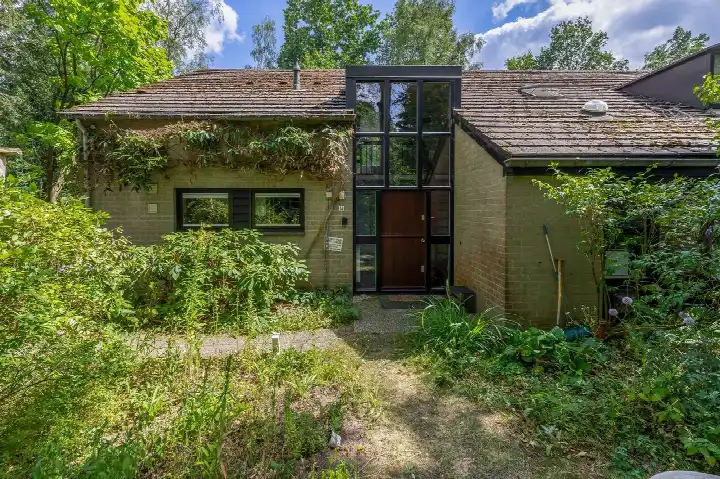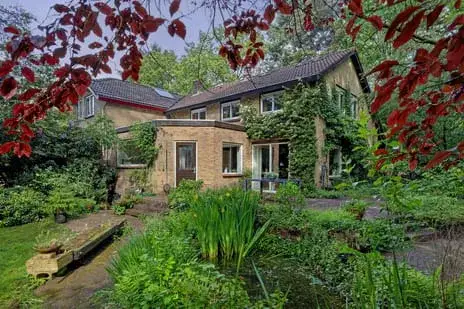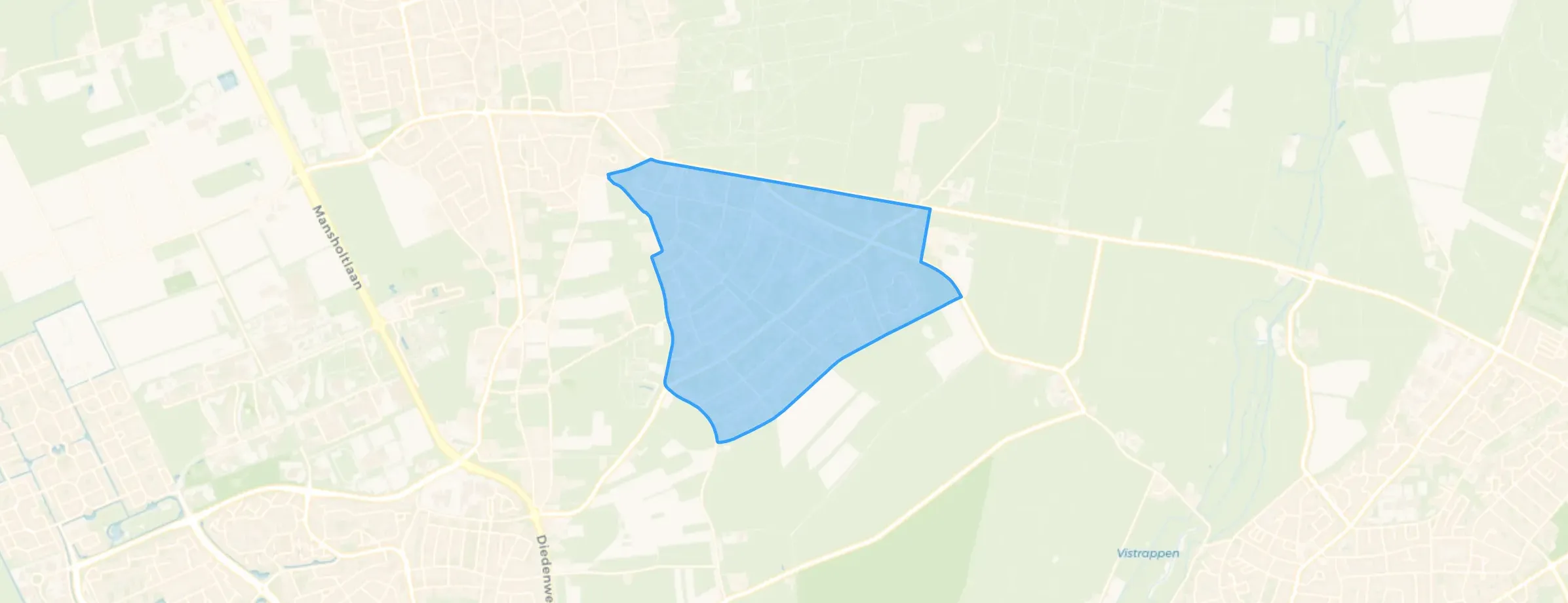
District in Wageningen
Wageningen-Hoog is located in the province of Gelderland, in the municipality of Wageningen The district has a total area of 119 hectares, of which 119 hectares are land and 0 hectares are water. The district is coded as WK028911. The postcode area is 6704PJ-6705DK.
Wageningen-Hoog has 1.225 residents. Of these, 51,0% are men and 49,0% are women. Most residents are 45 to 65 years (35,5%). The other age groups are 33,5% for '65 years or older', 11,0% for '0 to 15 years', 10,2% for '15 to 25 years' and 9,8% for '25 to 45 years'. Of the residents, 34,3% is unmarried, 55,9% is married, 4,5% is divorced and 4,9% is widowed. 1.045 residents originate from the Netherlands, 55 come from Europe and 125 come from countries outside Europe.
There are 520 households in Wageningen-Hoog. 17,3% of these are single-person households, 51,9% households without children and 30,8% households with children. The average household size is 2,3 persons. The national average is 2,1 persons.
In Wageningen-Hoog there are 1.100 income recipients. The average income per income recipient is €63.500, which is €21.300 (50%) higher than the national average of €42.200. Per resident, the average income is €54.600, which is €19.700 (56%) higher than the national average of €34.900. Most residents of Wageningen-Hoog are highly educated. 74,4% have a university or higher professional education (HBO/WO), 16,7% have an intermediate education (HAVO, VWO or MBO 2-4) and 8,9% have a lower education (VMBO or MBO 1).
Of the 1.225 residents, around 73% are in paid employment, which amounts to 894 people. This is 1% higher than the national average of 72%. The majority of workers are in salaried employment (71%), while 29% are self-employed. In Wageningen-Hoog, 32% of residents receive a benefit. The largest group is those receiving a state pension (AOW). 370 people receive this benefit.
In Wageningen-Hoog there are 518 homes with an average assessed value (WOZ) of €951.000. Of these, around 97% are occupied and 3% unoccupied. Most homes are owner-occupied. This amounts to 3% rental homes and 97% owner-occupied homes. Of the homes, 97% privately owned and 3% owned by other landlords. The most common construction periods in Wageningen-Hoog are 1970-1980 (37%) and 1950-1970 (31%).
There are currently no homes for sale in Wageningen-Hoog. The most recently listed home is Papenpad 18 by Barten Tiemessen NVM Makelaars. No homes were sold in Wageningen-Hoog over the past year.
There are currently no homes for rent in Wageningen-Hoog. The most recent home is Thijsselaan 15, offered by 't Mauritshuis Makelaars op Funda. No homes were let in Wageningen-Hoog over the past year.
No recent rental data available for Wageningen-Hoog.
In Wageningen-Hoog there are 277 addresses with a registered energy label. The most common labels are C (27%), A (17%) and D (12%). On average, an address in Wageningen-Hoog uses 4.320 kWh of electricity per year. This is 69% above the national average of 2.550 kWh. Natural gas consumption, at 1.610 m³ per year, is 101% above the national average of 800 m³.
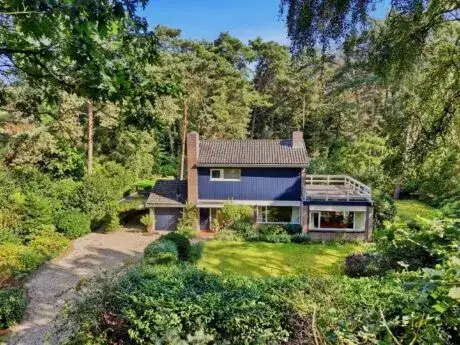
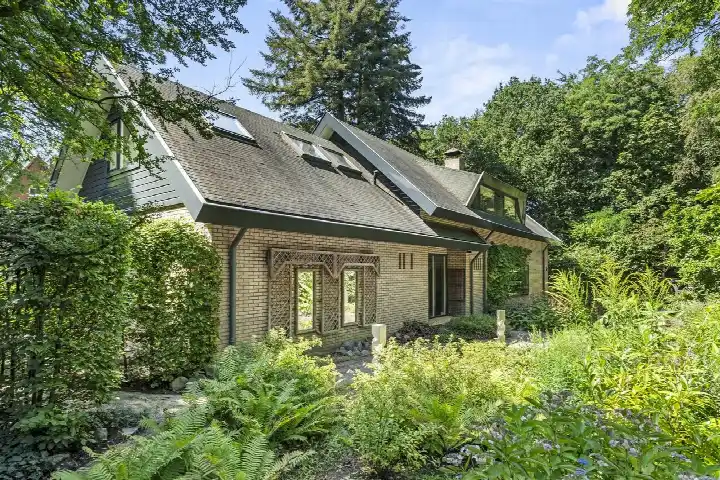
The housing stock is mainly post-war — 68% was built between 1945 and 1990. In addition, the most common type is detached houses (80%).
Over the past year a home for sale in Wageningen-Hoog was listed for an average of €473,505 (€4,508 per m²). That is 10% below the Dutch national average.
A rental home in Wageningen-Hoog cost an average of €1,726 per month (€19 per m²). That is 20% below the national average.
Wijk Wageningen-Hoog has 1,225 residents. The largest age group is 45 to 65 years (36%).
The housing supply in Wageningen-Hoog is remarkably efficient: 57% has an A, A+ or B label. The average natural gas consumption per household is 1,610 m³ per year.
From Wageningen-Hoog you can on average reach a supermarket at 2.1 km, a GP at 2.1 km, a railway station at 5.5 km, a primary school at 2.1 km (as the crow flies, source: CBS).