





6 homes for sale in Borneo, Amsterdam
Discover homes for sale in Borneo, one of Amsterdam's most architecturally distinctive neighbourhoods. View the current listings and latest market figures at the top of this page.




House prices and market figures Borneo, Amsterdam
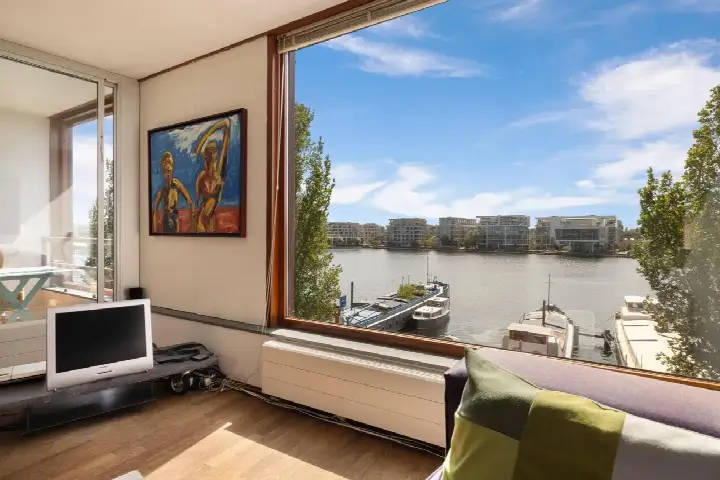
Borneo is one of the more expensive neighbourhoods within the Oostelijk Havengebied. Only 37% of the housing stock consists of owner-occupied homes, the rest is rental. This limited supply of owner-occupied homes, combined with the location on a peninsula in the IJ, drives up prices. The average WOZ value in Borneo is €784,000, well above the district average of €630,000 and far above the Amsterdam average of €517,000. This difference is no coincidence: Borneo has relatively many large, high-quality finished homes with water views.
Over the past twelve months, 16 owner-occupied homes changed hands, with an average selling price of €855,938. The range ran from €470,000 to €1,595,000, indicating that both compact apartments and spacious ground-floor homes come onto the market. The average living area was 114 m², which works out at a price of around €7,508 per square metre. That is steep, even by Amsterdam standards. The supply consists mainly of ground-floor townhouses and loft-like apartments from the 1990s, largely designed by renowned architects such as Koen van Velsen and West 8. View the current supply and current asking prices at the top of this page.
Living in Borneo, Amsterdam
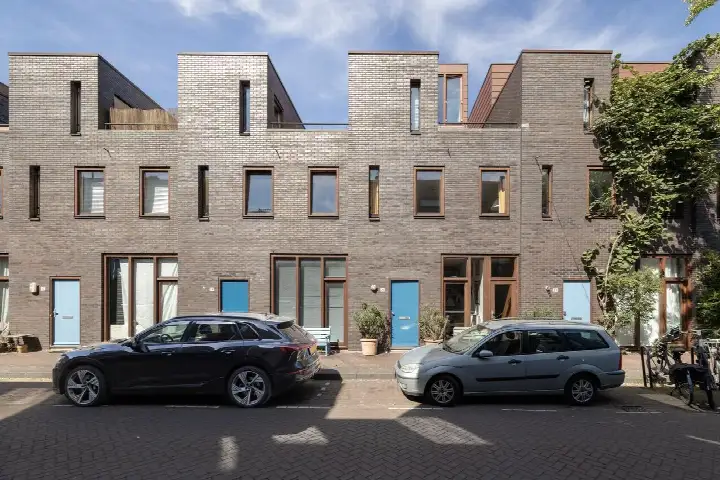
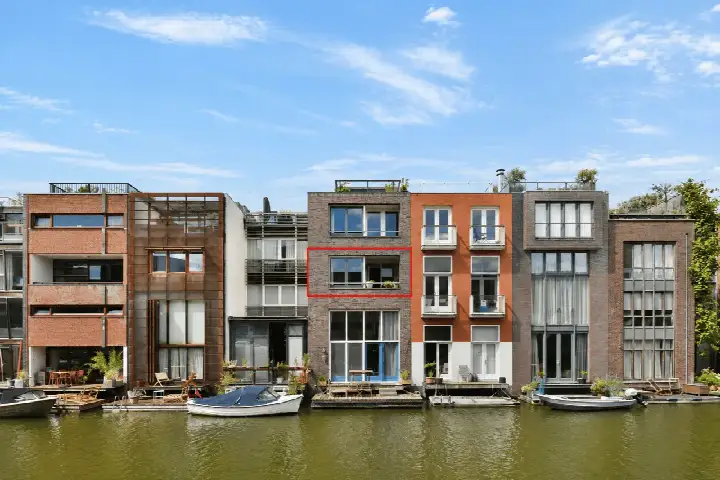
Borneo is an island in both the literal and figurative sense. The neighbourhood was built on a peninsula in the IJ, constructed in the 1990s as part of the urban renewal of the Oostelijk Havengebied. Anyone walking through it for the first time immediately notices how coherent the architecture is: continuous rows of townhouses with their own front doors, lots of brickwork, large windows and here and there a striking facade that deliberately deviates from the neighbours. There are no random 1960s flats or generic new-builds. This gives the neighbourhood its own identity that you find in few other Amsterdam districts.
The Borneokade and Scheepstimmermanstraat are the main arteries of daily life. You will find a small Albert Heijn for daily groceries, a number of eateries and a handful of local shops. For a larger supermarket range or more extensive shopping options, you hop on your bike towards the Czaar Peterstraat or the centre of the Oostelijk Havengebied. That takes ten minutes. Children in the neighbourhood go to primary school De Fuik or De Kleine Reus, both within walking distance. There is less green space than in older Amsterdam neighbourhoods, but the water more than compensates. The quay along the IJ is the informal meeting place, especially in summer.
In terms of accessibility, Borneo is good but not exceptional. Tram 26 runs along the island and takes you to Amsterdam Central Station in a quarter of an hour. By bike you are there in twenty minutes. The car is less practical: parking on the island itself is limited and you pay for a parking permit. There is no direct motorway connection. Anyone who has to drive outside Amsterdam daily will notice this. Comparable neighbourhoods such as Java-eiland and Sporenburg have a similar reliance on public transport, although Sporenburg has slightly more parking space.
Residents particularly appreciate the combination of architectural quality, the water and the relative peace compared to busier Amsterdam neighbourhoods. One resident writes: "You really live here on an island, with all the peace that entails, but Amsterdam is just around the corner. That is hard to beat." Criticisms often concern the limited facilities on the island itself and the lack of green space. If you need a park daily, you really have to cross the bridge for that. On the neighbourhood main page of Borneo you will find all resident reviews and neighbourhood scores per category. Neighbourhoods such as KNSM-eiland and Oostelijke Handelskade offer a similar atmosphere but with a different housing type profile, making them worth comparing if you are looking in this part of Amsterdam.
Does an owner-occupied home in Borneo suit you?
Borneo mainly attracts movers and dual-income couples who consciously choose architectural quality and a water-rich environment, without the hustle and bustle of the city centre. The largest age group is 45 to 65 years old, and over 500 households in the neighbourhood have children. First-time buyers find it difficult: with an average purchase price of almost €856,000 and an entry price around €470,000, the financial threshold is high. Expect overbidding in the lower segment, because supply is scarce. If you want to be more flexible or first get to know the neighbourhood, you can look at the rental homes in Borneo as an intermediate step. Seniors who want to live smaller but still seek quality and peace will also find something here, provided the budget is sufficient.
What residents say about living in Borneo
Borneo scores well on liveability and atmosphere, particularly in terms of architecture, peace and neighbourhood feel. Residents are generally positive about the social cohesion on the island. They are less enthusiastic about the limited shopping facilities and the sparse green space. One resident puts it this way: "The architecture is really special, every home is different. But if you want a park, you really have to cross the bridge." View all scores and ratings per category on the neighbourhood page of Borneo.
Compare owner-occupied homes in and around Borneo
Buurtje.nl bundles the supply from more than 1,500 sources on one page, supplemented with resident reviews and neighbourhood data that you will not find in this combination anywhere else. This way you can compare not only homes, but also neighbourhoods. Want to search more broadly? Then view the owner-occupied homes in the Oostelijk Havengebied or the full overview of owner-occupied homes in Amsterdam. Other neighbourhoods nearby that are worth comparing are Rietlanden and Entrepot-Noordwest. For those also considering other parts of Amsterdam, the Jordaan and the Haarlemmerbuurt offer an interesting contrast. More information about permits, zoning plans and the local housing market can be found on the website of the municipality of Amsterdam.
What is the cost of a home in Borneo, Amsterdam?
The average purchase price in Borneo over the past year was €855,938, based on 16 sales. The range was from €470,000 to €1,595,000. The average living area was 114 m², resulting in a price of approximately €7,508 per square metre. In the lower segment, you should expect to overbid, as supply is limited.
What is the WOZ value of homes in Borneo?
The average WOZ value in Borneo is €784,000. This is well above the average for the Oostelijk Havengebied (€630,000) and significantly above the Amsterdam average of €517,000. The high WOZ value reflects the architectural quality of the homes and the desirable waterside location.
What is it like to live in Borneo?
Borneo is a quiet, water-rich neighbourhood with a strong character of its own. The architecture from the 1990s was deliberately designed to be diverse: no two homes are the same. Residents appreciate the tranquillity, social cohesion and proximity to the water. Criticisms focus on the limited shopping options on the island itself and the lack of greenery. The neighbourhood mainly attracts families and movers who prioritise quality and atmosphere over hustle and bustle.
Is Borneo suitable for families with children?
Yes, Borneo has a relatively high proportion of households with children. There are primary schools within walking distance, the neighbourhood is car-free, and the water provides play space. The homes are generally spacious, with an average area of 114 m². The downside is the limited greenery on the island itself; for a playground, you need to cross the bridge.
How accessible is Borneo?
Tram 26 runs along Borneo and connects the neighbourhood to Amsterdam Central in about fifteen minutes. By bike, you can reach the city centre in twenty minutes. The car is less practical: parking space on the island is scarce and a parking permit is required. There is no direct motorway connection, which is a point of attention for commuters who drive.
What type of homes can you buy in Borneo?
The supply mainly consists of ground-level townhouses with their own front door and loft-style apartments, both built in the 1990s. The homes were designed by various architects, resulting in a varied streetscape. Those considering buying an apartment in Borneo will find both smaller units and spacious homes with water views. Detached houses are not available.
Is there sufficient parking space in Borneo?
Parking in Borneo is limited. The island was designed to be relatively car-free, and paid parking with a permit system applies. Residents with a permit have a spot, but guests often park off the island. If you use a car daily, you will notice this is a point of attention. Most residents solve this by using a bike or public transport as their primary means of transport.