Homes for sale in Timorpleinbuurt-Noord, Amsterdam
Discover homes for sale in Timorpleinbuurt-Noord and compare current listings, market prices, and neighbourhood data directly on this page.

House prices and market figures for Timorpleinbuurt-Noord, Amsterdam
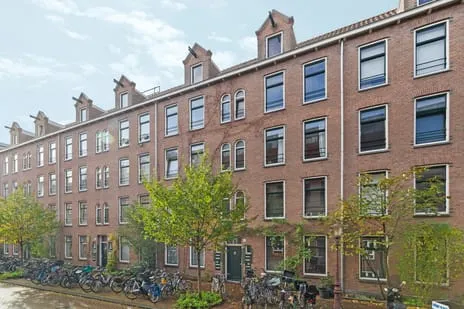
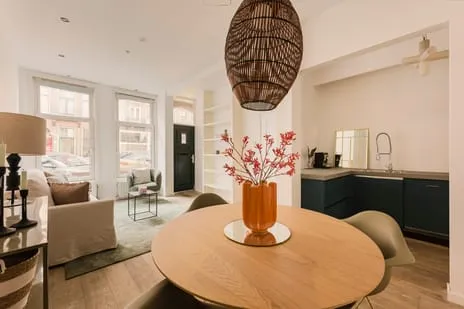
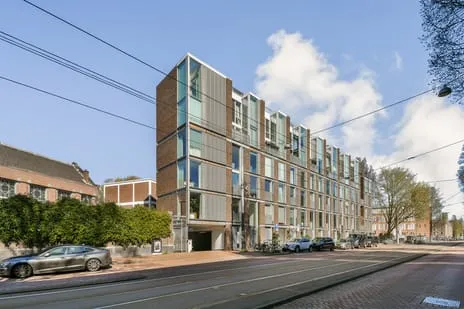
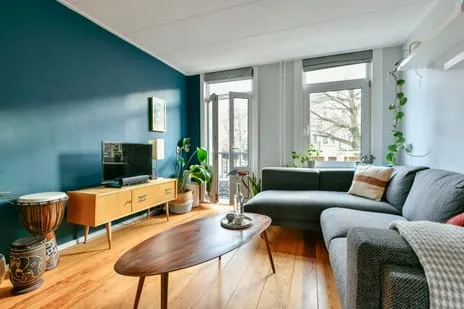
The owner-occupied market in Timorpleinbuurt-Noord is relatively limited in size: only 33% of the more than 2,300 homes are owner-occupied, while 67% are rented. This makes supply scarce and competition for an attractive property correspondingly high. Over the past twelve months, 92 homes were sold for an average of €571,130, with an average living area of 73 m². This works out at approximately €7,825 per square metre. The range runs from €285,000 to €1,180,000, indicating that both smaller apartments and larger homes come onto the market. The WOZ value is €495,000, slightly above the district average of Indische Buurt-West (€475,000), but still below the Amsterdam average of €517,000. In terms of price level, the neighbourhood is therefore in the middle segment of the city. The housing stock consists mainly of apartments in pre-war buildings. Current availability and the current average asking price can be found at the top of this page.
Living in Timorpleinbuurt-Noord, Amsterdam
Timorpleinbuurt-Noord is located in the western part of the Indische Buurt, one of the more densely populated districts of Amsterdam-Oost. The neighbourhood has a distinctly urban character: narrow streets, closed building blocks from the early twentieth century, and a mix of residents that gives the area a certain vibrancy. It is not a neighbourhood that impresses with wide avenues or lush greenery, but rather with the everyday bustle at street level.
The largest age group consists of 25 to 45-year-olds, accounting for almost half of all residents. Single-person households are by far the majority (1,360 of households), and only 18% of residents are married. This paints the profile: this is a neighbourhood for young urbanites, many highly educated (58%), who want to live close to the centre without paying the canal belt prices.
For daily groceries, you can go to the supermarkets along the Javastraat, the main shopping street of the Indische Buurt. Here you will also find bakeries, greengrocers and various catering establishments. Flevopark is within cycling distance and offers some breathing space, although some residents feel that green space in the neighbourhood itself is lacking. Primary schools in the immediate vicinity serve the modest but present group of young families (420 children aged 0 to 15).
Accessibility is one of the strongest assets. Veemarkt metro station (line 54) and various tram lines connect the neighbourhood quickly with the centre and Amsterdam Central. By bike, you are in the heart of the city within a quarter of an hour. Residents therefore give accessibility the highest score: 8.0 out of 10. Motorists have access to the ring road via the Zeeburgerdijk, although parking in the neighbourhood is a daily challenge.
The overall resident score stands at 6.4 out of 10, based on reviews via the neighbourhood main page of Timorpleinbuurt-Noord. Resident Mara describes it as follows: "I find the atmosphere pleasant and there are nice people living here. I would like to see a bit more greenery, such as more flowers and plants. That would make the neighbourhood a bit cosier. Also, there is often litter on the street, which looks unattractive and especially uncosy." That picture matches the sub-scores: accessibility (8.0) and safety (7.0) score well, while beauty (5.0) and green space (6.0) lag behind. For those comparing the neighbourhood with sister neighbourhoods: Timorpleinbuurt-Zuid has a similar character but is located slightly further south, while the Ambonpleinbuurt feels just a bit quieter. The broader Indische Buurt-West provides context for those wanting to explore the entire district. More information about living and residing in Amsterdam can also be found on the website of the municipality of Amsterdam.
Who is a home for sale in Timorpleinbuurt-Noord interesting for?
Buying a home in Timorpleinbuurt-Noord appeals mainly to young professionals and starters who want to live in an urban setting with a good connection to the centre. The average income in the neighbourhood (€41,900) and the high labour participation rate (67%) indicate that residents are generally financially active, but the average purchase price of over €571,000 makes an owner-occupied home difficult to reach for true starters without their own capital or help. Movers with equity from a previous home are in a stronger position. Families looking for a lot of space or greenery are less likely to find what they are looking for here. Those who are unsure can also look at rental homes in Timorpleinbuurt-Noord as a temporary alternative. Keep in mind that the scarce owner-occupied stock regularly leads to overbidding.
What residents say about Timorpleinbuurt-Noord
The neighbourhood receives an average score of 6.4 out of 10, based on resident reviews. Accessibility stands out positively with an 8.0, followed by safety and sense of community (both 7.0). Beauty (5.0) and housing (6.0) are the weakest points. Mara writes: "The neighbourhood is fine. I find the atmosphere pleasant and there are nice people living here," but also mentions the lack of greenery and litter as points for improvement. View all reviews and neighbourhood data on the overview page of Timorpleinbuurt-Noord.
Compare homes for sale in and around Timorpleinbuurt-Noord
On Buurtje.nl, you will find homes for sale in Timorpleinbuurt-Noord brought together from more than 1,500 sources, supplemented with resident scores and district data that you will not find in one place elsewhere. This allows you to directly compare the supply here with that in the rest of Indische Buurt-West, or look more broadly at homes for sale in Amsterdam. Want to explore other Amsterdam neighbourhoods? The Haarlemmerbuurt and the Jordaan offer a different living environment in a different price range. Buurtje.nl helps you first understand whether a neighbourhood suits you, before you look at the housing supply.
Frequently asked questions
What does a home cost in Timorpleinbuurt-Noord?
Over the past twelve months, homes in Timorpleinbuurt-Noord sold for an average of €571,130, with an average area of 73 m². That works out to about €7,825 per square metre. The range runs from €285,000 for a smaller apartment to €1,180,000 for a larger home. Keep in mind that bidding above the asking price is common, as the supply of homes for sale is limited.
What is the WOZ value in Timorpleinbuurt-Noord?
The average WOZ value in Timorpleinbuurt-Noord is €495,000. That is slightly above the average for the wider Indische Buurt-West district (€475,000), but still below the Amsterdam average of €517,000. In terms of valuation, the neighbourhood sits in the middle segment of the city.
What is it like to live in Timorpleinbuurt-Noord?
Timorpleinbuurt-Noord is an urban, densely built neighbourhood in Amsterdam-Oost with a mix of young professionals and single-person households. The atmosphere is lively but not flashy. Residents appreciate the accessibility and sense of community, but mention the lack of green space and litter as drawbacks. The overall resident score is 6.4 out of 10.
Is Timorpleinbuurt-Noord suitable for starters or families?
The neighbourhood mainly attracts young urbanites aged 25 to 45, often highly educated and working. For starters without their own capital, buying an apartment in Timorpleinbuurt-Noord is financially challenging given an average sale price of over €571,000. Families find the neighbourhood less attractive due to limited green space and relatively small homes. Those moving up the property ladder with existing equity are in the strongest position.
How is the accessibility of Timorpleinbuurt-Noord?
Accessibility is the neighbourhood's strongest asset, with a resident score of 8.0 out of 10. Veemarkt metro station (line 54) is within walking distance and takes you quickly to Amsterdam Central. Several tram lines run through the area. By bike, you can reach the city centre in about fifteen minutes. Motorists can access the ring road via Zeeburgerdijk, but parking on the streets themselves is tight.
What type of homes are for sale in Timorpleinbuurt-Noord?
The supply consists mainly of pre-war apartments in closed building blocks, characteristic of the Indische Buurt. Detached houses or single-family homes are rare. The average sold area over the past twelve months was 73 m², indicating that the majority of homes are compact to medium-sized apartments. Buying a home in Timorpleinbuurt-Noord typically means choosing urban and compact living.
Is Timorpleinbuurt-Noord a safe neighbourhood?
Residents give safety a score of 7.0 out of 10, which is a reasonable result for a densely built Amsterdam city neighbourhood. The neighbourhood is described as 'fine' and the atmosphere as pleasant, although litter and the appearance of streets are mentioned as areas for improvement. Those who want to know more about liveability can consult the municipality of Amsterdam for current safety data.
I don't think the neighbourhood is extremely special, but I do like the atmosphere and there are nice people living here. I would like to see a bit more greenery, like more flowers and plants. That would make the neighbourhood a bit cosier. Also, there is often litter on the streets, which doesn't look nice and especially not cosy. Other than that, I'm happy with my neighbourhood!
Auto-translated to English by AI